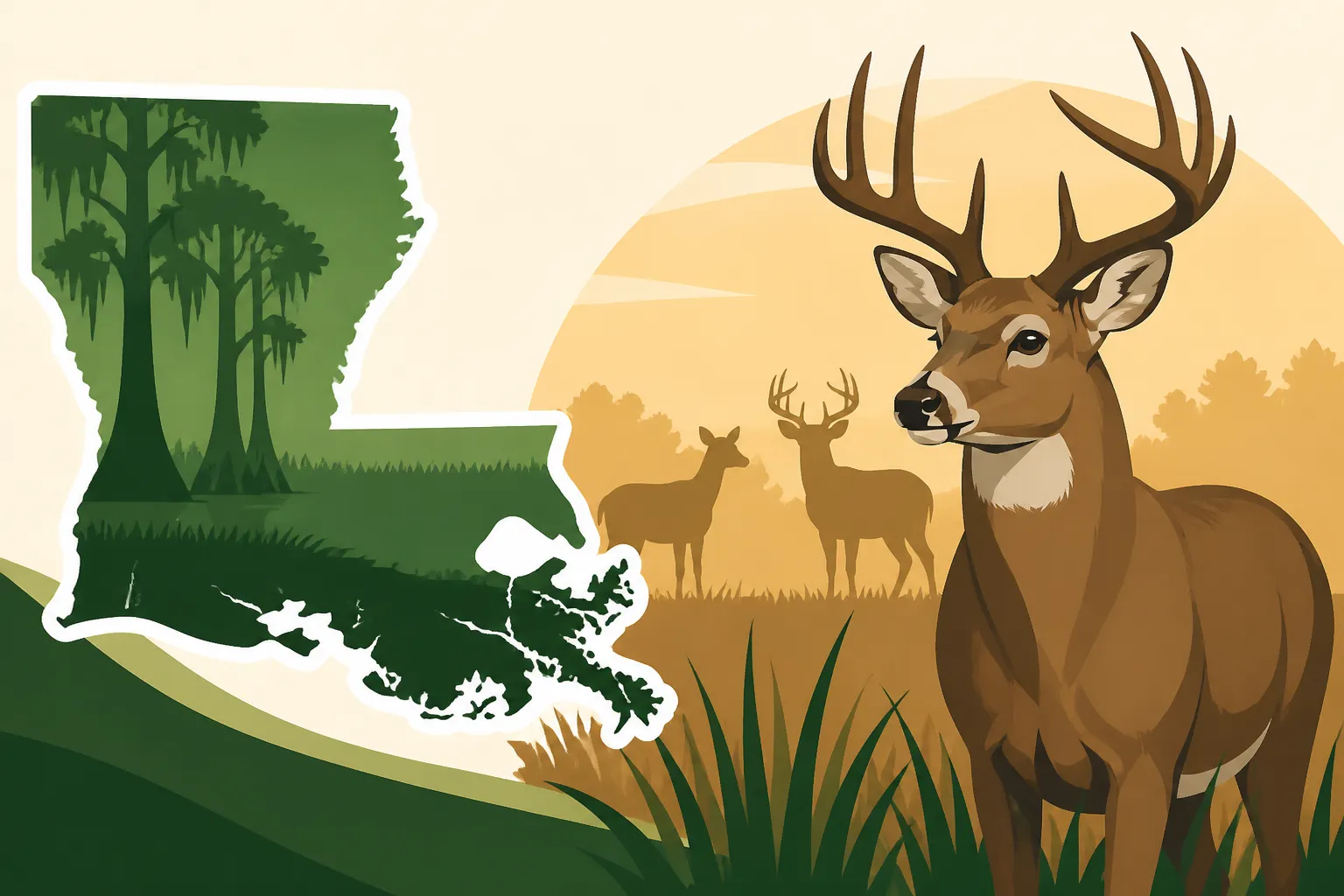
Louisiana Deer Herd Size
It can be incredibly frustrating to hear wildlife biologists throw around big, often vague numbers about the "deer herd" when all you care about is how many healthy deer are roaming the woods right where you plan to hunt this season. You want to know if your hard work scouting will pay off, or if you're just stomping through empty timber. This guide will pull back the curtain on how we understand Louisiana's deer population, what influences those numbers, and how that translates to your actual hunting experience in the bayous, piney hills, and delta bottoms across the state.
Understanding Louisiana's Deer Population Estimates
When you hear talk about the "Louisiana deer herd size," it’s not as simple as someone counting every single deer from a helicopter. Wildlife agencies like the Louisiana Department of Wildlife and Fisheries (LDWF) use a complex system of scientific methods to estimate deer populations. This isn't just for curiosity; it's crucial for setting season lengths, bag limits, and overall management strategies to ensure a healthy, sustainable deer population for future generations of hunters. It’s about trying to paint a picture of what’s happening in the woods, even when you can’t see every brush stroke.
How Wildlife Biologists Estimate Deer Numbers
Biologists don't have a magical deer counter, of course. Instead, they rely on a combination of techniques, each with its own strengths and limitations, to build a comprehensive picture. One common method involves harvest data. Every time a hunter checks a deer, that data point contributes to the larger puzzle. This includes information like the sex of the deer, its age (often estimated by jawbone collection at check stations), and sometimes even its weight. When you track something like the annual number of deer taken by hunters, and then couple that with other indicators, it helps show population trends. For instance, if harvest numbers are consistently high and the buck-to-doe ratio remains balanced, it suggests a robust population. You can dive deeper into these figures when considering the overall Louisiana Deer Harvest Records.
Beyond harvest data, biologists also conduct various surveys. These might include spotlight surveys, where they drive designated routes at night, counting deer spotted by powerful lights. Camera surveys are another invaluable tool, especially with today's technology. Placing trail cameras in strategic locations over a period of time can help estimate deer density in specific areas, as individual deer can often be identified or a count of unique deer can be made from the photos. These methods, combined with habitat assessments and even landowner reports, all feed into the larger picture of How LDWF Counts the Louisiana Deer Herd. It's a continuous effort to keep tabs on a constantly fluctuating natural resource.
Challenges in Counting a Wild, Wily Population
Let's be real, trying to count deer is like trying to count mosquitoes in a swamp—it's incredibly difficult. Deer are masters of camouflage and stealth, and Louisiana's diverse habitats, from dense bottomland hardwoods to sprawling coastal marshes, make direct counts almost impossible. Think about stalking through thick palmettos or wading through cypress-tupelo stands; it's hard enough to find one deer, let alone estimate thousands.
Weather also plays a huge role. A particularly wet spring might mean lush forage, leading to better fawn survival, while a severe drought could stress the herd. Human factors, like poaching or changing land use patterns (more development, fewer agricultural fields), constantly impact local populations. And then there's the ever-present challenge of disease, particularly with concerns like Chronic Wasting Disease Risk in Louisiana now on everyone's radar. All these variables mean that any "herd size" number is an estimate, a snapshot in time, rather than a precise tally. It’s a dynamic system, and good hunters learn to read the signs on the ground, not just rely on published numbers.
Factors Influencing Deer Herd Size in Louisiana
The actual number of deer you might encounter on any given hunt in Louisiana isn't just a random figure; it's the result of a delicate balance of ecological and human factors. Understanding these influences can help you anticipate better hunting opportunities and appreciate the complexities of wildlife management.
Habitat Quality and Food Availability
Deer, like all wildlife, need good habitat to thrive. In Louisiana, this varies dramatically from the fertile alluvial floodplains to the drier pine forests. Areas with diverse forage, ample cover, and reliable water sources will naturally support higher deer densities. Think about the rich soils of the Mississippi River Delta parishes, where agricultural crops and natural browse provide a buffet for deer year-round. These areas often boast some of the healthiest deer populations and larger-bodied animals. Conversely, areas with poor soil quality, monoculture timber plantations, or fragmented habitats tend to have fewer deer, or deer that are simply not as robust.
Food availability is paramount. Hard mast crops, especially acorns, are a critical food source. A booming acorn year can mean deer go into winter in excellent condition, leading to better fawn survival and a healthier overall herd. However, a poor acorn year can force deer to browse on less nutritious forage, stressing the herd and potentially impacting the following year's fawn crop. Hunting around late-season food sources for Louisiana whitetails becomes crucial in these leaner years. Water, too, is often overlooked but vital. While Louisiana generally has abundant water, prolonged dry spells, especially in some upland areas, can concentrate deer around remaining water sources, or conversely, cause stress and dispersal if water becomes too scarce.
Predation, Disease, and Environmental Stressors
Nature has its own ways of managing deer populations. Predators like coyotes, bobcats, and even black bears (especially in their core range like the Tensas Basin and Atchafalaya) can impact fawn survival rates, particularly in areas with lower deer densities. While predators rarely control an entire healthy deer population, they certainly play a role in the natural selection process, often culling the weak or sick.
Diseases are another significant factor. Hemorrhagic disease (HD), often called EHD or "blue tongue," is a common viral disease that can cause significant die-offs in deer, especially during hot, dry summers when insect vectors are prevalent. The increasing presence of Chronic Wasting Disease (CWD) is a major concern, as it is always fatal and can have devastating long-term impacts on deer populations. Understanding Louisiana's New CWD Management Zone Law is vital for hunters in affected areas, as these regulations are designed to mitigate the spread and protect the herd. Beyond disease, environmental stressors like hurricanes, floods, and extreme temperature swings can directly impact deer survival, displace animals, or destroy critical habitat, leading to localized fluctuations in herd size.
Hunting Pressure and Management Strategies
Hunters themselves are a primary management tool in Louisiana. The LDWF uses harvest data and population models to set seasons, bag limits, and antler regulations designed to keep the herd healthy and balanced. In areas where populations are high, more liberal either-sex days and higher bag limits might be implemented to reduce herd density, prevent habitat degradation, and improve overall herd health. Conversely, in areas where deer numbers are lower or biologists are trying to improve buck age structure, more restrictive regulations might be in place.
The structure of Louisiana's Ten Deer Hunting Areas Explained is a prime example of how management adapts to regional differences. Some areas have a very long either-sex window, allowing hunters to take more deer, while others are more conservative. The cumulative effect of hunter harvest across the state is carefully monitored. Responsible hunting, including adhering to regulations and accurately reporting harvests, contributes directly to sound management practices that aim for sustainable deer populations for everyone. It's a partnership between hunters and biologists, whether you're chasing bucks in the piney woods or focused on Hunting Atchafalaya Basin Swamp Deer.
Regional Variations in Louisiana Deer Density
Louisiana is a tapestry of diverse landscapes, and as you might expect, deer populations don't just magically distribute themselves evenly across the entire state. What you find in the low-lying swamps is vastly different from the rolling hills up north. Knowing these regional differences is key to understanding where you might find higher or lower concentrations of deer, and what kind of hunting challenges each area presents.
Delta Floodplains and River Bottoms
The rich, fertile floodplains and river bottoms, particularly along the Mississippi and Red River systems, are often considered the prime deer habitat in Louisiana. Think about parishes like Tensas, Concordia, and Madison. These areas benefit from incredible soil fertility, producing lush vegetation and abundant mast crops. Deer here tend to be larger-bodied, with the potential for impressive antler growth due to superior nutrition. The habitat offers dense cover in hardwood forests, interspersed with agricultural fields providing high-energy food sources.
Hunting in these areas can be incredibly rewarding, but also challenging due to the thick cover and often extensive private land holdings. However, public land gems like Tensas River National Wildlife Refuge Hunting offer a taste of this rich environment. These areas often experience higher deer densities, and management strategies here frequently focus on maintaining herd health and balancing the buck-to-doe ratio, sometimes with more liberal antlerless harvests. The deer density in these regions, often referred to as "Delta Deer," is typically among the highest in the state, making them highly sought after by hunters.
Piney Hills and Upland Forests
Head north and central, and you'll find the piney hills and upland forests, characterized by vast tracts of pine timber, mixed with hardwoods in creek bottoms and drainages. Areas like Kisatchie National Forest, spanning parishes such as Vernon, Natchitoches, and Rapides, exemplify this landscape. While still good deer country, the carrying capacity is generally lower than the delta regions due to less fertile soils and often more limited food diversity, especially in pure pine stands.
Deer in these areas tend to be slightly smaller on average than their delta counterparts, but can still grow impressive antlers given age and genetics. The hunting here often involves more still-hunting or stand hunting along ridges, creek bottoms, and clear-cuts. Understanding Reading a Ridge for Central Louisiana Deer becomes a critical skill. While the overall North Louisiana Deer Density might not be as high as the floodplains, there are still plenty of deer, and the expansive public land opportunities make these areas very popular. Hunters often utilize tools like GoHunt to scout and understand terrain features and potential deer concentrations in these larger, more open areas.
Coastal Marshes and Swampy Basins
Louisiana's coastal marshes and expansive swampy basins, like the Atchafalaya, offer a unique and often overlooked deer hunting experience. These areas, particularly in south Louisiana parishes, present entirely different challenges and opportunities. Deer here live in a world defined by water, cypress trees, palmetto thickets, and willow heads. Food sources are abundant in specific niches, with browse like rattan, greenbrier, and various aquatic plants forming their diet.
Deer densities in the deepest, most inaccessible parts of the swamps might be lower than the fertile farmlands, but deer that thrive here are incredibly hardy and adapted to their environment. They often utilize small islands, levees, and slightly higher ground for bedding. Hunting these areas often requires boat access and a deep understanding of water levels and deer movement patterns, like Where Atchafalaya Basin Bucks Bed. You'll find a different kind of hunting here, focusing on specific choke points and travel corridors that are less obvious from a road. The coastal marsh areas, while primarily known for waterfowl, do hold deer, especially on higher ground or along the edges of agricultural development.
Here's a simplified look at how deer density generally varies across Louisiana's main regions:
| Region | Typical Habitat | General Deer Density | Characteristics for Hunters |
|---|---|---|---|
| Delta Floodplains | Fertile hardwood bottoms, ag fields | High | Larger deer, trophy potential, often thick cover, mostly private |
| Piney Hills & Uplands | Pine forests, mixed hardwoods, clear-cuts | Moderate | Medium-sized deer, good public land access, ridge/drainage hunting |
| Coastal Marshes/Swamps | Cypress-tupelo, palmetto, willow, water | Moderate to Low | Extremely hardy deer, boat access needed, unique challenge |
| Florida Parishes | Mixed pine/hardwood, small farms, urban fringe | Moderate to High | Good genetics, older bucks in pockets, some public access |
Impact of Management Strategies on Herd Health
The numbers we discuss, whether they're statewide estimates or local observations, are directly influenced by the proactive management strategies employed by the state. These aren't just arbitrary rules; they're carefully crafted plans designed to foster a healthy, thriving deer population across Louisiana.
Regulation Adjustments and Their Consequences
Every year, the LDWF evaluates a mountain of data – harvest reports, population surveys, health assessments – to determine the upcoming hunting regulations. When biologists notice an area where the deer population is booming and habitat is showing signs of over-browsing, they might increase either-sex days or the antlerless bag limit. The goal isn't just to let hunters take more deer, but to balance the herd with the available habitat, ensuring that all deer have enough food and resources. This leads to healthier animals, better fawn survival, and ultimately, bigger, stronger deer in the long run.
Conversely, if an area shows signs of declining deer numbers, perhaps due to habitat loss, disease outbreaks, or poor fawn recruitment, regulations might become more conservative. This could mean fewer either-sex days, reduced bag limits, or even special antler restrictions aimed at allowing more young bucks to mature. These adjustments are critical for protecting the future of hunting. For instance, understanding Louisiana Archery Opening Day by Area or Louisiana Firearms Season Opening Day by Area reveals how seasons are staggered and varied to manage pressure and harvest goals effectively across different zones. These regulations are a living, breathing part of wildlife management, constantly adapting to what the science tells us about the herd.
CWD Zones and Disease Management
The emergence of Chronic Wasting Disease (CWD) in Louisiana has introduced a new, critical layer to deer herd management. CWD is a serious concern because it's always fatal to deer and can spread through direct contact or contaminated environments. When CWD is detected, the LDWF acts swiftly to implement specific management zones and regulations aimed at containing the spread. This often includes restrictions on carcass movement, mandatory testing in certain areas, and sometimes even increased harvest quotas for disease management purposes. You can learn more about Louisiana CWD Testing for Hunters and the specific regulations that apply if you find yourself hunting in a CWD zone.
These measures, while sometimes inconvenient for hunters, are absolutely essential for protecting the broader deer herd. The goal is to minimize the prevalence of the disease and prevent it from becoming widespread, which could decimate deer populations in the long term. It’s a stark reminder that herd health isn't just about numbers, but also about the vitality and disease resistance of the animals themselves. Hunters play a crucial role in CWD management by understanding and complying with these regulations, acting as the first line of defense against this devastating disease.
Hunter Participation and Future of the Herd
Ultimately, the health and size of Louisiana's deer herd are tied to hunter participation. Hunters are not just consumers of a resource; they are vital conservationists. Through license fees and excise taxes on hunting equipment, hunters provide the majority of funding for wildlife management, research, and habitat conservation efforts conducted by the LDWF. Without this financial support, many of the programs that protect and enhance deer populations simply wouldn't exist.
Furthermore, active hunters are often the first to notice changes in local deer populations, whether it's an unusual number of sick deer or a noticeable decline in deer sign. Reporting these observations to the LDWF helps biologists gather more comprehensive data. Hunter feedback, combined with scientific data, helps shape future management decisions. Whether you're learning about Louisiana Hunter Education Requirements as a new hunter or you're a seasoned veteran, your involvement directly contributes to the sustainability of the deer herd. It's a testament to the fact that deer management in Louisiana is a collaborative effort, ensuring that future generations can also experience the thrill of chasing a whitetail through our incredible landscapes.
Disclaimer
This article is for general informational purposes only and does not constitute professional advice. Laws, prices and regulations vary by location and change over time. Consult a qualified professional for guidance on your specific situation.