Louisiana Feral Swine Genetics and Origin
It’s a frustrating reality for so many Louisiana landowners and hunters: the relentless, destructive force of feral hogs. These aren't just a minor nuisance; they're an ecological and agricultural disaster that seems to multiply faster than you can say "squeal." Understanding where these tenacious creatures came from and the unique genetic makeup that makes them so successful is key to grasping the scale of the problem and figuring out how to deal with them. This guide is going to dig deep into the fascinating, albeit troubling, story of Louisiana's feral swine, exploring their origins and the genetic traits that fuel their widespread presence across our beautiful state.
The Proliferation Problem: Why Feral Hogs Dominate Louisiana's Landscape
Anyone who has spent time in the woods or fields of Louisiana has seen the tell-tale signs: rooted-up earth, muddy wallows, and often, the elusive glimpse of a black, bristly form disappearing into the thicket. Feral hogs are incredibly prolific, adaptable, and frankly, a real headache for wildlife managers, farmers, and hunters alike. Their presence isn't just an inconvenience; it's a profound challenge to our natural ecosystems and agricultural economy.
The Sheer Numbers and Their Impact
Imagine an animal that can start reproducing as young as six months old, have multiple litters a year, and pop out anywhere from 4 to 12 piglets per litter. That's your average feral sow in Louisiana. This incredible reproductive capacity is why their populations explode so quickly, often doubling in a single year if left unchecked. These aren't just numbers on a biologist's spreadsheet; they represent real, tangible damage on the ground. Farmers face devastating losses as hogs root through crops like corn, soybeans, and rice, turning meticulously cultivated fields into lunar landscapes overnight. The economic toll on Louisiana's agriculture is staggering, with millions of dollars lost annually. Beyond the farm fence, their rooting behaviors destroy native plant communities, compromise water quality by churning up stream beds and pond banks, and even prey on vulnerable ground-nesting birds and fawns. It's a cascade of destruction that impacts everything from soil health to biodiversity. We've talked before about the sheer scale of the issue in posts like How Many Feral Hogs Louisiana Has and the direct impact on agricultural producers, delving into Crop Damage Hogs Cause in Louisiana.
Not Your Average Pig: Understanding Feral Hog Behavior
If you're thinking these are just runaway farm pigs, think again. Louisiana's feral hogs possess a cunning and resilience that sets them apart. They are incredibly intelligent, quickly learning to avoid traps and adapt to hunting pressure. A sounder (a group of hogs) that's been targeted a few times will often change its patterns, becoming nocturnal or moving to areas with denser cover, making them notoriously difficult to pin down. They have an almost uncanny ability to utilize varied habitats, from the dense bottomland hardwoods of the Atchafalaya Basin to the piney woods of North Louisiana, and even the edges of suburban developments. Their keen sense of smell, powerful digging ability, and tough hides make them formidable survivors. They're quick learners, wary, and possess a remarkable memory for danger. This adaptability, combined with their strong social structures, allows them to maintain stable populations even under significant hunting pressure. Using a mapping app like GoHunt can sometimes help decipher their patterns by overlaying satellite imagery with known feeding or bedding areas, though even that can be a chess match with these clever creatures.
A Journey Through Time: The Historical Roots of Louisiana's Feral Swine
To understand why Louisiana is so inundated with feral hogs, we have to look back centuries. Their presence isn't a recent phenomenon, but rather the result of multiple waves of introduction and human activity that inadvertently set the stage for today's widespread problem.
Early Introductions: European Wild Boar and Domestic Escapes
The earliest ancestors of Louisiana's feral hogs weren't native to North America. Spanish explorers, notably Hernando de Soto, brought domestic pigs to the continent in the 16th century as a food source. These pigs, hardy and quick to reproduce, frequently escaped or were deliberately released to forage for themselves, eventually forming free-ranging populations that became wild. Over the centuries, more domestic pigs escaped from farms, gradually adding to these wild populations. These "razorbacks" were the backbone of many early southern economies, valued for their meat and ability to thrive on their own.
Later, particularly in the early to mid-20th century, a new genetic component was introduced: the European wild boar. These were brought to the U.S. from Germany and Russia, primarily for sport hunting on private game preserves. As is often the case with non-native species, some inevitably escaped or were intentionally released from these preserves, interbreeding with the existing feral domestic pig populations. This crossbreeding created a hybrid animal that combined the size and toughness of the European wild boar with the prolific breeding rates of domestic pigs, resulting in an even more resilient and destructive animal. The story of How Wild Hogs Spread Across Louisiana is really a tale of human interaction, both accidental and intentional, over hundreds of years.
The Role of Release for Hunting Purposes
While accidental escapes contributed significantly, a major accelerant to the feral hog problem in Louisiana, and indeed across the South, was the deliberate release of hogs for hunting purposes. For decades, some individuals and hunting clubs would catch wild hogs from one area and release them into another to establish a hunting population. This practice, often done with little understanding of the ecological consequences, inadvertently transported these invasive animals to new territories, accelerating their spread and genetic diversification.
This practice still occurs in some clandestine forms today, despite being illegal, further complicating eradication efforts. It’s a classic example of good intentions (or at least, misguided recreational desires) leading to unintended and dire consequences for the wider environment. These releases ensured that the hogs found new niches and resources, allowing their populations to explode in areas previously untouched. This is a big reason why you see them reproducing at such a staggering pace, a phenomenon we've examined in depth with articles like Why Basin Hogs Reproduce So Fast.
Decoding the DNA: The Genetic Makeup of Louisiana's Feral Hogs
If you look closely at a Louisiana feral hog, you might notice features that don't quite match a typical farm pig or a pure European wild boar. That's because most of what we encounter today are complex hybrids, a living genetic mosaic that tells a story of diverse ancestry.
A Mixed Ancestry: Wild Boar and Domestic Crossbreeds
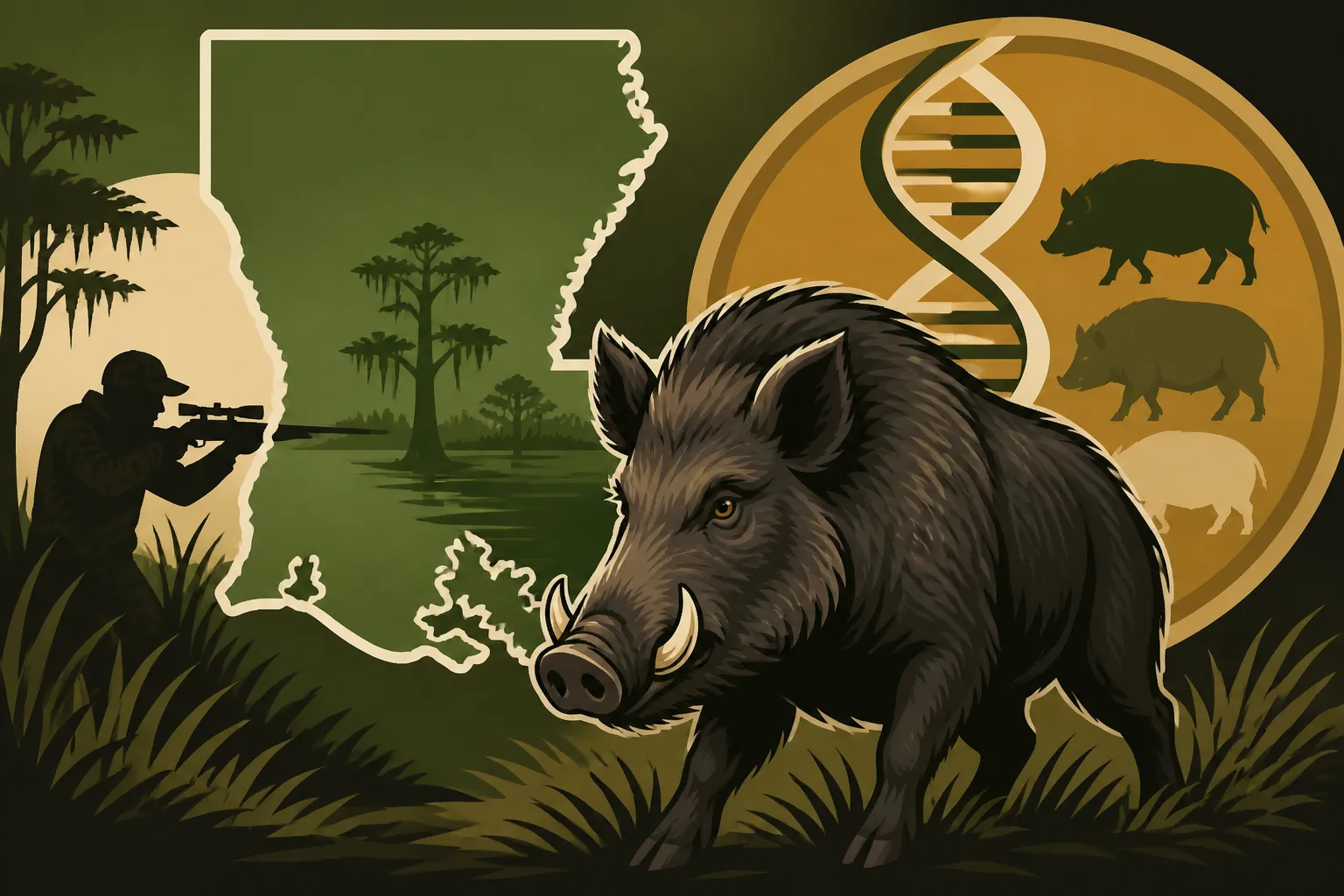
The genetic signature of Louisiana's feral swine is predominantly a mix of two main lineages: Sus scrofa domesticus (domestic pig breeds) and Sus scrofa scrofa (European wild boar). When these two interbreed, their offspring inherit a fascinating blend of traits. From the domestic side, they often get the higher fertility rates and larger litter sizes that make them such efficient breeders. You might also see a wider variety of coat colors than a pure wild boar, including spotted, red, or even sandy hues, depending on the domestic breeds involved in their lineage.
From the European wild boar, they gain incredible hardiness, a more robust and muscular build, and distinctive physical characteristics like coarser, bristly hair, longer snouts, and often prominent tusks (canines that grow continuously). These tusks, particularly on mature boars, are formidable weapons for defense and rooting. This genetic cocktail produces an animal that is tougher, more alert, and better equipped for survival in the wild than either parent stock alone. It's this hybrid vigor that really fuels their success as an invasive species. This genetic adaptability allows them to thrive everywhere from the deep swamps to open pastures, making their eradication a significant challenge. You can even sometimes trace the lineage based on certain physical traits, which is explored in greater detail in articles like Feral Swine Sightings in North Louisiana.
Physical Traits and Adaptations Stemming from Genetics
The mixed genetics of Louisiana's feral hogs manifest in a suite of physical and behavioral adaptations that contribute directly to their survival and spread.
- Physical Appearance: While domestic pigs often come in predictable pinks, whites, or solid blacks, feral hogs exhibit a kaleidoscope of colors due to their diverse genetic heritage. You'll see solid black, brown, red (sometimes called "piney woods rooters"), spotted, or even striped piglets (a trait often seen in pure wild boar that fades with age). Their coats are typically dense and bristly, offering excellent protection against thorns, insects, and harsh weather. They often have longer legs and leaner bodies than their domestic cousins, built for speed and endurance, not just piling on weight.
- Tusks: Both male and female feral hogs can develop tusks, but they are much more pronounced in mature males. These aren't just for show; they're essential tools for digging, defense against predators, and fighting with other hogs during the breeding season. These sharp, upward-curving canines are a direct inheritance from their wild boar ancestors and are a clear indicator of their feral nature.
- Sensory Acuity: Feral hogs possess an exceptional sense of smell, far superior to their eyesight. This genetic advantage allows them to detect food buried deep underground, locate distant water sources, and, most importantly for hunters, detect human presence from a considerable distance. Their hearing is also quite good, and combined with their olfactory prowess, makes them incredibly difficult to sneak up on. These heightened senses are prime survival adaptations passed down through generations of living in the wild.
- Adaptable Diet: Their digestive systems, honed by a mixed diet of forbs, roots, insects, small animals, and crops, are incredibly efficient. Genetically, they are opportunistic omnivores, capable of digesting almost anything, which allows them to exploit a wide range of food sources as seasons change or resources become scarce. This dietary flexibility, underpinned by their genetics, is a critical factor in their ability to colonize diverse environments. This adaptability means hunters have to get creative with tactics, often employing methods like those detailed in Louisiana Feral Hog Trapping Rules.
Here’s a quick comparison of some genetic traits:
| Trait | Domestic Pig (e.g., Yorkshire) | European Wild Boar (Pure) | Louisiana Feral Hog (Hybrid) |
|---|---|---|---|
| Coat Color/Pattern | Pink, white, solid black | Solid dark brown/black | Highly variable (black, red, spotted, striped piglets) |
| Hair Texture | Fine, sparse | Coarse, bristly | Coarse, bristly |
| Tusks (Adult Male) | Absent/Vestigial | Prominent, sharp | Present, often prominent and sharp |
| Snout Length | Shorter, blunt | Longer, tapered | Variable, often longer and robust |
| Body Shape | Round, heavy | Lean, muscular | Lean, muscular, built for speed |
| Litter Size | Large (10-14+) | Moderate (4-8) | Large (6-12+), multiple litters per year |
| Temperament | Docile | Aggressive, wary | Wary, can be aggressive when cornered |
Geographic Spread and Genetic Hotspots Across the State
Feral hogs aren't evenly distributed across Louisiana. Their populations tend to be denser in certain regions, influenced by habitat availability, food sources, and historical patterns of introduction. Understanding these hotspots can inform targeted control efforts.
Basin and Bottomland Concentrations
Some of the highest concentrations of feral hogs in Louisiana are found in our vast river basins and bottomland hardwood forests, particularly the legendary Atchafalaya Basin and the Tensas River Basin. These areas provide everything a hog needs: dense, impenetrable cover for bedding and farrowing (giving birth), abundant water, and a year-round smorgasbord of food sources like acorns, roots, tubers, and small animals. The thick undergrowth, cane brakes, and cypress-tupelo swamps offer perfect refuge from hunting pressure, making it incredibly challenging for hunters to access and control populations effectively.
In these environments, the genetic traits for hardiness and adaptability truly shine. Hogs in the basin often exhibit the more pronounced "wild boar" characteristics due to the selective pressure of living in a truly wild environment. Their resilience in these harsh conditions is a testament to their genetic makeup. If you're looking for where the bulk of the problem lies, these are the areas to focus on. We often see high densities of hogs in these regions, making them key areas to monitor, as detailed in Which Louisiana Parishes Have the Most Hogs.
Farm Country Incursions and Damage Zones
While the basins provide refuge, farm country provides a buffet. As populations swell in the wilder areas, hogs inevitably push into adjacent agricultural lands. Here, they exploit abundant resources like corn, soybean, and rice fields. These farm fields act as massive attractants, drawing hogs out of their dense cover, often under the cloak of darkness.
In these areas, the genetic blend of domestic and wild traits allows them to thrive. They retain the intelligence and wariness of their wild boar ancestors to avoid detection, while their domestic pig genes contribute to their prolific breeding, ensuring that even if some are removed, many more quickly take their place. The damage they cause in these agricultural zones is immediate and severe, leading to significant financial losses for farmers. This movement from wilder areas to cultivated fields is a constant battle for landowners. Hunting them year-round becomes a necessity, as explored in Hunting Louisiana's Year-Round Feral Hogs, but it's a monumental task. When using tools like GoHunt, understanding property boundaries and connecting patches of woods to crop fields can reveal common travel corridors for these animals.
The Management Challenge: How Genetics Inform Control Strategies
Dealing with Louisiana's feral hog problem isn't simple. It requires a multi-faceted approach that acknowledges their genetic advantages and adapts strategies accordingly.
Understanding Adaptability for Effective Control
Because of their strong genetic resilience and rapid breeding cycles, simply hunting hogs recreationally, while enjoyable, rarely puts a significant dent in the overall population. These animals are incredibly adaptable. They learn quickly from hunting pressure, becoming more nocturnal and elusive. Their mixed genetics give them an edge, allowing them to thrive in diverse habitats and exploit various food sources.
Effective control strategies must take this adaptability into account. This means implementing comprehensive, sustained efforts that combine trapping, snaring, and focused shooting, especially thermal-assisted night hunting where legal. Trapping, in particular, leverages their social structure. Targeting entire sounders at once can have a much greater impact than individually hunting hogs. Understanding their genetic predisposition to quickly reproduce also highlights the importance of removing as many females as possible, as they are the engines of population growth. Baiting strategies, such as those described in Building and Freshening a Hog Bait Site, are often employed to draw sounders into a localized area for trapping.
Prevention of Further Genetic Pollution
One of the most critical, yet often overlooked, aspects of feral hog management is preventing further genetic pollution and spread. This means strict enforcement against the illegal transportation and release of hogs. Every time a new hog is released into an area, it potentially introduces new genetic material, increasing the diversity and adaptive capacity of the existing feral population. It also risks introducing diseases.
Education is paramount. Hunters, landowners, and the public need to understand the severe consequences of moving or releasing hogs. Maintaining robust biosecurity measures on farms to prevent domestic escapes is also crucial. The goal isn't just to reduce numbers, but to reduce the source of the problem. Without preventing new introductions and genetic mixing, our efforts to control the existing populations will be a never-ending uphill battle. This is part of the larger regulatory framework that includes Louisiana Feral Hog Regulations which aim to mitigate these risks. While GoHunt primarily focuses on hunting access and mapping, understanding the broader context of genetic pollution helps hunters make more informed decisions about ethical hunting practices and supporting conservation efforts.
Disclaimer
This article is for general informational purposes only and does not constitute professional advice. Laws, prices and regulations vary by location and change over time. Consult a qualified professional for guidance on your specific situation.