How Many Feral Hogs Louisiana Has
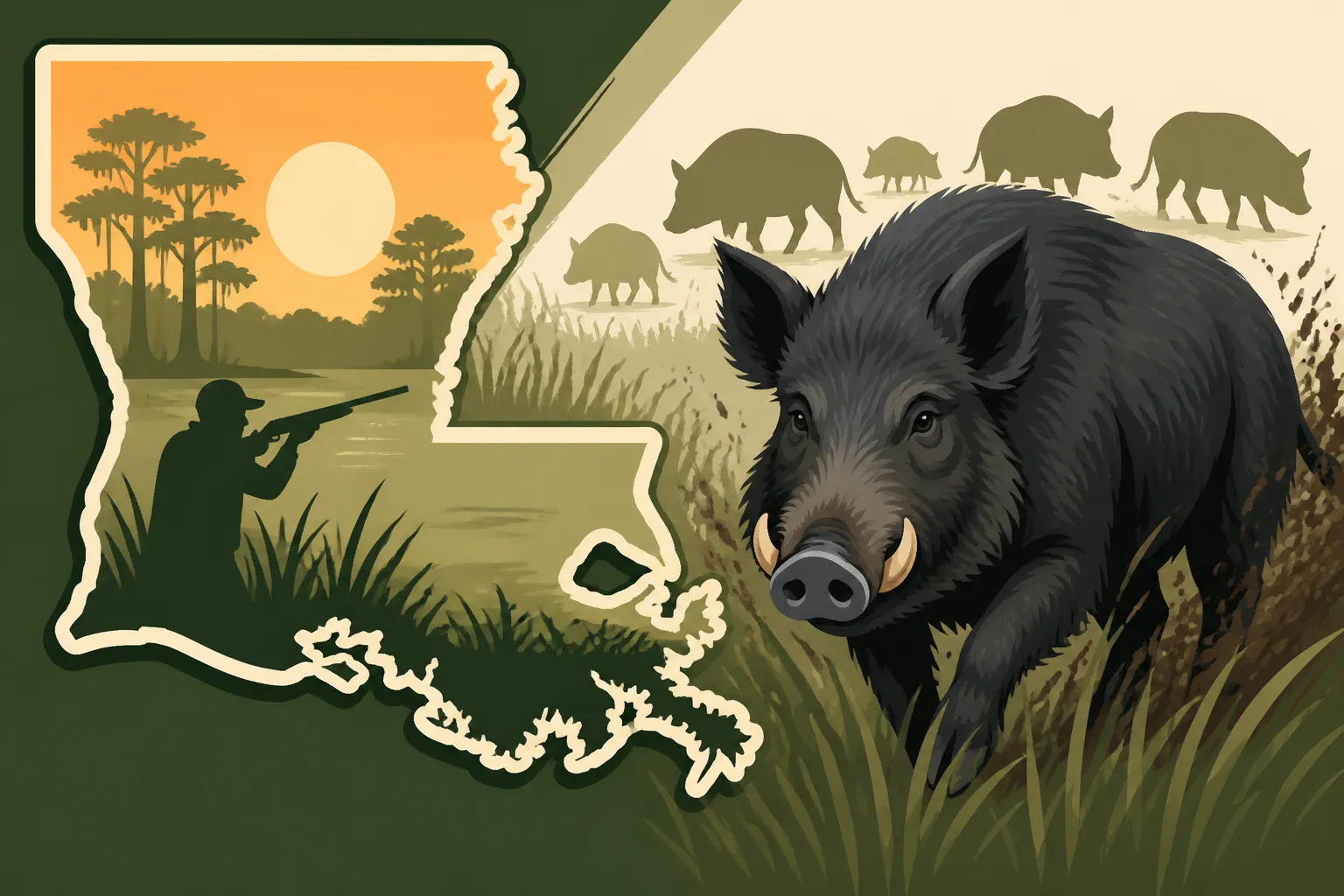
If you've spent any time at all in the Louisiana outdoors, whether hunting, farming, or just enjoying nature, you've likely come face-to-face with the relentless problem of feral hogs. It feels like they're everywhere, doesn't it? The sheer number of these destructive critters can feel overwhelming, and many of us wonder just how many there actually are. This guide will dive into the challenging world of estimating Louisiana's feral hog population, why those numbers are so hard to pin down, and what it all means for our state's ecosystem and our hunting efforts.
The Elusive Numbers Game: Why Counting Hogs is So Hard
Let's be real, trying to get an exact count of feral hogs in Louisiana is like trying to count mosquitoes in a swamp after a heavy rain – it's practically impossible. Unlike species like white-tailed deer or wild turkeys, which have more predictable movement patterns and can be surveyed using various techniques, feral hogs are notoriously elusive. Their behavior makes precise population estimates an ongoing, frustrating challenge for wildlife biologists and state agencies.
One of the biggest hurdles is their secretive nature. Feral hogs are masters of concealment, preferring to live in dense cover found in our swamps, bottomland hardwoods, and thick pine forests. They often move under the canopy of night, especially when pressured, making daytime aerial surveys or spotlight counts incredibly inefficient, if not entirely useless, for a true population assessment. You might scout a promising area, see plenty of sign, and yet never lay eyes on a single hog during daylight hours. This phantom-like existence means any direct observation method significantly underestimates their true numbers.
Then there's the astonishing rate at which they reproduce. A mature sow can start breeding as young as six to eight months old, and she can typically have one to two litters of piglets per year, sometimes even three under ideal conditions. Each litter can range from four to twelve piglets. Just do the math on that! A small group of hogs can explode into a massive problem in an incredibly short amount of time. Any census taken today would be outdated tomorrow, with new piglets constantly being born and contributing to the ever-growing population. This biological reality means that even if you could get a snapshot, it wouldn't accurately reflect the population for long.
Because of these difficulties, most "estimates" of feral hog populations are often indirect, relying on metrics like harvest numbers, reports of agricultural damage, or localized trapping efforts. While these indicators certainly tell us that the numbers are high and growing, they don't give us that satisfying, concrete figure we often crave. It's a constant battle, and the numbers are always on the rise, making it feel like we're always playing catch-up.
Factors Fueling Louisiana's Feral Hog Explosion
So, why are these hogs such a persistent and growing problem across Louisiana? It boils down to a perfect storm of biological advantages and environmental factors that allow them to thrive and multiply with alarming efficiency. Understanding these drivers helps us grasp the sheer scale of the population issue.
First and foremost is their incredible reproductive capacity, which we touched on briefly. This isn't just about having one or two litters; it's about the speed and volume. Sows reach sexual maturity at a young age, and gestation periods are relatively short, around 115 days. This means a sow can breed again shortly after weaning a litter. In optimal conditions, a single sow can be responsible for dozens of offspring in a year, or even more over her lifetime. This is a primary reason Why Basin Hogs Reproduce So Fast is such a critical consideration when trying to manage their numbers. Their biology is simply built for rapid expansion, far outstripping the reproductive rates of our native game species.
Louisiana's diverse and abundant habitat also plays a huge role. From the dense, swampy bottoms of the Atchafalaya Basin to the vast agricultural fields in the north, and the mixed pine and hardwood forests in between, feral hogs find everything they need to survive and flourish. They're not picky eaters either. They'll root for acorns, tubers, and roots, graze on green vegetation, feast on agricultural crops like corn, soybeans, and rice, and even prey on small animals, eggs of ground-nesting birds, and fawns. This opportunistic diet means they are rarely limited by food availability, unlike more specialized species.
Another significant factor is the near-complete lack of natural predators for adult hogs. While coyotes or alligators might occasionally take a small piglet, fully grown feral hogs face very few threats beyond human hunters. This absence of top-down population control means that once a population is established, it can grow virtually unchecked, reaching densities that would be unsustainable for other species. Without natural checks and balances, the population continues to swell, dominating food sources and habitats.
Finally, their intelligence and adaptability are key. Feral hogs are incredibly smart animals. They learn quickly to avoid traps, recognize hunting pressure, and adapt their movements and feeding patterns to evade detection. If you hunt an area hard, they might go nocturnal or move to an adjacent property. They can quickly colonize new areas, traversing surprising distances, and once they're there, they quickly establish a breeding population. This resilience makes them incredibly difficult to manage and eradicate, contributing to their ever-increasing numbers across the state.
The Widespread Impact of Louisiana's Swelling Hog Population
The sheer number of feral hogs rampaging across Louisiana isn't just an abstract biological problem; it translates into very real, tangible, and often devastating impacts on our state's ecosystems, economy, and even public health. When a population spirals out of control, the repercussions are felt far and wide.
Ecologically, the damage caused by large hog populations is profound. Their constant rooting behavior, a tell-tale sign of their presence, destroys native plant communities and disrupts soil structure. They compete directly with native wildlife, especially white-tailed deer, for vital food resources like acorns, which are a crucial food source in many parts of the state. This competition can negatively impact deer health and population dynamics. Hogs also have a nasty habit of preying on the eggs and young of ground-nesting birds, including turkeys, and can even target fawns. This puts additional pressure on already fragile wildlife populations, making it harder for them to thrive. The sight of a once-lush forest floor torn up by hog rooting is a stark reminder of their destructive presence.
For Louisiana's agricultural community, feral hogs are an absolute nightmare. The financial losses due to Crop Damage Hogs Cause in Louisiana run into the millions of dollars annually. They can decimate entire fields of corn, soybeans, sugarcane, and other valuable crops in a single night. This isn't just about eating the crops; their rooting and wallowing can make fields impossible to harvest, damaging equipment and infrastructure in the process. Farmers are constantly fighting an uphill battle, pouring resources into fencing and trapping, only to see their livelihoods threatened by these destructive animals. It’s a frustrating reality for anyone trying to make a living off the land here.
Beyond the visible destruction, feral hogs are also significant vectors for disease. They can carry and transmit a host of serious diseases, including brucellosis, leptospirosis, and pseudorabies. While some of these primarily affect other livestock, there's always a risk of transmission to domestic animals, and in some cases, to humans. This silent threat adds another layer of concern to their burgeoning numbers, impacting cattle operations and even the health of family pets that might come into contact with wild hogs or contaminated soil.
Furthermore, their activities impact water quality. When hogs wallow and root near streams, bayous, and ponds, they increase erosion and sedimentation, leading to cloudier water. Their waste can also introduce bacteria into waterways, posing risks to aquatic ecosystems and potentially impacting human recreational uses of these water bodies. The sheer volume of hogs means these localized impacts combine to create a much larger problem across the landscape.
Strategies for Managing the Relentless Numbers
Given the immense challenges of feral hog population estimates and their prolific nature, the goal in Louisiana isn't really eradication – that's a near-impossible dream – but rather sustained, aggressive population management. Hunters are on the front lines of this effort, playing a crucial role in mitigating the impacts of these destructive animals.
One of the most important aspects of hog management in Louisiana is the year-round, open season for feral hogs on private land. The state has wisely recognized the need for continuous pressure, understanding that any break in hunting or trapping effort would quickly be exploited by their rapid reproductive cycle. This is why Louisiana Feral Hog Regulations are often so liberal, encouraging hunters to take as many as possible without restrictions on sex or size. On many public lands, regulations also permit year-round hunting, though checking specific WMA rules is always essential. For those hitting public lands, understanding terrain and potential travel corridors is key, and tools like GoHunt's mapping features can certainly help you identify promising areas for hog activity, especially when overlaid with public land boundaries.
When it comes to effective control methods, a multi-pronged approach is always best. While hunting with firearms or bows certainly helps, trapping is often considered the most efficient way to remove large numbers of hogs from an area quickly. Large corral traps, set with consistent baiting, can capture entire sounders. As discussed in Trapping Louisiana Feral Hogs, patience and strategic placement are key to success. Night hunting with lights, as detailed in Night Hunting Hogs With Lights on Private Land, is another highly effective method on private land, particularly since hogs are often most active after dark. And for those who enjoy the chase, using dogs to locate and bay hogs, a method explored in Running Dogs on Louisiana Feral Hogs, is a traditional and effective way to remove them from thick cover.
The key to making a dent in these numbers is consistent and sustained effort. No single hunter, farmer, or method will solve the problem alone. It requires a community-wide commitment to continuous pressure. If you're a hunter, every hog you take is a win for native wildlife and agriculture. It's not about trophy hunting with hogs; it's about population control. Make it a point to take every opportunity to harvest these animals. Using mapping platforms, such as those offered by GoHunt, can give you a crucial edge in identifying potential feeding zones, bedding areas, and travel routes, even if you’re focusing on public land.
Hunters can also contribute by understanding hog behavior and applying smart tactics. Learning how to set up effective bait sites, as covered in Building and Freshening a Hog Bait Site, can concentrate hogs for removal. Scouting areas and knowing Which Louisiana Parishes Have the Most Hogs can help you focus your efforts where they'll have the biggest impact. The more we collectively engage in these management strategies, the better we can mitigate the pervasive impacts of Louisiana's booming feral hog population.
Feral Hog Control Strategies in Louisiana
| Strategy | Description | Pros | Cons |
|---|---|---|---|
| Hunting (Stalk/Still) | Pursuing hogs on foot, often during daylight, targeting individuals or small groups. | Accessible to most hunters, provides sport. | Limited impact on overall population, hogs become wary. |
| Stand Hunting | Hunting from a fixed position (stand/blind) over bait or travel routes. | Can be effective if hogs are patterned, less physically demanding. | Hogs are smart, may avoid stands/bait, especially with pressure. |
| Trapping | Using large corral traps to capture entire sounders (groups of hogs). | Most effective for removing large numbers, can clear an area. | Requires significant investment, time, and consistent baiting. |
| Night Hunting | Using artificial lights (legal on private land) to hunt nocturnal hogs. | Highly effective due to hogs' nocturnal habits. | Requires specialized equipment (lights, thermal), specific regulations apply. |
| Hunting with Dogs | Using trained dogs to locate, pursue, and bay hogs for harvest. | Effective in dense cover, provides high success rates. | Can be controversial, requires well-trained dogs, physically demanding. |
| Aerial Control | Shooting hogs from helicopters (often by professionals). | Extremely effective for rapid, large-scale reduction. | Expensive, requires specialized permits and trained personnel. |
Disclaimer
This article is for general informational purposes only and does not constitute professional advice. Laws, prices and regulations vary by location and change over time. Consult a qualified professional for guidance on your specific situation.