Louisiana Deer Vehicle Collisions
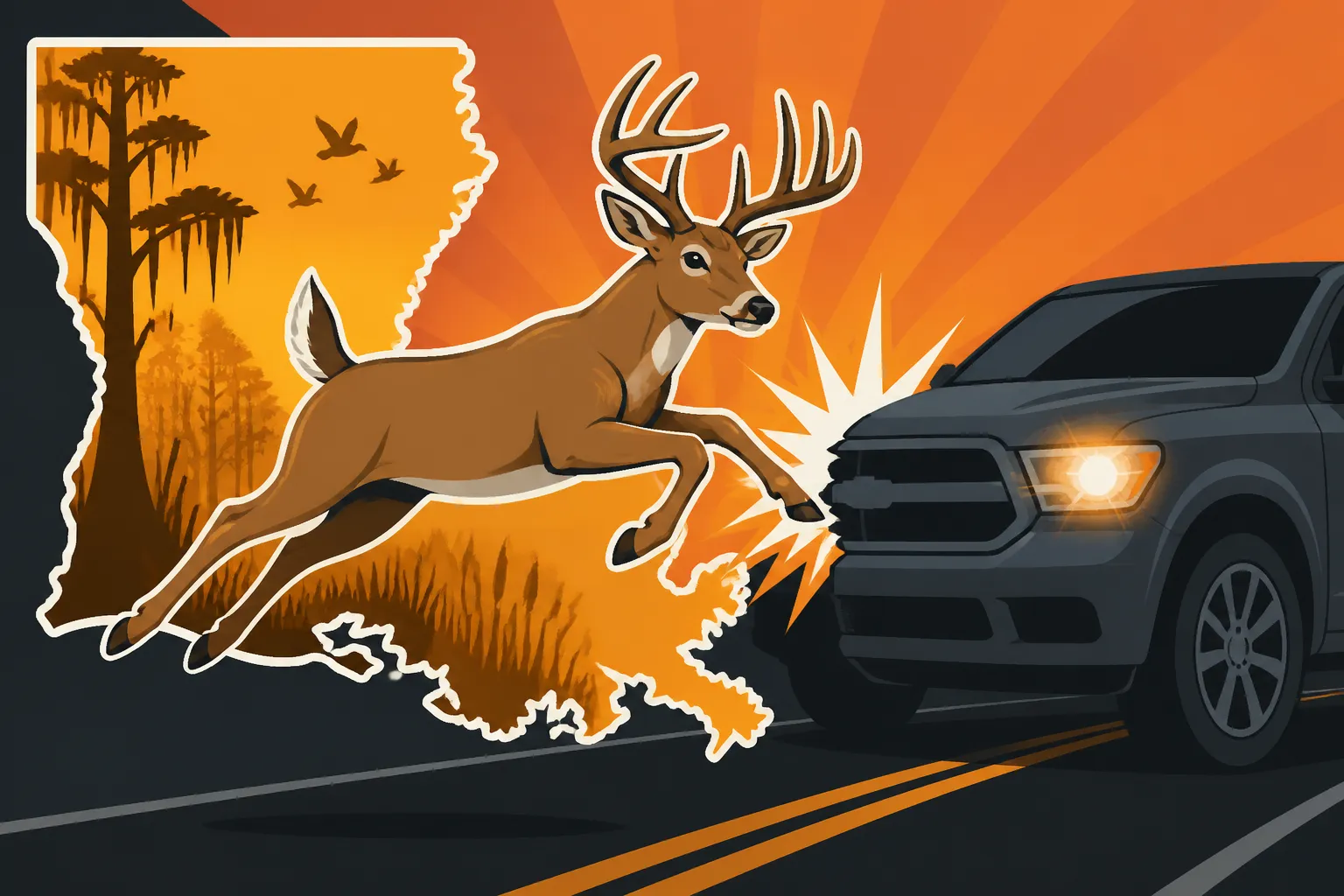
It’s a chilling thought for any driver, especially here in Louisiana: rounding a curve or cresting a hill only to see a deer suddenly dart into your path. Deer vehicle collisions are a very real, often terrifying experience that can leave you shaken, your vehicle damaged, and sometimes, tragically, result in serious injury or worse. This comprehensive guide will help you understand why these incidents are so common in our state, how you can minimize your risk, and what critical steps to take if you ever find yourself involved in a deer collision.
Understanding Why Deer Collisions Happen in Louisiana
Louisiana's diverse landscape, from our dense pine forests to sprawling agricultural fields and winding bayous, provides abundant habitat for white-tailed deer. While this is fantastic news for hunters, it also means our roads frequently intersect with their daily routines, especially as human populations expand and development pushes further into traditional deer territories. It's a challenging balance, and one that often leads to unfortunate encounters on the highway.
Peak Seasons and Times for Deer Activity
Deer aren't just out and about randomly; their movements are heavily influenced by biological urges and environmental factors. Knowing these patterns can be your first line of defense.
The Rut and Breeding Season
Perhaps the most significant factor driving increased deer activity near roads is the breeding season, often called the rut. In many parts of Louisiana, particularly in the early-start areas like Areas 1, 2, 4, 7, 8, and 10, the rut can peak in late October through November. However, it can extend much later into December and even January in the long-window areas like Areas 5, 6, and 9. During this time, bucks are far less cautious, focused intensely on finding does, and often travel great distances. Does, in turn, are also more active, trying to avoid aggressive bucks or moving to find new territories. This heightened activity, especially at dawn and dusk, puts them directly in the path of commuters. Understanding When the Louisiana Rut Peaks by Area can help you identify these high-risk periods in your specific region.
Seasonal Food Sources and Habitat Shifts
Beyond the rut, deer movements are dictated by their search for food and cover. In spring and summer, they might be drawn to fresh green growth along ditches and roadsides. As fall approaches, they shift their focus to acorns and other mast crops in the hardwoods. If a particular area has a poor acorn year, deer might travel further than usual, crossing more roads in search of sustenance. Heavy hunting pressure, particularly on opening weekend or on heavily used public lands, can also push deer out of their typical cover and into less familiar areas, sometimes closer to roads. Knowing the seasonal availability of Late-Season Food Sources for Louisiana Whitetails can give you an edge in predicting their movements, even if you're just driving.
Where Deer and Vehicles Most Often Meet
It’s not just when but also where these collisions tend to happen. Certain types of terrain and road features are magnets for deer movement.
Wooded Edges and Agricultural Fields
Think about those stretches of road where dense woods suddenly give way to open fields—these are prime deer habitat and crossing points. Deer use the cover of the woods for safety and bedding, then venture out into fields to feed. Roadways that cut through these transitions are inherently dangerous. Similarly, roads bordering large agricultural operations, whether it's sugarcane, corn, or soybean fields, often see deer moving between these food sources and nearby cover. Deer use fencerows, drainages, and even powerline cuts as travel corridors, and if a road bisects one of these, you’re in a high-risk zone. Even in areas like Kisatchie National Forest, roads often parallel the natural ridge lines and bottomland, which deer regularly traverse. Knowing how to read Reading a Ridge for Central Louisiana Deer for hunting can actually inform your defensive driving strategy.
Curves, Hills, and Blind Spots
Any driving situation that reduces your visibility is a potential deer hazard. Blind curves, the crest of a hill, or areas with thick roadside vegetation all prevent you from seeing a deer until it's too late. Louisiana's topography might not have towering mountains, but our rolling hills, especially in the northern and central parishes, and the dense, swampy foliage in the south, create plenty of natural blind spots. Deer don't look both ways before crossing, and if they're startled, their reaction is often to bolt directly into the road. This is why always driving defensively, especially in rural or semi-rural areas, is paramount.
Mitigating Your Risk on Louisiana Roads
While you can't control wildlife, you can absolutely control your driving habits and awareness. Taking proactive steps can significantly reduce your chances of a devastating encounter.
Defensive Driving Techniques
Good driving habits are your best defense against unexpected deer encounters. It's not about being paranoid, it's about being prepared.
Scan the Road and Roadsides Constantly
Don't just look directly in front of your vehicle. Actively scan the ditches, tree lines, and open fields to both sides of the road. Deer often travel in groups, so if you see one, assume there are more nearby. Their eyes might reflect your headlights, giving you an early warning. Be especially vigilant during those low-light hours of dawn and dusk, and extend your scanning to after dark, when their nocturnal movements increase. In areas known for high deer populations, like those near the Tensas River Basin or Kisatchie National Forest Hunting, this constant scanning becomes even more critical.
Control Your Speed and Be Ready to React
Excessive speed significantly reduces your reaction time and the distance needed to stop. Driving at or below the posted speed limit, especially in areas with known deer activity, gives you precious extra seconds to brake or swerve safely. If you see a deer, hit the brakes firmly but avoid swerving violently if possible. Swerving can cause you to lose control, hit other vehicles, or strike a tree, often leading to more severe injuries than a direct deer impact. Sometimes, a controlled brake is the safest option. Knowing where deer are most prevalent can be aided by tools like GoHunt, which can help visualize game movement patterns.
Utilizing Vehicle and Environmental Aids
Modern vehicles and even basic knowledge of your surroundings can offer additional layers of protection.
High Beams and Horn
When safe and legal to do so (i.e., no oncoming traffic), use your high beams at night to illuminate more of the road and its surroundings. This can give you a better chance of spotting deer further away. If you see deer near the road, a quick, firm blast of your horn might startle them into freezing or running away from the road, rather than into it. Don't rely on it entirely, as some deer may react unpredictably, but it's another tool in your arsenal.
Understanding Deer Crossing Signs
Those yellow deer crossing signs aren't just decorative; they're placed in areas with historically high deer activity. Take them seriously. These signs are often the result of real-world data showing where deer-vehicle collisions are most frequent. When you see one, immediately reduce your speed and increase your vigilance. Treat it as a warning that deer could appear at any moment. Your diligence during these times can make all the difference, and understanding local data, sometimes available through apps like GoHunt, can further reinforce where these hotspots are.
What to Do After a Deer Collision
Despite your best efforts, a deer collision can still happen. Knowing what steps to take immediately afterward can protect you, other drivers, and ensure you comply with legal and insurance requirements.
Prioritizing Safety and Assessment
Your safety and the safety of others should be your absolute first concern. The moments immediately following an impact are chaotic and can be dangerous.
Pull Over Safely and Turn on Hazards
If you hit a deer, try to remain calm. Steer your vehicle to a safe location off the roadway, if possible, and turn on your hazard lights. This protects you from further collisions and warns other drivers of the incident. Check yourself and any passengers for injuries first. Even if you feel fine, adrenaline can mask pain, so a thorough check is important. Only exit your vehicle if it's safe to do so, being mindful of traffic and your surroundings.
Assess Vehicle Damage and the Deer
Once safe, take a moment to assess the damage to your vehicle. Note the extent of the impact and any leaking fluids. Do not approach an injured deer. A wounded animal, even one that appears docile, can be unpredictable and dangerous. If the deer is still alive and suffering, or if it's blocking the roadway, contact local law enforcement or the Louisiana Department of Wildlife and Fisheries (LDWF). They can dispatch an officer to handle the situation appropriately. Never attempt to move a deceased deer from the road by yourself if it's large or if traffic conditions make it unsafe.
Legal and Insurance Steps
There are specific protocols you should follow after a deer collision, especially regarding reporting and insurance claims.
Contact Law Enforcement
Even if there are no apparent human injuries, it's always wise to contact local law enforcement. They can document the incident, which can be invaluable for insurance purposes. Depending on the extent of damage or if the deer is obstructing the road, they will dispatch an officer to the scene. The officer can also assist with an injured animal or help coordinate removal of a deceased deer. This formal report makes the insurance claim process much smoother down the line. Keep their report number handy.
Document the Scene and Notify Your Insurance Company
Take photographs of your vehicle's damage, the deer (if safely possible), and the accident scene. Capture different angles and close-ups. This visual evidence will support your insurance claim. Gather contact information from any witnesses. As soon as you are able, notify your insurance company about the collision. Most comprehensive auto insurance policies cover damage from hitting an animal, but it's essential to understand your specific coverage and deductible. Be honest and thorough in your reporting to them.
The Broader Impact and Prevention Efforts
Deer vehicle collisions aren't just about individual incidents; they represent a larger ecological and societal challenge. Understanding the bigger picture helps foster community-level solutions.
Ecological and Economic Consequences
Beyond the immediate damage and potential injuries, deer collisions have significant ripple effects on both wildlife populations and our economy.
Deer Population Health and Management
While a single collision won't decimate the Louisiana Deer Herd Size, the cumulative effect of thousands of such incidents each year can impact local populations. Deer management efforts by the LDWF often take into account factors like road mortality when setting harvest quotas and season dates, like those for Louisiana Deer Hunting Area by Area. When populations are too high in certain areas, collisions increase, prompting wildlife agencies to consider strategies like extended either-sex harvest opportunities to help thin herds. Tools that provide insights into deer density, such as GoHunt, can indirectly help agencies and landowners understand these population dynamics.
Cost to Motorists and the State
The financial toll of deer collisions is staggering. It includes vehicle repair costs, increased insurance premiums, medical expenses for injuries, and lost work time. For the state, there are costs associated with law enforcement response, carcass removal, and public awareness campaigns. While specific figures are difficult to pin down, it's understood that deer collisions represent a multi-million dollar problem annually for Louisiana residents and insurance providers.
Community and Wildlife Coexistence Strategies
Finding ways for humans and wildlife to coexist safely is crucial for reducing future incidents. This involves both infrastructure and public awareness.
Roadside Habitat Management
One approach to reducing collisions is managing vegetation along roadways. Sometimes, clearing brush and tall grasses can improve visibility for drivers, making it easier to spot deer before they enter the road. However, it's a delicate balance; too much clearing can eliminate valuable habitat. Thoughtful landscaping that deters deer from congregating near roads can also play a role. Understanding deer habitat preferences, which can be explored with mapping tools like GoHunt, can inform these management decisions.
Public Awareness and Education
Education remains a powerful tool. Campaigns that remind drivers about peak deer activity times, the importance of defensive driving, and what to do after a collision are vital. Many local parishes and the LDWF regularly share information about deer movements, especially during the rut. By staying informed and sharing this knowledge, we can collectively make our roads safer for both drivers and our beloved Louisiana whitetails. Even hunters, who often have a deep understanding of deer, can play a role by sharing their knowledge of deer behavior with non-hunting friends and family who drive these same roads.
Louisiana Deer Collision Summary
| Factor | Description | Driver Action |
|---|---|---|
| Peak Seasons | Fall (October-January) due to the rut; spring/summer due to new growth. | Be extra vigilant during these months, especially at dawn/dusk. |
| Peak Times | Dawn (approx. 5-8 AM) and Dusk (approx. 5-8 PM). | Increase awareness during commute times. Use high beams when safe. |
| High-Risk Areas | Transitions between woods/fields, dense roadside vegetation, blind curves, crests of hills. | Reduce speed, actively scan roadsides. |
| Deer Behavior | Unpredictable; often travel in groups; focused during the rut. | If you see one, assume more are present. Avoid sudden swerving. |
| After Collision | Prioritize safety, pull over, check for injuries, call law enforcement, document damage, contact insurance. | Stay calm, don't approach injured deer, follow legal and insurance protocols. |
Deer vehicle collisions are an unfortunate reality of sharing our beautiful Louisiana landscape with its abundant wildlife. By understanding the factors that contribute to these incidents, practicing vigilant and defensive driving, and knowing the proper steps to take if an accident occurs, we can all contribute to making our roads safer for everyone. Stay alert, stay safe, and enjoy the rich outdoor heritage our state offers.
Disclaimer
This article is for general informational purposes only and does not constitute professional advice. Laws, prices and regulations vary by location and change over time. Consult a qualified professional for guidance on your specific situation.