Reading a Basin Chute for Deer Movement
Basin chutes in the Atchafalaya Basin connect larger bodies of water to help deer travel efficiently through dense swamps.
Close the distance.
Archery, muzzleloader, and firearm techniques — calling, stand placement, still-hunting, spot-and-stalk, and the weapon rules that change at the state line.
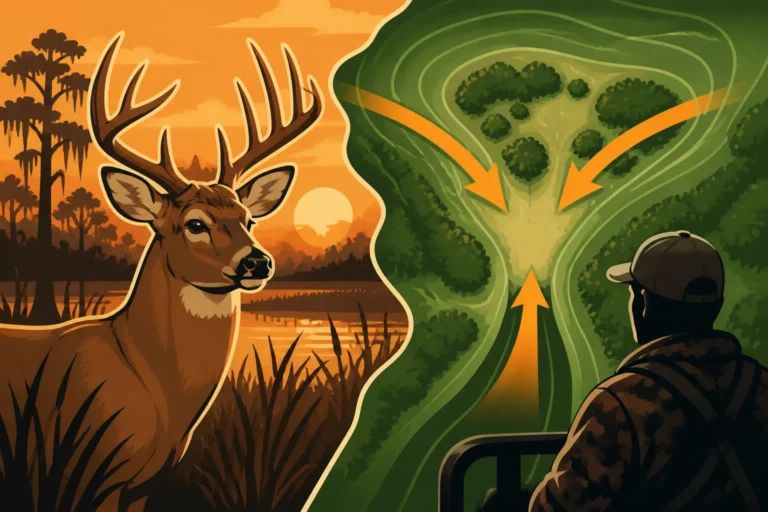
Basin chutes in the Atchafalaya Basin connect larger bodies of water to help deer travel efficiently through dense swamps.
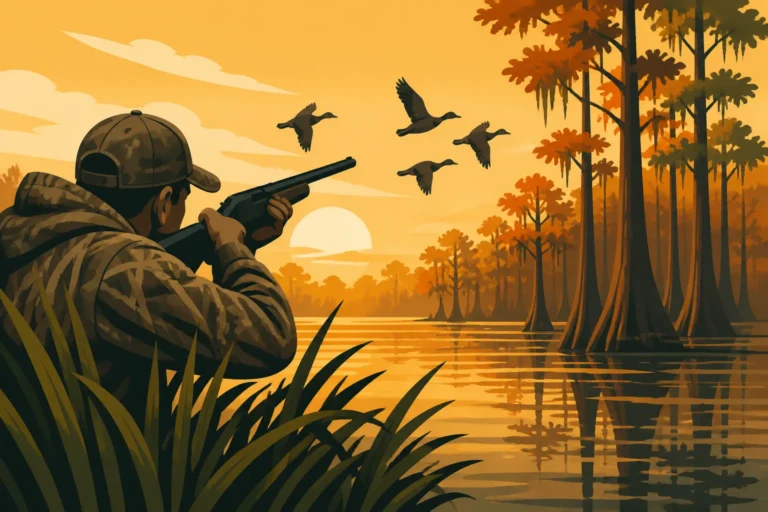
Louisiana cypress tupelo swamp edges provide prime habitat for hunting deer, hogs, and waterfowl near shifting water levels.
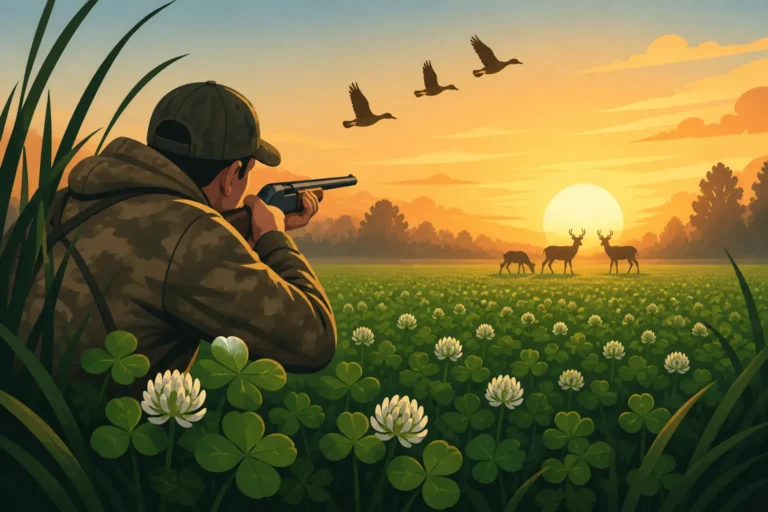
Morning clover plot hunting in Louisiana requires specific morning approach strategies to prevent deer from detecting human scent.
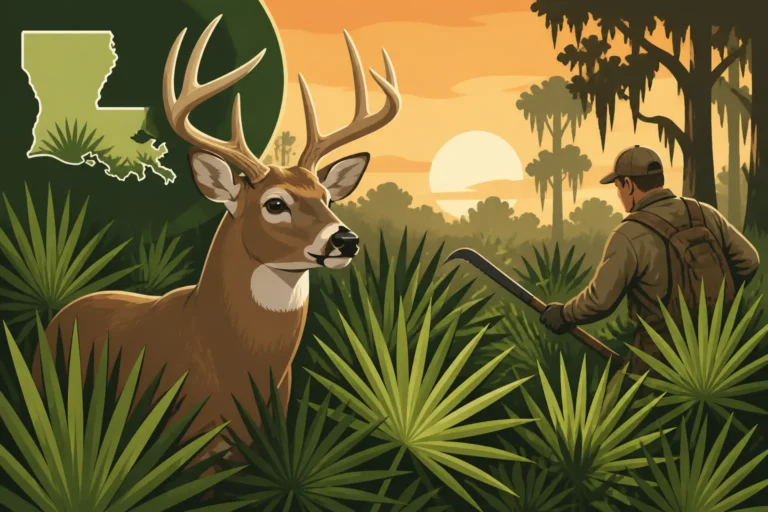
Louisiana palmetto thickets provide whitetail deer sanctuary and forage, requiring strategic scouting and technology for successful hunting.
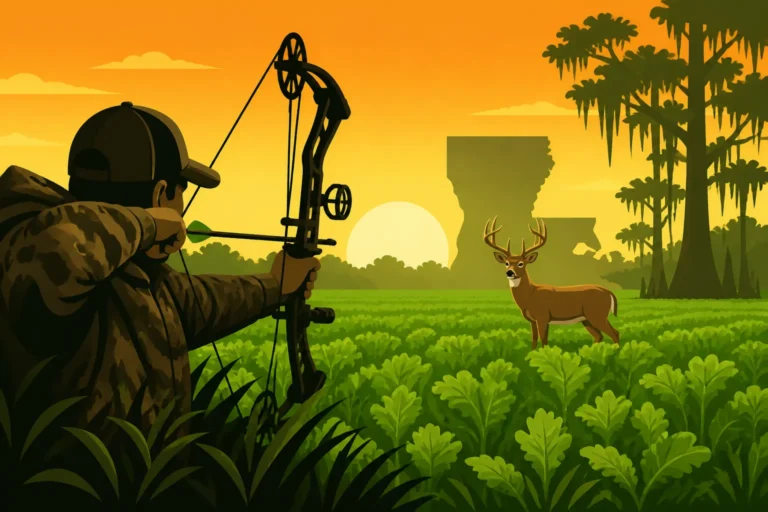
Practical strategies for hunting green fields in Louisiana help daylight mature bucks during dawn, dusk, and cold fronts.
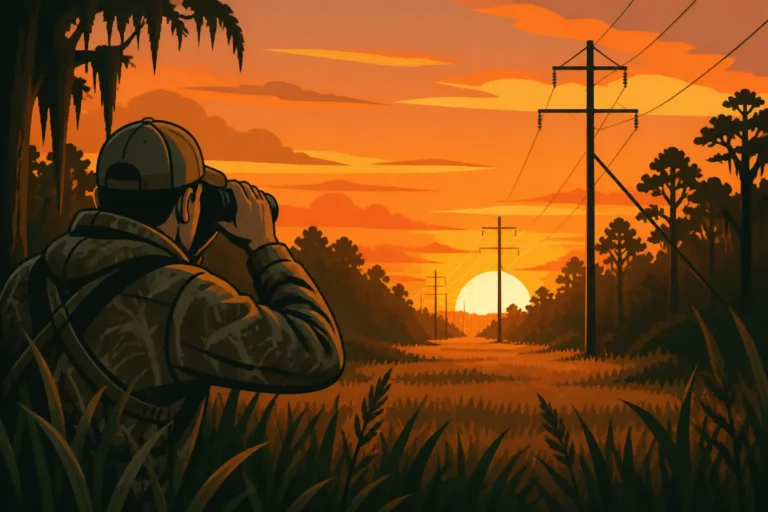
Glassing powerline cuts in Louisiana during last light helps deer hunters spot animals using open travel corridors and edge habitats.
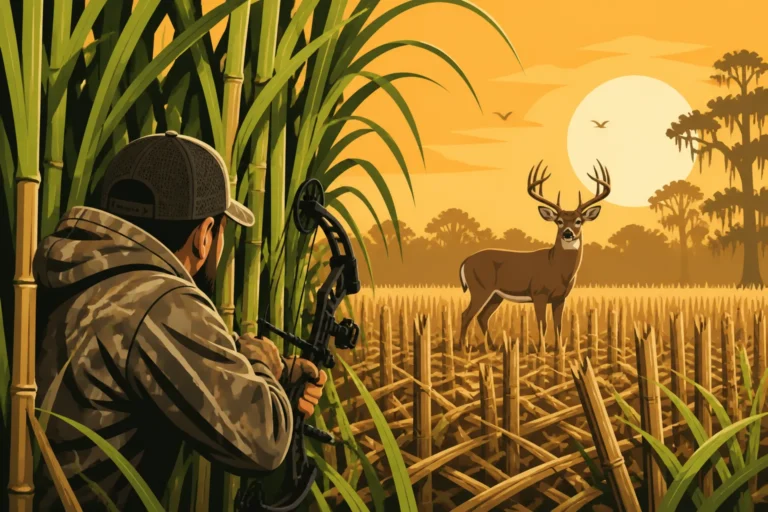
Louisiana sugarcane hunting tactics, deer behavior patterns, and weather effects explain how to find whitetails in dense fields.
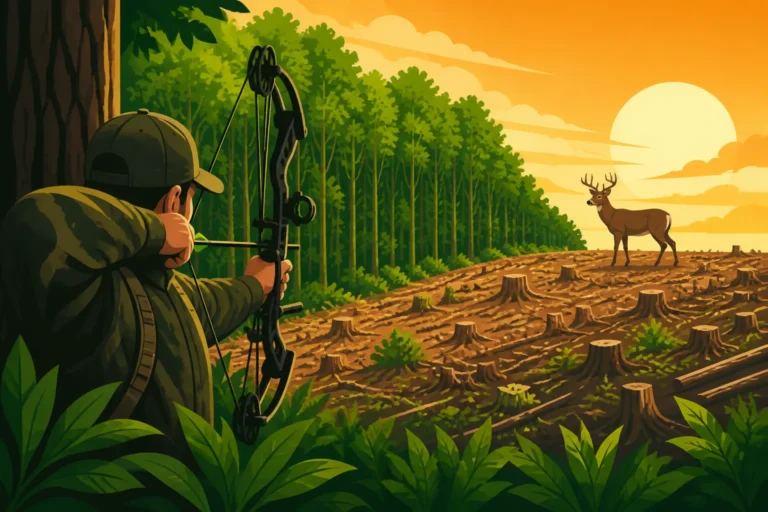
Clear-cut regrowth edges in Louisiana provide deer with food and cover, creating high-traffic intersections for hunters.
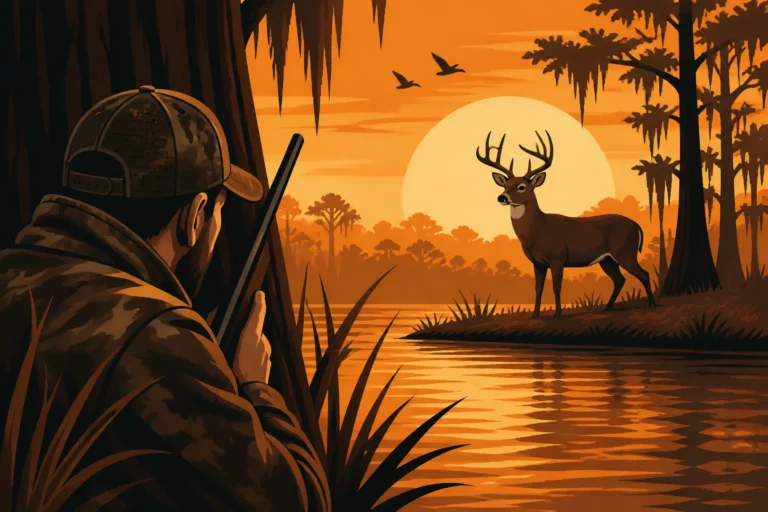
Louisiana bayou banks provide deer with thick thermal cover, water, and food sources, helping hunters find late-season bucks.
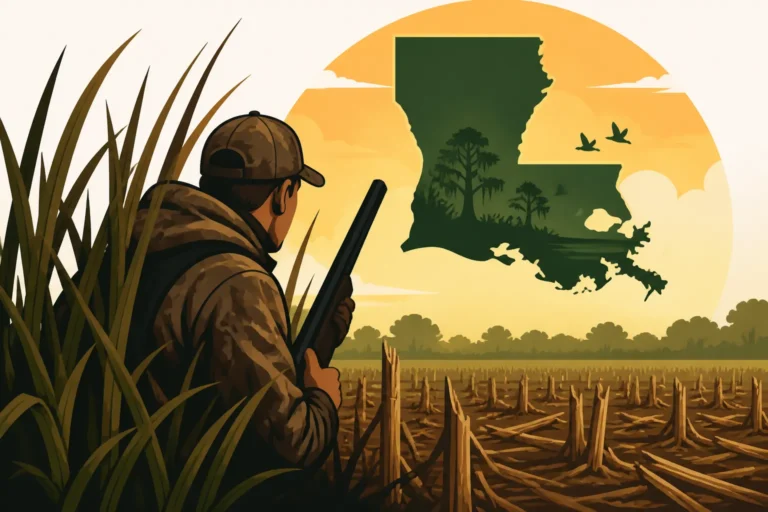
Louisiana deer hunting strategies for finding mature bucks hiding in leftover standing corn, soybeans, and sugarcane patches.