Working Palmetto Thickets for Deer
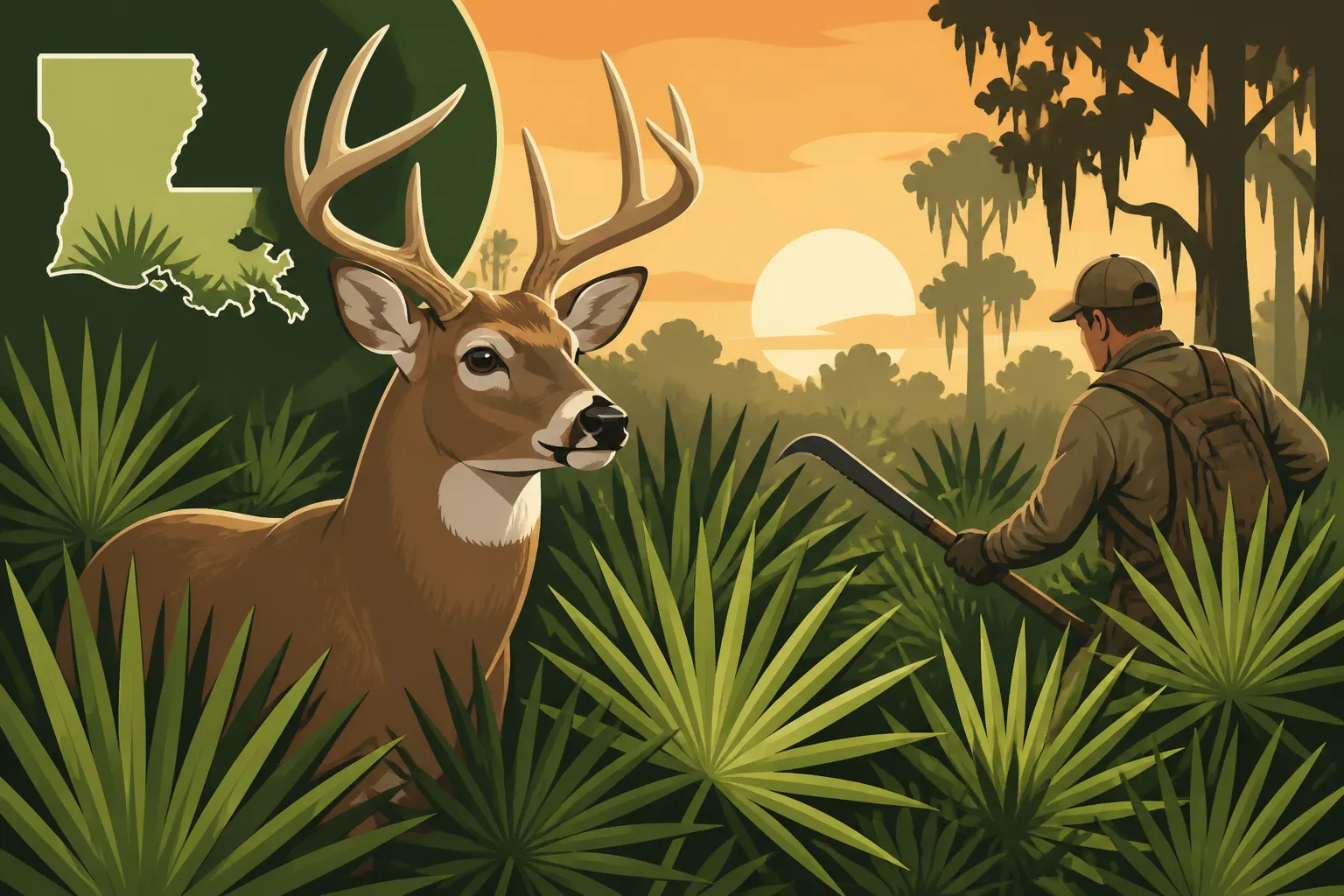
Anyone who's spent time chasing whitetails in Louisiana knows the frustration of deer seemingly vanishing into thin air, especially when you're hunting those thick, nasty palmetto patches. It's easy to walk right past prime deer habitat because those dense, green carpets of saw palmetto look impenetrable and miserable to traverse. This guide is all about demystifying those seemingly impassable thickets, helping you understand why deer love them, and giving you actionable strategies to effectively hunt deer that call these dense covers home.
Understanding Why Deer Love Palmetto Thickets
Louisiana's landscape is incredibly diverse, and while we often think of open pine forests or deep cypress swamps, those sprawling palmetto thickets play a huge role in a deer's life. They might seem like nothing but a thorny nuisance to us, but for a whitetail, they are five-star accommodations. Ignoring these areas means you're overlooking a significant portion of where deer live, feed, and feel safe.
Palmetto Thickets as Sanctuary and Security
Deer are masters of survival, and their primary goal is to avoid predators, including us hunters. Palmetto thickets, with their dense, interwoven fronds and often thorny bases, provide an almost impenetrable fortress. Think about it: when a deer feels pressured, where does it go? Not usually out into the open, but into the thickest, nastiest cover it can find. The palmettos offer exactly that – a visual barrier and a physical deterrent that keeps them hidden from prying eyes and makes it incredibly difficult for hunters to push through quietly. This security is especially crucial on heavily pressured public lands or during the peak of firearm season when human activity is at its highest. A buck knows he can bed down in the middle of a palmetto swamp and often be undisturbed, listening to the commotion around him without being seen.
Foraging and Browse Opportunities Within the Thicket
Beyond just security, palmetto thickets often contain a surprising amount of forage that deer find appealing. While the palmetto itself isn't a primary food source, the microclimate and soil conditions within these thickets can foster the growth of other browse. Deer are opportunistic eaters, and they will nibble on the tender new growth of various plants that manage to thrive beneath or alongside the palmettos. During certain times of the year, especially late season when other food sources might be depleted, those seemingly barren thickets can still offer a critical caloric boost. Furthermore, the thick overhead canopy can offer shade during our often-warm early season hunts, and the cooler, moister ground keeps tender plants growing longer. Bucks might not be gorging themselves on palmetto fronds, but they're certainly finding enough to keep them fed and hydrated within these hideaways.
Effective Scouting for Deer in Palmetto Thickets
Scouting is paramount when you're considering hunting palmetto thickets. You can't just blindly walk in and expect to stumble upon a deer. These areas demand a more strategic and often more patient approach to uncovering their secrets. It's about looking for subtle clues and understanding how deer navigate what seems to us like a solid wall of vegetation.
Using Technology for Pre-Season Insight
Before you even step foot in the woods, modern technology can be your best friend. Applications like GoHunt, with their detailed satellite imagery and topographic maps, allow you to identify large palmetto thickets and analyze their boundaries. Look for areas where the thickets meet more open timber, agricultural fields, or water sources. These edges are often prime travel corridors. You might also spot subtle deer trails or drainage patterns on aerial photos that suggest pathways through the denser sections. Before season, it's wise to spend some time digitally scouting, marking potential entry and exit points, and identifying any subtle breaks in the canopy that might indicate a slightly less dense area or an old logging road. This gives you a game plan and helps you avoid wasting precious hunting time getting disoriented in the impenetrable green. For more detailed insights, checking out resources on Scouting Louisiana Public Land Before Season can really hone your pre-hunt strategy.
Interpreting Deer Sign Within the Dense Cover
Once you're boots-on-the-ground, finding actual deer sign in palmettos can be challenging but not impossible. Deer trails are key. They will create tunnels and pathways through the densest sections, often just barely wide enough for their bodies. Look for these "tunnels" leading into and out of the thickets. You'll likely find rubs and scrapes along the edges of these trails, especially during the rut. Pay close attention to droppings and tracks. Fresh sign means deer are actively using the area. Don't be afraid to crawl on your hands and knees if you find a promising tunnel leading deeper into the palmettos; sometimes, the best sign is found just a few yards into the seemingly impenetrable cover. Remember that deer will often use the thickest part of the palmetto patch as a bedding area, so look for slightly matted-down vegetation or concentrations of droppings in the deepest, most secure spots. Understanding how to interpret these subtle cues, even in difficult terrain, is crucial, similar to Finding Sign in Big Kisatchie Timber.
Hunting Strategies for Palmetto Thickets
Once you've done your homework and identified promising palmetto thickets, it's time to think about how you'll actually hunt them. This isn't your typical open woods hunting; it requires patience, careful movement, and sometimes a different approach to stand placement.
Stand Placement and Access Routes
Placing a stand effectively around a palmetto thicket is all about identifying those key travel corridors. Deer aren't going to crash through the densest part of the palmettos unless they're spooked. Instead, they'll use the easiest paths. This means focusing your stand setups on the edges of the thickets, particularly where a well-used trail exits into a more open area, or where two thickets funnel down into a narrow strip of timber. Look for natural funnels, pinch points, or crossings. If you can find a subtle opening or an old logging road that runs through the thicket, those are absolute gold mines. Your access route to and from the stand is just as critical. You need to be able to get in and out quietly and without alerting deer already bedded in the palmettos. Often, this means a long, circuitous route, or even approaching from downwind through a less dense area. Think about how the wind and thermals will affect your scent, especially when deer are likely to be moving in and out of the thicket at first light or last light. For more insights on this, consider tactics like Treestand Setups in Kisatchie National Forest or understanding Wind and Thermals in Swamp Bottomland.
Still-Hunting and Sneaking Through the Edges
Still-hunting is another highly effective tactic for palmetto thickets, but it's not about busting through the middle. Instead, it's about painstakingly slow movement along the edges and through any slightly less dense sections. The key word here is "slow." Take one step, pause for several minutes, and scan. Look for the horizontal line of a deer's back, the flick of an ear, or an antler tine. Move only when you've thoroughly scrutinized the area in front of you. Focus on areas where the palmettos transition to another type of cover, like a pine flat or a hardwood bottom. Deer often use these transition zones for feeding before slipping back into the security of the thicket. You'll be surprised how close you can get to a bedded deer if you move slowly and deliberately. This method demands immense patience and attention to detail, much like Still-Hunting Kisatchie Hills Wilderness. Using a mapping tool like GoHunt can help you identify these transition lines and plan your still-hunting path.
Coordinated Deer Drives
When all else fails, or if you're hunting with a group, a coordinated deer drive can be extremely productive in pushing deer out of palmetto thickets. This isn't about running wild and making a ton of noise; it's about strategic pressure. Designate a few "drivers" to slowly and quietly walk through the thicket, while "standers" are positioned on the downwind side, typically where trails exit the thicket or along open edges. The drivers should move in a line, maintaining visual contact if possible, and move just fast enough to make the deer uncomfortable. The goal isn't to make deer bolt at 100 mph, but to encourage them to walk out slowly and cautiously, giving standers a better shot opportunity. This tactic is particularly useful in larger, more expansive palmetto swamps. Communication between the group is vital to ensure safety and effectiveness. Learn more about effective group tactics with Deer Drives on Louisiana Public Land.
Essential Gear for Navigating Palmetto Thickets
Hunting palmetto thickets requires more than just your typical hunting setup. The dense, often thorny nature of these areas demands specific gear to ensure your safety, comfort, and success. Being ill-equipped can quickly turn a promising hunt into a frustrating, even painful, ordeal.
Protective Clothing and Footwear
First and foremost, you need rugged, protective clothing. Think durable briar pants or chaps, preferably made of a tough synthetic material or heavy canvas. These will save your legs from countless scratches, pokes, and tears from the palmetto fronds and any other thorny undergrowth. A long-sleeved shirt, even in warmer weather, is also a good idea to protect your arms. For footwear, waterproof boots are non-negotiable. Palmetto thickets often hold water, and the ground can be boggy, especially in low-lying areas or after a rain. Look for boots with good ankle support and sturdy soles to navigate the uneven terrain and tangled roots. Brands like LaCrosse or Muck Boots are popular choices for their durability and waterproofing, keeping you dry and comfortable even in the nastiest conditions.
Navigation and Essential Tools
Getting lost in a dense palmetto thicket is surprisingly easy, even if you know the general area. A reliable GPS device or a smartphone app like GoHunt with offline mapping capabilities is absolutely critical. Mark your entry point, your stand location, and any key trails you find. This will give you peace of mind and help you navigate confidently, especially in low light. Beyond navigation, carry a good quality pruning saw or a sturdy pair of clippers. These can be invaluable for clearing shooting lanes from your stand or making a path slightly more manageable if you need to retrieve a downed deer. A small, bright headlamp is also essential for early morning entry or late evening exits, illuminating the tangled paths. Don't forget bug spray, especially during our warmer seasons; mosquitoes and other biting insects can be relentless in these humid, dense environments.
| Strategy | Best Use Case | Pros | Cons | Key Gear |
|---|---|---|---|---|
| Stand Hunting | Active travel corridors, funnel points, field edges | High chance of intercepting moving deer, less physical | Limited visibility, requires precise scouting, deer might avoid edges | Treestand, rangefinder, binoculars, scent control, GoHunt app |
| Still-Hunting | Slow, methodical pursuit along thicket edges, smaller pockets | Engaging and active, excellent for locating bedded deer | Highly physically demanding, demands extreme patience, easy to spook deer | Briar pants/chaps, quiet footwear, compact binoculars, GPS, GoHunt app |
| Deer Drives | Large, expansive thickets, multiple hunters required | Effectively pushes deer out of dense cover, covers ground quickly | Requires coordination and communication, risk of deer blowing out too fast | Two-way radios, blaze orange, briar pants/chaps, good walking boots, GoHunt app |
Other Considerations for Hunting Palmettos
Hunting palmetto thickets isn't just about tactics and gear; it's also about understanding the broader environment and being prepared for the realities of hunting in such challenging conditions.
The Role of Water and Terrain Features
Many palmetto thickets are found in low-lying areas, often bordering cypress swamps, sloughs, or bayous. This means water plays a significant role in how deer use these areas. Deer will often stick to slightly higher ground within the thickets, creating distinct trails on small humps or ridges that remain dry. Understanding these subtle elevation changes, even just a few inches, can reveal key travel routes. Drainage ditches or natural breaks in the terrain can also act as highways through otherwise impassable vegetation. When scouting or hunting, look for any features that offer deer an easier path. This could be a natural clearing, a subtle rise, or even an old ditch. For example, understanding Basin Tactics for Louisiana Swamp Deer can give you an edge, as many of those basin environments share characteristics with palmetto thickets.
Safety and Ethical Hunting Practices
Hunting in dense palmetto thickets presents unique safety challenges. Visibility is often severely limited, making it crucial to always identify your target clearly and be absolutely sure of what's beyond it. Wearing blaze orange, even when not legally required, is a smart practice, especially if you're still-hunting or participating in a drive. Always communicate your position to other hunters if you're in a group. Retrieving a downed deer from a palmetto thicket can also be an arduous task, often requiring multiple trips, a good drag rope, and plenty of grit. Make sure you have a plan for extraction before you even take a shot. Ethical hunting means doing everything in your power to recover your animal, and in these conditions, that might mean a lot of hard work. Always be prepared for the worst-case scenario and know your limitations.
Hunting deer in Louisiana's palmetto thickets isn't for the faint of heart, but with the right mindset, preparation, and tactics, it can be incredibly rewarding. These often-overlooked havens hold some of the wariest deer, and successfully pulling a buck from their depths is a true testament to a hunter's skill and persistence.
Disclaimer
Please remember that hunting regulations, seasons, and licensing requirements can change. Always consult the most current Louisiana Department of Wildlife and Fisheries (LDWF) official regulations before heading into the field. This guide is for informational purposes only and does not supersede official legal requirements.