Still-Hunting Kisatchie Hills Wilderness
The silence of the Kisatchie Hills Wilderness can be deafening, especially when you're moving slow, hoping to spot a deer before it spots you. It's a place that can make even seasoned hunters feel like they're walking on eggshells, struggling to put together a strategy that consistently works in its dense, rugged terrain. If you've ever felt frustrated by the challenge of moving quietly and effectively through this unique landscape, trying to intercept a wary whitetail on its home turf, then this guide is for you. We're going to dive deep into the art of still-hunting, specifically tailored for the Kisatchie Hills, offering actionable tactics to increase your success and enjoyment.
Understanding the Kisatchie Hills Wilderness Environment
Still-hunting is perhaps the most intimate way to hunt, demanding an acute understanding of your surroundings. In the Kisatchie Hills Wilderness, this understanding is paramount. This isn't your typical flatland hunting; the very landscape dictates how you move, where deer travel, and what challenges you'll face. The Kisatchie Hills present a genuinely distinct environment within Louisiana, offering a refreshing change of pace from the vast river bottoms or coastal marshes, but with its own set of puzzles to solve.
Unique Topography and Vegetation
The Kisatchie Hills Wilderness, located within the larger Kisatchie National Forest, is a geological anomaly in Louisiana. While much of our state is famously flat, this area boasts rolling hills, steep ravines, and rugged bluffs carved by ancient forces. These aren't mountains, mind you, but they offer significant elevation changes that impact wind, thermals, and deer movement in ways you won't encounter elsewhere in the state. The ground itself can be a mix of soft pine straw, crunchy leaves over sandy soil, or exposed rock formations, all demanding constant attention to foot placement.
The vegetation is predominantly mixed pine and hardwood forests. You'll find stands of longleaf pine, often with an open understory, interspersed with dense thickets of young pines, yaupon holly, and briars, especially in regenerating timber cuts or areas disturbed by fire. The hardwoods, like oaks and hickories, are crucial, particularly in fall, as they provide vital food sources. These diverse cover types create a patchwork of open visibility and impenetrable sanctuary, which is exactly what a still-hunter needs to understand. Deer will naturally gravitate to the thickest cover for bedding, especially during hunting pressure, and use the more open pine stands for feeding and traveling between bedding areas. The challenge is often finding those subtle travel corridors within this varied landscape.
Understanding Wildlife Patterns
Deer in the Kisatchie Hills are typically smaller-bodied than their river bottom cousins, but they are incredibly tough and remarkably adept at navigating their hilly, broken habitat. They are also notoriously cagey, having likely encountered their fair share of hunters. This means they are highly sensitive to unusual sounds, movements, and scents. Their patterns are heavily influenced by the availability of food, water, and cover, as well as prevailing winds and hunting pressure.
During the early archery season, you might find deer feeding more openly on acorns or other early mast crops on the hardwood ridges and bottoms. As gun season approaches and hunting pressure increases, they'll become more nocturnal and seek out the densest security cover, often on steep hillsides or within thick pine plantations. Still-hunting during the rut, which in this area generally peaks later in the season for some of the surrounding deer areas, can be particularly productive as bucks are more preoccupied and less cautious. Understanding these seasonal shifts in deer behavior is critical. Don't expect to find deer in the same spots or behaving the same way in November as you would in October. You've got to adapt your approach to their current behavior.
Planning Your Still-Hunting Strategy
Still-hunting isn't just about walking slowly; it's a strategic chess match where every move is calculated. Before you even set foot in the woods, a good still-hunter has a plan, or at least a flexible framework, for how they intend to navigate the terrain and interact with the deer. This proactive planning is especially vital in a challenging environment like the Kisatchie Hills Wilderness.
Pre-Season Scouting and Mapping
Before the season even opens, or at least before your hunt, dedicate time to scouting. This doesn't necessarily mean boots on the ground every time, though that's ideal. Start with detailed maps, whether they're paper topo maps or digital tools like GoHunt, which can give you satellite imagery, terrain contours, and property boundaries right on your phone. Look for changes in elevation, pinch points, saddles between ridges, creek bottoms, and areas of dense cover versus more open timber. Identifying these features on a map can help you visualize how deer might move through the area. You can also explore Reading Aerial Photos for Central Louisiana Deer to get a better grasp of what to look for from above.
When you do get out into the woods, look for actual deer sign: rubs, scrapes, tracks, and droppings. Pay close attention to trails, especially those that parallel ridge lines or funnel down into creek bottoms. These are often primary travel corridors. Note where thick bedding areas are in relation to potential food sources. This initial scouting helps you create a mental map of deer movement patterns, guiding your still-hunting path. Don't just scout; think about what the deer are trying to do. Are they moving from bedding to feeding? Are bucks cruising for does? Your plan should reflect those likely movements.
Wind, Thermals, and Entry/Exit Routes
Understanding wind and thermals is probably the single most important factor for still-hunting success, especially in hilly terrain. Wind carries your scent, and deer rely heavily on their noses. Always hunt into the wind or with a quartering wind, allowing it to blow your scent away from where you expect deer to be. In the Kisatchie Hills, however, thermals add another layer of complexity. As the sun rises and warms the earth, air flows uphill. In the evening, as the air cools, it flows downhill. This means your scent will be carried uphill in the morning and downhill in the evening, regardless of the prevailing wind direction on top of the ridge.
You need to factor both into your approach. For example, if you're hunting a ridge system in the morning, you might want to start low and still-hunt uphill, letting the rising thermals carry your scent upwards and behind you. In the afternoon, you might start high and work your way down. Plan your entry and exit routes carefully to avoid spooking deer before you even start hunting or as you leave. Consider using natural features like creek beds or logging roads for quiet access, but be mindful that these can also be deer travel corridors. Sometimes, the best entry is the hardest one, the path least traveled. For more detailed information, consider reading Wind and Thermals in Swamp Bottomland, which, while focused on swamps, provides excellent foundational knowledge on thermal dynamics applicable to any terrain.
Choosing Your Pace and Approach
The name "still-hunting" implies stillness, but it's really about controlled, deliberate movement. There's a common misconception that still-hunting means walking endlessly. Instead, think of it as a series of short, slow movements punctuated by long periods of intense observation. Your pace should be incredibly slow—often taking an hour to cover just a few hundred yards. This gives you time to really look and listen.
Your approach should be dictated by the terrain and cover. In dense thickets, you might move even slower, picking your steps through the brush, trying to use the cover to conceal your movement. In more open pine stands, you might increase your movement slightly, but always from cover to cover, scanning thoroughly before each step. The goal is to move so slowly and deliberately that you become part of the environment, blending in rather than disrupting it. Imagine yourself as a predator, patiently stalking its prey, taking advantage of every shadow and every pause to observe.
Mastering the Art of Movement and Observation
Still-hunting is as much a mental game as it is a physical one. It requires patience, discipline, and an incredibly keen sense of observation. Many hunters struggle with it because it goes against our natural inclination to move quickly and cover ground. But in the Kisatchie Hills Wilderness, where deer are sharp and the cover is often thick, slowing down is your biggest advantage.
The Stop-and-Go Rhythm
The cornerstone of effective still-hunting is the "stop-and-go" rhythm. It's not about constant motion; it's about periods of motion followed by extended periods of absolute stillness and observation. Take a few slow, deliberate steps, always watching where you place your feet to avoid crunching leaves or snapping twigs. Then, stop. And when I say stop, I mean stop. Don't just pause for a second; remain motionless for several minutes, often five to ten minutes or even longer. During these pauses, actively scan your surroundings.
Don't just look for an entire deer; look for parts of a deer: a horizontal line in a vertical world, the flick of an ear, the shine of an antler, the black patch of a nose, or a shadow that seems out of place. Use your binoculars during these stops to pick apart distant cover or shadowed areas. Deer are masters of camouflage, and often, the first indication of their presence will be a subtle movement or a small, tell-tale shape. This stop-and-go method allows you to move into an area, then let the woods settle before you reveal yourself, increasing your chances of spotting a deer before it detects you. You might be surprised how many times you spot movement only after you've been still for a while.
Using Cover and Terrain to Your Advantage
In the Kisatchie Hills, the undulating terrain and varied vegetation are your allies if you learn to use them. Always try to move from cover to cover, utilizing trees, brush, and changes in elevation to break up your silhouette. Ridge lines, for example, can be excellent for still-hunting, as long as you stay just below the crest, using the rise of the hill to hide your approach. This allows you to peer over the top into draws or down into bottoms without silhouetting yourself against the sky.
Similarly, creek beds and drainages offer natural pathways that often provide excellent cover. The banks can obscure your movement, and the flow of water can sometimes mask minor sounds. When crossing open areas, move quickly and directly, but only after thoroughly scanning. Don't be afraid to take a longer, more circuitous route if it keeps you concealed. The goal is to maximize your chances of seeing a deer without being seen. Think about how a deer would move through the landscape – they stick to cover, they use terrain to their advantage, and so should you.
Silent Footwork and Sensory Awareness
This is where still-hunting truly becomes an art form. Every step you take needs to be intentional and quiet. Before lifting your foot, scan the ground where you intend to place it. Look for crunchy leaves, dry twigs, or loose rocks. When you do step, roll your foot from heel to toe, gently easing your weight down, testing for stability and sound before fully committing. This kind of slow, deliberate movement takes practice, but it drastically reduces the noise you make.
Beyond your feet, engage all your senses. Listen intently. The rustle of leaves that isn't the wind, the snap of a twig that wasn't you, the sudden silence of a bird call – these can all be indicators of a deer's presence. Smell the air for the musky scent of a buck. Use your peripheral vision, as movement often stands out more effectively when not directly focused upon. The more you immerse yourself in the environment, the more attuned you'll become to the subtle cues that indicate a deer is nearby. And remember, the deer have been practicing this their whole lives, so you need to be exceptionally good at it.
Reading the Sign and Adapting to Conditions
A still-hunter is constantly gathering information, not just from what they see, but from what they read in the landscape. The Kisatchie Hills are a canvas of subtle clues, and learning to interpret them allows you to adapt your strategy on the fly, increasing your chances of encountering a deer. You can't just follow a set path; you must react to what the woods tell you.
Interpreting Tracks, Scrapes, and Rubs
Fresh deer sign is like a newspaper for the still-hunter. Tracks tell you not only that a deer has been through but often how recently and in what direction. Look for clear, crisp edges on tracks, indicating recent passage. Droppings that are moist and shiny are also a strong indicator of a deer's immediate presence. If you find a fresh track, especially a large one, consider slowing your pace even further and following it, paying extra attention to the wind and cover.
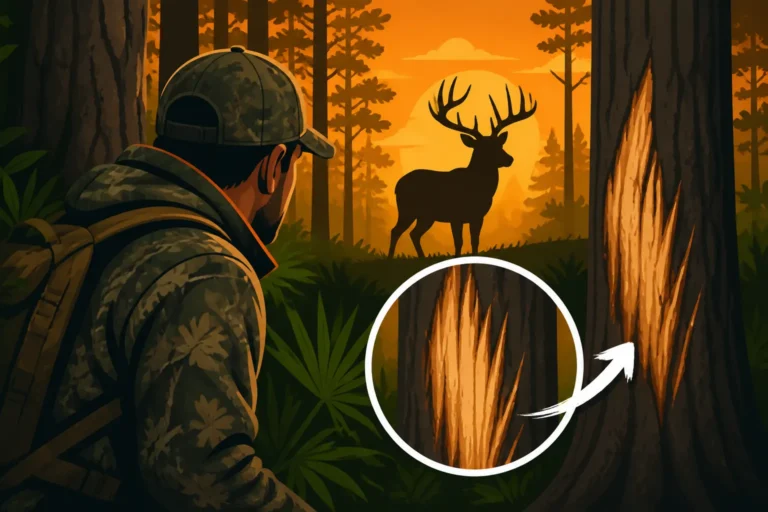
Rubs and scrapes are particularly important during the rut. Rubs, where a buck has rubbed its antlers on a sapling or tree, indicate a buck's presence and sometimes its travel patterns. Fresh rubs will have exposed, light wood. Scrapes, where a buck has pawed a bare patch of ground and often urinated, are signposts indicating buck activity and can be hotbeds of doe visits. Finding a fresh scrape line might indicate a cruising buck, prompting you to still-hunt the area more thoroughly. Remember, bucks tend to follow specific travel corridors, and finding these signs can help you identify those routes. For understanding more about these behaviors in your area, consider Scrape Lines Along a Logging Road or Grunt Calls in Mature Louisiana Timber for tactics related to calling.
Adapting to Weather and Hunting Pressure
The Kisatchie Hills, like any hunting ground, see their fair share of weather shifts and human activity. A truly effective still-hunter adjusts their tactics based on these factors. After a rain, the woods become quieter, making silent movement much easier. This can be an ideal time to still-hunt, as deer might also be moving more freely. Conversely, dry, crunchy conditions demand an even slower pace and more meticulous foot placement.
Hunting pressure is another significant factor. The Kisatchie Hills Wilderness is public land, and on opening weekend or holidays, you can expect company. Deer react to pressure by becoming more nocturnal, seeking out the densest, most inaccessible cover, and using less obvious travel routes. If you know there's been a lot of pressure, focus your efforts on those thick areas, steep drainages, or places other hunters might overlook. Often, this means working harder to get to spots that are off the beaten path. Conversely, if you're hunting midweek after a long weekend, deer might be starting to resume more normal patterns. Always consider the human element in your strategy. Finding Hunting Pressure on Louisiana Public Land can offer insights into how deer react and how you can counter it.
Essential Gear for Still-Hunting Success
While still-hunting emphasizes skill over excessive gear, having the right tools can make a significant difference in your comfort, effectiveness, and safety. Each item should serve a purpose, aiding your stealth, navigation, or observation without adding unnecessary bulk or noise.
Clothing and Footwear Considerations
Your clothing needs to be quiet, comfortable, and appropriate for the Kisatchie Hills weather, which can vary wildly. Avoid noisy fabrics like stiff denim or swishy synthetics. Soft fleece, wool, or brushed cotton blends are ideal. Layering is key, as you'll be exerting yourself while moving, but then sitting still for long periods. You need to be able to shed or add layers to regulate your body temperature. Camouflage patterns should match the environment, blending with the pine and hardwood mix.
Footwear is arguably the most critical clothing item for still-hunting. You need boots that offer good ankle support for the uneven terrain but are also flexible enough to allow you to feel the ground beneath your feet. Waterproofing is essential, as you'll likely encounter dew, mud, or stream crossings. Some hunters prefer lighter, flexible hiking boots, while others opt for rubber boots for scent control and waterproofness. Whatever you choose, ensure they are broken in and comfortable for long hours of slow, quiet movement.
Optics and Navigation Tools
Good optics are non-negotiable for still-hunting. A high-quality pair of binoculars (8×42 or 10×42 are excellent choices) will allow you to pick apart cover during your stationary phases, spotting deer that would be invisible to the naked eye. Carry them on a harness system that keeps them secure and easily accessible without flopping around and making noise.
For navigation, a GPS device or a smartphone with a reliable hunting app is a lifesaver. Tools like the GoHunt app are fantastic for marking your route, identifying property boundaries, and seeing topographical features. The Kisatchie Hills Wilderness can feel disorienting with its rolling terrain and dense timber, so always know where you are and where you're going. Make sure your devices are fully charged, and consider carrying a portable power bank. A compass and paper map are also wise backups, especially in areas with poor cell service.
Calling and Scent Control
While still-hunting emphasizes stealth, knowing when and how to use calls can sometimes be effective, especially during the rut. A soft grunt tube or a doe bleat can sometimes stop a cruising buck or pique the curiosity of a deer you've spotted. However, use calls sparingly and subtly; overuse or loud calling can quickly spook deer in this pressured environment. For specific insights into calling, refer to Rattling Volume in Thick Cover.
Scent control is absolutely paramount. Deer in the Kisatchie Hills are incredibly sensitive to human odor. Shower with scent-free soap, wash your hunting clothes in scent-free detergent, and store them in airtight containers. Use scent-eliminating sprays on your boots and outer layers, paying particular attention to your hat and areas where you might sweat. While total scent elimination is probably a myth, minimizing your human odor is crucial. Consider using a small amount of natural cover scent, like pine or earth, but avoid anything overpowering or unnatural. Remember, you're trying to blend into their world, not overwhelm it with your own.
The Rewards of Still-Hunting Kisatchie
Still-hunting the Kisatchie Hills Wilderness isn't easy, but the rewards are profound. There's a deep satisfaction that comes from outsmarting a wary whitetail on its own terms, moving silently through its home, and spotting it before it ever knows you're there. It's an intimate connection with the wild, a true test of your patience, observation skills, and understanding of the natural world.
Beyond the harvest, the experience itself is a treasure. You'll learn the lay of the land in a way a stationary stand hunter never could. You'll discover hidden pockets of habitat, observe countless small details of the forest, and challenge yourself physically and mentally. It's a method that makes you a better hunter, sharpening your senses and honing your woodcraft. So, next time you head out to the Kisatchie Hills, slow down, embrace the silence, and truly immerse yourself in the art of the still-hunt. You might just find that the most rewarding hunts are not about how fast you cover ground, but how effectively you become part of it. If you're looking for other methods to hunt in the area, consider reading Bowhunting Louisiana's Long Archery Season or Primitive Firearms Deer Hunting in Louisiana.
| Aspect | Still-Hunting | Stand Hunting (General) |
|---|---|---|
| Movement | Constant, slow, deliberate | Minimal once in stand |
| Observation | Active, wide-ranging | Focused on specific lanes/areas |
| Stealth Focus | Foot placement, silhouette, scent | Scent, quiet entry/exit |
| Adaptability | High (can change direction) | Low (fixed position) |
| Terrain Use | Utilizes cover/contours while moving | Relies on natural funnels/chokepoints |
| Gear Emphasis | Optics, quiet clothes, good boots | Comfort, scent control, warm clothes |
| Patience | Intense bursts, long pauses | Extended periods of stillness |
| Scent Control | Critical due to constant movement | Critical, especially for approach |
| Advantage in Kisatchie | Covers more varied terrain, targets pressured deer in thick cover | Good for predictable deer movement patterns or food sources |
Disclaimer
Hunting is an inherently dangerous activity. Always prioritize safety, understand and adhere to all Louisiana Department of Wildlife and Fisheries regulations, and obtain proper licenses. This guide provides informational content only and should not replace professional guidance or a thorough understanding of local laws and safety protocols. The information presented here is for educational purposes and is not a substitute for proper training or adherence to state and federal hunting laws. Always hunt responsibly.