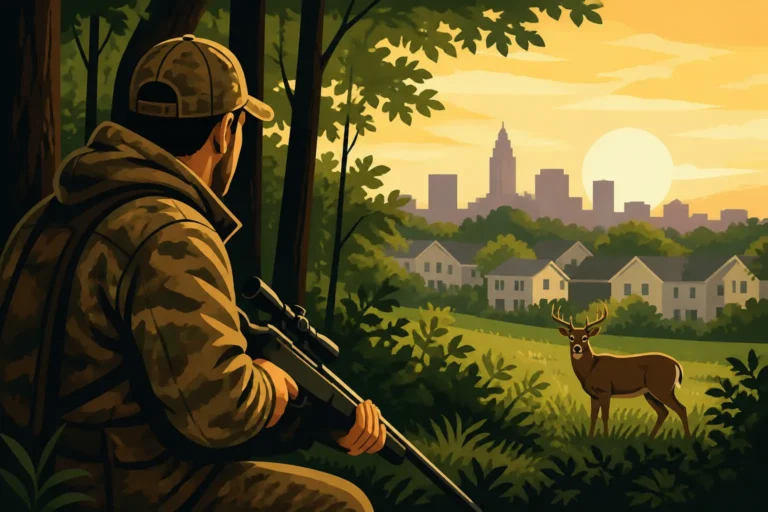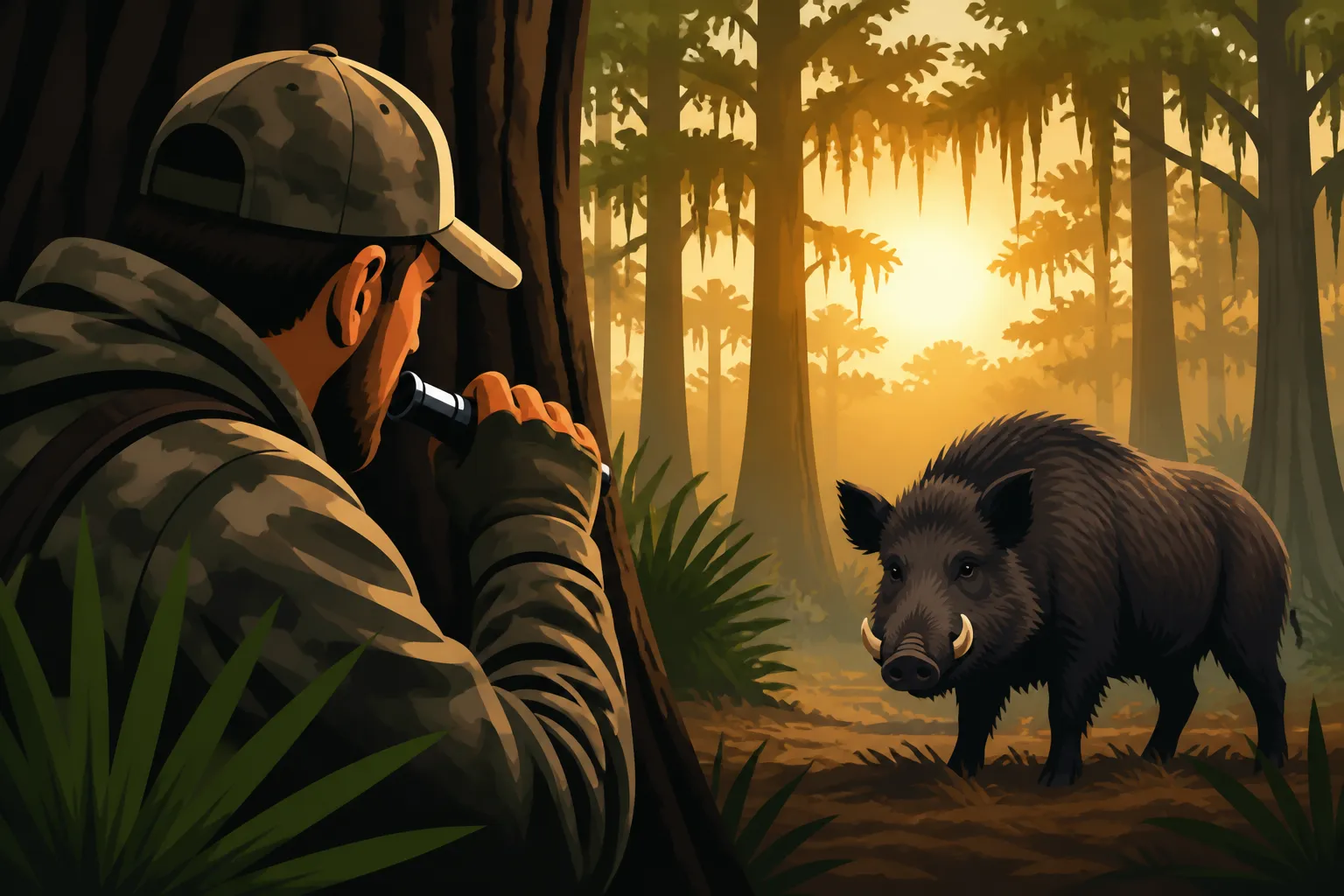
Grunt Calls in Mature Louisiana Timber
There's nothing quite as frustrating as knowing there's a mature buck in that dense Louisiana timber, but feeling like you have no way to reach him. The thick cover, the limited visibility—it can make traditional hunting methods incredibly challenging. This guide is all about cutting through that frustration and equipping you with the knowledge to effectively use grunt calls to pull those wary whitetails right out of the shadows, especially in our state's mature, sprawling woodlands.
The Unique Challenge of Grunt Calling in Mature Louisiana Timber
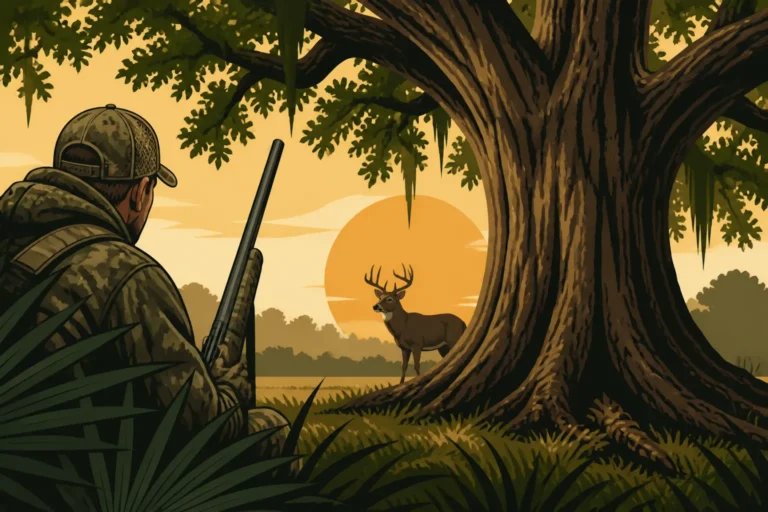
Hunting in Louisiana's mature timber, whether it's the vast bottomland hardwoods of the Tensas River Basin or the mixed pine and hardwood forests of Kisatchie National Forest, presents its own distinct set of hurdles. It's not like hunting open fields or sparse woods where a deer might see a decoy or hear a call from a quarter-mile away. Here, the dense canopy, the thick understory of palmettos, briars, and young saplings, and the often-humid air all conspire to swallow sound and limit sight.
Why Mature Timber Makes Calling Different
The very structure of mature Louisiana timber fundamentally alters how sound travels and how deer perceive it. Imagine trying to talk to someone across a crowded room, but that room is also filled with heavy curtains and sound-dampening panels. That's essentially what you're up against. Sound waves, especially the lower frequencies of a deer grunt, get absorbed and scattered by every tree trunk, every leaf, and every vine. This means your call won't carry nearly as far as it would in more open country. Instead of a booming, far-reaching call, you need a more localized, nuanced approach.
Furthermore, the visual limitations work both ways. While a deer often can't pinpoint your exact location or see you clearly from a distance, you also can't easily see them approaching through the thick screen of vegetation. This makes setting up your ambush point even more critical. You need to anticipate their approach, understanding that they'll likely use cover, circle downwind, and move slowly, testing the air. Older, more mature bucks, the very ones you're trying to call, are particularly adept at this ghost-like movement. They've survived countless seasons in this exact terrain and are extremely wary of anything that sounds out of place. They've heard it all before, and they know the difference between a real buck and a hunter's hopeful imitation.
Understanding Deer Vocalizations
Before you can effectively use a grunt call, it's essential to understand what a grunt actually is and why deer make these sounds. A grunt is a guttural vocalization primarily made by bucks, though does can also make softer versions. It's their way of communicating within the herd, conveying everything from "I'm here" to "Stay away from my doe!" Learning to discern and mimic these various types of grunts is the key to speaking their language.
- Contact Grunt: This is a simple, low-volume, short grunt. It's essentially a deer saying, "Hey, I'm over here," or "Where are you?" Bucks use this to keep tabs on other deer, and does might use it to locate fawns. In mature timber, a soft contact grunt can be invaluable for pinpointing a deer's general location without alarming it.
- Trailing Grunt: As a buck pursues a doe, he'll often emit a series of rhythmic grunts, sometimes called "chase grunts." These are typically a bit louder and more urgent than contact grunts, signaling his intent to the doe and other bucks in the area. This sound is a clear indicator that the rut is on, and a prime opportunity for calling.
- Aggressive Grunt: This grunt is deeper, often longer, and carries more intensity. It's a challenge, a buck telling another buck, "This is my territory, and these are my does." This is often accompanied by head bobbing, posturing, or even antler rubbing. When you hear this, you know a confrontation might be brewing.
- Snort-Wheeze: This is perhaps the most aggressive vocalization a buck makes. It's a combination of a snort, followed by a wheezing sound. It's a direct threat, often a precursor to a fight. Hearing a snort-wheeze means you've got a seriously agitated buck on your hands, and he's likely looking for a confrontation. This is a very powerful, high-risk, high-reward call.
Deer primarily use these vocalizations during the rut (breeding season), which varies across Louisiana's diverse deer areas, but they also use them outside of the rut for social cues and general communication. Learning when and how to deploy each type of grunt is what separates a hopeful caller from a successful one.
Choosing and Using Your Grunt Call Effectively
The market is flooded with various grunt calls, and walking into a sporting goods store can feel overwhelming. Choosing the right one for Louisiana's mature timber requires understanding their differences, and then, more importantly, dedicating time to master its use.
Selecting the Right Call for the Job
When it comes to grunt calls, you'll find a spectrum of options. Adjustable calls, like those from Primos or Buck Commander, offer versatility. They often have a rubber tube or slide mechanism that allows you to change the pitch and tone, mimicking everything from a young buck to a mature, guttural dominant buck. This versatility is a major pro, allowing you to adapt to what you perceive the deer might be doing. However, they can also be more complex to master, requiring practice to ensure consistent sound quality. On the other hand, fixed-reed calls, while less versatile, are simpler to use and often produce a very consistent, authentic sound. They might be better for beginners who want to focus on mastering one specific grunt sound.
The material of the call can also influence its tone and durability. Wooden calls often produce a richer, more natural tone, but they can be more susceptible to moisture and temperature changes. Plastic calls are generally more robust, weather-resistant, and less expensive, making them a practical choice for the rugged Louisiana woods. Ultimately, the "best" call is the one you can consistently make realistic sounds with. Don't be swayed by marketing; go to a store, try a few out, and see what feels and sounds right to you. Just like you might use GoHunt to scout new public lands, experimenting with calls in your backyard is essential before you hit the timber.
| Call Type | Pros | Cons | Best Use Case |
|---|---|---|---|
| Adjustable Tube | Versatile pitch/tone | Can be harder to master consistency | Mimicking different buck ages/intensities |
| Fixed Reed | Simple, consistent, easy to learn | Less versatile, one primary sound | Beginners, consistent contact/trailing grunts |
| Snort-Wheeze Call | Highly aggressive, challenges dominant bucks | Use sparingly, can spook wary deer | During peak rut, challenging visible bucks |
| Bellow Call | Deeper, more guttural, carries further | Too loud for close quarters, less subtle | Long-distance contact, windy conditions (with caution) |
Mastering Volume and Cadence in Thick Cover
This is where the rubber meets the road, especially in thick Louisiana timber. Your approach to volume and cadence needs to be dramatically different from how you might call in open country. Forget those booming, attention-grabbing calls you see on TV shows filmed in wide-open Western landscapes. Here, less is almost always more.
The dense cover dictates that your calls should be lower in volume but potentially more frequent. Instead of trying to project your voice across a football field, aim to create the illusion of a nearby deer. Imagine a buck quietly moving through the palmettos—he's not shouting his presence to the world. A series of soft, subtle grunts, perhaps three to four short "urrps" every 15-20 minutes, can be far more effective than a loud blast. This subtlety prevents you from "blowing out" a wary deer that might be just out of sight.
Cadence is equally crucial. Avoid frantic, hurried calling. Deer are naturally calm, deliberate creatures. Your calls should reflect that. A slow, deliberate, and natural cadence makes your grunts sound authentic. Try what I call the "phantom deer" approach: emit a short series of grunts, then pause. Imagine that deer moving a few steps, then grunting again. This makes the sound seem more dynamic and real, as if a buck is actively browsing or moving through the cover. Remember, you're not trying to replicate a 30-second buck fight; you're trying to sound like a single buck going about his business.
While we're talking about vocalizations, it's worth noting the distinct difference between grunting and rattling in thick cover. While both are effective, rattling, especially "Rattling Volume in Thick Cover", can sometimes be too abrupt and alarming in close quarters. Grunts, by contrast, offer a more subtle invitation, often drawing a deer in to investigate without immediately putting it on high alert.
Strategic Grunt Calling in Louisiana's Mature Woodlands
Understanding the seasonality of deer behavior is paramount to successful grunt calling. A call that works wonders during the peak of the rut might be completely ignored or even counterproductive during the early season.
Pre-Rut and Early Season Tactics
During the pre-rut and early season, usually from late September through October in many Louisiana areas, bucks are primarily focused on food and establishing their hierarchy without full-blown aggression. Their testosterone levels are rising, and they're starting to rub trees and make scrapes, but they're not yet in a chasing frenzy.
This is the time for subtle tactics. Focus on contact grunts to locate deer and pique their curiosity. A soft "urrpp, urrpp" near a food source like a promising oak flat (especially if it's not a "Hunting After a Poor Acorn Year" where the mast crop is poor) can sometimes draw in a cruising buck or even a doe. You're not trying to challenge them; you're just letting them know another deer is in the vicinity. Think of it as social networking for deer.
Always remember that scouting is paramount during this phase. Before you even think about calling, you need to know where the deer are likely to be. "Scouting Louisiana Public Land Before Season" can help you identify bedding areas, travel corridors, and feeding grounds. Tools like GoHunt can be invaluable here, helping you analyze satellite imagery and topographical maps to pinpoint likely deer hideouts and movement patterns before you ever step foot in the woods. Once you have a good idea of their whereabouts, your subtle grunts become much more targeted and effective.
Peak Rut and Aggressive Calling
This is the sweet spot for aggressive calling. When the rut truly kicks into gear—which can be anywhere from mid-November to December in "Hunting the Rut in the Early-Start Areas" or stretching into January for "Hunting the Rut in the Long-Window Areas" like Areas 5, 6, and 9—bucks are actively seeking does and are much more receptive to aggressive vocalizations. Their adrenaline is pumping, their guard is down (relatively), and they're often willing to investigate any sound that suggests a rival buck or a receptive doe.
This is when aggressive grunts and even snort-wheezes can really shine. If you see a buck cruising through the timber or hear crashing in the distance, a series of urgent trailing grunts might convince him a doe is nearby. If you suspect a dominant buck is in the area, a well-placed aggressive grunt or snort-wheeze might challenge him into coming to investigate. The key here is confidence and timing. You're trying to provoke a reaction, to tap into that primal urge to breed or fight.
However, even with aggressive calls, remember your surroundings. In dense timber, visual decoys are often not practical due to limited visibility, so you're relying almost entirely on sound. Always be acutely aware of the wind. No matter how perfectly you grunt, a buck will almost always try to circle downwind to scent-check the source of the sound. If the wind is wrong, you're busted. Understanding "Wind and Thermals in Swamp Bottomland" is non-negotiable, especially in areas like the Atchafalaya Basin where air currents can be tricky.
Post-Rut and Late Season Considerations
Once the peak of the rut has passed, usually by late December or January in many parts of Louisiana, bucks are often exhausted and have lost a significant amount of body weight. Their focus shifts back to recovery and finding reliable food sources. This means aggressive calls are far less effective, and can even be detrimental.
In the post-rut and late season, return to subtle contact or trailing grunts. Bucks are less interested in fighting and more interested in conserving energy. They might still respond out of curiosity, especially if they believe there's a late-cycling doe in the area or if they're simply trying to locate other deer for social grouping. Use your grunt call more as a tool for confirmation of a deer's presence rather than a means to provoke a charge. A soft grunt might cause a deer to pause or lift its head, giving you a chance for a shot, but don't expect them to come charging in like they would a month earlier.
Avoiding Common Pitfalls and Maximizing Your Chances
Even with the best grunt call and a perfect understanding of deer vocalizations, mistakes can easily ruin a hunt. Being aware of common pitfalls and employing smart strategies can dramatically increase your success rate in Louisiana's challenging mature timber.
Overcalling and Under-calling
One of the most frequent mistakes hunters make is either overcalling or under-calling. It's a delicate balance. Overcalling makes your setup sound unnatural, almost like a deer on a loop, and will quickly spook wary bucks. They've heard enough natural sounds in their lives to know when something is off. Less is often more. After a sequence of grunts, give it time – 15 to 20 minutes at least – for a deer to respond or approach. Many a hunter has called too much and then moved, only to jump a buck that was silently closing in.
Conversely, under-calling means you're not generating enough interest to grab a deer's attention, especially in sound-absorbing mature timber. You need to find that sweet spot, a natural rhythm that implies a deer is moving, stopping, and grunting periodically. The key is to read the deer's body language (if you're lucky enough to catch a glimpse). A flick of an ear, a tail twitch, a head turn—these are all subtle signs that a deer has heard you and is contemplating a move. If you see these signs, back off the calling for a bit and let the deer come in on its own terms. Patience, truly, is crucial here.
The Importance of Setup and Wind Direction
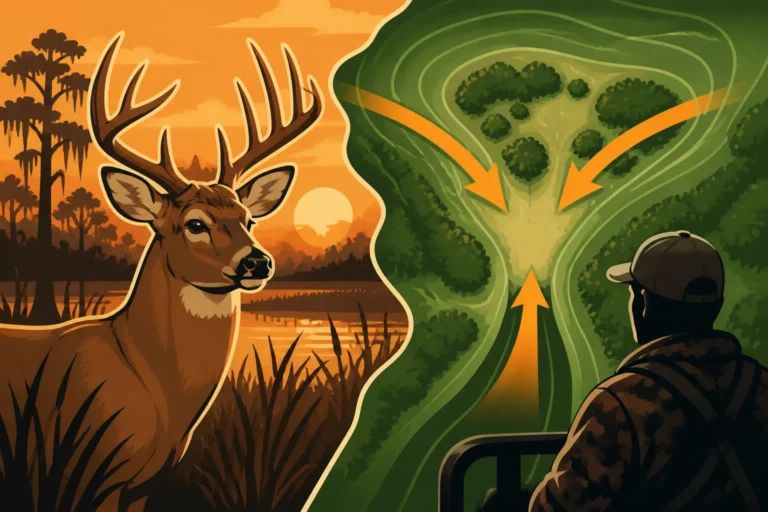
You might have the most realistic grunt call on the planet, but if your setup isn't solid, it's all for naught. Never, ever call without a good ambush spot. Deer, especially mature bucks, are coming to you, and they will approach cautiously, circling to get downwind. You need to be ready for them. Choose a location that offers good cover for yourself, clear shooting lanes in multiple directions (especially downwind), and some sort of natural funnel or pinch point that guides their approach.
Always, without exception, have the wind in your favor. If a deer gets downwind of you and smells you, the game is over. They'll evaporate into the timber without you ever knowing they were there. Use the terrain to your advantage: a ridge, a creek bank, or a dense thicket can help control where a deer might approach. Think about your entry and exit routes, too, ensuring you can get in and out silently without disturbing the area. When you're using tools like GoHunt, pay close attention to topography and vegetation types to help you find these optimal setups for "Reading Aerial Photos for Central Louisiana Deer".
Dealing with Pressured Deer
Louisiana's public lands, while abundant, can experience significant "Hunting Pressure on Louisiana Public Land", especially during opening weekends. Deer in these areas become "call shy" or even completely avoid anything that sounds like human-generated noise. In such situations, your approach needs to be extremely refined.
Very subtle, infrequent calls are your best bet here. You're not trying to create a ruckus; you're merely trying to sound like another deer quietly passing through. Sometimes, silence and stealth are your most powerful tools. Focus on impeccable scouting, using tools like GoHunt to identify overlooked areas, or simply applying good old woodsmanship by "Reading Louisiana Mud for Fresh Deer Movement" and other subtle signs. Don't be afraid to put in the legwork and try "Finding Ground Others Walk Past" to locate less pressured deer. These deer, often older and wiser, contribute to the overall "Louisiana Buck Age Structure" and are inherently more cautious, making your calling efforts even more challenging but ultimately more rewarding when they pay off.
Disclaimer
The information provided in this article is for general guidance and educational purposes only. Hunting regulations and conditions can change rapidly. Always consult the most current Louisiana Department of Wildlife and Fisheries (LDWF) regulations and local ordinances before engaging in any hunting activities. User discretion is advised.