Louisiana Buck Age Structure
It can be incredibly frustrating to consistently see young, immature bucks on your hunting lease or public land, making you wonder if you'll ever get a shot at a truly mature deer. Understanding the buck age structure in Louisiana’s deer herd is key to deciphering what you’re seeing in the woods and developing effective strategies to improve your chances, whether you’re managing private land or just trying to make sense of public hunting dynamics. This guide will walk you through what buck age structure means, why it’s so important, and what factors influence it across our diverse Louisiana landscapes.
Understanding Louisiana Buck Age Structure: Why It Matters for Your Hunt
When we talk about buck age structure, we're not just throwing around fancy biology terms; we're talking about the distribution of different age classes within the male deer population. Imagine looking at all the bucks in a given area and seeing how many are yearlings, how many are 2.5 years old, 3.5, and so on. This isn't just a number-crunching exercise for biologists; it's a vital indicator that influences everything from herd health to your personal hunting success.
What Exactly is Buck Age Structure?
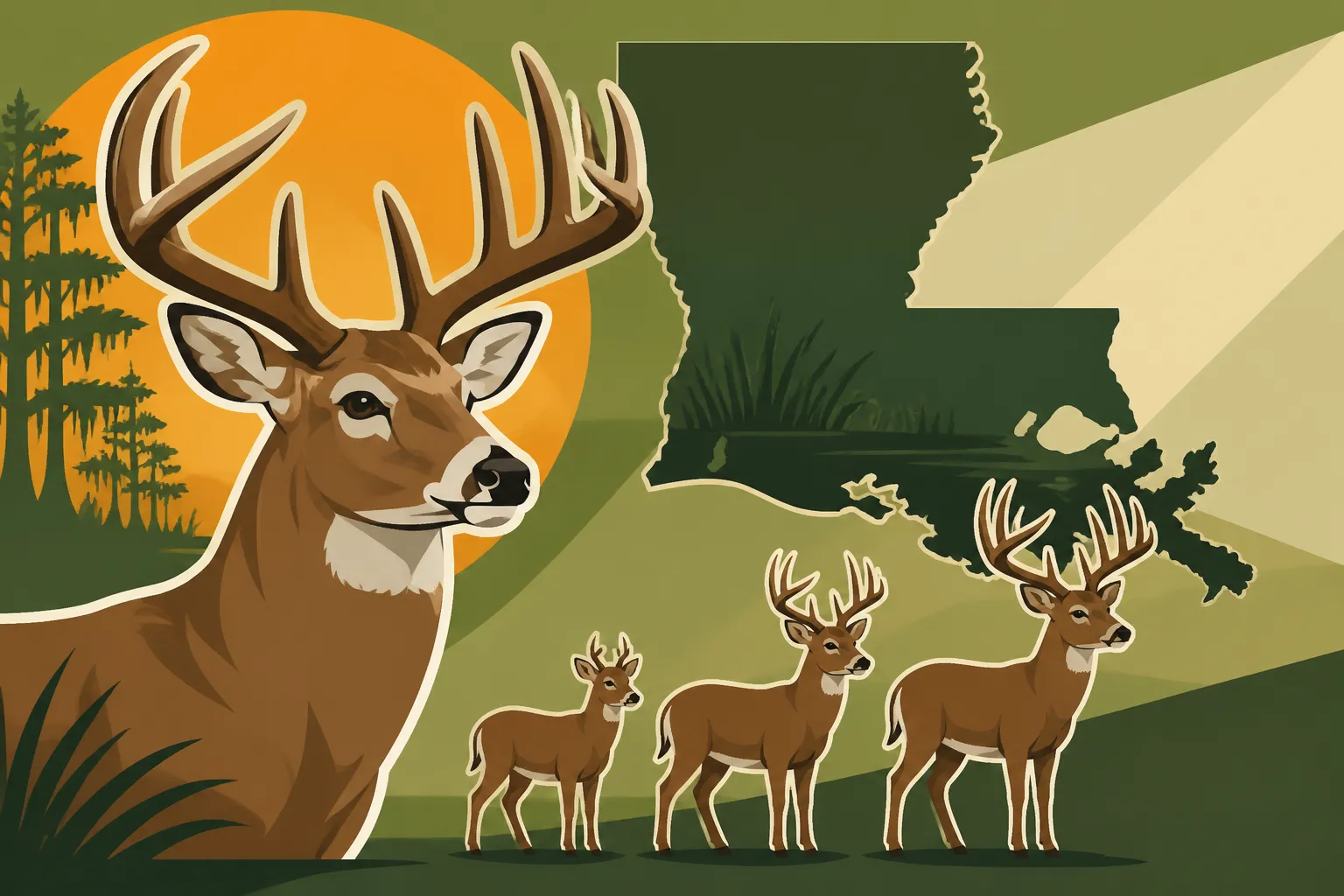
Simply put, buck age structure refers to the proportion of bucks of various ages within a specific deer population. In a healthy, well-managed herd, you'd ideally see a good representation of all age classes, from those scrappy yearlings just getting their first racks to older, more mature bucks. A balanced age structure means you’re not just seeing 1.5-year-old bucks with tiny spikes or fork horns, but also a decent number of 2.5, 3.5, and even older animals that have had time to grow.
Think about it like this: if you walk into a crowded room and everyone is a teenager, that's one kind of age structure. If it's a mix of kids, teens, adults, and seniors, that's a completely different picture. For deer, a skewed age structure, where most of the bucks are very young, often points to intense hunting pressure on young animals or other underlying issues. Conversely, seeing a good number of older bucks suggests that younger animals are surviving long enough to reach their physical prime, which is a win for both the deer and the hunters.
This concept ties directly into the overall health and productivity of the herd. If all the bucks are constantly being harvested before they reach maturity, it impacts breeding dynamics and the genetic potential of the population. It’s like harvesting all your tomatoes before they’ve had a chance to fully ripen and drop their seeds for next year's crop—you're short-changing the future.
Why a Balanced Age Structure Benefits Everyone
A balanced buck age structure is a cornerstone of quality deer management (QDM) and ultimately leads to better hunting opportunities and healthier deer. When bucks are allowed to mature, they reach their peak antler growth, offering those exciting trophy opportunities many hunters dream of. But it's not just about bigger racks; it's about the entire ecosystem.
Mature bucks contribute to a more efficient rut. Older, more dominant bucks typically do most of the breeding, leading to a more defined and concentrated breeding season. This means fawns are born closer together, which can be advantageous for fawn survival, as predators have less time to key in on vulnerable newborns. If you've ever seen an inconsistent rut or struggled to find breeding activity, a skewed age structure with too many young, inexperienced bucks trying to breed could be part of the problem.
Furthermore, a healthy age structure supports a healthier doe population. When the buck-to-doe ratio is more balanced, it reduces stress on the does from being constantly harassed by too many young, less efficient breeders. This also prevents early breeding of fawn does, allowing them to fully mature before expending energy on pregnancy and lactation. It truly is a holistic approach; what's good for the bucks is often good for the entire deer herd and, by extension, good for the hunter.
Factors Shaping Louisiana's Deer Age Classes
Louisiana is a diverse state, from the pinewoods of the north to the sprawling river bottoms and coastal marshes. Naturally, the factors influencing buck age structure are just as varied. Understanding these influences is crucial for anyone trying to manage a deer population or even just trying to understand what they might encounter when Hunting Louisiana's Ten Deer Areas Differ.
The Role of Hunting Pressure and Harvest Regulations
Unsurprisingly, hunting pressure is one of the most significant factors influencing the age structure of bucks in Louisiana. Areas with high hunter density and liberal harvest rules often see a younger buck age structure. If everyone is eager to fill a tag, especially during the firearm season opener, young bucks are often the first to go. It's a natural inclination to take the first legal deer that steps out, and often, that's a 1.5-year-old or 2.5-year-old buck.
This is especially true on many public lands or smaller private tracts where "if it's brown, it's down" is the prevailing mentality. When most bucks are harvested before they hit 3.5 or 4.5 years of age, the older age classes simply can't develop. The Louisiana Deer Reporting Requirements are in place to help biologists track harvest data, which in turn helps inform management decisions and potential changes to regulations. However, enforcement and compliance always play a role in how accurate that picture is.
Regulations like antler point restrictions (APRs), though not universally applied across Louisiana, are tools specifically designed to allow younger bucks to survive and mature. By only allowing the harvest of bucks with a certain number of points or minimum main beam length, hunters are encouraged to pass on younger animals. While APRs can be controversial, their primary goal is to shift the buck age structure towards older animals, which, over time, can lead to bigger antlers and a more balanced herd. You can explore this more by looking into the topic of Louisiana Deer Antler Point Restriction Status.
Habitat, Nutrition, and Genetics
Beyond hunting pressure, the quality of the habitat plays a monumental role in a buck's ability to survive and express its genetic potential for antler growth. A healthy habitat provides consistent, high-quality nutrition throughout the year, which is essential for bucks to grow antlers and maintain overall body condition. Areas with abundant food sources, like lush agricultural fields, nutrient-rich bottomland hardwoods, or well-managed timberlands, typically support healthier deer that grow faster and larger. For instance, understanding Late-Season Food Sources for Louisiana Whitetails can directly impact antler growth in subsequent years.
In contrast, areas with poor soil, limited forage, or overpopulated deer herds can lead to stunted growth and smaller antlers, regardless of how old a buck gets. If a buck spends its early years just trying to survive and find enough to eat, its body allocates resources to basic survival functions rather than growing impressive headgear. Think about the difference in body size and antler quality you might see between a buck from a highly fertile Tensas Parish river bottom compared to one from a sandy, nutrient-poor pine forest.
Genetics are also a piece of the puzzle, though often overemphasized by hunters. While a buck certainly needs the right genes to grow a Boone and Crockett rack, even the most genetically gifted buck won't reach its potential if it's harvested as a 1.5-year-old or lives in an area with poor nutrition. Genetics work in conjunction with age and nutrition; you need all three components to produce truly exceptional deer. Good habitat helps ensure that bucks can express whatever genetic potential they possess.
How We Track Buck Age Structure in Louisiana
Understanding the current buck age structure across Louisiana isn't just guesswork; it's a deliberate effort by wildlife agencies and, increasingly, by hunters themselves. This data is critical for making informed management decisions that ultimately benefit the deer herd and provide better hunting.
LDWF's Efforts and Mandatory Reporting
The Louisiana Department of Wildlife and Fisheries (LDWF) plays a crucial role in monitoring the state's deer population, including buck age structure. Biologists conduct various surveys, including herd health checks, spotlight counts, and harvest data analysis. When hunters report their harvests—which is mandatory in Louisiana—that data provides a snapshot of what's being taken out of the population. By looking at jawbones collected at check stations or through hunter-submitted photos, biologists can determine the age of harvested deer. This collective information helps paint a broader picture of the age structure in different areas, like what might be seen in Louisiana Deer Harvest Records.
While these statewide efforts provide valuable insight, they rely heavily on hunter participation and accurate reporting. Every deer reported helps biologists fine-tune their understanding of local populations. This allows them to identify trends, such as an area where too many young bucks are being harvested, or conversely, an area where the age structure is improving due to specific management efforts. Without this data, management decisions would be based on assumptions rather than scientific evidence, which is never ideal for wildlife conservation.
LDWF also uses its expertise to analyze factors like Louisiana Buck-to-Doe Ratio by Region which is intricately linked to age structure. An imbalanced ratio often suggests too few older bucks for efficient breeding, or an overabundance of does, which can impact habitat quality for all deer. These comprehensive analyses help guide regulatory changes and educational initiatives aimed at promoting a healthier and more balanced deer herd across the state.
Using Technology and Personal Observation
Beyond official surveys, hunters themselves are increasingly using technology to better understand the deer on their land. Trail cameras have become indispensable tools for monitoring buck activity and estimating age structure. By running cameras year-round, hunters can track individual bucks over multiple seasons, watching them grow and mature. This provides invaluable, hyper-local data that supplements the broader statewide picture. Imagine seeing "Ol' One-Eyed Jack" as a 2.5-year-old 8-point, then watching him develop into a true monster at 4.5 or 5.5—that's the kind of direct observation that helps understand local age structure.
Apps like GoHunt can be incredibly useful for private land managers or even dedicated public land hunters. These platforms allow hunters to log sightings, track harvest data, and analyze trends specific to their property or hunting area. For instance, if you consistently log sightings of only young bucks on your property for several years through GoHunt, it's a strong indicator that your local age structure is skewed and might need attention. Conversely, if you're suddenly seeing more mature bucks, it could mean your management strategies, or simply reduced pressure, are paying off.
Furthermore, simple boots-on-the-ground scouting remains a powerful tool. Learning to age bucks on the hoof, even roughly, through body characteristics and antler development, allows you to make informed decisions in the moment. Observing how many different age classes you see during your scouting trips or actual hunts, coupled with analyzing sign like rubs and scrapes (especially if you're checking for Scrape Lines Along a Logging Road), can give you a gut feeling for the age structure even before you crunch numbers. This combination of official data, personal tech, and experienced observation provides the most comprehensive understanding.
| Age Class (Years) | Body Characteristics | Antler Potential (General) | Role in Herd | Management Goal |
|---|---|---|---|---|
| 0.5 (Fawn) | Small, often spotted, still reliant on doe | None | Future breeders/harvest | Protection, ensure fawn survival |
| 1.5 (Yearling) | Long legs, thin neck, often small rack (spikes to 8pt) | Below potential | Low breeding contribution, high vulnerability | Protect for future growth (QDM areas) |
| 2.5 | Body filling out, longer neck, better rack potential | Good, but not peak | Increasing breeding, still growing | Still growing, often protected (QDM areas) |
| 3.5 | Developed body, muscular neck, antlers showing mass | Approaching peak | Significant breeder, good antler quality | Harvest for mature animals, or pass for true giants |
| 4.5+ | Fully mature body, thick neck, sagging belly, heavy antlers | Peak potential, declining past 6.5 | Dominant breeders, high antler quality | Trophy harvest, key for herd genetics |
Strategies for Improving Age Structure on Your Hunting Grounds
So, you've looked at the data, checked your trail cameras, and you're pretty sure your local buck age structure is out of whack. What can you actually do about it? The good news is, there are practical steps you can take, whether you manage a large lease or just influence a small hunting club.
Implementing Quality Deer Management (QDM) Practices
Quality Deer Management (QDM) is a philosophy centered around producing a healthy deer herd with a balanced age structure, buck-to-doe ratio, and optimal habitat. It's not just about growing big antlers, though that's often a welcome side effect. The core of QDM involves passing on young bucks and selectively harvesting does to achieve desired population densities and ratios.
For many hunters, the hardest part of QDM is the patience required. It means letting those young 2.5-year-old bucks walk, even when they present a tempting shot. It requires a collective commitment from all hunters on a property. If one person is harvesting every young buck, it undermines the efforts of everyone else. Implementing a strict rule, like "no bucks under 3.5 years old," can dramatically shift the age structure over just a few seasons. Many hunting clubs find success by clearly defining antler criteria, such as "only bucks with outside spread past the ears" or a specific minimum point count, to encourage the passing of younger, narrower-racked bucks.
Beyond buck harvest, doe management is equally critical. If your property has a high Deer Density by Louisiana Area and an imbalance of does to bucks, selectively harvesting does helps bring the buck-to-doe ratio closer to 1:1 or 1:2. This reduces competition for food, allows the remaining deer better nutrition, and focuses the breeding efforts on fewer, more mature bucks. It’s a holistic approach that acknowledges all aspects of the deer herd contribute to its overall health and the age structure of its male component.
Patience and Selective Harvesting
Ultimately, improving buck age structure boils down to patience and selective harvesting. It’s a long-term game, not a quick fix. On private land, this means having candid conversations with fellow hunters, establishing clear harvest guidelines, and committing to them. Utilizing trail cameras year-round can help identify specific bucks and track their growth, making it easier to decide who gets a pass. You can even use GoHunt to create profiles for individual bucks, tracking their sightings and estimated age, which helps build that critical collective knowledge.
On public land, where you can't control what other hunters do, your strategy shifts slightly. You can still exercise selective harvesting for yourself, passing on young bucks in the hope they'll mature. However, the primary focus might be on hunting smarter—targeting areas that receive less pressure or understanding how deer move in response to that pressure. Hunting Pressure on Louisiana Public Land can significantly impact the age structure you encounter. By seeking out more remote or harder-to-reach spots, you increase your odds of encountering older, wiser bucks that have survived multiple hunting seasons.
Another often-overlooked aspect of patience is habitat improvement. Investing in food plots, timber stand improvement, or creating natural browse can dramatically boost the nutritional plane for deer, allowing them to express their genetic potential. A buck that is well-fed from a young age will typically grow larger antlers faster and be healthier overall, increasing its chances of surviving to an older age. This means your personal ethics and management practices directly influence the future of your hunting experience and the health of the deer you pursue.
Disclaimer
This article is for general informational purposes only and does not constitute professional advice. Laws, prices and regulations vary by location and change over time. Consult a qualified professional for guidance on your specific situation.