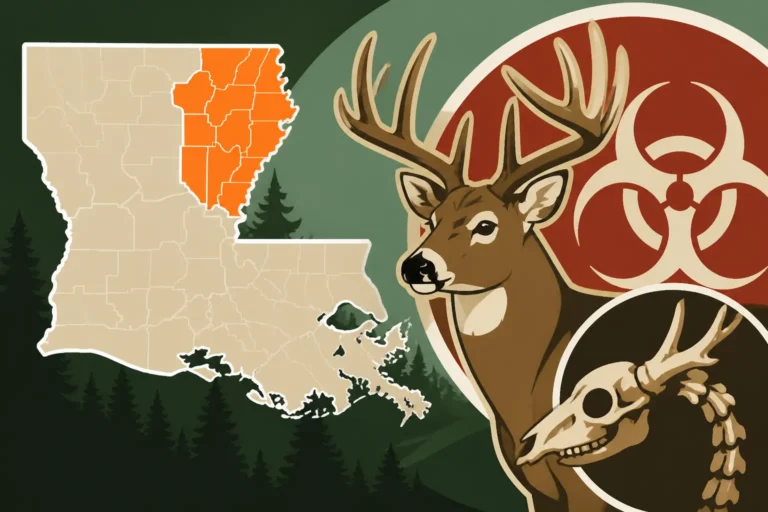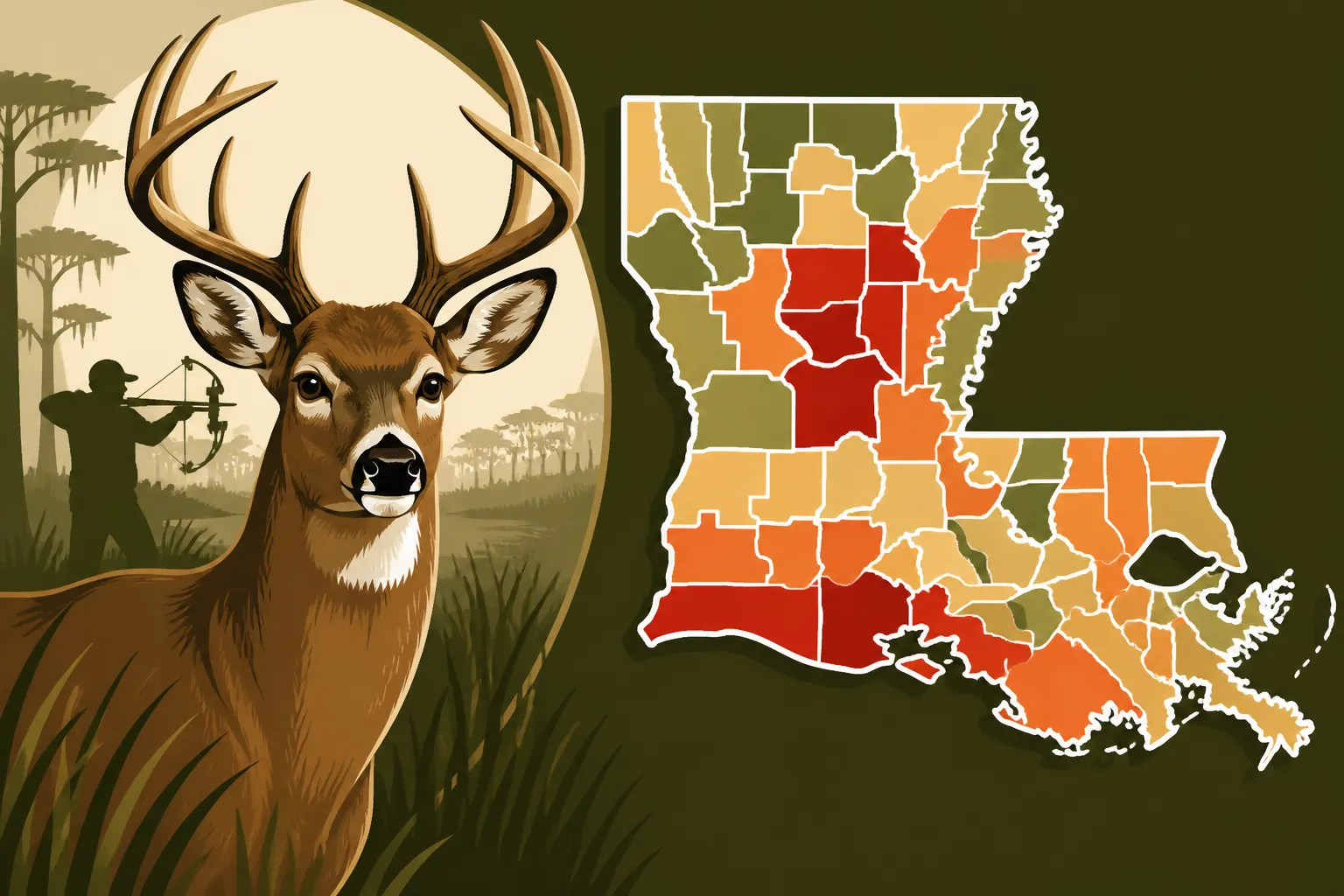
Louisiana’s CWD Case Count by Parish
The threat of Chronic Wasting Disease (CWD) casts a long shadow over the deer hunting community here in Louisiana, bringing with it a lot of questions and, let's be honest, a fair amount of anxiety. Hunters often find themselves wondering exactly where the disease has been detected and what that means for their hunting plans. This guide aims to pull back the curtain on Louisiana's CWD situation, providing a clear, parish-by-parish breakdown of confirmed cases and the regulations that come with them, so you can hunt smart and responsibly.
Understanding CWD in Louisiana: A Brief Overview
Before we dive into the specific parishes, it’s important to understand what CWD is and why it's such a big deal for Louisiana deer hunters. This isn't just another sickness; it's a game-changer.
What is CWD and Why Does it Matter to Hunters?
Chronic Wasting Disease is a neurological disease that affects cervids, which include deer, elk, and moose. It's caused by infectious proteins called prions, which slowly accumulate in the brain and other tissues, leading to symptoms like emaciation, abnormal behavior, drooling, and ultimately, death. Think of it as a slow, inevitable decline that spreads through a herd. For us hunters, the concern is multi-layered. First, it's about the health of our deer herd. A widespread CWD infection could decimate populations and change deer hunting as we know it. Second, there are public health concerns, although currently, there's no scientific evidence of CWD transmitting to humans. Still, health officials advise against consuming meat from CWD-positive animals, which impacts our ability to enjoy the fruits of our harvest. Finally, the management efforts—like testing, carcass restrictions, and baiting bans—can significantly alter how and where we hunt.
The presence of CWD forces us to be more vigilant than ever. It means adapting our hunting practices, being aware of the rules in specific areas, and playing an active role in monitoring the health of the herd. Ignoring it isn't an option if we want to preserve our hunting heritage and the deer populations we cherish.
Louisiana's Initial Discovery and Response
Louisiana held out for a long time, watching CWD spread in neighboring states with a knot in our stomachs. Unfortunately, our luck ran out in January of 2022 when the first confirmed case of CWD was detected in a wild white-tailed deer in Tensas Parish. That single discovery immediately triggered a comprehensive response from the Louisiana Department of Wildlife and Fisheries (LDWF), changing the landscape of deer hunting regulations overnight for many.
The initial finding wasn't just a random event; it was the culmination of years of proactive surveillance and testing efforts across the state. Biologists had been diligently collecting samples, especially from road-killed deer and hunter harvests, to establish a baseline and detect any early incursions. When the positive sample came back from that Tensas Parish buck, it confirmed our worst fears and set in motion a series of emergency rules and long-term management strategies designed to contain the spread. Understanding "How CWD Reached Tensas Parish" is crucial for appreciating the challenge we now face across the state.
The Parish-by-Parish Breakdown of CWD Cases
When CWD hit, it wasn't a statewide blanket; it started in specific locations. Knowing which parishes have confirmed cases and which fall within the associated management zones is vital for every hunter.
Tensas Parish: The Epicenter of Louisiana CWD
Tensas Parish, located in the rich river bottoms of Northeast Louisiana, unfortunately became the ground zero for CWD in our state. Since that initial discovery, a significant majority of Louisiana's confirmed CWD cases have originated from this parish. This area, known for its fertile soils and dense deer populations, has proven to be a challenging environment for containing the disease.
The high number of cases in Tensas Parish can be attributed to several factors. Dense deer populations can facilitate easier transmission between animals. Furthermore, the parish's habitat, characterized by extensive bottomland hardwoods and agricultural fields, provides abundant food and cover, which, while great for deer numbers, also allows for higher deer-to-deer contact rates. The unfortunate reality is that "Why Tensas Parish Drives Louisiana's CWD Count" is a combination of biological factors and the simple fact that it was the first place we found it, leading to more intensive testing there.
Neighboring Parishes and Buffer Zones
While Tensas Parish remains the primary area for CWD detections, the nature of the disease means it doesn't respect parish lines. Consequently, several adjacent parishes have been impacted, either through confirmed cases or by being designated as CWD Management Zones (CMZs) or Buffer Zones due to their proximity to positive detections.
These zones are typically drawn with a radius around a confirmed positive case. For instance, you’ll find that "How the Fifteen-Mile CWD Zone Radius Works" dictates the boundaries for immediate management actions. This radius often encompasses parts of multiple parishes. For example, Concordia Parish, directly bordering Tensas, has also had confirmed cases, placing it firmly within the CMZ. Other parishes like Madison and Franklin, while perhaps not having as many direct confirmed positives, might still fall into a CWD Buffer Zone. This means even if a deer hasn't tested positive in your hunting spot, if your spot is near a positive detection, you're still under specific regulations. It's a critical distinction to grasp. To get a comprehensive view, it's worth checking "Which Fourteen Parishes Sit in a CWD Zone" to understand the full scope of affected areas.
Beyond the Northeast: Isolated Cases and Monitoring Efforts
While the majority of Louisiana's CWD focus has been on the northeastern part of the state, it’s important for hunters across Louisiana to understand that no area is completely immune, and monitoring efforts are continuous. Although less common, isolated cases have popped up in other regions, which immediately triggers concern and intensified surveillance.
A notable example involved a positive case in Ouachita Parish, which, while still in North Louisiana, wasn't directly adjacent to the initial Tensas cluster. This case, though isolated, really underscored the potential for CWD to appear in unexpected places and definitely was a moment when "Why Ouachita Parish's Case Worried Biologists" became a critical discussion point. Such instances immediately prompt LDWF to establish new, localized control measures and increase testing in that specific region, often creating a smaller, more localized management zone around the new detection point. This statewide vigilance means that even if you're hunting hundreds of miles from Tensas Parish, staying informed about CWD developments is always a good idea.
Here’s a snapshot of the primary parishes impacted by CWD detections and management zones in Louisiana:
| Parish | Confirmed Cases (as of current data) | Primary Management Zone Type | Key Regulations to Note |
|---|---|---|---|
| Tensas | Highest Number | CWD Management Zone (CMZ) | Mandatory Testing, Carcass Restrictions, Baiting Ban |
| Concordia | Confirmed Cases | CWD Management Zone (CMZ) | Mandatory Testing, Carcass Restrictions, Baiting Ban |
| Madison | Confirmed Cases | CWD Management Zone (CMZ) | Mandatory Testing, Carcass Restrictions, Baiting Ban |
| Franklin | Within Buffer Zone | CWD Buffer Zone | Voluntary Testing, Limited Carcass Restrictions |
| Richland | Within Buffer Zone | CWD Buffer Zone | Voluntary Testing, Limited Carcass Restrictions |
| Ouachita | Isolated Case | CWD Management Zone (CMZ) | Mandatory Testing (area-specific), Carcass Restrictions |
| East Carroll | Within Buffer Zone | CWD Buffer Zone | Voluntary Testing, Limited Carcass Restrictions |
| West Carroll | Within Buffer Zone | CWD Buffer Zone | Voluntary Testing, Limited Carcass Restrictions |
| Caldwell | Within Buffer Zone | CWD Buffer Zone | Voluntary Testing, Limited Carcass Restrictions |
Note: The exact boundaries and regulations of CWD Management Zones and Buffer Zones can change. Always check the latest LDWF regulations before hunting.
Implications for Hunters: What You Need to Know in CWD Zones
Knowing where CWD cases have occurred is just the first step. The real challenge for hunters lies in understanding and adhering to the modified regulations that accompany these detections. It’s no longer business as usual.
Mandatory Testing and Carcass Restrictions
If you find yourself hunting in a CWD Management Zone (CMZ) – which, as we've discussed, primarily includes Tensas, Concordia, Madison, and specific areas of Ouachita – there are crucial new steps you must take after harvesting a deer. The most significant of these is "Mandatory Testing Inside a Louisiana CWD Zone". This means that any deer harvested within these designated zones must be submitted for CWD testing at an approved LDWF sampling station. It’s not an option; it’s a requirement designed to help biologists track the disease's spread and prevalence. You can find these stations, often located at WMAs, weigh stations, or check stations, on the LDWF website.
Beyond testing, there are strict rules about what you can and cannot do with a deer carcass taken from a CWD zone. "Moving a Deer Carcass Out of a CWD Zone" is heavily restricted to prevent the inadvertent spread of prions. Generally, you can only transport boned-out meat, cleaned antlers (free of brain or spinal cord tissue), and hides. Whole carcasses, or parts containing brain or spinal tissue, are usually prohibited from leaving the zone. This is a big change for many hunters who are used to taking their deer home to process, and it requires careful planning to ensure you're compliant.
Baiting Bans and Enhanced Mitigation Zones
Another significant impact of CWD on hunting practices within affected areas is the implementation of baiting bans. In an effort to reduce deer congregation at artificial feed sites, which can increase deer-to-deer contact and potential CWD transmission, baiting is strictly prohibited in CWD Management Zones. This includes any substance or material that attracts deer, whether solid, liquid, or gas.
Specifically, in what are often termed "The Enhanced Mitigation Zone Baiting Ban", these restrictions are particularly stringent, prohibiting the use of bait for any species if deer are attracted to it. Even in CWD Buffer Zones, while not always a full ban, you'll often find "The CWD Buffer Zone Baiting Rules" are modified, perhaps allowing mineral sites but restricting corn or other high-attractant feeds. This requires hunters to revert to more traditional scouting and hunting methods, focusing on natural food sources, travel corridors, and bedding areas rather than relying on supplemental feeding. It's a tough adjustment for many, but it's a necessary step in the fight against CWD.
Staying Informed with Tools like GoHunt
Given the dynamic nature of CWD regulations, which can change as new information becomes available, staying current is paramount. No hunter wants to unintentionally break a rule or miss a crucial update. This is where modern hunting tools and resources really shine.
One excellent way to stay on top of the latest CWD zones, regulations, and testing locations is through platforms like GoHunt. Tools like their mapping features or dedicated regulation guides can integrate the latest LDWF information, showing you exactly where CWD zones are, specific parish rules, and where you can find mandatory sampling stations. Instead of constantly scouring various government websites, a comprehensive resource like GoHunt can centralize this critical information, making it easier for you to plan your hunt responsibly. Regularly checking the official LDWF website is always the primary source, but supplementing that with user-friendly platforms can save you time and prevent misunderstandings, ensuring you're always hunting legally and contributing to CWD management efforts.
Disclaimer
This article is for general informational purposes only and does not constitute professional advice. Laws, prices and regulations vary by location and change over time. Consult a qualified professional for guidance on your specific situation.