How Many Deer Have Tested CWD-Positive in Louisiana
When Chronic Wasting Disease (CWD) was first detected in Louisiana, it sent ripples of concern and even a bit of shock through our deer hunting community. For years, we'd watched neighboring states grapple with this insidious disease, hoping it would never cross our borders. This guide will walk you through the journey of CWD in Louisiana, from its initial discovery to the ongoing efforts to manage its spread, helping you understand how many deer have tested positive and what that means for your hunting experience.
The First Alarm: When CWD Arrived in Louisiana
There's no sugarcoating it: the news of CWD hitting Louisiana was a gut punch for many of us who cherish our whitetail hunting heritage. We knew it was a possibility, but when it became a reality, it changed the conversation around deer hunting overnight. It truly underscores how connected our wildlife populations are and how easily diseases can travel.
The Initial Discovery in the Northeast
The first confirmed positive case of CWD in Louisiana was identified in the northeastern part of the state, specifically in Tensas Parish. This wasn't just another scientific report; it was a wake-up call right in our backyard. For years, we'd been diligently monitoring for CWD, taking samples and sending them off, always hoping for negative results. When that first positive came back, it marked a significant turning point, moving us from a state preparing for CWD to a state actively managing it. It highlighted the importance of programs like Louisiana's CWD Testing for Hunters, even before the disease was found here.
The discovery immediately triggered a heightened level of surveillance and action from the Louisiana Department of Wildlife and Fisheries (LDWF). Hunters were suddenly faced with new rules and responsibilities, and the sheer uncertainty of what this meant for future seasons was a heavy topic around every camp fire. Knowing Which Parish Found Louisiana's First CWD Case became critical for anyone who hunted in the vicinity, or even thought about hunting there.
Understanding the Early Cases and Their Significance
Following that initial case, subsequent surveillance efforts, particularly within the established CWD Management Zone, led to more confirmed positives. It wasn't just an isolated incident; it was a sign that the disease had taken root. Each new positive added to the growing concern, emphasizing that this wasn't a problem that would simply vanish. The early cases were absolutely crucial because they helped biologists understand the initial footprint of the disease, informing the boundaries of the CWD Management Zones and the strategies for containment.
What's important to remember is that these early detections, while alarming, are also a testament to the proactive measures put in place. Without the rigorous testing and sampling protocols, the disease might have spread further unnoticed. These initial numbers, though concerning, provided the foundation for the state's response, shaping everything from future hunting regulations to educational outreach for hunters. It really showed us the value of paying attention to wildlife health and participating in reporting efforts.
Tracking the Spread: Where CWD Cases Are Concentrated
Once CWD was confirmed, the focus immediately shifted to understanding its distribution. It's one thing to know it's here, but it's another to pinpoint where and how many deer are affected. This mapping effort is continuous, and as hunters, staying informed about these areas is essential, especially with resources like GoHunt that can help you visualize these zones.
Mapping the CWD Zones and Affected Parishes
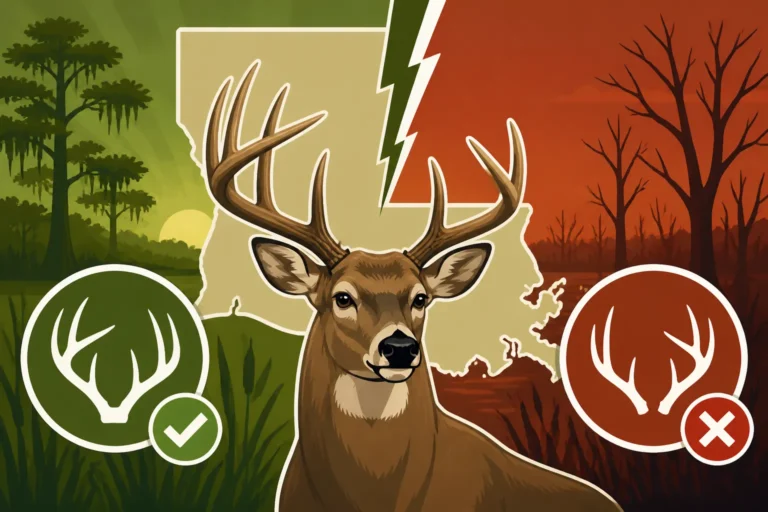
The LDWF has been very transparent in establishing and communicating the boundaries of its CWD Management Zones. These zones aren't arbitrary; they are meticulously drawn to encompass the areas where positive cases have been found and where the risk of transmission is highest. Currently, the bulk of the confirmed CWD-positive deer have come from within these designated zones, predominantly in the northeastern parishes that border other states with established CWD populations. The intensive sampling efforts within these zones are precisely Why Tensas Parish Drives Louisiana's CWD Count is a key piece of information for hunters.
These zones are typically broken down into an "Enhanced Mitigation Zone" and a "Buffer Zone," each with its own set of rules regarding baiting, carcass movement, and mandatory testing. For example, knowing How the Fifteen-Mile CWD Zone Radius Works around a confirmed case is vital for understanding why certain parishes are included. Hunters relying on digital mapping tools like those offered by GoHunt can often overlay these CWD zone boundaries onto their hunting maps, making it easier to see if their lease or public land hunt falls within a restricted area. It’s a dynamic situation, and the number of positive detections guides where these zones are drawn and how they are managed.
Here's a simplified look at the zones:
| Zone Type | Primary Purpose | Key Regulations (general) |
|---|---|---|
| Enhanced Mitigation | Containment & intense surveillance | Mandatory testing, baiting ban, carcass restrictions |
| Buffer Zone | Prevent further spread beyond mitigation zone | Baiting restrictions, carcass movement restrictions (often) |
As positive cases are confirmed, these zones can expand or shift, so checking the latest LDWF information is crucial.
The Role of Deer Movement and Human Factors
Deer, being wild animals, don't recognize our parish lines or management zones. Their natural movements are a primary driver of CWD spread. A buck chasing a doe during the rut, or a herd migrating for food, can carry the disease into new territories. This natural movement makes containment incredibly challenging, especially in areas with high deer densities.
However, human factors also play a significant role. The transportation of deer carcasses, or even parts of them, from a CWD-positive area to a clean area, is a major concern. This is why you'll hear so much about Louisiana Carcass Movement Restrictions. Baiting deer, while a popular practice for some hunters, can also concentrate deer at a single site, increasing the chances of CWD transmission through saliva, urine, and feces left on the ground. This concern is why regulations like The Enhanced Mitigation Zone Baiting Ban and The CWD Buffer Zone Baiting Rules were put into place. Hunters need to be aware that even bringing home an unboned deer from a CWD zone, even if they're not hunting in that zone, could contribute to the spread if not handled correctly.
Louisiana's Proactive Defense: LDWF's Management Strategies
The minute CWD was confirmed, the LDWF swung into action, not just with monitoring, but with a comprehensive strategy aimed at containing the disease and minimizing its impact. These aren't just arbitrary rules; they are science-backed efforts to protect our deer herd and hunting future.
Mandatory Testing and Hunter Responsibilities
One of the cornerstones of Louisiana's CWD management strategy is mandatory testing, particularly within the established CWD Management Zones. If you harvest a deer in one of these zones, it's not just a suggestion – it's a requirement to submit a sample for CWD testing. This isn't just about collecting data; it's about providing critical real-time information to track the disease and adjust management plans. You'll find specific dates and locations for Mandatory Testing Inside a Louisiana CWD Zone, often at designated drop-off sites or check stations.
This mandatory testing puts a shared responsibility on hunters. We are the eyes and ears in the field, and our participation is vital. The LDWF works hard to make the process as straightforward as possible, often setting up convenient Finding a Louisiana CWD Sampling Location during peak hunting weekends. It might feel like an extra step, but it's a small price to pay for the health of our deer herd and the longevity of our hunting tradition. Companies like GoHunt can provide updated maps that highlight these testing locations alongside CWD zones.
Navigating Carcass Restrictions and Baiting Bans
Beyond testing, two other significant changes impact hunters directly: carcass movement restrictions and baiting bans. The logic behind carcass restrictions is simple: the CWD prion, the infectious agent, is concentrated in certain parts of the deer, particularly the brain, spinal cord, and lymph nodes. Transporting an entire carcass from a CWD zone to a non-CWD zone risks inadvertently introducing the disease to a new area. That's why rules on Moving a Deer Carcass Out of a CWD Zone are so strict; typically, only boned-out meat, cleaned antlers, or taxidermy-ready hides are permitted to leave.
Similarly, baiting bans are a preventative measure. Deer naturally congregate at food sources, but bait piles concentrate them unnaturally in a small area, increasing nose-to-nose contact and the likelihood of CWD transmission between animals. This is why you'll find The Enhanced Mitigation Zone Baiting Ban strictly enforced. These regulations are designed to disrupt the disease's natural spread patterns, even though they can be frustrating for hunters accustomed to different practices. It's all part of adapting to the new reality of CWD in our state.
Living with CWD: Impacts on Hunters and Deer Season
CWD isn't just a biological problem; it's a hunting problem. It affects how we plan our hunts, what we do with our harvest, and even how we view the future of deer hunting in Louisiana. It’s a challenge, but one we're facing head-on, much like we learn about Louisiana's Chronic Wasting Disease Zones.
Adjusting Hunting Practices in CWD Areas
Hunting in a CWD-affected area requires a shift in mindset and tactics. First and foremost, you need to be intimately familiar with the specific regulations for the area you're hunting. Are you in an Enhanced Mitigation Zone? A Buffer Zone? The rules for Louisiana's Chronic Wasting Disease Zones can vary significantly. This might mean scouting new areas if your traditional spots are now under a baiting ban, or planning for where you'll get your deer tested if you're in a mandatory sampling area.
Beyond regulations, there's a heightened awareness around deer health. Hunters are encouraged to report any deer exhibiting signs of illness, such as excessive drooling, emaciation, or unusual behavior. While these signs aren't definitive proof of CWD, reporting them helps the LDWF monitor the herd's overall health. It's about being a responsible steward of the resource, not just a harvester. For some, it might even mean exploring new hunting methods or areas, perhaps trying Basin Tactics for Louisiana Swamp Deer if their usual farm country spot is heavily impacted by CWD regulations.
The Long-Term Picture for Louisiana's Deer Herd
The long-term impact of CWD on Louisiana's deer herd is still unfolding, and it's something the LDWF continues to monitor closely. Unlike some other diseases, CWD is always fatal to deer, though it can take months or even years for symptoms to appear. The presence of CWD introduces a new layer of complexity to deer management, moving beyond just population control to disease management.
While the number of confirmed CWD-positive deer in Louisiana, while concerning, is a fraction of the overall deer population, the concern is about preventing significant increases and widespread distribution. The state is committed to ongoing surveillance, research, and public education to mitigate the disease's spread. As hunters, our continued cooperation with testing, adherence to regulations, and support for wildlife management efforts are crucial for the health of our herd. It’s not just about one season; it’s about ensuring that future generations can enjoy the rich tradition of White-Tailed Deer Across Louisiana. This challenge means we need to stay informed and flexible, adapting our traditions to protect what we love.
Disclaimer
This article is for general informational purposes only and does not constitute professional advice. Laws, prices and regulations vary by location and change over time. Consult a qualified professional for guidance on your specific situation.