Which Parish Found Louisiana’s First CWD Case
The news of Chronic Wasting Disease (CWD) arriving in Louisiana was a moment many of us in the hunting community had dreaded for years. When the first confirmed case hit, it sent ripples of concern and uncertainty through deer camps and wildlife departments alike, making hunters everywhere wonder how this would change our cherished traditions. This comprehensive guide will walk you through the details of Louisiana's initial CWD discovery, explain what this disease means for our deer herd, and outline the crucial steps the Louisiana Department of Wildlife and Fisheries (LDWF) and hunters are taking to manage its spread.
The Day the News Broke: Louisiana's First CWD Discovery
I remember the feeling, a mix of apprehension and resignation, when the official announcement came. We’d seen CWD creeping closer from neighboring states for a long time, and it felt like an inevitable, if unwelcome, guest. When it finally arrived, it wasn't just a headline; it was a shift in how many of us would approach deer season from then on.
The January 2022 Discovery
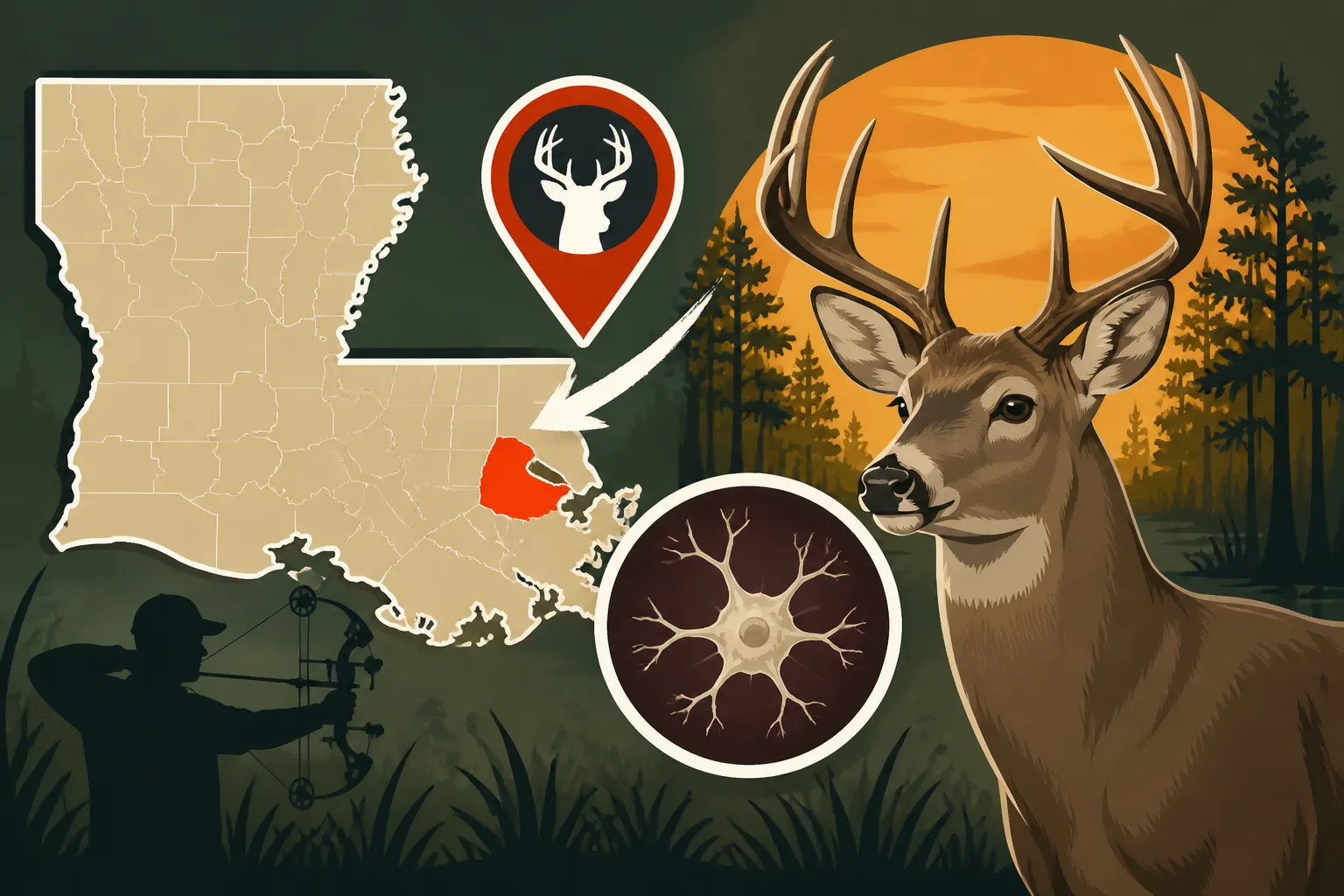
Louisiana’s first confirmed case of Chronic Wasting Disease was detected in a harvested white-tailed deer in Tensas Parish. The deer, an adult buck, was sampled as part of routine CWD surveillance efforts by the LDWF. While we'd all been hoping to avoid it, finding that first positive sample on January 28, 2022, officially marked the disease's presence within our state's borders. This wasn't some isolated incident in a far-off state; it was right here, in a parish many of us have hunted for years. This particular discovery immediately put Tensas Parish and surrounding areas under the microscope, as biologists scrambled to understand the scope of the local infection. For those deeply invested in White-Tailed Deer Across Louisiana, this was a stark reminder of the challenges facing our herd.
Why This Case Rocked the State
The detection of CWD in Tensas Parish was a significant blow because it confirmed what many feared: the disease had crossed into Louisiana. Tensas, known for its rich bottomland habitat and strong deer populations, is a popular hunting destination. The parish is part of the broader northeast region of Louisiana, an area with a strong deer hunting culture and some of the state's most productive deer herds. The initial find immediately raised questions about how long the disease might have been present undetected and what the implications would be for future hunting seasons, deer management strategies, and even the safety of venison. It wasn't just about a single deer; it was about protecting an entire resource that's deeply woven into the fabric of Louisiana's outdoor heritage. Suddenly, conversations at deer camp weren't just about big bucks and cold fronts, but about disease transmission and testing protocols.
Understanding the Threat: What is Chronic Wasting Disease?
Before we can even begin to talk about management, it’s absolutely essential to understand what CWD actually is. It's not your typical bacterial or viral infection, and that's precisely what makes it so insidious and difficult to combat. Many hunters, myself included, had to do a deep dive into the science to truly grasp the gravity of the situation.
The Science Behind the Sickness
Chronic Wasting Disease is a neurological disease affecting deer, elk, moose, and reindeer (cervids). It’s caused by abnormal proteins called prions. Unlike bacteria or viruses, prions aren't living organisms, which means they can persist in the environment for years, making eradication incredibly challenging. These prions essentially turn a healthy animal's brain tissue into a spongy mess, leading to neurological symptoms and, eventually, death. The disease is highly contagious and spreads through direct animal-to-animal contact, as well as indirectly through contaminated environments. Deer shed prions through saliva, urine, and feces, which can then contaminate soil, plants, and water sources. This environmental persistence is why CWD is such a game-changer for deer management; it's not just about infected animals, but about contaminated landscapes. Understanding Chronic Wasting Disease Risk in Louisiana is now a critical part of being a responsible hunter.
Recognizing the Signs in the Field
It's heartbreaking to think about, but knowing what to look for can help with early detection. Deer infected with CWD might not show symptoms for a long time, sometimes over a year, but once they do, the disease is always fatal. Classic signs include drastic weight loss, which is where the "wasting" in CWD comes from. You'll often see them looking emaciated, almost like they're starving, even when food is available. Other symptoms can include stumbling, poor coordination, excessive drooling, lethargy, head tremors, and a noticeable change in behavior, such as a lack of fear of humans. They might stand alone, with a vacant stare, or appear disoriented. These signs are unfortunately shared with other ailments, which is why testing is so crucial for definitive diagnosis. If you ever observe a deer exhibiting these symptoms, it's vital to report it to the LDWF immediately rather than harvesting it, as this aids in surveillance efforts.
The Immediate Response: LDWF's Actions and Emergency Rules
Once CWD was confirmed in Tensas Parish, the LDWF didn't waste any time. The department quickly implemented a series of emergency rules and established specific management zones to try and contain the spread and gather more data. For many of us, it felt like a sudden shift in the rulebook, but it was absolutely necessary.
Establishing the CWD Management Zones
Following the initial detection, the LDWF acted swiftly to establish a CWD Control Area, which included an "Enhanced Surveillance Zone" and a "Buffer Zone." The Enhanced Surveillance Zone was centered around the confirmed positive case in Tensas Parish, encompassing areas where the risk of additional cases was highest. This zone required mandatory CWD testing for all harvested deer, increased surveillance efforts, and strict carcass movement restrictions. The Buffer Zone surrounded the Enhanced Surveillance Zone, serving as an additional layer of protection and requiring specific precautions, though with slightly less stringent rules. These zones were designed to aggressively monitor and detect any further spread of the disease. Over time, these zones have evolved based on subsequent findings, highlighting the dynamic nature of CWD management. Understanding Louisiana's Chronic Wasting Disease Zones is now a non-negotiable part of hunting in affected areas.
New Regulations for Hunting and Carcass Movement
The implementation of CWD zones brought with it a host of new regulations that hunters needed to understand quickly. Perhaps the most significant change for many was the baiting ban within the Enhanced Surveillance Zone. This was a tough pill to swallow for some, as baiting is a common practice on private lands in Louisiana, but it was deemed a necessary step to reduce deer concentration at artificial feed sites, which can facilitate prion transmission. For a deeper dive into the specifics, you can check out information on The Enhanced Mitigation Zone Baiting Ban.
Another critical regulation concerned carcass movement. To prevent the unintentional spread of CWD prions, hunters are now restricted from moving whole deer carcasses or certain parts out of the CWD control areas. Only specific parts, such as deboned meat, clean antlers, or taxidermy-ready hides, can be transported outside the zone. This means if you harvest a deer within the CWD zone, you pretty much need to process it there. This can be a logistical challenge for hunters who travel from outside the zone or for those who rely on commercial processors located elsewhere. It’s a real headache, but it’s for a good reason. LDWF also emphasized Louisiana Carcass Movement Restrictions to all hunters.
The table below summarizes some of the key regulations immediately put into place and their purpose:
| Regulation Type | Key Action | Purpose |
|---|---|---|
| CWD Management Zones | Enhanced Surveillance & Buffer Zones defined | Concentrate resources, monitor spread |
| Mandatory Testing | All harvested deer in ESZ must be tested | Detect prevalence, track spread |
| Carcass Movement Restrictions | Only specific parts allowed out of zones | Prevent prion transfer to uninfected areas |
| Baiting & Feeding Ban | No bait or feed in ESZ | Reduce deer congregation, lower transmission risk |
| Antler Restrictions | Potentially modified within zones | Manage age structure, reduce spread |
| Deer Reporting | Emphasized digital reporting via LDWF app | Improve data collection speed and accuracy |
Living with CWD: Long-Term Management and Hunter's Role
The initial shock of CWD hitting Louisiana has subsided, but the reality of managing it for the long haul has set in. This isn't a problem that will go away quickly. It requires sustained effort from wildlife managers and, critically, from every single hunter who loves our state's outdoors.
Mandatory Testing and Sampling Stations
One of the cornerstones of Louisiana's long-term CWD strategy is robust surveillance, which relies heavily on mandatory testing. If you’re hunting in a designated CWD management zone, reporting your harvest and submitting a sample for CWD testing isn't just a suggestion—it's the law. The LDWF has established numerous voluntary and mandatory Louisiana CWD Testing for Hunters and sampling stations, especially during deer season, to make this process as convenient as possible. These stations can be physical check stations, self-service kiosks, or partnerships with taxidermists and processors. This data is absolutely vital for biologists to monitor the disease's prevalence, track its geographical spread, and inform future management decisions. Many reputable hunting apps and mapping tools, like GoHunt, have integrated CWD zone information and sampling station locations, making it easier for hunters to find nearby resources. Checking your Scouting With the LDWF App is a good practice before hitting the woods to confirm the latest regulations and testing sites.
Responsible Carcass Handling and Disposal
Beyond testing, how hunters handle and dispose of deer carcasses is profoundly important in preventing CWD spread. Since prions can remain infectious in the environment for extended periods, simply leaving a carcass where it drops, especially if it was harvested in a CWD-positive area, poses a risk. The LDWF strongly encourages hunters to process deer at the harvest site whenever possible, taking only deboned meat, clean skull plates, and capes out of the CWD zone.
For any remaining carcass parts, proper disposal is critical. This usually means double-bagging and disposing of them in an approved landfill or burying them deep enough to prevent scavengers from accessing them. Never dispose of carcasses in ponds, streams, or along roadways. This might seem like an extra hassle, but it’s a necessary step to protect our deer herd and hunting future. Learning about Finding a Louisiana CWD Sampling Location is just as important as knowing where to dispose of remains safely.
By understanding the nature of CWD, adhering to LDWF regulations, actively participating in surveillance through testing, and practicing responsible carcass disposal, Louisiana hunters play an indispensable role in mitigating the impact of this challenging disease. It’s a shared responsibility, and our commitment is key to preserving our hunting heritage for generations to come.
Disclaimer
The information provided in this article is for general guidance and informational purposes only. Hunting regulations, seasons, and CWD management zones are subject to change by the Louisiana Department of Wildlife and Fisheries (LDWF). Always consult the most current official LDWF regulations and advisories before participating in any hunting activities.