Louisiana Feral Hog Regulations
The persistent, ever-growing challenge of feral hogs in Louisiana is something every landowner and hunter here understands deeply. These intelligent, destructive animals cause millions of dollars in agricultural damage annually and pose a significant threat to native wildlife and ecosystems. If you're looking to understand the nuanced regulations and best practices for hunting and managing these pervasive pests, you've come to the right place. This comprehensive guide will walk you through everything you need to know about Louisiana's feral hog regulations, from legal methods to licensing, helping you become a more effective and compliant hog hunter.
Understanding the Feral Hog Problem in Louisiana
Before we dive into the nitty-gritty of regulations, it’s crucial to grasp why Louisiana, like so many Southern states, has such liberal rules for feral hogs. These aren't just another game animal; they are an invasive species, an ecological menace that reproduces at an astonishing rate. Ignoring the impact of these animals would be a disservice to our farmers, our native wildlife, and our fragile wetlands.
The Ecological and Agricultural Damage Hogs Cause
The destruction wrought by feral hogs across Louisiana is truly staggering. They wallow in wetlands, destroying native vegetation and creating channels that accelerate erosion, especially in our coastal marshes. Their rooting behavior, which involves tearing up the soil with their powerful snouts in search of food, devastates agricultural fields, ripping through crops like corn, soybeans, and rice. Imagine a farmer in Tensas Parish waking up to find an entire field of newly sprouted corn plowed under overnight – that's a common, heartbreaking reality. This damage isn't just an inconvenience; it's an economic crisis for many. Furthermore, feral hogs compete directly with native wildlife, like deer and turkeys, for food sources such as acorns and other mast. They'll even prey on the fawns of white-tailed deer and turkey poults, further exacerbating the challenges our cherished game species already face. This ecological imbalance is a primary driver behind the state's aggressive stance on hog management. You can learn more about the specific economic toll these animals take in our piece on Crop Damage Hogs Cause in Louisiana.
The Rapid Reproduction Cycle of Feral Hogs
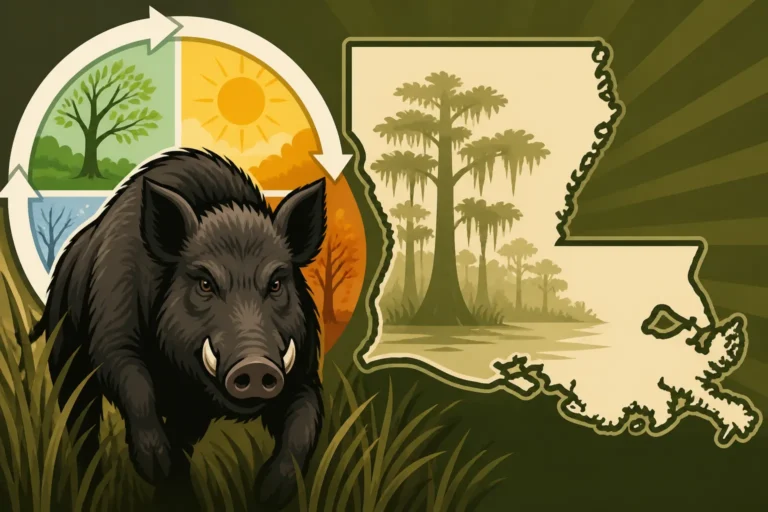
What makes the feral hog problem so incredibly difficult to control is their astonishing reproductive capacity. Unlike deer, which typically have one or two fawns once a year, a sow (female hog) can have two litters of piglets per year, sometimes even three under optimal conditions. Each litter can range from 4 to 12 piglets, meaning a single sow can produce 10 to 20 offspring annually, or even more. These piglets reach sexual maturity in just 6 to 8 months. This exponential growth rate means that even if hunters remove a significant number of hogs from an area, the population can rebound alarmingly fast if management efforts aren't sustained and aggressive. It's truly a numbers game, and unfortunately, the hogs are very good at winning it without constant human intervention. Understanding How Wild Hogs Spread Across Louisiana helps illustrate why this rapid reproduction is so problematic for the state.
General Regulations for Hunting Feral Hogs in Louisiana
Louisiana takes a very pragmatic approach to feral hog management, recognizing them as an invasive species rather than traditional game. This means the regulations are generally more permissive than those for deer or turkey, encouraging their removal whenever possible. However, it's crucial to understand the distinctions between hunting on private land versus public land, as the rules can vary significantly.
Year-Round Hunting on Private Land
If you're fortunate enough to hunt on private land in Louisiana, you'll find the regulations for feral hogs to be remarkably liberal. Essentially, feral hogs are considered an unclassified quadrupeds, which means they can be hunted year-round, day or night, with almost any legal firearm or archery equipment. There are no closed seasons, no bag limits, and no sex restrictions on private property. This flexibility is a direct response to the immense damage hogs inflict on agricultural interests and private property. Landowners and their guests can actively pursue hogs without the seasonal constraints that apply to other game animals. This means if you see a hog tearing up your food plot in July, you can grab your rifle and take care of the problem then and there. This year-round approach is a cornerstone of the state's hog management strategy, empowering individuals to protect their investments. For more tactical advice on this, check out Hunting Louisiana's Year-Round Feral Hogs.
Public Land Regulations and Specific WMA Rules
Hunting feral hogs on public lands, primarily Louisiana Wildlife Management Areas (WMAs) and National Forests, operates under a different set of rules compared to private land. While the principle of hog removal remains, public lands often have specific regulations designed to ensure hunter safety, manage overall wildlife, and prevent conflicts with other hunting seasons. You cannot simply hunt hogs year-round on every WMA. Instead, hog hunting is typically permitted during established deer or small game seasons, and often during designated hog-specific hunts. The methods allowed (e.g., firearms, archery, dogs) and even the hours of hunting can be restricted. For instance, some WMAs might prohibit night hunting or require specific permits. It is absolutely essential to consult the Louisiana Department of Wildlife and Fisheries (LDWF) WMA regulations pamphlet or their website for the specific public area you plan to hunt. Rules can change annually, and what's legal on one WMA, like Richard K. Yancey, might be strictly prohibited on another, such as Sherburne. Familiarizing yourself with these area-specific rules is paramount to avoid fines and ensure a legal hunt. Many hunters use mapping applications, such as those offered by GoHunt, to verify public land boundaries and specific WMA overlays, which often include links to current regulations. This is particularly useful when navigating Louisiana Wildlife Management Areas.
Legal Hunting Methods and Equipment for Hogs
One of the reasons feral hogs are such a challenging opponent is their resilience and adaptability. Louisiana's regulations reflect this by allowing a wide array of methods and equipment to encourage their removal. From traditional firearms to modern thermal optics, hunters have many tools at their disposal to combat these destructive animals.
Firearms, Archery, and Primitive Weapons
On private land, the options for taking feral hogs are incredibly broad. You can use virtually any legal firearm typically used for deer hunting, including centerfire rifles, shotguns loaded with slugs or buckshot, and handguns. There are no minimum caliber restrictions specifically for hogs, meaning you can choose the most effective tool for your particular situation. Similarly, archery equipment, including compound bows, recurve bows, and crossbows, is perfectly legal. Primitive firearms, such as muzzleloaders and single-shot breech-loading rifles, are also allowed. The key here is effectiveness and safety. You want a weapon that can humanely dispatch a hog, which are notoriously tough animals. While small rimfire cartridges might be legal, a more powerful centerfire round or a heavy broadhead is generally recommended for a quick, ethical kill. Always confirm local parish ordinances, though, as some areas might have restrictions on firearm discharge near residences, even on private land.
On public lands, especially WMAs, the allowed methods might be more restrictive and often align with the concurrent game season. For example, during an archery-only deer season on a WMA, you would typically be limited to archery equipment for hogs as well. During a firearms season, conventional firearms would be permitted. Always double-check the specific WMA regulations for any method restrictions before heading out.
Trapping and Snaring Regulations
Beyond active hunting, trapping is one of the most effective and widely used methods for feral hog control, especially when dealing with large populations or particularly elusive groups. Louisiana allows the use of various traps, including live traps (cage traps, corral traps) and snares, to capture feral hogs.
Live traps are generally preferred as they allow for the selective release of non-target animals, which is crucial for ethical wildlife management. These traps can range from small individual cages to large, elaborate corral traps designed to capture an entire sounder (group of hogs) at once. Baiting these traps with corn, soured grain, or commercial attractants is a common and effective strategy. You can find detailed information on Trapping Louisiana Feral Hogs if you're looking to implement this method.
Snares are also permitted but require more careful placement to minimize the risk to non-target animals. Snaring involves setting a cable loop designed to tighten around a hog's neck or leg as it passes through a travel corridor. While effective, snares require regular checking to ensure the humane dispatch of captured hogs and prevent prolonged suffering or entanglement of other wildlife. It's vital to follow all LDWF guidelines on snare construction and placement to ensure legality and ethical practice. Remember, proper permitting may be required for certain types of trapping, especially if you're conducting commercial trapping operations.
Night Hunting with Lights and Thermal Optics
Hunting feral hogs at night can be incredibly productive, as hogs are often most active during cooler nighttime hours, especially in warmer months. On private land, Louisiana regulations are very permissive regarding night hunting. You are generally allowed to use artificial lights, including spotlights, weapon-mounted lights, and even vehicle-mounted lights, to locate and shoot feral hogs.
The advent of modern thermal and night vision optics has revolutionized night hunting. These technologies allow hunters to detect hogs from long distances, even in complete darkness, without the need for visible light. This is incredibly effective for population control and is fully legal on private land in Louisiana. Many hunters, including those using sophisticated gear often reviewed on GoHunt, rely on these tools to maximize their harvest rates. However, just like with daylight hunting, safety is paramount. Always be absolutely sure of your target and what lies beyond it, as visibility is inherently limited at night. When considering night hunting, especially with advanced optics, consult Night Hunting Hogs With Lights on Private Land for specific guidance.
On public lands, night hunting for hogs is typically prohibited or highly restricted. WMAs almost universally have specific hunting hours, usually from civil dawn to civil dusk, that prevent nighttime activities. There might be rare exceptions or specific quota hunts that allow it, but these are few and far between and would be explicitly stated in the WMA regulations. Assume night hunting is not allowed on public land unless you have verified it directly with the LDWF for that specific area.
Special Considerations for Feral Hog Hunting
Beyond the basic methods, there are several nuances to hog hunting in Louisiana that warrant special attention. These include the use of hunting dogs, baiting practices, and crucial ethical considerations that apply to all hunting activities. Understanding these details will help ensure your hunt is both legal and responsible.
Hunting Hogs with Dogs
The tradition of hunting hogs with dogs runs deep in Louisiana culture, especially in the thick swamps and dense bottomlands where tracking these elusive animals can be incredibly challenging. Louisiana allows the use of dogs for hunting feral hogs, but the regulations surrounding this practice are critical to understand, particularly when moving between private and public lands.
On private land, using dogs to locate, bay, and even catch hogs is a common and highly effective method. Hunters typically use a combination of "bay dogs" to find and hold the hog in place by barking, and "catch dogs" that move in to physically restrain the hog, allowing the hunter to dispatch it with a knife or handgun. This method requires specialized, well-trained dogs and an understanding of dog behavior and hog dynamics. It’s an active and often intense form of hunting, requiring quick decision-making and a strong focus on animal welfare for both the dogs and the hog.
However, on public lands like WMAs, the use of dogs for hog hunting is much more restricted. Many WMAs prohibit the use of dogs for hog hunting altogether to prevent conflicts with other game species, avoid disturbing other hunters, and minimize the risk of dogs wandering off property. Some WMAs may allow it during specific seasons or in designated areas, but these exceptions are rare and always require explicit verification in the WMA's regulations. Never assume you can run dogs on public land without checking first. Our detailed article on Running Dogs on Louisiana Feral Hogs provides an in-depth look at this popular yet regulated method.
Baiting Regulations for Hogs
Baiting is a highly effective strategy for attracting feral hogs to a specific location, making them easier to target for removal. Given their destructive nature and status as an invasive species, Louisiana's baiting regulations for hogs are significantly more lenient than those for deer or turkey.
On private land, baiting for feral hogs is generally permitted year-round. You can use various attractants, from corn (soured or unsoured) to commercial hog attractants, to draw hogs into a specific area for hunting or trapping. Many hunters establish dedicated hog bait sites, returning regularly to refresh the bait and monitor activity, often with trail cameras. This continuous baiting strategy can be incredibly productive for consistent hog control. When you're thinking about setting up your own bait station, consider the comprehensive advice in Building and Freshening a Hog Bait Site.
However, the situation changes dramatically on public lands. Baiting of any kind for hogs is typically prohibited on most WMAs and other public hunting areas. This rule is primarily in place to prevent the incidental baiting of other game animals, such as deer, which have strict anti-baiting regulations. The presence of Chronic Wasting Disease (CWD) in Louisiana also adds another layer of caution; baiting can concentrate animals and potentially facilitate disease transmission. Therefore, if you're hunting hogs on public land, assume baiting is not allowed unless the WMA-specific rules explicitly state otherwise. For hunters focused on public lands, learning how to hunt Hunting Hogs Without Bait or Dogs becomes a crucial skill.
Safety and Ethical Hunting Practices
Regardless of whether you're hunting on private or public land, or what methods you employ, safety and ethical conduct must always be your top priority. Feral hogs, especially large boars, can be dangerous animals, capable of inflicting serious injury with their tusks. Always approach a downed hog with extreme caution, ensuring it is fully deceased before handling.
Ethical hunting practices dictate that you strive for a quick, humane kill. This means using appropriate caliber firearms or sharp, well-placed broadheads. Practicing your shot placement is essential to minimize suffering and ensure efficient removal. Even though hogs are a nuisance, they are still living creatures deserving of a respectful and swift end. Our guide on Shot Placement on a Feral Hog offers crucial advice for achieving this.
Furthermore, always be mindful of your surroundings, especially when hunting with dogs or at night. Know your backstop, identify your target positively, and be aware of any other hunters or landowners in the vicinity. The responsibility of a hunter extends beyond just pulling the trigger; it encompasses adherence to all regulations, ensuring public safety, and upholding the integrity of the sport.
Carcass Disposal and Disease Prevention
The responsible handling and disposal of feral hog carcasses is a crucial, yet often overlooked, aspect of hog hunting. Beyond the immediate act of harvesting, hunters have a vital role to play in preventing the spread of diseases that these animals can carry, and in maintaining a clean and healthy environment.
The Importance of Proper Carcass Disposal
Feral hogs can carry a host of diseases and parasites, some of which are transmissible to humans, livestock, and other wildlife. When a hog is harvested, improper disposal of the carcass can create several problems. Leaving carcasses exposed in accessible areas can attract other scavengers, potentially concentrating animals and facilitating disease transmission. It can also create an unsightly and unsanitary situation, particularly near public access points or populated areas.
The most responsible method of carcass disposal is deep burial or removal to an approved landfill. Deep burial prevents scavengers from accessing the remains and helps to contain any potential pathogens. If burial isn't feasible, double-bagging the carcass and taking it to a landfill designed for animal waste is the next best option. Never dump carcasses in waterways, on public roadsides, or near residential areas. This applies not just to the large body, but also to gut piles. While gut piles are generally less problematic, they should ideally be left deep in the woods, away from human or domestic animal contact. Your actions in proper disposal contribute directly to the health of Louisiana's ecosystem and the safety of its residents.
Understanding Disease Risks and Precautions
Feral hogs are known carriers of several diseases, including swine brucellosis, pseudorabies, leptospirosis, and E. coli. While the risk of transmission to humans is relatively low with proper precautions, it's not zero. Swine brucellosis, for example, can cause flu-like symptoms in humans and requires careful handling.
When field dressing or butchering a hog, always wear gloves to minimize direct contact with blood and internal organs. Avoid touching your face or eyes. After handling the carcass, thoroughly wash your hands, knives, and any tools with hot, soapy water, and disinfect them. Cooking hog meat to an internal temperature of at least 160°F (71°C) will kill most bacteria and parasites. It's also advisable to avoid consuming meat from any hog that appears sick or lethargic.
While Chronic Wasting Disease (CWD) is primarily a deer disease, the LDWF's heightened awareness due to CWD findings in Louisiana underscores the general importance of responsible carcass handling for all wildlife. Limiting the movement of carcasses, especially from areas with known disease outbreaks, is a critical step in preventing further spread. Hunters should stay informed about any disease advisories issued by the LDWF, particularly for their hunting zones. This vigilance protects not just humans, but also our cherished wildlife populations. For details on related issues, consider reviewing Handling Venison From a CWD Management Zone.
Hunting Licenses and Permits for Hogs
Navigating the licensing requirements for hunting feral hogs in Louisiana can sometimes feel a bit like wading through the cypress knees in a backwater slough – it's not always straightforward, but it's absolutely necessary. While hogs are considered a nuisance, the general rule of thumb is that if you're hunting any animal in Louisiana, you generally need a valid hunting license.
General Hunting License Requirements
For the vast majority of hunters pursuing feral hogs, whether on private or public land, a valid Louisiana hunting license is required. This typically includes a Basic Hunting License for residents. Non-residents will need a Non-Resident Basic Hunting License or a short-term equivalent. While feral hogs themselves don't have specific tag requirements like deer or turkey, the act of hunting them still falls under the umbrella of regulated hunting activities.
The logic here is simple: even if your primary target is hogs, you're still engaged in a hunting activity that could intersect with other game or necessitate a conservation officer checking your credentials. Therefore, ensure your basic hunting license is current before heading afield. This applies whether you're using a rifle, bow, or even trapping. The license helps fund the Louisiana Department of Wildlife and Fisheries (LDWF) conservation efforts, which ultimately benefit all wildlife, including managing the hog population. You can easily purchase your license online through the LDWF website or at authorized vendors. GoHunt also offers resources that can guide you through the process of securing the necessary Louisiana hunting licenses.
Specific Permits for Trapping or Commercial Operations
While a general hunting license covers most recreational hog hunting, there are specific circumstances where additional permits or licenses might be necessary.
For instance, if you're engaging in trapping activities for commercial purposes – meaning you intend to sell the hogs or their meat – you would likely need a trapper's license or a similar commercial permit. These are different from a standard hunting license and often involve more stringent regulations regarding trap types, checking schedules, and reporting requirements. Farmers and landowners who are regularly trapping hogs for agricultural damage control might also have specific rules or assistance programs they can enroll in through the LDWF or USDA.
Similarly, if you're operating as a professional hog removal service or guide, you would certainly need appropriate business licenses and potentially specific LDWF permits depending on the scope of your operations. The distinction often lies in the intent: recreational removal versus commercial enterprise. Always err on the side of caution and contact the LDWF directly if you have any questions about commercial trapping or specialized hog removal operations to ensure full compliance. It's always better to ask than to face penalties later. Consult Louisiana Hog Hunting Permit Requirements for more nuanced details.
Finding Opportunities: Public Land vs. Private Land
Once you've got your license and understand the regulations, the next big question is: where do you go to find these elusive, destructive critters? The opportunities for hog hunting in Louisiana are diverse, ranging from vast public tracts to smaller private holdings, each presenting its own unique set of challenges and rewards.
Navigating Wildlife Management Areas for Hogs
Louisiana boasts a significant amount of public land managed by the LDWF as Wildlife Management Areas (WMAs). Many of these WMAs hold robust populations of feral hogs, offering excellent opportunities for hunters. However, as discussed earlier, hunting hogs on WMAs comes with specific restrictions.
First and foremost, you'll need a WMA Access Permit in addition to your basic hunting license. These permits are usually inexpensive and help fund the management of these valuable public resources. Next, you must diligently review the regulations pamphlet for the specific WMA you plan to hunt. Each WMA has its own set of rules regarding open hunting days, allowed weapons, hunting hours, and whether hog hunting is permitted outside of other big game seasons. For example, some WMAs might only allow hog hunting during archery deer season, while others may have dedicated hog-only periods.
Scouting is absolutely crucial when hunting hogs on public land. Hogs are highly mobile and their patterns can shift quickly based on food availability, water sources, and hunting pressure. Look for sign: rooted areas, wallows, rubs on trees, and tracks. Utilize mapping tools, such as those often integrated into platforms like GoHunt, to identify potential travel corridors, dense cover, and water sources within the WMA. While it can be more challenging due to pressure and restrictions, successfully hunting hogs on public WMAs like the Atchafalaya Basin WMA or Pearl River WMA offers a rewarding experience for those willing to put in the effort. For a deeper dive, check out our piece on Louisiana Wildlife Management Areas.
Securing Private Land Permission
For many Louisiana hunters, private land offers the most consistent and liberal opportunities for feral hog hunting. With year-round hunting, fewer method restrictions, and no bag limits, private property becomes an ideal location for aggressive hog management. However, gaining access to private land often requires some effort and good relationship-building.
Farmers and landowners, suffering from hog damage, are frequently eager for hunters to help mitigate the problem. The best approach is often a respectful, in-person visit to introduce yourself and offer your services. Be polite, explain your intentions clearly, and always be prepared to provide proof of insurance and your hunting license. Emphasize your commitment to safety and ethical hunting practices. Sometimes, a small gesture of appreciation, like a share of the harvest or help with a chore, can go a long way in building trust.
Once you gain permission, treat the landowner's property with the utmost respect. Close gates, avoid driving off established roads, pick up your trash, and always communicate your hunting plans. Building a solid reputation as a responsible hunter can open doors to long-term access and even lead to opportunities on other properties. Remember, in Louisiana, written permission is often recommended, especially if you plan to hunt frequently or for extended periods. Our guide on Getting Private Land Permission in Louisiana provides excellent tips for navigating these conversations and securing access.
The Role of Hunters in Feral Hog Management
While hunting hogs provides exhilarating opportunities for outdoor enthusiasts, it's vital to recognize that our efforts as hunters play a much larger, critical role in the ongoing struggle against this invasive species. Every hog removed contributes to the greater good, protecting agriculture, native wildlife, and the health of our natural environment.
Contributing to Population Control Efforts
The sheer reproductive capacity of feral hogs means that effective management requires a sustained, multi-pronged approach. Hunters are an indispensable part of this strategy. By actively pursuing hogs, whether through traditional spot-and-stalk hunting, dog drives, or trapping, individual hunters directly contribute to reducing local hog populations. Each hog harvested is one less animal rooting up fields, preying on fawns, or competing with native deer for food.
While recreational hunting alone may not eradicate hogs from a region, consistent pressure from hunters can significantly reduce their numbers and mitigate their devastating impacts. This is especially true on private lands where year-round, intensive hunting can keep populations in check. It's a challenging task, often feeling like a drop in an ocean, but every drop makes a difference. Hunters are truly on the front lines of this ecological battle, and their participation is valued by wildlife agencies and landowners alike.
Reporting and Monitoring
Beyond the harvest itself, hunters can further contribute to feral hog management by reporting their observations and harvests to the Louisiana Department of Wildlife and Fisheries. While there's no mandatory reporting system for hogs like there is for deer, providing information about hog sightings, population trends, and even successful harvests can be incredibly valuable to wildlife biologists. This data helps the LDWF monitor hog distribution, assess population densities, and refine their management strategies.
If you encounter a particularly large sounder, notice significant new hog damage in an area, or harvest a hog that appears sick, reporting this information can be crucial. This kind of grassroots intelligence from observant hunters provides real-time data that professional wildlife managers simply can't gather on their own. Platforms like GoHunt often offer features that allow hunters to log their observations and successes, indirectly contributing to broader data sets that can inform management decisions. By actively participating in reporting and monitoring, hunters elevate their role from simply harvesting animals to becoming citizen scientists, directly assisting in the long-term goal of mitigating Louisiana's pervasive feral hog problem.
Summary of Louisiana Feral Hog Regulations
Here's a quick overview of the key differences in feral hog regulations between private and public lands in Louisiana. Remember, always double-check specific WMA regulations for public land hunting.
| Feature | Private Land | Public Land (WMAs/National Forests) |
|---|---|---|
| Hunting Season | Year-round | Generally restricted to concurrent deer/small game seasons or designated hog hunts; check WMA rules |
| Bag Limit | No limit | No limit (when permitted) |
| Sex Restrictions | None | None (when permitted) |
| Hunting Hours | Day or night | Typically civil dawn to civil dusk; night hunting generally prohibited unless explicitly stated |
| Legal Weapons | Most legal firearms, archery equipment, primitive weapons (no caliber restrictions specifically for hogs) | Aligns with concurrent season (e.g., archery-only during archery season); check WMA rules for specifics |
| Baiting | Generally permitted | Generally prohibited |
| Use of Dogs | Generally permitted (with proper training/safety) | Often prohibited or highly restricted; check WMA rules for specifics |
| Licenses/Permits Required | Basic Hunting License (residents/non-residents) | Basic Hunting License + WMA Access Permit (or equivalent for National Forest) |
| Carcass Disposal | Responsible deep burial or landfill removal encouraged | Responsible deep burial or landfill removal encouraged |
Disclaimer
Please be aware that hunting regulations are subject to change. While every effort has been made to provide accurate and up-to-date information, it is the hunter's sole responsibility to consult the most current Louisiana Department of Wildlife and Fisheries (LDWF) hunting regulations pamphlet or website before engaging in any hunting activities. This guide is for informational purposes only and does not constitute legal advice.