Louisiana Waterfowl Zones and Seasons
The crisp morning air, the distant sound of wingbeats, and the smell of damp marsh grass are all quintessential parts of waterfowl hunting in Louisiana. But let's be honest, figuring out the labyrinth of zones, season dates, and specific regulations can feel like trying to call in a wary pintail from a mile away—confusing and often frustrating. This guide is here to untangle all that, giving you a clear, realistic roadmap to understanding Louisiana's waterfowl zones and seasons so you can spend less time scratching your head and more time chasing ducks and geese.
Understanding Louisiana's Waterfowl Zones
Louisiana is a waterfowl mecca, but it's a big state with incredibly diverse habitats, and that's precisely why our Department of Wildlife and Fisheries (LDWF) has divided it into distinct zones. These aren't arbitrary lines on a map; they're critical for managing our bird populations effectively and providing hunters across the state with the best possible opportunities. Ignoring them isn't just illegal; it can severely impact your hunting success and even lead to fines.
Why Zones Matter for Duck Hunters
The primary reason for waterfowl zones in Louisiana, and really across the flyway, boils down to the biological reality of bird migration and habitat availability. Ducks and geese don't arrive on a single, statewide schedule. What's happening in the brackish marshes of Cameron Parish in November might be entirely different from the conditions in the flooded timber of the Ouachita River basin up north. Different species arrive at different times, and their preferred habitats dictate where they settle. LDWF scientists analyze migration data, habitat conditions, and hunter participation to establish zones that reflect these natural patterns.
This zonal approach allows for tailored season dates and sometimes even specific bag limits that maximize hunting opportunities while ensuring sustainability. Imagine the frustration if the entire state had the same season, and hunters in the south were missing the peak of the green-winged teal migration because the season was set for the later-arriving mallards in the north. The zones help avoid that kind of mismatch, making sure hunters in different regions get a shot at birds when they're most abundant locally. It's all about balancing biological needs with recreational demand, which is no small feat.
Another practical reason for zones is managing hunting pressure. By having different opening and closing dates in various parts of the state, LDWF can spread out the hunting effort, preventing an overwhelming crush of hunters on a single statewide opening day. This also gives birds some respite as they move between zones throughout the season. For hunters, knowing your zone is non-negotiable. Stepping across a parish line, especially near a zone boundary, without realizing you're now under different regulations can turn a successful hunt into a costly lesson. Always double-check your location against the official zone maps before heading out.
The Three Major Zones: Coastal, West, and East
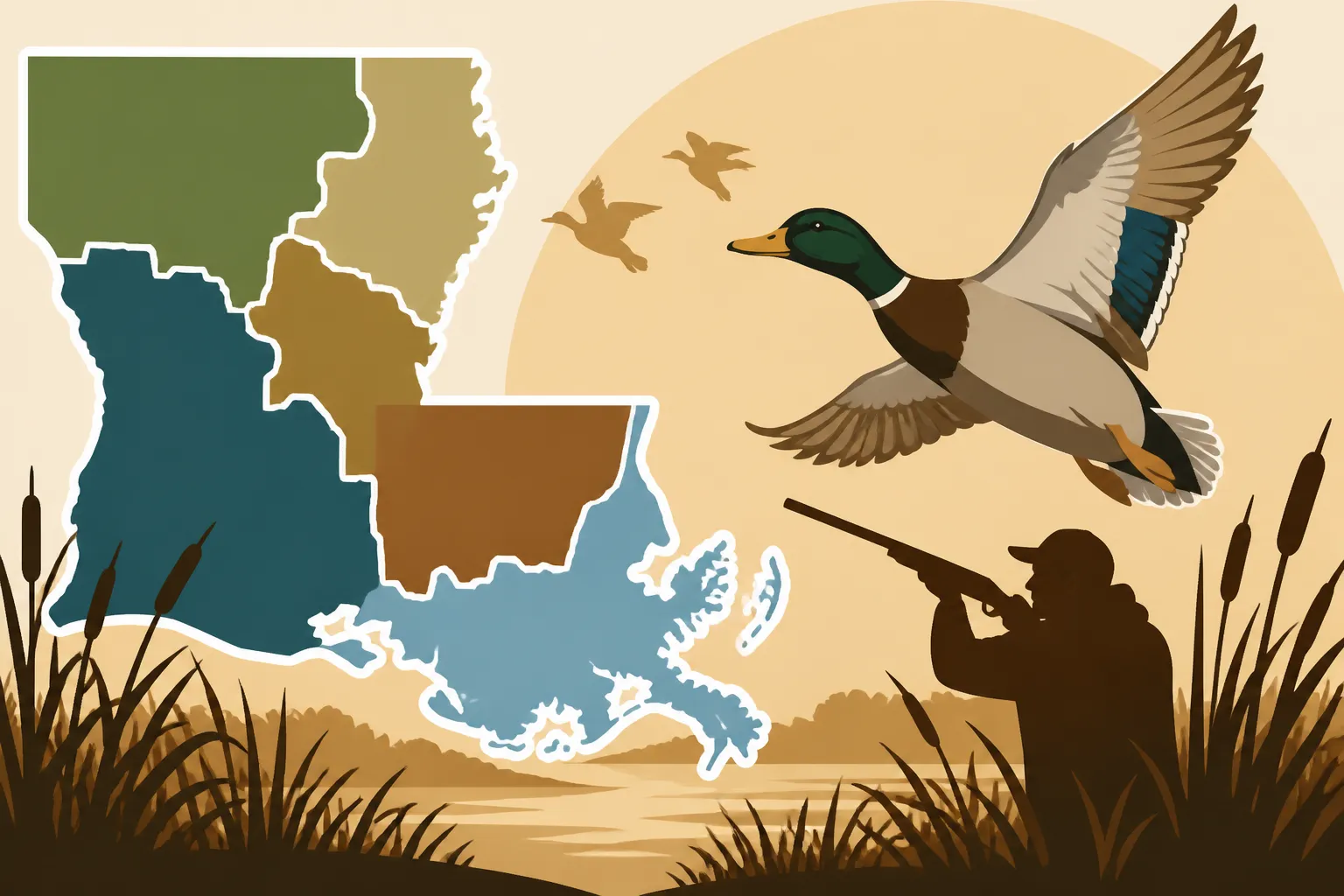
Louisiana is divided into three primary waterfowl zones: the Coastal Zone, the West Zone, and the East Zone. Each offers a unique hunting experience due to its distinctive geography and the types of waterfowl it attracts. Understanding these differences is key to planning a successful season.
The Coastal Zone encompasses a significant portion of Louisiana's southern parishes, stretching along the Gulf Coast. This area is famously characterized by its expansive coastal marshlands, intertidal flats, and vast stretches of rice fields once harvest is complete. It's a critical wintering ground for a huge variety of ducks, including mottled ducks, green-winged and blue-winged teal, gadwalls, pintails, and wigeon. The hunting here often involves airboats or mud boats to navigate shallow waters, layout blinds in cut rice fields, or stationary blinds tucked deep into the marsh. It’s a truly iconic Louisiana waterfowl experience, with ducks flying against a backdrop of endless flatland and distant oil rigs. For a taste of this unique environment, exploring areas like the Vermilion Parish Marsh or the Terrebonne Parish Marsh offers incredible opportunities.
Moving inland and to the west, you'll find the West Zone. This zone primarily covers the southwestern and central parts of the state, including parishes that blend agricultural landscapes with scattered timber and inland lakes. Here, hunters often find themselves targeting ducks in flooded agricultural fields, particularly rice and soybean fields, or in timbered swamps and bayous. Mallards, gadwalls, and wood ducks are common, alongside various diving ducks on larger bodies of water. The hunting methods can vary widely, from permanent blinds on private land to mobile setups in public waters. This zone often benefits from weather pushes that bring new birds down the Mississippi Flyway as the season progresses.
Finally, the East Zone covers the northeastern and eastern portions of Louisiana, including the vast bottomland hardwood forests along the Mississippi River and its tributaries. This is classic "timber hole" country, where mallards reign supreme. Hunters here often focus on flooded timber, backwater sloughs, and agricultural fields adjacent to major river systems. Wood ducks are also prevalent, especially in the smaller creeks and cypress swamps. Access can be challenging, often requiring boats to reach remote hunting spots. This zone is heavily influenced by river stages; high water can open up new hunting grounds in the timber, while low water can concentrate birds in smaller, accessible pockets. Each zone, with its unique characteristics, demands a different approach, making Louisiana a versatile destination for any waterfowl enthusiast.
Zone-Specific Regulations and Exceptions
While the broad strokes of waterfowl hunting regulations apply statewide, the zone system introduces crucial differences you absolutely must be aware of. The most significant divergence is typically in the season dates. The opening and closing dates for the regular duck season, and sometimes even the early teal season, can vary by a week or more between zones. This means if you have hunting grounds in, say, both the West and East Zones, you'll need to meticulously track two separate schedules. A simple mistake of showing up on the wrong date in the wrong zone can quickly lead to a violation.
Beyond general season dates, some specific opportunities or restrictions might also be zone-dependent. For instance, an early season for a particular species might only be allowed in one zone if biological data suggests a healthy population can sustain it there without impacting other zones. While bag limits for core species like mallards or gadwalls are usually consistent across the state, there might be nuanced differences for less common species or in areas with specific conservation needs. This is particularly true for certain types of geese or even some special experimental seasons that pop up occasionally.
It's not just about the when; sometimes it's also about the where within the zone itself. For instance, specific Wildlife Management Areas (WMAs) or National Wildlife Refuges (NWRs) within a zone might have their own micro-regulations, such as specific shooting hours, motor restrictions, or even limitations on hunting days. That’s why it’s imperative to consult the official Louisiana Department of Wildlife and Fisheries (LDWF) waterfowl pamphlet every single year. Don't rely on last year's knowledge or what your buddy heard. The LDWF website and their mobile app are fantastic resources for the most up-to-date information, and using a mapping tool like GoHunt can help you visualize these boundaries and specific WMA rules right on your phone, ensuring you're always on the right side of the law.
Deciphering the Louisiana Duck Seasons
Louisiana's duck season is much more than just a single block of time; it's a carefully structured series of seasons designed to maximize hunter opportunity while managing the resource. From the sweltering heat of early teal to the brisk chill of late-season mallards, there's a unique flavor to each segment. Understanding these distinctions is paramount for any serious duck hunter in the Bayou State.
Early Teal Season: A Unique Opportunity
For many Louisiana waterfowl enthusiasts, the calendar truly kicks off in September with the highly anticipated Early Teal Season. This special hunt, typically lasting about two weeks, is a unique opportunity to target blue-winged, green-winged, and sometimes cinnamon teal before the main duck migration really gets going. These fast-flying, agile little ducks are some of the first to head south, and Louisiana's vast marshes and shallow agricultural fields provide perfect staging and feeding grounds for them.
The early teal season is often characterized by warm, humid weather, a stark contrast to the frosty mornings of the regular duck season. This means hunters need to adjust their gear and strategy. Light clothing, plenty of water, and bug spray are essential. Decoy spreads tend to be smaller, featuring mostly teal decoys, and calling is often more subtle, focusing on short, high-pitched peeps. This season is incredibly popular because it offers an early taste of duck hunting action and provides a chance to scout areas before they get heavily pressured during the later splits. It's also a fantastic way to introduce new hunters to the sport in generally milder conditions.
However, hunting early teal requires diligence. Because other duck species are also present (though not legal to harvest), positive identification is crucial. Blue-winged teal in particular are known for their incredibly rapid migration; they can be here one day and gone the next if a strong front pushes through. Staying informed on Duck Migration Timing Through Louisiana and local scouting reports is key to hitting the peak of the movement. While it's a short window, a successful teal hunt is one of the most exciting ways to kick off the waterfowl season, providing delicious table fare and thrilling action.
The Main Duck Season Splits
Louisiana's general duck season is not continuous but typically broken into two "splits." This split-season approach is a time-tested management strategy used by many states along migratory flyways, and it's something every Louisiana duck hunter learns to live with. Generally, the first split might run from mid-November into early December, followed by a closure, and then a second split that picks up in late December and runs through late January. The exact dates shift slightly each year, so checking the official LDWF regulations is always crucial.
The reasoning behind these splits is multifaceted. Firstly, it's designed to align hunting pressure with the different waves of duck migration. The initial split often coincides with the arrival of early-season migrants like gadwalls, wigeon, and the tail end of the teal. The mid-season break gives birds a chance to rest and disperse, reducing the impact of constant pressure. When the second split opens, it's usually in full swing for the prime mallard flight and other species that arrive later, typically after colder weather has pushed them south from up north. This strategic timing ensures that hunters have a crack at a variety of birds throughout the wintering period.
From a hunter's perspective, the splits offer distinct experiences. The first split can be exciting, often with a good mix of species and a bit more predictable weather. However, the second split, particularly after major cold fronts, is what many hunters live for. This is when the big numbers of mallards and diving ducks are typically present, especially if significant freezes occur further north, pushing birds down into Louisiana. Success in the second split often hinges on adapting to colder temperatures, potentially icy conditions in shallow water, and targeting birds that have been pressured for weeks. Understanding the rhythm of these splits is crucial for planning your hunts and making the most of your time in the blind.
Youth and Veterans Waterfowl Hunting Weekends
Beyond the regular season framework, Louisiana proudly offers special Youth and Veterans Waterfowl Hunting Weekends. These dedicated days are invaluable opportunities that serve multiple important purposes within the hunting community. Typically, these weekends fall outside the regular general season dates, often a week or two before the main opener or during the mid-season split, providing a less pressured hunting environment.
The Youth Waterfowl Hunting Weekend is specifically designed to introduce the next generation to the joys and traditions of duck hunting. Eligible youth, usually 17 years of age or younger, can hunt waterfowl under the supervision of a licensed adult hunter. The focus isn't just on harvesting birds, but on teaching firearm safety, ethical hunting practices, species identification, and the sheer camaraderie of the duck blind. These hunts are often less crowded, allowing for a more relaxed and educational experience for young hunters, sparking a passion that will hopefully last a lifetime. Many seasoned hunters will prioritize taking a youngster out on these days, passing on their knowledge and love for the outdoors.
Similarly, the Veterans Waterfowl Hunting Weekend is a way for the state to honor the service and sacrifices of our military veterans. This special season allows eligible veterans (and sometimes active military personnel) to enjoy a dedicated hunting opportunity. Like the youth hunts, these weekends provide a chance for veterans to connect with the outdoors, often with fellow service members or family, in a setting that acknowledges their unique contributions. It's a small gesture, but a meaningful one, that allows them to experience the peace and challenge of waterfowl hunting. Always check the specific eligibility requirements and dates for both of these special weekends in the annual LDWF regulations, as they can sometimes vary. These programs are vital for sustaining our hunting heritage and showing gratitude to those who serve.
Goose Seasons in the Bayou State
While ducks often steal the spotlight, Louisiana is also a phenomenal destination for goose hunting, offering diverse opportunities for both specklebellies and snow geese. The seasons for these birds often overlap with duck season but also extend further, providing additional chances to put some birds in the freezer. Knowing the specific regulations for each species and the unique Conservation Order is crucial for a successful goose hunt.
Regular Goose Seasons
Louisiana offers robust regular seasons for two primary goose species: the white-fronted goose, affectionately known as the specklebelly or "speck," and the more numerous snow, blue, and Ross' geese. Specklebelly geese are highly prized for their challenging nature and excellent table fare. Their season typically opens in late October or early November and runs through late January or early February, often with a split that aligns with the duck season structure. The daily bag limit for specks is usually quite conservative, reflecting their lower population compared to snow geese, making each harvested bird feel like a true trophy.
Snow geese, along with their blue phase and the smaller Ross' geese, also have a regular season that generally overlaps with the duck season and often extends beyond it, typically running from November into March. The daily bag limits for these "light geese" are much more liberal, sometimes reaching 20 birds per hunter, due to their abundant populations. Hunters often target these birds in vast agricultural fields, particularly rice and soybean stubble, where they feed in massive flocks. The sheer spectacle of thousands of snow geese descending on a field is an unforgettable experience. Understanding the habits and calls of both specks and snows is key, as their behaviors and preferred habitats are quite different. For those looking to delve deeper into these opportunities, learning about Early Goose Season Tactics in Louisiana can provide a serious edge.
Light Goose Conservation Order
The Light Goose Conservation Order (CO) is a special regulatory framework implemented by the U.S. Fish and Wildlife Service and adopted by states like Louisiana to help manage the overpopulation of Mid-Continent Greater Snow Geese, Lesser Snow Geese, and Ross’s Geese. These species have experienced explosive population growth in recent decades, leading to significant habitat degradation on their Arctic breeding grounds. The CO is designed to increase hunter harvest to reduce these populations to sustainable levels.
In Louisiana, the Light Goose Conservation Order usually kicks in after the regular waterfowl seasons have concluded, extending the hunting opportunity for snow, blue, and Ross' geese well into February and often through March. This period comes with relaxed regulations intended to maximize harvest. Hunters are allowed to use unplugged shotguns, meaning they can hold more than three shells. Electronic calls, which are typically prohibited during regular seasons, are legal under the CO, allowing hunters to broadcast realistic goose sounds to attract large flocks. Furthermore, there are no daily bag or possession limits under the Conservation Order, and shooting hours are often extended from 30 minutes before sunrise to 30 minutes after sunset.
The Light Goose Conservation Order provides a unique, high-volume hunting experience. Hunters often employ massive decoy spreads, sometimes numbering in the hundreds or even thousands, to mimic large feeding flocks. The use of electronic calls can be incredibly effective in pulling in wary geese. While it's a departure from traditional waterfowl hunting, the Conservation Order is a vital tool for ecological management, offering hunters a chance to contribute to conservation while enjoying exhilarating action. It’s a fantastic opportunity for hunters to help manage a species that is literally eating away its own future, all while putting a lot of birds in the air.
Managing for Geese and Ducks Simultaneously
For many hunters in Louisiana, the dream scenario involves a mixed bag – ducks and geese flying into the same spread. While this can certainly happen, especially in certain agricultural regions or marsh environments where both thrive, successfully managing for both ducks and geese simultaneously requires careful planning and strategic execution. It's about creating an inviting setup that appeals to both species without compromising your chances for either.
When scouting, look for areas that show sign of both duck and goose activity. This might be a cut rice field with pockets of standing water that ducks are using, but also littered with goose droppings from a recent feed. Your decoy spread will need to reflect this dual appeal. A common strategy is to have a primary duck spread with a distinct, larger "sub-spread" of goose decoys positioned upwind or to one side. For snow geese, you might even deploy a separate, larger white spread further out. For specklebellies, a smaller cluster of realistic full-body or shell decoys can be effective. Tools like those offered by GoHunt often include mapping layers that show agricultural areas favored by geese, helping you pinpoint potential mixed-bag locations.
Calling strategy is another critical component. You'll need to be proficient with both duck calls and goose calls (for specklebellies and/or snows). The key is timing: call to the species that is currently showing interest, and be ready to switch. Don't blow a snow goose call when a flock of mallards is committed, and vice-versa. Finally, always be mindful of regulations. While seasons often overlap, bag limits differ significantly. If you're targeting both, make sure you know the current daily and possession limits for each species you intend to harvest, especially during the Conservation Order when snow goose regulations are different. It's a challenging but highly rewarding endeavor that epitomizes the rich waterfowl hunting experience Louisiana offers.
Key Species and Bag Limits
Understanding which species you can harvest and how many you're allowed to take is foundational to responsible and legal waterfowl hunting in Louisiana. With such a diverse array of ducks and geese gracing our skies, proper identification and adherence to bag limits are paramount. It’s not just about avoiding a ticket; it’s about ensuring the sustainability of these incredible migratory birds.
Common Duck Species in Louisiana
Louisiana is renowned as a wintering haven for a vast array of duck species, each with its own characteristics, habitats, and often, specific bag limits.
Mallards are often considered the king of ducks, especially in the flooded timber and agricultural fields of the East and West Zones. Their vibrant green heads and distinctive quack make them easily recognizable. Typically, you can bag a limited number of mallards daily, with specific restrictions on hens.
Gadwalls are incredibly abundant across the state, particularly in the coastal marshes and rice fields. They're often called "gray ducks" and are known for their quiet demeanor. The bag limit for gadwalls is usually quite generous.
Green-winged teal are small, speedy ducks that arrive early and are found everywhere from shallow ponds to open marshes. Their distinctive green speculum makes them identifiable. Like gadwalls, their bag limit is often quite liberal.
Wigeon (baldpates) are common in many wetland types, known for their whistling calls and vegetarian diet.
Pintails are elegant ducks, especially the long-tailed drakes, preferring open waters and shallow marshes. Their populations have seen fluctuations, and bag limits are often restrictive.
Shovelers (spoonbills) are easily identified by their large, spatulate bills, used for filtering food from the water. They are found in nutrient-rich shallow wetlands.
Wood ducks are incredibly beautiful, often found in wooded swamps and small creeks. Their unique flight pattern and calls are distinctive. They have a specific, generally conservative, bag limit.
Ring-necked ducks and Scaup (bluebills) are common diving ducks, often found on larger bodies of water or deeper marshes.
And then there's our beloved Mottled Duck, a non-migratory resident species unique to the Gulf Coast. They are extremely sensitive to habitat changes, and as such, they often have a very restrictive bag limit, sometimes just one per hunter per day. Monitoring the Louisiana Mottled Duck Population Trend is crucial for their management. Understanding these individual species and their aggregate daily bag limits (which often restrict the total number of certain species you can take, like no more than two mallard hens, or one pintail) is essential for every hunter.
Goose Species and Their Limits
Just like ducks, goose species in Louisiana come with their own set of characteristics and, more importantly, strict bag limits that you need to be aware of.
Specklebelly geese (White-fronted Geese) are highly sought after for their challenging nature and superb eating quality. The regular season bag limit for specklebellies is typically quite conservative, often set at two or three birds per hunter per day. This reflects their lower population compared to snow geese and the desire to manage them sustainably. Each specklebelly earned is a hard-fought victory, and they are a prized bird in any hunter's bag.
Snow, Blue, and Ross' geese (collectively often referred to as "light geese") are much more numerous. During the regular season, the daily bag limit for these light geese is significantly higher, often 15-20 birds per hunter, depending on annual federal frameworks. The abundance of these birds, particularly snow geese, is why the Light Goose Conservation Order exists, allowing for even more liberal harvest methods and no bag limits during that specific period.
It's crucial to correctly identify your geese, as mistaking a specklebelly for a blue goose can lead to exceeding the much stricter specklebelly limit. Knowing the distinct calls, flight patterns, and plumage differences between these species is an integral part of responsible goose hunting. As mentioned earlier, the Conservation Order is a special case that dramatically alters the rules for light geese, so always confirm which season you are hunting under.
Understanding Daily and Possession Limits
The concepts of daily bag limits and possession limits are fundamental to legal hunting and often a point of confusion for new, and sometimes even experienced, hunters. Let's break it down clearly:
The daily bag limit refers to the maximum number of a particular species or group of species that a single hunter is legally allowed to harvest in one calendar day. For example, if the daily bag limit for mallards is four, you can shoot no more than four mallards between legal shooting hours on a given day. This limit applies regardless of how many birds you've taken on previous days or how many you have stored at home. Once you reach your daily limit for a species, you must stop hunting that species for the remainder of the day, even if you continue hunting other species for which you haven't reached the limit. This rule is designed to prevent excessive harvest on any single day, distributing the pressure over the season.
The possession limit, on the other hand, refers to the maximum number of legally harvested game birds or animals that an individual can have in their possession at any given time, including those at their home, camp, or in transit. This limit is typically set at two or three times the daily bag limit. For instance, if the daily limit for gadwalls is six and the possession limit is three times the daily, you could possess up to 18 gadwalls. This means if you hunt for three days and bag six gadwalls each day, you would have reached your possession limit of 18. The possession limit is designed to prevent stockpiling game and ensure that hunters are not holding an excessive amount of wildlife, especially when they might be traveling from out of state or accumulating meat over several weeks. It is crucial to tag and separate game if you have multiple days' worth, to avoid any confusion. Always double-check the latest LDWF regulations for the precise daily and possession limits for all species you intend to hunt, as these can be adjusted annually based on population surveys and federal guidelines.
Essential Licensing and Permitting Requirements
Before you even think about setting foot in a blind or wading into a marsh, you absolutely must have all your ducks—and geese—in a row when it comes to licensing and permits. Louisiana's system, like many states, requires a combination of state and federal credentials, and missing even one can turn a great day afield into a costly encounter with a game warden.
Basic Hunting License and State Duck Stamp
First things first, every hunter in Louisiana needs a valid basic hunting license. This is your foundational credential, proving you have the general right to hunt game animals within the state's regulations. For Louisiana residents, there are various options, including an annual license, a lifetime license, or even specific packages that bundle multiple privileges. Non-residents also have options, such as an annual non-resident license or a shorter-term, often five-day, non-resident hunting license tailored for those on shorter trips. Understanding your Louisiana Resident Hunting License Options or Louisiana Nonresident Hunting License Options is the first step.
Beyond the basic hunting license, any waterfowl hunter aged 16 or older (unless exempt) is also required to purchase a Louisiana State Duck Stamp. This isn't just another fee; it's a direct investment in the very habitats that make our state a waterfowl paradise. The funds generated from the sale of state duck stamps are specifically dedicated to waterfowl conservation, habitat restoration, and wetlands management projects within Louisiana. These dollars help maintain and improve the crucial breeding, resting, and wintering grounds that migratory birds depend on. You can purchase both your basic hunting license and the state duck stamp easily online through the LDWF website, via their mobile app, or at various authorized retailers across the state. Many hunters find using an integrated platform or app, such as GoHunt, makes managing all their licenses and permits straightforward, allowing them to carry digital copies for convenience.
Federal Duck Stamp and HIP Certification
In addition to state-specific requirements, hunting migratory waterfowl in Louisiana—or anywhere in the United States—demands a couple of federal credentials. The first is the Federal Migratory Bird Hunting and Conservation Stamp, more commonly known as the Federal Duck Stamp. This is an absolute must-have for any waterfowl hunter aged 16 or older. Like the state stamp, the Federal Duck Stamp is far more than just a permit; it's a powerful tool for conservation. Funds generated from its sale go directly to the U.S. Fish and Wildlife Service, which uses them to acquire and protect wetlands and waterfowl habitat. In fact, over 6 million acres of wetlands have been conserved thanks to this program since its inception in 1934. You can purchase the Federal Duck Stamp at most post offices, many sporting goods stores, or online. It's crucial to physically sign the stamp across its face to validate it before you go hunting. For more details, see Louisiana Federal Duck Stamp Requirement.
The second federal requirement is the Harvest Information Program (HIP) certification. This is a simple, no-cost registration that you complete annually when you purchase your hunting license. HIP gathers vital information about migratory bird hunters, allowing the U.S. Fish and Wildlife Service to conduct annual harvest surveys. These surveys provide crucial data on harvest rates for various migratory species, which, in turn, helps biologists manage populations and set season frameworks. Essentially, by participating in HIP, you're contributing to the scientific data that directly influences future hunting seasons and bag limits. It's a quick checkbox or question during your license purchase process, but failing to complete it means you are not legally certified to hunt migratory birds. Both the Federal Duck Stamp and HIP certification are non-negotiable for anyone pursuing ducks, geese, doves, or other migratory game birds in Louisiana.
WMA Permits and Other Special Licenses
For many Louisiana hunters, particularly those who don't have access to private land, Wildlife Management Areas (WMAs) are critical hunting grounds. However, hunting on a WMA typically requires an additional permit: the WMA Access Permit. This permit helps fund the management, maintenance, and improvement of these public lands, ensuring they remain viable and productive habitats for wildlife and accessible for hunters. These permits are usually affordable and can be purchased alongside your other licenses through the LDWF system. It's important to remember that WMAs often have their own specific regulations regarding hunting days, bag limits, shooting hours, and even vehicle or boat access, which can supersede general state regulations. Always check the specific WMA pamphlet or website for the area you plan to hunt.
Beyond WMAs, there might be other specialized permits or lottery applications depending on where and what you plan to hunt. For example, some National Wildlife Refuges (NWRs) in Louisiana offer waterfowl hunting opportunities but often operate under their own permit systems, which might involve a lottery draw or specific sign-up procedures. These can be highly competitive due to limited access and prime habitat. Similarly, if you're participating in certain quota hunts for specific species or on particular land types, additional applications or fees might be necessary. Using an application like GoHunt can be incredibly useful here, as it often integrates WMA boundaries and regulations into its maps, helping you identify what permits you might need based on your chosen location. The bottom line: always check the current LDWF regulations and specific area rules for every hunting trip to ensure you're fully compliant.
Navigating Regulations and Staying Informed
In the world of Louisiana waterfowl hunting, regulations are like the constantly shifting tides of the marsh—always present and always impacting your journey. Staying on top of them is not just about legality; it's about being an ethical hunter and ensuring the future of the sport. The sheer volume of rules can feel overwhelming, but thankfully, there are clear paths to staying informed.
The Louisiana Department of Wildlife and Fisheries (LDWF)
When it comes to the official word on Louisiana hunting and fishing regulations, the Louisiana Department of Wildlife and Fisheries (LDWF) is your ultimate authority. They are the governing body responsible for managing the state's natural resources and setting the rules that dictate how, when, and where we can hunt. Their website, ldswf.la.gov, should be your first and most frequent stop for any regulatory questions. Here, you'll find comprehensive hunting and fishing regulations pamphlets, which are updated annually and are often available in PDF format for easy download to your phone or tablet. These pamphlets contain all the critical information on season dates, bag limits, zone boundaries, licensing requirements, and WMA-specific rules.
Beyond the annual pamphlets, the LDWF website also features a news section where they post important announcements, such as emergency closures due to weather, new scientific findings, or changes to regulations that might occur mid-season. Following their social media channels can also provide real-time updates and helpful reminders. It's easy to get information from unofficial sources or rely on outdated knowledge, but the only truly reliable source is the LDWF itself. Making a habit of reviewing their resources at the beginning of each season, and periodically checking for updates, is a mark of a responsible hunter. Don't leave your legal compliance to chance; go straight to the source.
Using Technology to Stay Compliant
In today's digital age, technology has become an invaluable ally for hunters trying to navigate the complex world of regulations. Gone are the days of relying solely on paper maps and cryptic notes scribbled on the back of a license. Modern tools can significantly enhance your ability to stay compliant and informed while afield.
Mapping applications like GoHunt are prime examples of this. These apps often feature detailed layers that show public land boundaries, WMA perimeters, and even waterfowl zone lines right on your phone's screen. This is a game-changer when you're hunting near a boundary, allowing you to confirm your exact location and ensure you're in the correct zone for specific season dates. Many of these apps also include property ownership overlays, which are incredibly helpful for ensuring you're not trespassing, especially when Finding Louisiana Property Lines on unfamiliar ground.
Beyond mapping, your smartphone can also be a repository for all your essential hunting documents. Most states, including Louisiana, now allow you to carry digital copies of your hunting licenses, duck stamps, and WMA permits on your phone. This means no more worrying about losing a paper license in the marsh. Additionally, apps and online resources can provide instant access to legal shooting times for your specific location, often integrating with weather forecasts to give you a complete picture of your hunting conditions. While technology offers incredible convenience, remember that it's a tool, not a substitute for personal responsibility. Always ensure your devices are charged, and have a backup plan, but leverage these advancements to enhance your safety and compliance.
Avoiding Common Missteps
Even the most well-intentioned hunter can inadvertently make a mistake, but with a bit of foresight, many common violations can be easily avoided. One of the most frequent missteps is exceeding bag limits. This isn't always intentional; sometimes it's simply miscounting birds in the excitement of a fast-flying flock, or misidentifying a specific duck with a more restrictive limit, like mistaking a mottled duck for a gadwall. To prevent this, make positive identification before shooting, and if in doubt, pass. Keep a mental or even physical tally of your birds, especially if you're nearing your daily limit.
Another common pitfall is hunting outside legal shooting hours. Sunrise and sunset times vary daily, and the "30 minutes before sunrise to sunset" rule is critical. Rely on a reliable app or check the official LDWF shooting time tables for your specific hunting day and location. Guessing can lead to an early or late shot that lands you in trouble. Failure to purchase all required licenses and stamps, particularly the Federal Duck Stamp or HIP certification, is another easy trap to fall into. Always do a "license check" before the season and again before your first hunt to ensure everything is current and valid.
Finally, proper game tagging and transport are often overlooked. Know the rules for field dressing, retaining evidence of species and sex (often a wing or head), and how to legally transport your birds, especially if you're crossing state lines or plan to process them later. Ethical hunting goes beyond just following the law; it means respecting the resource and your fellow hunters. By being meticulous with regulations, practicing good judgment, and prioritizing safety, you contribute to a positive hunting culture and ensure that Louisiana's incredible waterfowl hunting opportunities remain available for generations to come.
Strategic Considerations for Waterfowl Hunters
Waterfowl hunting in Louisiana isn't just about pointing and shooting; it's a chess match against wild birds, influenced by a myriad of factors. To consistently put birds in the bag, you need a strategic mindset that encompasses scouting, understanding weather patterns, and making smart decisions about where and how to hunt.
Scouting and Habitat Preferences
Successful waterfowl hunting begins long before opening day, often with diligent scouting. You can have the fanciest gear and the most expensive calls, but if you're not where the birds want to be, you're just enjoying a nice marsh walk. Different duck species, for example, exhibit distinct habitat preferences. Mallards, especially after major cold fronts, are often drawn to flooded timber and freshly flooded agricultural fields, seeking acorns and waste grain. Gadwalls and green-winged teal, while versatile, are frequently found in shallow, emergent marsh vegetation or rice fields, sifting for seeds and invertebrates. Pintails, with their long necks, prefer open, shallow water where they can dabble.
Therefore, your scouting efforts should focus on identifying active feeding and resting areas for the species you intend to target. Look for fresh droppings, disturbed vegetation, feather piles, and, most importantly, observe actual bird movement at dawn and dusk. This might involve driving backroads to glass fields, or taking a slow boat ride through marsh ponds before season. Understanding how to interpret subtle signs, such as Reading a Marsh Pond for a Morning Flight, can provide invaluable clues. Using online mapping tools can help pinpoint potential spots by identifying agricultural fields adjacent to water, or remote marsh ponds. The more you scout, the better you understand the local bird movements and preferences, which will dictate your decoy spreads, calling, and blind placement when the season finally arrives.
Weather and Migration Patterns
Weather is arguably the most dominant factor influencing waterfowl hunting success, especially in a state like Louisiana, which sits at the terminus of the Mississippi Flyway. For many hunters, "duck weather" means cold fronts, and for good reason. Significant cold fronts pushing down from the north are the primary drivers of migration, bringing fresh waves of ducks and geese into Louisiana. These weather systems not only push birds south but also dramatically influence their behavior once they arrive. High pressure and clear, cold days often mean birds will be up and flying, actively feeding. Warmer, stagnant weather can make birds lethargic and harder to decoy.
Beyond long-range migration, local weather also plays a critical role. Strong winds can make ducks fly lower and cup their wings more readily, often favoring hunters with well-positioned blinds or layout blinds. Rain and fog can limit visibility, changing flight patterns and making birds tougher to spot but potentially more willing to decoy if they can't see far. Conversely, bluebird skies with no wind can make for tough hunting, as birds have perfect visibility and might be wary. Keep a close eye on both long-range forecasts (for migration pushes) and short-range forecasts (for daily hunting conditions). Being flexible with your hunting plans, even switching locations based on wind direction or an approaching front, can make all the difference. Understanding Duck Migration Timing Through Louisiana and how it intersects with various weather phenomena is a skill developed over many seasons.
Choosing Your Hunting Location
Deciding where to hunt waterfowl in Louisiana involves weighing many factors, from public versus private land access to the specific habitat type that appeals to your target species. The state offers a wealth of options, but each comes with its own set of advantages and challenges.
Public lands, including Wildlife Management Areas (WMAs) and National Wildlife Refuges (NWRs), offer incredible opportunities, but often come with higher hunting pressure, especially on opening days and weekends. Successfully hunting public land often requires extensive scouting, hiking further than others, or utilizing specialized equipment like kayaks or shallow-drive boats to reach less-pressured areas. For example, hunters in the coastal zone might focus on Hunting Cameron Parish Marsh Ducks on public access points, while those in the interior might try Working Flooded Timber for Mallards on a WMA. Understanding the WMA-specific rules and designated hunting zones is critical here.
Private land, whether owned, leased, or accessed through a guided hunt, often provides more control over habitat management and potentially lower pressure, leading to more consistent hunting. However, this comes at a cost, either through leases, club memberships, or guide fees. For those interested in this route, Joining a Louisiana Hunting Club can provide long-term access. Regardless of private or public, consider the specific habitats you prefer and the species you wish to target. Do you want to hunt open marsh for pintails and gadwalls, or focus on flooded timber for mallards and wood ducks? Do you want to chase snow geese in agricultural fields or specklebellies in pasture? Each choice dictates the gear, calling, and strategies you'll employ. By carefully evaluating your options and understanding the unique characteristics of each hunting area, you can significantly increase your chances of a memorable and successful Louisiana waterfowl season.
| Zone | Primary Habitat Type | Key Duck Species (Common) | General Duck Season Splits (Approx.) | General Goose Season (Approx.) |
|---|---|---|---|---|
| Coastal Zone | Coastal Marsh, Rice Fields, Bayous | Gadwall, Green-winged Teal, Mottled Duck, Pintail, Wigeon, Shoveler | Mid-Nov – Early Dec; Late Dec – Late Jan | Oct – Feb (Specks); Nov – Mar (Snows/Blues) |
| West Zone | Agricultural Fields (Rice, Soybeans), Inland Lakes, Scattered Timber | Mallard, Gadwall, Wood Duck, Green-winged Teal, Ring-necked Duck | Mid-Nov – Early Dec; Late Dec – Late Jan | Oct – Feb (Specks); Nov – Mar (Snows/Blues) |
| East Zone | Flooded Bottomland Hardwoods, River Backwaters, Agricultural Fields | Mallard, Wood Duck, Gadwall, Green-winged Teal | Mid-Nov – Early Dec; Late Dec – Late Jan | Oct – Feb (Specks); Nov – Mar (Snows/Blues) |
Note: The dates above are general approximations. Always consult the official Louisiana Department of Wildlife and Fisheries (LDWF) waterfowl regulations pamphlet for the precise, annually updated season dates, bag limits, and specific zone boundaries before planning your hunt. Seasons and limits are subject to change based on federal frameworks and biological data.
Disclaimer
The information provided in this guide is intended for general informational purposes only and does not constitute legal advice. Hunting regulations, season dates, and bag limits are subject to change annually and can vary by specific hunting area or WMA. It is the sole responsibility of the hunter to review and comply with all current federal, state, and local hunting laws and regulations. Always consult the official Louisiana Department of Wildlife and Fisheries (LDWF) website or current regulations pamphlet before engaging in any hunting activity.