Working Flooded Timber for Mallards
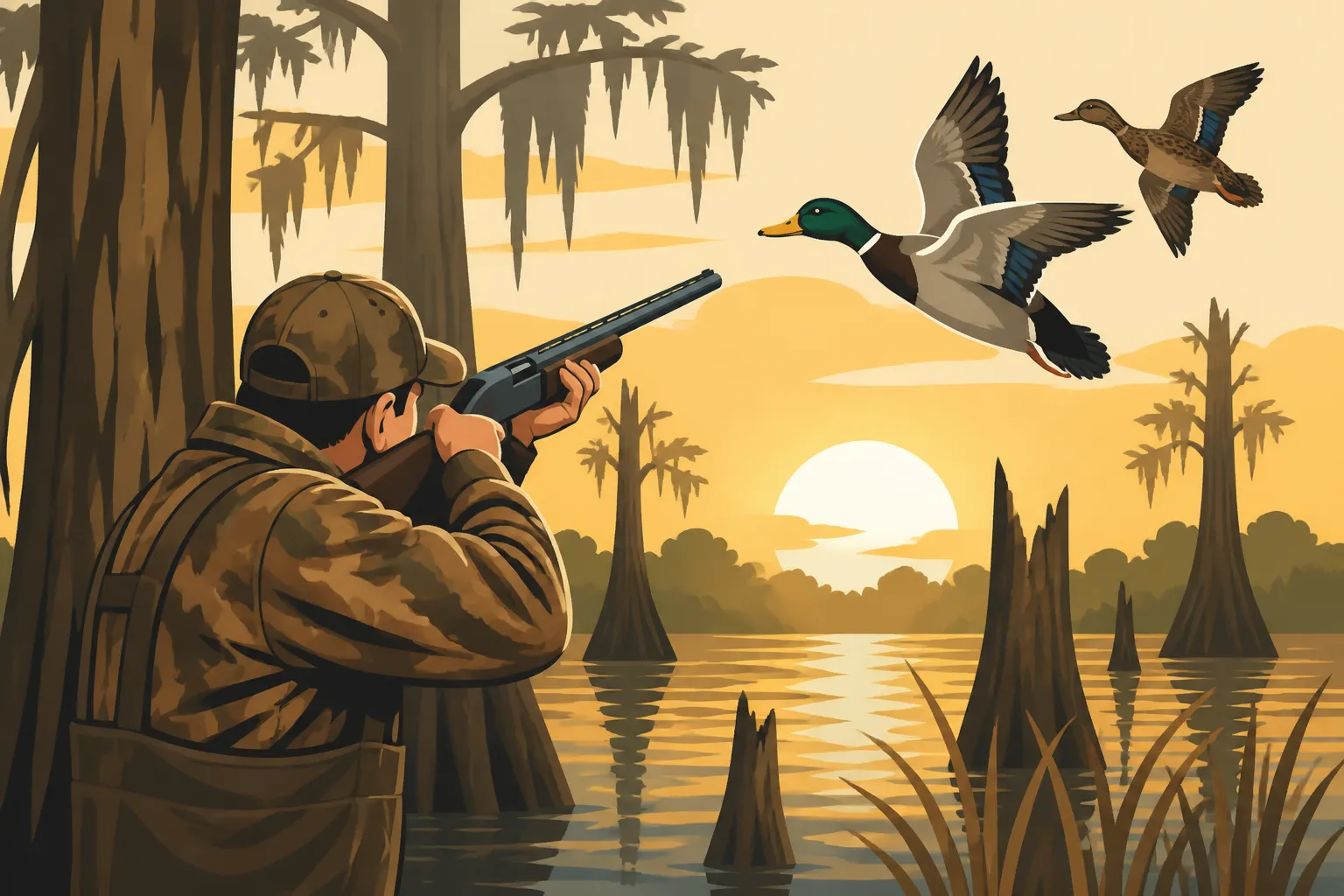
Ah, the sound of mallards cupping their wings, dropping through the tall timber, settling into a perfectly flooded hole – there's nothing quite like it. But let's be real, turning that dream into a reality in Louisiana's flooded hardwoods can be a seriously frustrating endeavor. It's not just about having a duck call; it's about understanding a complex ecosystem, the subtleties of duck behavior, and the precise art of setting up shop where they want to be. This guide is going to walk you through the ins and outs of working flooded timber for mallards, from understanding their habitat preferences to mastering your calling and decoy spreads, so you can increase your odds of success in those magical cypress and oak bottoms.
Understanding Louisiana's Flooded Timber Habitat
Hunting flooded timber for mallards isn't just a tactic; it's an immersion into a unique wetland ecosystem that mallards absolutely adore. This isn't your typical marsh or open field hunt. Here, the trees themselves are part of the habitat, offering food, shelter, and a sense of security that draws ducks in like a magnet. Understanding this environment is the first critical step to consistently finding success.
The Allure of Acorns and Hardwoods for Mallards
If there's one thing that pulls a mallard out of the sky and into the flooded woods, it's a buffet of acorns. Louisiana's bottomland hardwood forests, particularly those with a strong presence of oaks like pin oak, nuttall oak, willow oak, and water oak, are prime real estate. These trees produce protein-rich acorns that become readily available when water levels rise and flood the forest floor. Ducks don't just eat them; they actively seek them out. You'll often see them dabbling and tipping up in shallow water, sifting through the submerged leaf litter for these coveted morsels.
It's a game of timing, too. Early in the season, ducks might still be hitting rice fields and open water, but as the weather cools and acorns drop, their preference shifts dramatically. A strong acorn crop can hold ducks in an area for weeks, making it a hotspot. Conversely, a poor acorn year can scatter birds, making your job much harder. When scouting, always pay attention to the previous year's acorn production and what's currently available on the forest floor. If you find a spot littered with fresh acorns under a few inches of water, you've likely found a mallard magnet.
Water Levels and Their Impact on Duck Movement
Water levels are arguably the single most critical factor in flooded timber hunting. Mallards prefer shallow water, generally ranging from just a few inches up to about 18-24 inches, where they can easily dabble for food. Too deep, and they can't reach the acorns. Too shallow, and they might not feel secure or have enough area to land comfortably. Rivers like the Ouachita, Red, and Tensas, along with their associated backwater sloughs and oxbows, often dictate water levels in nearby timber. When these rivers rise, they push water into the adjacent bottoms, creating ideal feeding and resting areas.
It's not just the depth, but the stability of the water that matters. Ducks prefer stable or slowly rising water. Rapidly falling water can expose food sources, but it can also make ducks nervous, pushing them to more consistent feeding grounds. A great resource for understanding these dynamics and planning your hunts is the detailed information available on Louisiana Waterfowl Zones and Seasons. Hunters often track river gauges like a hawk, knowing that a few feet of rise can completely transform a dry woods into a duck haven. Understanding the hydrology of your specific hunting area – where the water comes from, how fast it rises and falls – will give you a significant edge in predicting where the ducks will be.
Identifying Key Timber Species
While oaks are the kings of the flooded timber feast, other tree species play crucial roles. Cypress and tupelo gums, especially in deeper swamps and sloughs, offer roosting areas and shelter. Their sprawling root systems and hollow trunks provide excellent cover for hunters too. Knowing your trees isn't just for botany buffs; it's essential for a duck hunter. For instance, a stand of predominantly willow oak and water oak might hold more attraction for feeding ducks than a stand of sweetgum or pine, which offer little in terms of forage.
It's not uncommon to find a mix of species, but focusing your efforts on areas with a high concentration of preferred food trees, combined with good water depth, is key. If you're new to an area, taking some time to learn the local flora will pay dividends. Many seasoned hunters can tell you exactly what kind of acorns a duck prefers just by looking at the trees. The ability to identify these critical timber species, even in the dim light of early morning, helps you select the best hunting spots and understand what natural food sources are attracting the birds.
Scouting and Locating Productive Timber Holes
You can have the best call and the fanciest decoys, but if you're not where the ducks want to be, it's all for naught. Scouting is the lifeblood of flooded timber hunting. This isn't just a casual stroll; it's an investigative mission to find fresh sign, pinpoint travel corridors, and understand the daily routines of the mallards in your area. This intense reconnaissance effort, both from your couch and on foot, is what separates consistent success from hopeful guessing.
Reading Aerial Maps and Topographical Features
Before you even get your waders muddy, start your scouting mission with aerial maps. Tools like those found on the GoHunt app are invaluable here. Look for subtle changes in elevation that might create shallow pockets when flooded. Identify sloughs, old creek beds, and subtle depressions that will hold water longer or fill up first. Pay attention to how the timber transitions – from dense canopy to more open areas, or where different tree species dominate. Ducks, especially mallards, like variety and edges.
Also, focus on potential travel routes. Are there gaps in the timber, old logging roads, or natural funnels that ducks might use to fly into a feeding area? These features become critical approach lanes for birds. Identifying these on a map allows you to predict flight paths and position yourself accordingly. Remember, ducks are creatures of habit, and they often follow the path of least resistance. Using your mapping software to identify these features and potential bottlenecks for duck movement is a fantastic way to maximize your time once you hit the ground.
On-the-Ground Reconnaissance for Fresh Sign
There's no substitute for boots on the ground, or rather, waders in the water. Once you've identified potential spots on your map, it's time to physically scout. Look for fresh duck sign: droppings on logs or stumps, breast feathers caught on branches, and most importantly, disturbed leaf litter where ducks have been dabbling for acorns. The freshest sign is always the best indicator. If you find a spot covered in fresh, black duck poop and churned-up leaves, you've found a primary feeding area.
Listen, too. Early morning or late evening often reveal flight patterns. If you hear ducks talking in a specific area, that's a huge clue. Even during the day, pay attention to the subtle sounds of the woods. Sometimes, you'll hear the distant splash of a landing duck or the soft chatter of birds that are completely hidden from view. A good scouting trip might also involve going in during mid-day, sitting quietly, and just observing. You'd be amazed what you can learn about duck movements and habits by simply being still and present in their environment.
Using Technology for Timber Scouting
In today's hunting world, technology is your friend, especially in vast, confusing flooded timber. Beyond mapping apps like GoHunt, consider using a GPS to mark potential spots, entry/exit points, and any hazards. Trail cameras, though not always practical in deep water, can be strategically placed on higher ground adjacent to flooded areas to monitor deer and hogs, but sometimes they catch a duck or two, giving you an idea of wildlife presence. More importantly, understanding water levels is often supported by online river gauge data, which can be linked to your mapping efforts. Knowing how much water is expected to rise or fall in your target area can completely change your game plan.
Furthermore, integrating real-time weather forecasts with your scouting information is crucial. A strong north wind after a cold front might push more ducks south, making your scouted timber holes even hotter. Conversely, calm, warm weather might mean fewer new birds and more pressure on existing populations. Check out Scouting Louisiana Public Land Before Season for more general scouting tips that can be applied specifically to timber. Don't underestimate the power of these digital tools; they can save you countless hours of unproductive walking and dramatically increase your efficiency in finding the right spots.
Setting Up Your Flooded Timber Spread
Once you've done your homework and found that perfect timber hole, the real fun—and precision—begins. Setting up your flooded timber spread isn't just about tossing out a few decoys; it's an art form that requires careful consideration of realism, hide placement, and understanding how ducks interact with their environment. Get this wrong, and even the hottest hole can go cold.
Decoy Placement for Realistic Movement
Flooded timber hunting often benefits from a less-is-more approach to decoys, but the realism of their placement is paramount. Forget those huge V-patterns you might use in open fields. In the timber, you're trying to mimic a small, contented flock of ducks feeding and resting. Create small, natural-looking clusters of 6-12 mallard decoys, scattering them loosely. Mix in a few feeders, uprights, and perhaps a couple of active motion decoys like a spinning wing decoy or a jerk string if legal in your area. Always ensure your decoys appear to be swimming or dabbling naturally.
Crucially, create a clear, inviting landing zone. This open water "hole" should be downwind from your blind, giving ducks a comfortable path to approach and set their wings. The size of this hole will depend on the density of the timber and your water depth, but generally, a 15-20 yard diameter is a good starting point. Think about wind direction; ducks land into the wind. So, if you expect a north wind, your landing zone should be positioned directly north of your hide. This ensures incoming birds present broadside or slightly quartering shots as they commit.
Here's a quick look at some common decoy configurations in flooded timber:
| Decoy Type/Action | Quantity (Typical) | Placement Strategy | Purpose |
|---|---|---|---|
| Upright/Dabbler | 6-12 | Scattered in small groups near timber | Mimic resting/feeding birds, add bulk to spread |
| Feeder | 4-8 | Directly in shallow water, head down | Signifies ducks actively feeding, high confidence |
| Motion Decoy | 1-2 | On edge of landing zone, where movement is visible | Adds realism, catches attention from afar (check legality) |
| Jerk String | 1 | Attached to 2-3 decoys in landing zone | Creates ripple and movement in still water, very realistic |
| Puddle/Teal | 2-4 (optional) | Mixed in, especially early season | Adds variety, indicates a safe feeding spot for multiple species |
Choosing the Right Blind or Hiding Spot
In flooded timber, your blind isn't usually a manufactured structure; it's the woods itself. The key is to blend in seamlessly. Often, you'll find a clump of thick cypress knees, a downed tree, or a dense thicket of brush that offers natural concealment. Don't be afraid to enhance it with natural materials from your immediate surroundings – broken branches, palm fronds, or cane stalks. The goal is to become part of the forest, completely invisible to the wary eyes of circling mallards.
Position your hide so that you have a clear view of your landing zone and can comfortably shoot in the expected flight path. Also, consider the sun's position. If possible, set up with the sun at your back so that incoming ducks aren't looking directly into the glare, and you have a clear, well-lit view of them. Entry and exit are also critical; make sure you can get into your hide quietly and efficiently in the dark without spooking any early arrivals. Take the time to brush it in effectively, even if it means an extra 15 minutes in the cold morning. That small effort can be the difference between ducks finishing in your spread and flaring at the last second.
The Importance of Entry and Exit Routes
Just as crucial as your blind and decoy setup is how you get in and out of your hunting spot. In flooded timber, silence is golden. Any splashing, loud talking, or clumsy movements on your approach can send ducks packing before legal shooting hours even begin. Map out your entry route during daylight if possible. Use existing game trails, old logging cuts, or natural clearings to minimize noise. If you're using a boat, plan where you'll moor it securely and silently, well away from your spread.
Your exit strategy is equally important. After the hunt, you'll be retrieving decoys and birds, potentially making more noise. Having a clear, quiet path back to your vehicle or boat helps ensure you don't disturb other hunters or, more importantly, leave a lasting negative impression on the ducks that might return. Consider the wind and current if you're in moving water – you want to be able to navigate easily and quietly. For more on navigating tricky swamp areas, consider reading up on Basin Tactics for Louisiana Swamp Deer for general wisdom on moving through dense, wet environments. A well-planned entry and exit is often overlooked but can make or break a successful timber hunt.
Mastering Calls and Movement in the Woods
Calling ducks in flooded timber is a different beast entirely than calling over open water. The dense canopy, the echoing sounds, and the close-quarters nature of the hunt demand a nuanced approach. Furthermore, your physical presence and movement are magnified in the quiet woods. It's about knowing when to be aggressive, when to be subtle, and when to be absolutely still.
Aggressive Calling Versus Subtle Chatter
In timber, the acoustics are unique. Your call can seem much louder and carry further than you might expect, but it can also be muffled by dense foliage. Often, less is more. While an aggressive, pleading "hail call" might grab distant ducks' attention, once they're circling your timber hole, switch to softer, more contented calls. Short, sweet "greeting calls," soft "clucks," and "feed calls" are usually all it takes to convince wary birds to drop in.
Think of it this way: you're trying to sound like a small group of happy, feeding mallards that are completely at ease. Constant, loud calling can actually make ducks suspicious. If they're already committed and dropping in, sometimes the best call is no call at all. Just watch them, ready your gun, and let them finish. Learning to read the birds and adapt your calling to their reactions is a skill that takes time and practice. Sometimes, a single soft quack is more effective than a full-blown routine. For a deeper dive into calling strategies in Louisiana, you might find some useful crossovers by looking at Rattling and Grunting in Louisiana, even though it's deer-focused, the principle of reading animal behavior and adjusting vocalizations applies.
Reading Duck Reactions to Your Calls
This is where the art truly comes in. Every duck flock is different, and their reaction to your calling tells you everything you need to know. If they turn immediately and start heading your way, they're interested. Keep calling softly to guide them. If they circle high and wide, they might be looking for something specific or feeling a bit wary. Try a pleading comeback call, but don't overdo it. If they swing wide, stare at your decoys, and then turn away, they've likely spotted something wrong – maybe your hide, or perhaps your decoys don't look natural.
Pay close attention to their wing beats, head position, and overall body language. Ducks that are truly committed will often set their wings, drop their feet, and lose altitude quickly. Ducks that are suspicious will stay high, fly fast, and often keep their heads on a swivel. The goal is to convince them that your spot is safe, full of food, and worth the risk. The moment they start committing, ease off the aggressive calling and let them finish on their own terms. Learning this intuition takes many hours in the blind, observing countless flocks.
The Art of Stillness and Stealth
In the close confines of flooded timber, movement is the ultimate duck spooking culprit. Mallards have incredible eyesight, and even a slight twitch of your head or the barrel of your gun can send them rocketing out of the hole. Once ducks are circling, everyone in the blind needs to become a statue. Eyes can move, but nothing else. Keep your gun barrel pointed safely towards the ground or sky, not waving it around.
Don't stand up until the ducks are fully committed and inside your effective shooting range. Often, the best strategy is to call the shot just as they start to drop their feet into the landing zone. Then, rise smoothly and quickly to take your shot. This element of surprise is highly effective in timber. Remember, you're not trying to ambush them; you're trying to blend in so perfectly that they don't even know you're there until it's too late. Practice smooth, controlled movements with your hunting partners. It's a team effort to remain truly stealthy in the timber.
Dealing with Challenges and Adapting in Flooded Timber
Flooded timber hunting is rarely a straightforward affair. Louisiana's dynamic environment throws curveballs constantly, from fluctuating water levels to intense hunting pressure. A successful timber hunter isn't just skilled in calling and shooting; they're masters of adaptation, constantly analyzing the conditions and adjusting their approach.
Handling Changing Weather and Water Conditions
Louisiana weather is famously unpredictable, and its impact on flooded timber hunting can be profound. A sudden cold front can bring in new birds, but it can also drop water temperatures, affecting duck behavior. Heavy rains can raise water levels dramatically, spreading ducks out across wider areas and making them harder to concentrate. Conversely, a lack of rain can cause water to recede, leaving timber holes dry and ducks looking elsewhere.
Always keep an eye on the long-range forecast and river gauges. If water levels are rising rapidly, ducks might spread out, or they might flock to the newly flooded fringes where fresh food is becoming available. If water is falling, focus on the deeper pockets or sloughs where ducks might concentrate as other areas dry up. Understanding Wind and Thermals in Swamp Bottomland is also vital. A strong north wind can completely change where ducks approach, requiring you to re-evaluate your decoy spread and hiding spot on the fly. Don't be afraid to pick up and move if conditions dictate it; sometimes, that extra effort is what salvages a slow hunt.
Managing Hunting Pressure and Competition
Let's face it, Louisiana's public land timber holes can get crowded, especially on opening weekend or after a strong cold front. Hunting pressure is a real challenge, and it makes ducks incredibly wary. If a timber hole is getting pounded daily, ducks might become nocturnal, feeding only after dark, or they might simply abandon the area for quieter pastures. This is where your scouting pays off – finding those hidden, less-pressured spots is crucial.
If you find yourself in a high-pressure situation, consider adjusting your tactics. Hunt later in the morning after the initial flurry, when other hunters might be leaving. Employ ultra-realistic, subtle calling. Use fewer decoys. Focus on concealment above all else. Sometimes, the best strategy is to wait out the crowds or hike deeper than others are willing to go. Learning to coexist and respect other hunters is also important, but ultimately, your goal is to put yourself in the best position possible. For tips on dealing with crowds, a read about Why Louisiana's Gun Opener Draws the Biggest Crowds might give you perspective on common hunter behavior.
Troubleshooting a Slow Hunt
We've all been there: sitting in a beautiful timber hole, the perfect spread, perfect calling, and nothing. It happens. When the ducks aren't flying, it's time to troubleshoot. First, reassess your setup. Is your hide truly invisible? Is your landing zone clear? Are your decoys moving naturally? Sometimes, a minor adjustment can make a huge difference.
Next, consider your calling. Are you over-calling or under-calling? Try a different cadence or volume. If that doesn't work, think about the ducks' current behavior. Are they working other areas nearby? Are they flying high and ignoring everything? If you're confident in your spot but the birds just aren't there, it might be time for a change of scenery. Perhaps a completely different habitat type, like a marsh pond (see Reading a Marsh Pond for a Morning Flight) or a cut rice field (refer to Layout Blind Hunting a Cut Rice Field), is holding birds on a particular day. Don't be stubborn; adaptability is a timber hunter's best friend. Sometimes, just moving 100 yards to a different pocket of timber can make all the difference, especially if you think the ducks are working a different feed source or flight path.
Disclaimer
Hunting carries inherent risks, and it is the responsibility of each hunter to understand and comply with all federal, state, and local regulations. Always prioritize safety, and ensure you have the necessary licenses and permits before heading into the field. This guide provides general information and should not replace official hunting regulations or professional safety instruction.