Calling Crows Over a Winter Feed Site
When the chill sets in and the deer seasons start winding down across Louisiana, many hunters find themselves longing for the crack of a shotgun or the challenge of outsmarting wary game. Crows, often overlooked and sometimes considered a nuisance, offer an incredible opportunity to stay sharp, enjoy the outdoors, and put your calling skills to the test, especially when they gather around winter feed sites. This comprehensive guide will walk you through the ins and outs of calling these intelligent birds over those crucial winter food sources, providing you with the tactics and knowledge to make your late-season hunts both productive and exhilarating.
Understanding Crow Behavior Around Winter Feed Sites
Crows are incredibly intelligent and adaptable birds, and their behavior shifts significantly with the seasons. During the colder months, their focus narrows sharply on survival, primarily revolving around readily available food and safe roosting areas. Understanding these fundamental drives is key to successfully bringing them into range over a winter feed site.
Why Crows Gravitate to Winter Feed Sites
As winter takes hold in Louisiana, natural food sources like berries, insects, and easily accessible seeds become scarcer. This forces crows to consolidate their efforts, often leading them to congregate in large numbers where food is most dependable. Winter feed sites, in this context, aren't just one thing; they're a variety of human-influenced locations that offer a consistent buffet.
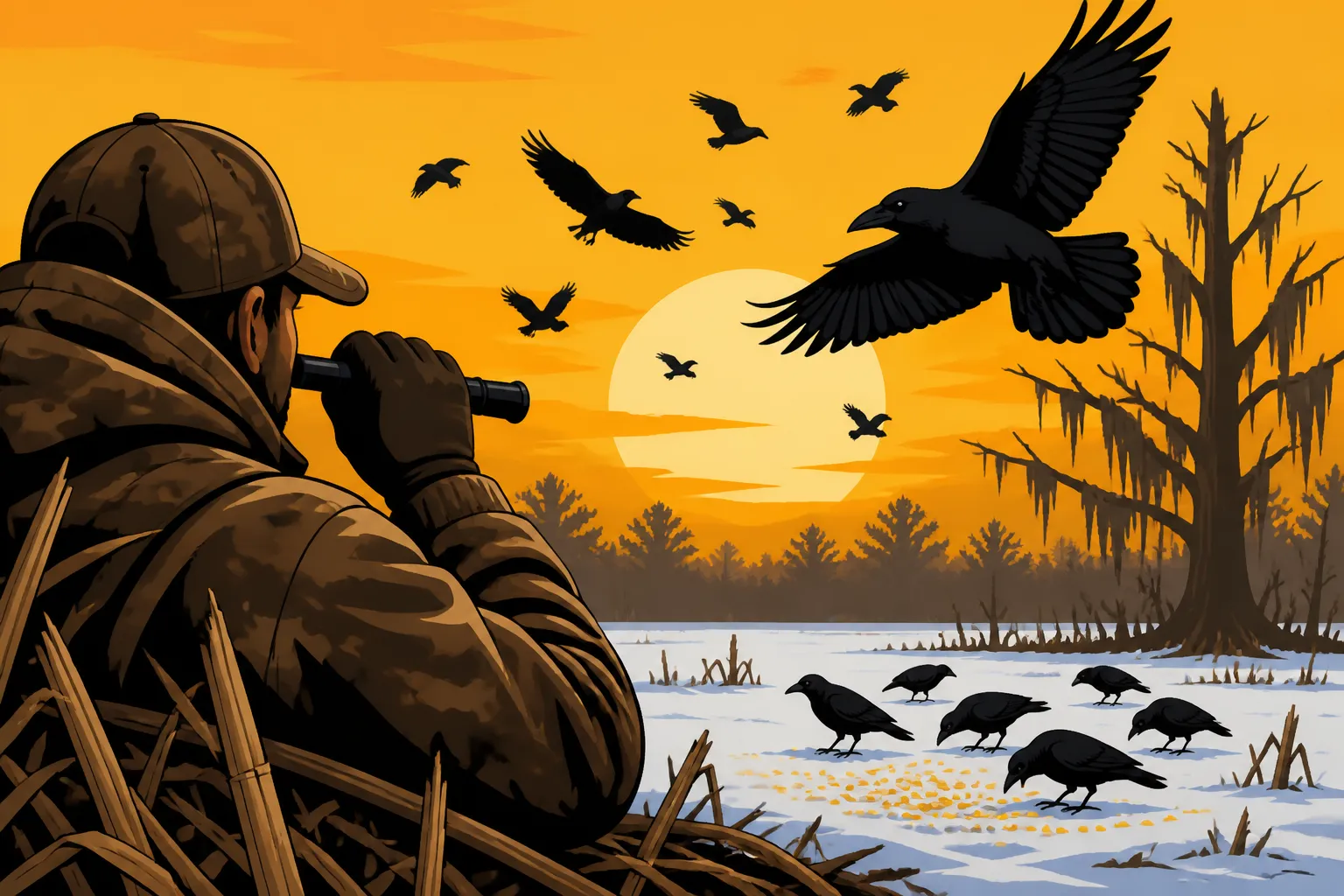
Think about agricultural areas across parishes like Tensas, Concordia, and Madison. After the soybean, corn, or rice harvests, there's always waste grain left behind. This spilled bounty is an absolute magnet for crows, offering a high-energy food source during lean times. They’ll sweep through these fields, often in massive flocks, cleaning up what the combines missed. Beyond waste grain, any concentrated food source can become a winter feed site: cattle feedlots where spilled feed is common, even roadside areas where unlucky animals become easy meals, or dumpsters near restaurants or convenience stores, though hunting these urban spots is rarely an option. Crows are opportunistic omnivores, and in winter, they're not picky. They’ll also congregate in areas where landowners might be putting out feed for other wildlife, like deer, presenting a unique challenge if you're trying to manage those populations. The sheer volume of food at these sites allows them to feed efficiently and quickly, before retreating to large, communal roosts where they find safety in numbers.
Scouting for Prime Crow Concentrations
You can’t just drive out to any old field and expect crows to magically appear. Successful crow hunting over a feed site begins with meticulous scouting. This isn't just about finding crows; it's about understanding their daily routine.
Start by observing their flight paths. Crows are creatures of habit, and they often use the same travel corridors between their roosting sites and their feeding grounds. These flight paths might run along a treeline, follow a river, or cut straight across a wide-open field. Pay attention during dawn and dusk. You'll often see large flocks moving from their communal roosts to their feeding areas in the morning, and then back again in the evening. Identifying these general directions is your first step. Next, locate the actual feed sites. This might involve driving country roads and looking for large concentrations of crows on the ground in harvested fields, or observing where birds descend from their flight paths. Many hunters use powerful mapping tools, and while you might think of them primarily for deer season planning, resources like GoHunt can be invaluable for pinpointing large agricultural fields, potential roosting sites near water, or even abandoned farmsteads that might hold winter feed sources for crows.
Once you’ve identified a likely feeding area, spend some time glassing it from a distance with binoculars or a spotting scope. Watch how they enter and exit the field. Do they prefer a specific corner? Is there a particular group of trees they perch in before dropping down? Notice if they're feeding in a standing cornfield in farm country or a cut soybean field. These details will inform your setup. The goal is to find an area where crows are consistently feeding and where you can intercept them effectively. Remember, scouting isn't just a pre-season activity; it’s an ongoing process, especially for these smart birds.
Essential Gear and Setup for Calling Crows
Just like any other hunting endeavor, having the right gear and setting up strategically makes all the difference when calling crows. While it might seem less involved than a big game hunt, attention to detail in your equipment and blind placement will significantly improve your success rates.
The Right Calls and Calling Sequences
Calling crows is an art form, and having a diverse repertoire of calls is crucial. While a simple mouth call can work, electronic calls truly excel for crow hunting, offering a wide range of realistic sounds at varying volumes. Brands like FoxPro and Primos are popular choices, providing libraries of crow vocalizations that mimic everything from a single crow to a massive fight.
You'll want to have several types of calls at your disposal:
- Distress Calls: These mimic a crow in trouble, often being attacked by a predator like a hawk or owl. This sound can provoke a mobbing response, bringing in crows from a surprising distance, eager to join the fray or investigate the threat. It's often a great opener to get their attention.
- Fighting Crows: Similar to distress calls, but often more intense, these sounds suggest a full-blown brawl. Crows are highly social and territorial, and the sound of a fight can draw them in to either participate or simply observe.
- Rally Calls: These are louder, more aggressive "caw-caw-caw" sequences that mimic crows gathering. Use these to encourage birds to commit or to call in those circling at a distance.
- "All Clear" or Contentment Calls: These softer, less urgent caws can be used sparingly to reassure approaching birds if they seem hesitant, signaling that the area is safe.
Your calling sequence should be dynamic. Start with a loud, aggressive distress or fighting call to grab attention. Once crows respond and begin to approach, reduce the volume and vary your calls. Don't call constantly; let the natural curiosity of the crows do some work. If they hang up, cycle back to a distress call to pique their interest again. Watch their reactions; if they start to veer off, adjust your calling. The key is to be realistic and responsive to the birds' behavior. For more advanced tactics, consider learning about Rattling Volume in Thick Cover for deer, as similar principles of adjusting call intensity apply to various species based on environment.
Concealment, Decoys, and Shotgun Selection
Crows possess incredible eyesight and are notoriously wary, making effective concealment paramount. They will spot the slightest movement or an unnatural shape.
- Concealment: A well-brushed-in pop-up blind is ideal, especially if you're hunting in open agricultural fields. If natural cover is available – a dense hedgerow, a thicket of brush, or even a standing tree line – maximize its use. Always wear full camouflage, including a face mask and gloves. Even the glint of skin can spook them. Set up inside the shadows if possible, or where the sun is at your back, making it harder for them to see you. Remember, when you're setting up on a coastal prairie field edge, the same dedication to concealment pays dividends for other game too.
- Decoys: Crow decoys are incredibly effective for pulling birds in that final distance. Full-body decoys on stakes, silhouette decoys, or even motion decoys (like a flapping crow) can simulate a feeding or agitated flock. Place your decoys within 20-30 yards of your blind, mimicking a natural feeding spread. A few sentry decoys placed higher on nearby branches can also add realism. If possible, add a decoy of an owl or hawk among your crow decoys to heighten the mobbing instinct.
- Shotgun Selection: A 12-gauge or 20-gauge shotgun is typically preferred for crow hunting. The choice really comes down to what you’re comfortable shooting and the range you expect. Most shots will be within 40 yards. As for ammunition, standard field loads with 7.5 or 8 shot are excellent choices. The small shot size creates a dense pattern, increasing your chances of hitting these fast-moving targets. Always pattern your shotgun with your chosen load to understand its effective range and spread.
Here's a quick look at common shotgun loads for crow hunting:
| Gauge | Shell Length | Shot Size | Dram Equiv. / Velocity | Typical Application | Notes |
|---|---|---|---|---|---|
| 12 Gauge | 2 ¾ inch | 7.5 or 8 | 3 – 3 ¼ dram / 1200 fps | General Purpose, Good Range | Excellent pattern density |
| 20 Gauge | 2 ¾ inch | 7.5 or 8 | 2 ½ dram / 1200 fps | Lighter Recoil, Nimble Firearms | Effective within typical crow ranges |
| 12 Gauge | 2 ¾ inch | 6 | 3 ¼ – 3 ½ dram / 1220 fps | For longer shots or larger crows | Less pattern density, but more energy |
Strategic Calling Tactics and Ethical Considerations
Once you've got your gear and understanding of crow behavior dialed in, it's time to talk strategy for the actual hunt and, just as importantly, the ethical responsibilities that come with it.
Mastering the Ambush: Placement and Approach
Setting up your ambush correctly is half the battle when targeting wary crows. They have excellent eyesight and will quickly notice anything out of place.
First, always consider wind direction. While not as critical as for deer, approaching birds will often try to fly into the wind or circle downwind to get a better look. Position your blind so that the prevailing wind is either in your face or quartering towards you, which can slow down approaching crows and give you a better shot. Sun position is another huge factor. Try to set up with the sun at your back. This puts the sun in the crows' eyes as they approach, making it harder for them to see you and giving you a significant advantage. This strategy is also beneficial when Reading a Ridge for Central Louisiana Deer as it helps conceal your movement.
Your entry and exit routes to the blind are also critical. Never walk directly across the field you plan to hunt; use hedgerows, ditches, or tree lines to stay concealed until you're in your position. Minimize noise and movement. Crows often approach silently, and a sudden movement can send an entire flock scattering. Having a partner can be a huge advantage. One person can call while the other remains ready to shoot, or you can call in tandem, creating a more realistic flock sound. Once crows commit and begin to sail into your decoy spread, pick your bird and make a clean shot. Don't shoot at birds that are too far out; wait until they're within effective shotgun range to ensure a clean kill. If you're working a bayou bank for late-season deer, you'll find that similar stealthy approaches pay off.
Ethical Hunting and Responsible Practices
Crow hunting, like all hunting, comes with a set of ethical responsibilities that we as sportsmen and women must uphold. While crows are not typically considered a "game bird" in the traditional sense, they are still living creatures deserving of respect.
First, always be aware of local regulations. In Louisiana, crows are typically considered a nuisance species in many contexts and can often be hunted year-round without a daily bag limit, especially on private land with landowner permission. However, it's always wise to double-check the current Louisiana Department of Wildlife and Fisheries (LDWF) regulations, as specific rules might apply to certain public lands or change year to year. Make sure you understand the nuances of Louisiana Wildlife Violation Penalties to stay on the right side of the law.
Landowner permission is non-negotiable, particularly when hunting near agricultural operations or on any private property. Crows can cause significant crop damage, so many farmers are often happy to grant permission, but you must always ask first. When you do obtain permission, be respectful of the property, clean up your spent shells, and leave the area better than you found it.
When it comes to the actual hunt, shot placement is paramount. Aim for clean, humane kills. While crows are tough, a well-placed shot with appropriate ammunition will dispatch them quickly. Don't take Hail Mary shots at birds far out; it often leads to wounded birds and reinforces their wariness. Finally, responsible disposal of harvested crows is important. While some hunters use crows for predator bait or even consumption (they are edible, though not a popular table bird), many hunters simply leave them as is, particularly if they are serving a pest control purpose for a landowner. Be mindful of public perception and avoid leaving large piles of crows in highly visible areas. Ultimately, crow hunting offers fantastic opportunities to hone your skills, provide valuable pest control, and enjoy the outdoors when other seasons are quiet. Think of it as valuable practice for your Waterfowl Hunting the Louisiana Coastal Marsh trips or even for sharpening your aim for Squirrel Hunting Louisiana Bottomland Hardwoods.
Disclaimer
Please remember that hunting regulations, seasons, and licensing requirements can change. Always consult the most current Louisiana Department of Wildlife and Fisheries (LDWF) official regulations before heading afield. It is your responsibility to know and follow all applicable laws.