Choosing Legal Primitive Firearms Gear
Stepping into the woods for Louisiana's primitive firearms season is a unique thrill, a chance to connect with hunting traditions that feel a bit more raw and challenging. But let's be honest, figuring out exactly what counts as "legal primitive firearms gear" can feel like deciphering an ancient text written by a lawyer. The rules aren't always crystal clear, leaving many of us scratching our heads about everything from rifle calibers to scope restrictions. This guide is here to cut through that confusion, helping you confidently choose the right gear so you can focus on the hunt, not the rulebook.
Understanding Louisiana's Primitive Firearms Season
The primitive firearms season in Louisiana offers a special window for hunters, often preceding or overlapping with the general firearms season, providing an extended opportunity to pursue deer. This season is specifically designed to promote the use of firearms that harken back to earlier hunting eras, requiring a different skill set and approach. It's not just about the gun; it's about the spirit of the hunt. Many hunters appreciate the challenge of a single-shot rifle or a muzzleloader, finding it a more intimate and demanding experience. The Louisiana Department of Wildlife and Fisheries (LDWF) sets these rules with the goal of managing deer populations while also preserving a traditional hunting method.
Purpose of Primitive Season Regulations
The core purpose behind Louisiana's primitive firearms regulations is multifaceted. Primarily, it's about extending hunting opportunities while regulating harvest pressure. By limiting the type of firearms and often the number of shots, the LDWF aims to maintain a balance. This season also encourages ethical hunting practices, as the inherent limitations of primitive firearms often necessitate closer shots and a deeper understanding of deer behavior. It pushes hunters to improve their tracking, scouting, and woodsmanship skills, rather than relying solely on advanced technology. The regulations define what constitutes a "primitive firearm" to ensure this traditional aspect is upheld, separating it from modern centerfire rifle seasons.
Key Dates and Area-Specific Rules
Louisiana's deer hunting landscape is divided into ten distinct areas, and the primitive firearms season dates can vary significantly between them. For instance, some areas might have a primitive season running concurrently with the archery season, while others might have a dedicated window before the general firearms opener. It’s absolutely crucial to consult the current LDWF hunting regulations pamphlet or their online resources every year, as dates and specific rules can shift. What's legal in Deer Area 1 might have a slight variation in Area 5, 6, or 9, which often have a considerably Hunting the Long Either-Sex Window in Areas 5, 6 and 9. Moreover, specific Wildlife Management Areas (WMAs) often have their own unique primitive firearms regulations, sometimes even dictating different calibers or optics restrictions than private lands in the same deer area. Always double-check the WMA regulations if you plan on hunting public land; a tool like GoHunt can be invaluable for cross-referencing these specifics, showing boundary lines and WMA rules clearly. These details are paramount to ensuring a legal and successful hunt, especially when planning your approach for a specific region. For a broader overview, you might want to look into Louisiana Deer Hunting Area by Area.
Legal Rifles for Primitive Season
When we talk about legal rifles for primitive season in Louisiana, we're primarily looking at specific types of single-shot, exposed-hammer firearms that load from the breech or muzzle. This isn't the season for your semi-automatic or even bolt-action repeater. The emphasis is on a singular, well-placed shot, demanding precision and patience from the hunter. It's a different rhythm of hunting that many find incredibly rewarding.
Single-Shot, Breech-Loading Rifles
The most common and often favored type of "primitive firearm" for deer in Louisiana is the single-shot, breech-loading rifle. These are typically break-action or falling-block designs that only hold one round at a time. The regulations are very specific about the caliber, generally requiring a minimum of .38 caliber or larger for rifles. This means popular choices like the .45-70 Government, .444 Marlin, .35 Whelen, and even some specific .45 LC (long colt) rifles that meet the energy requirements are often permissible.
However, the real stickler for many hunters is the "exposed hammer" requirement. This means the hammer must be visible and manually cocked before each shot, adding to that traditional feel. Many modern single-shot rifles, while technically single-shot, might have internal hammers or designs that don't fit this specific rule, so it's vital to verify. Checking the manufacturer's specifications against the LDWF's exact wording is non-negotiable. It's easy to assume your classic single-shot falls into place, only to find a subtle technicality pushes it out of bounds for primitive season. For a deeper dive into the technicalities, you'll want to review Legal Primitive Firearms Under Louisiana Rules.
Muzzleloaders and Traditional Rifles
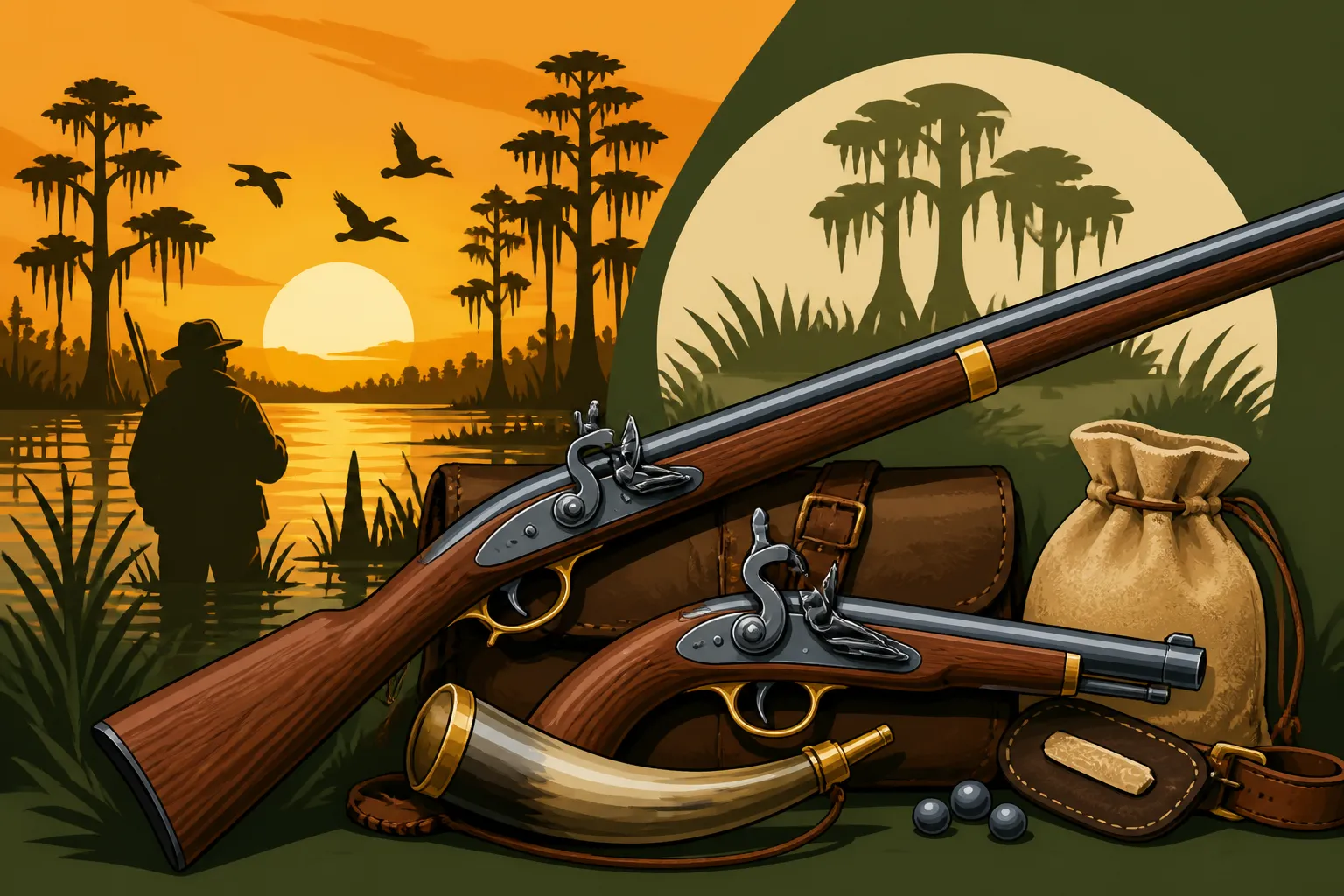
Muzzleloaders, often considered the quintessential primitive firearm, are also legal and widely used during this season. This category includes both traditional percussion cap and flintlock rifles, as well as more modern inline muzzleloaders. The key is that they load from the muzzle. For these, the minimum caliber is usually .44 or larger. This opens up options for .50 caliber, .54 caliber, and even larger bores, giving you plenty of knockdown power for deer.
With muzzleloaders, you'll need to understand the nuances of propellants (black powder or approved substitutes like Pyrodex or Triple Seven) and projectiles (conical bullets, sabots, or round balls). Louisiana regulations often specify what types are allowed. Some WMAs might even prohibit sabots, requiring traditional patched round balls or solid lead conicals. While modern inline muzzleloaders offer greater accuracy and ease of use, they still fit the "primitive" criteria because of their loading method. For those interested in this specific type, you might be curious about Choosing a .44 Caliber Primitive Pistol, although that's for handguns, the caliber discussion is similar.
Optics and Magnification Restrictions
This is where many hunters get tripped up, and it's a critical detail for primitive firearms season. While standard rifle scopes are generally permitted during the primitive season on private lands, there's a very important caveat: many Wildlife Management Areas (WMAs) and certain specific primitive firearms seasons have restrictions on magnified optics. It's common for WMAs to limit hunters to only open sights or non-magnifying scopes (1x power or red dot sights) during their primitive firearms hunts.
The intent here is to increase the challenge and keep the hunt truly "primitive" on public lands. Imagine setting up your perfect stand, only to realize your 3-9x scope is illegal for that specific WMA's primitive hunt. It's a frustrating scenario that's entirely avoidable with careful planning. Always, always check the WMA regulations for optical restrictions before you head out. If you primarily hunt public land, investing in a good quality peep sight, fiber optic sights, or a 1x red dot might be a smart move, ensuring you're compliant no matter where you hunt. GoHunt's platform is particularly useful for quickly checking WMA-specific rules that might override general state regulations, helping you verify optic legality for your chosen hunting spot.
Approved Shotguns and Muzzleloaders
While rifles get a lot of attention, shotguns and smoothbore muzzleloaders also have a place in Louisiana's primitive firearms season, offering versatile options for hunters who prefer a different kind of challenge. Understanding their specific rules is key to staying legal and effective in the field.
Shotguns with Specific Ammunition
The primitive firearms season allows for certain shotguns, but with very strict ammunition requirements. Typically, only shotguns 10-gauge or smaller, using slugs or buckshot, are legal for deer. However, during the primitive season, the regulations often specifically restrict shotguns to single projectile loads only, meaning slugs. Buckshot is generally not permitted during the primitive firearms season for deer, even if it's legal in certain areas during the general firearms season. The intent is to encourage precise, single-shot hunting, akin to a rifle.
Furthermore, many WMAs will have their own specific rules, sometimes allowing shotguns but only with certain types of slugs (e.g., rifled slugs only, no sabots). Always verify these specific regulations for your hunting area. A single-shot break-action shotgun firing slugs can be a highly effective primitive firearm, especially in thick cover where shots are likely to be close. The maximum gauge allowed is also usually specified, with 10 gauge or 12 gauge being the most common. You can find more detail on this specific restriction in Maximum Gauge for a Primitive Firearms Shotgun.
Smoothbore Muzzleloading Shotguns
Similar to muzzleloading rifles, smoothbore muzzleloading shotguns are also legal. These load black powder or approved substitutes, followed by a wad, and then a slug or round ball from the muzzle. Just like their rifle counterparts, these offer a very traditional hunting experience. The caliber (gauge) restrictions typically mirror those for modern shotguns, meaning 10-gauge or smaller.
When hunting with a muzzleloading shotgun, the type of projectile is paramount. You must use a single projectile – a round ball or slug – for deer hunting during the primitive season. This means no birdshot or buckshot, even if that's what you normally load for small game. The range and accuracy of a smoothbore muzzleloader with a round ball can be surprising but require practice to master. It's a fantastic option for those who truly want to immerse themselves in the historical aspects of hunting.
Importance of Legal Ammunition Types
Beyond the firearm itself, the ammunition you use during primitive season is just as heavily regulated. For rifles, as mentioned, minimum calibers are critical. For muzzleloaders, this means adhering to black powder or approved black powder substitutes. Never use smokeless powder in a firearm designed for black powder, as it can lead to catastrophic failure and serious injury. The type of bullet is also important; conical bullets, sabots (where allowed), or patched round balls are common.
For shotguns, it's almost universally limited to slugs during the primitive season for deer. Carrying buckshot, even if legal in other seasons, could be a violation during a primitive hunt. It's not enough to have a legal gun; your ammo must also comply. Before every hunt, take a moment to review the current year's regulations for your specific hunting area and WMA. It's a simple step that can prevent a lot of headaches and potential fines.
Handguns in Primitive Season
The thought of taking a deer with a handgun during primitive season adds another layer of challenge and satisfaction for many hunters. Louisiana does indeed allow certain handguns during this period, but just like rifles and shotguns, there are specific criteria they must meet. This isn't a free-for-all for any pistol you own; it’s about a specific type of handgun that aligns with the "primitive" spirit.
Exposed Hammer, Single-Shot Handguns
For a handgun to be considered legal during Louisiana's primitive firearms season, it must typically be an exposed hammer, single-shot design. This means no revolvers, semi-automatics, or even derringers that hold multiple rounds. We're talking about firearms like the Thompson/Center Contender or similar single-shot pistols with an external hammer that you manually cock for each shot.
The caliber requirement for handguns is also stringent, often requiring a minimum of .38 caliber or larger. Many hunters opt for cartridges like .357 Magnum, .41 Magnum, .44 Magnum, or even larger calibers like .45-70 Government adapted for single-shot pistols. The key is that "exposed hammer" feature, making sure it’s clearly visible and manually operated. This design forces you to take deliberate, precise shots, adding to the primitive experience.
Muzzleloading Pistols
Muzzleloading pistols are also a legal option for the primitive season. These typically load black powder or an approved substitute, a wad, and a projectile (usually a round ball or conical bullet) from the front of the barrel, similar to their rifle counterparts. Common calibers for muzzleloading pistols range from .36 to .50 caliber, with the larger calibers being preferred for deer.
Hunting with a muzzleloading pistol is an art form, demanding significant practice to achieve accuracy and consistent performance. The loading process is slower and more involved than a cartridge handgun, truly embodying the primitive spirit. It's important to ensure your muzzleloading pistol meets the minimum caliber requirements set forth by the LDWF. For those passionate about this traditional route, exploring the nuances of Choosing a .44 Caliber Primitive Pistol could be a helpful resource, even though it focuses on a specific caliber, the principles of selection remain.
Optic Restrictions for Handguns
Just like with rifles, handgun optics can be a point of confusion during primitive season, particularly on public lands. While a low-power scope or red dot sight might be acceptable on private lands for primitive handgun hunting, many WMAs will restrict handguns to open sights only. This often means no magnified optics at all, and sometimes even red dot sights are prohibited.
The reasoning is consistent: to maintain the challenge and traditional nature of the hunt. If you're serious about hunting deer with a handgun during primitive season, especially on public land, practicing with open sights is essential. A good set of fiber optic sights can significantly improve visibility in low light conditions without violating WMA optic restrictions. Always confirm the specific WMA regulations regarding handgun optics to avoid any surprises in the field.
Ammunition and Accessories
Beyond the primary firearm itself, what you load into it and the supplementary gear you bring along are equally subject to Louisiana's primitive firearms regulations. It’s not just about the gun; it’s about the entire setup meeting the spirit and letter of the law. Overlooking these details can turn a successful hunt into a legal predicament.
Projectile Types and Propellants
For modern primitive firearms (single-shot, breech-loading rifles), you'll be using standard cartridge ammunition. The critical factor here is ensuring the caliber meets the minimum .38 requirement and that the bullet type is legal for deer hunting (typically expanding projectiles designed for big game). For muzzleloaders, the choices become more nuanced. You must use black powder or approved black powder substitutes like Pyrodex, Hodgdon Triple Seven, or Blackhorn 209. Never, ever use smokeless powder in a firearm designed for black powder. This is a critical safety rule and a legal violation.
Projectiles for muzzleloaders include traditional patched round balls, conical bullets (like PowerBelts or Hornady FPB), or saboted bullets (a smaller diameter bullet encased in a plastic sleeve). While sabots are common and generally legal on private land, be aware that some WMAs might restrict them, requiring solid lead conicals or patched round balls. This is where the minutiae of the regulations become crucial. Always confirm WMA-specific rules, as they often have stricter limitations than general state regulations.
Legal Scopes and Sights for Primitive Weapons
We've touched on this, but it bears repeating: while optical sights (scopes, red dots) are generally allowed on private lands during primitive season, many WMAs have strict limitations, often requiring open sights only or only non-magnifying (1x) optics. This means that beautiful 3-9x variable scope or even a fixed 4x power scope might be illegal on your chosen public land hunting spot.
If you plan to hunt WMAs, preparing for open sights or a 1x red dot is a smart move. Practice extensively with these setups, understanding their limitations and advantages. Open sights can be incredibly fast for close-range shots in thick cover, but they demand a more precise sight picture and can be challenging in low light. Fiber optic sights can enhance visibility. A red dot sight offers quick target acquisition and is essentially a 1x optic, making it permissible in many WMA scenarios that prohibit magnification. It is vital to check the WMA regulations for each specific area you plan to hunt to confirm scope legality.
Ancillary Gear and Safety Considerations
Beyond the firearm itself, consider other gear that aids in primitive hunting while adhering to safety. A good rangefinder is invaluable for primitive hunting, as knowing your exact distance to target is critical for accuracy with a single-shot firearm, especially when you're limited to open sights. Binoculars are also essential for scouting and identifying game without disturbing them.
Safety is paramount. Always handle black powder and substitutes with extreme care, storing them separately from primers and projectiles. Eye and ear protection are a must, both at the range and in the field, especially with louder muzzleloaders. Carrying a cleaning kit for your muzzleloader is also a good idea, as black powder can be corrosive. Remember, just because it's "primitive" doesn't mean safety protocols relax. Treat every firearm with respect and adhere to all safety guidelines.
Ensuring Compliance and a Successful Hunt
Navigating the nuances of Louisiana's primitive firearms season can be daunting, but with a diligent approach to understanding the regulations, you can ensure your hunt is both legal and successful. It’s about taking responsibility for knowing the rules and preparing accordingly.
Verifying Current Regulations Annually
The single most important piece of advice for any hunter in Louisiana, especially concerning specialized seasons like primitive firearms, is to verify the current year's hunting regulations annually. Regulations are subject to change without notice, and what was legal last year might have a minor, but critical, alteration this year. The Louisiana Department of Wildlife and Fisheries (LDWF) publishes a comprehensive pamphlet and updates its website every year. This is your primary source of truth.
Don't rely on hearsay, old pamphlets, or what your buddy remembers from last season. Get the latest regulations, read them carefully, and pay particular attention to the definitions of "primitive firearm," minimum caliber/gauge, and any restrictions on optics or ammunition for both private and public lands, including specific WMAs. Even for general reporting after a successful hunt, rules can change, so stay informed about Louisiana Deer Reporting Requirements.
Avoiding Common Misinterpretations
It's easy to misinterpret some of the finer points, leading to potential violations. One common mistake is assuming that any single-shot rifle is a primitive firearm. Remember the "exposed hammer" rule. Many modern single-shot rifles, while great firearms, might not qualify due to their internal hammer design. Another frequent issue is with optics; just because a scope is legal on private land during primitive season doesn't mean it's legal on a WMA during their primitive hunt. Always confirm WMA rules separately.
A third area of confusion often involves ammunition. Carrying buckshot with your primitive shotgun, even if legal in general season, could be a violation during a primitive slug-only hunt. The "primitive" designation is more than just a name; it's a set of specific technical and historical criteria. If you're ever in doubt, contact the LDWF directly. It's better to ask a question than to face a citation.
Tips for Ethical Primitive Hunting
Primitive firearms hunting is not just about legality; it's also about ethics. The inherent limitations of these firearms often mean shorter effective ranges compared to modern centerfire rifles. This demands a closer approach and a greater emphasis on shot placement. Practice extensively at the range with your chosen primitive firearm. Know its effective range for consistent accuracy and stick within those limits in the field. For example, if you're hunting in thick cover like the Atchafalaya Basin, you might be closer to your quarry, but understanding Wind and Thermals in Swamp Bottomland is still critical for a clean shot.
Choose your shots carefully, ensuring a clean, humane kill. Tracking skills become even more crucial, as a marginal hit with a slower projectile might mean a longer trail. Consider Using a Ground Blind on Louisiana Public Land or other concealment to get closer to your target. The goal isn't just to harvest a deer, but to do so respectfully, efficiently, and in a manner that honors the tradition of primitive hunting. Utilizing resources like GoHunt to scout terrain and understand game movement before season can significantly improve your chances of getting within ethical range.
Disclaimer
Please remember that hunting regulations can change frequently. The information provided in this guide is for general informational purposes only and does not constitute legal advice. Always consult the official Louisiana Department of Wildlife and Fisheries (LDWF) regulations for the current hunting season before heading into the field. It is the hunter's responsibility to know and follow all applicable laws and regulations.