Hunting After a Poor Acorn Year
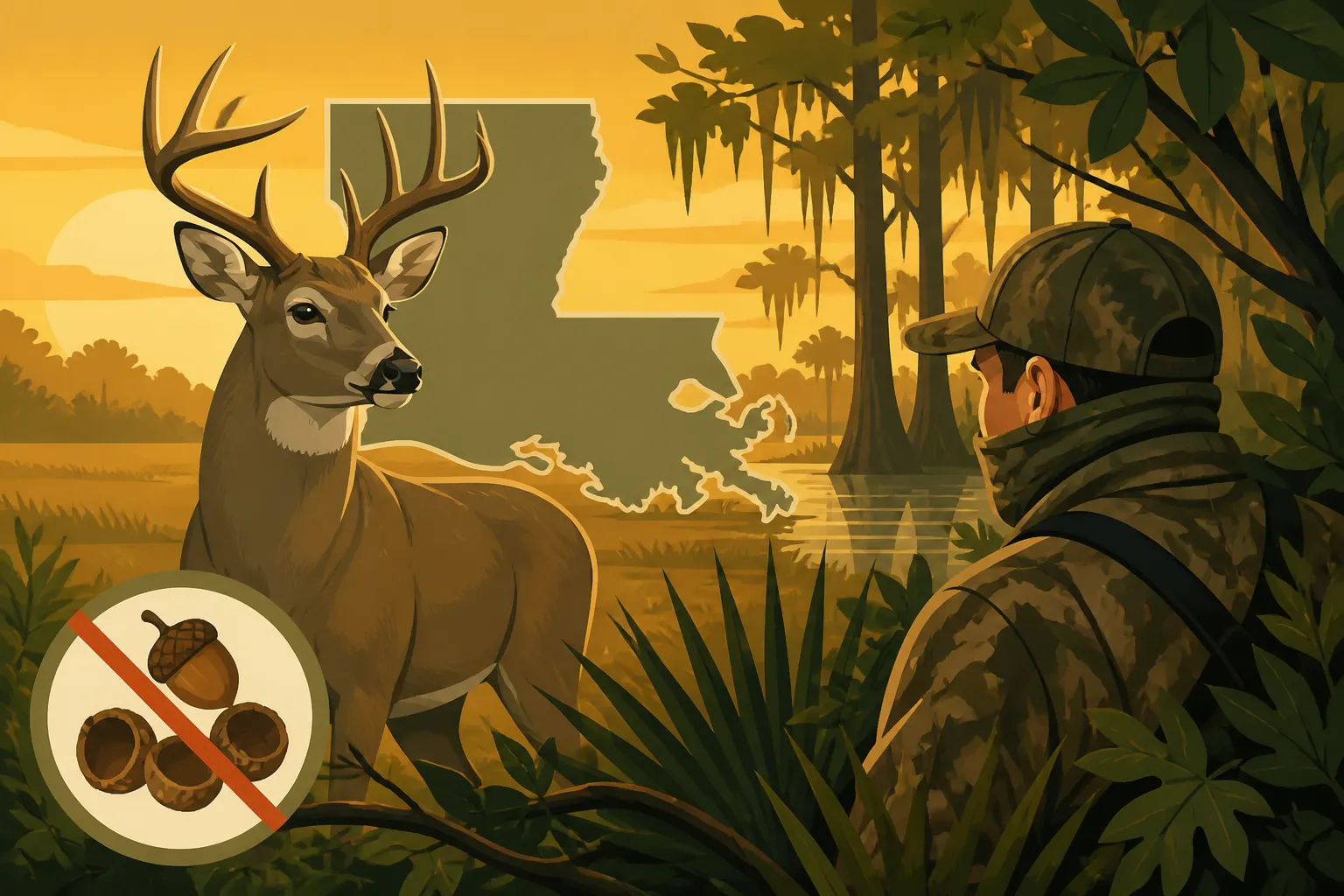
Man, there's nothing quite as frustrating as heading into deer season, full of hope, only to find that the acorn crop you were banking on has completely busted. It throws a wrench into everything you thought you knew about where the deer would be. When those preferred natural food sources dry up, it feels like the deer just vanish. This guide is all about helping you understand why deer behavior shifts dramatically after a poor acorn year in Louisiana and, more importantly, how to adapt your scouting and hunting strategies to stay successful, even when the forest floor is bare of those coveted nuts.
Understanding the Impact of a Poor Acorn Crop
When the acorns aren't falling, it's not just a minor inconvenience; it's a fundamental shift in the entire deer ecosystem. These small, nutrient-dense packages are a primary caloric intake for whitetails across Louisiana, and their absence forces deer to completely rethink their daily routines.
Why Acorns are King in Louisiana Deer Diets
Think about it from a deer's perspective: acorns are like fast food, but super healthy and readily available during certain times of the year. They're packed with carbohydrates, fats, and a good amount of protein, providing a crucial energy boost as deer prepare for the rut and endure the colder months. When a strong acorn crop hits, deer will gorge themselves, sometimes spending hours under a single oak, hardly moving. They are incredibly efficient calorie sources, meaning a deer doesn't have to travel far or expend much energy to fill its belly. This leads to predictable patterns – find the oak flats, and you'll find the deer. This is especially true for white oaks, which are preferred due to lower tannin content, but red oaks also get hit hard when white oaks are scarce or after a few frosts mellow them out.
Behavioral Shifts You'll Notice
Without that primary food source, deer behavior changes significantly. Instead of congregating under specific trees, deer become much more nomadic. They have to browse more extensively, covering wider areas to find enough to eat. This means their core feeding areas become less defined, and their travel patterns become less predictable. You'll often see deer hitting diverse food sources throughout the day rather than just focusing on one. This increased movement, while potentially making them more visible, also means they might be more scattered and less concentrated in traditional hotspots. You might find them in areas you never would have considered before, hitting browse lines in thickets or cruising through previously overlooked areas just trying to fill their stomachs. This makes traditional stand placements that rely on a specific food source much less effective.
Scouting and Adapting Your Strategy for Scarce Acorns
When Mother Nature throws a curveball with a light acorn crop, your scouting efforts become more critical than ever. You can't just rely on finding oak trees; you've got to become a detective, seeking out every alternative food source and understanding how deer move between them.
Focusing on Alternative Food Sources
With acorns off the menu, deer will turn to a variety of other natural and cultivated foods. Your job is to identify these and prioritize them in your scouting. Look for areas rich in soft mast like persimmons or muscadines, especially early in the season, though these are typically gone by late archery or gun season. More reliably, deer will hit browse, which includes the tender shoots and leaves of plants like greenbrier, honeysuckle, yaupon, and privet. These are often found in thick, brushy areas, clear-cuts, or along the edges of timber blocks. If you're hunting near agricultural land, deer will gravitate heavily towards fields of soybeans, corn, peanuts, or winter wheat. On private land, planted food plots suddenly become absolute magnets. Consider areas where you might find Late-Season Food Sources for Louisiana Whitetails, as many of these will be relevant even in early season if acorns are absent. Identifying these alternative food sources is paramount to locating deer.
Locating Key Travel Corridors and Bedding
When food sources are dispersed, deer spend more time traveling between them and their bedding areas. This makes finding those vital travel corridors even more crucial. Look for natural funnels like narrow strips of timber between fields, saddles on ridges, creek bottoms, or drainage ditches that deer will naturally use for cover and ease of travel. These pinch points can concentrate deer movement, making them prime spots for stand placement. Similarly, bedding areas will still be in thick, secure cover, but their location might shift to be closer to these newly important food sources. If deer are browsing in a clear-cut, their bedding might be in the dense regrowth right next to it. Understanding Where Atchafalaya Basin Bucks Bed can offer insights into the types of thick, secure cover deer seek, even if the surrounding food sources change. Spend time on the ground reading tracks and trails. A good hunting app like GoHunt can be invaluable here, allowing you to mark observations, identify terrain features, and visualize potential travel routes.
The Role of Water Sources
Especially during dryer periods, water sources become incredibly important when natural food is spread out. While Louisiana typically has abundant water, prolonged dry spells can make standing water a critical attractant. Deer need water daily, and if their primary food source like acorns provides some moisture, and that's gone, they'll need to seek it out elsewhere. Creeks, ponds, sloughs, and even ditches can become convergence points. Don't underestimate the power of a reliable water source, especially if other food is scarce and temperatures are higher than average for the season. Look for distinct trails leading to and from these water points, often intersecting with those travel corridors you're already trying to pinpoint.
Hunting Tactics When Acorns Are Absent
Once you've done your homework and identified the alternative food sources and travel patterns, it's time to adjust your hunting tactics. The old "sit over the oak flat" strategy won't cut it. You need to be more proactive and adaptable.
Still-Hunting and Scouting on the Move
With deer more dispersed and constantly moving between scattered food sources, traditional stationary hunting can be less productive. This is where still-hunting really shines. By moving slowly, deliberately, and quietly through an area, stopping frequently to glass and listen, you can cover more ground and potentially intercept deer that are browsing or transitioning. Focus your still-hunting efforts on those thickets, clear-cut edges, and areas with heavy browse sign. You're not just looking for a stand location; you're actively hunting while you scout. This method forces you to become more attuned to your surroundings and read the landscape for fresh sign like rubs, scrapes, and tracks. Pay close attention to Reading Louisiana Mud for Fresh Deer Movement as you traverse potential new deer highways.
Stand Placement Near Alternative Foods and Funnels
Your treestand or ground blind placement needs to pivot from acorn flats to these newly identified hot spots. Set up overlooking edges of agricultural fields, entry points to dense clear-cuts, thick creek bottoms, or those narrow funnels that concentrate movement. If you've located a patch of persimmon trees that are dropping, that's your new oak flat. If deer are hammering a specific browse species, place your stand to intercept them as they enter or leave that area. Remember to account for wind direction, as deer will be highly sensitive to human scent, especially when they're more on the move. Don't be afraid to utilize a ground blind, especially on public land where you might not be able to hang a permanent stand. Consider Using a Ground Blind on Louisiana Public Land for versatility. If you're hunting an area with Hunting a Green Field Planted for Deer, position your stand to catch deer coming into the plot during low light.
Adjusting for Increased Pressure
A poor acorn year doesn't just impact deer; it impacts other hunters too. When traditional food sources are bust, everyone starts looking for the same alternative food plots, clear-cuts, and browse thickets. This can lead to increased hunting pressure in these areas, pushing deer even further into nocturnal patterns or into the nastiest, thickest cover available. To combat this, you might need to hunt deeper, farther away from roads and easy access points, or focus on midday movements when other hunters might be less active. Sometimes, simply Finding Ground Others Walk Past is the key to success. This means looking at areas that don't look "pretty" but offer dense cover and security, often adjacent to more open feeding areas. Deer will use these pockets of safety to move and hide from human activity.
Utilizing Technology and Intelligence
In today's hunting world, technology can be a powerful ally, especially when you're forced to adapt to changing conditions like a poor acorn crop. Using mapping tools and trail cameras strategically can give you a significant advantage.
Leveraging Mapping Tools
Gone are the days of relying solely on paper maps and intuition. Modern hunting apps like GoHunt offer incredible detail, allowing you to analyze terrain features, identify potential alternative food sources, and pinpoint bedding areas from your couch. You can use aerial photos to scout for clear-cuts, powerline rights-of-way that often grow good browse, or the edges of dense timber that might hide a stand of persimmons. Mark potential funnels, water sources, and historical deer sightings. This pre-season digital scouting is crucial for figuring out how deer might move when traditional food sources are absent. For example, knowing how to use Reading Aerial Photos for Central Louisiana Deer can help you spot subtle elevation changes, drainage patterns, and vegetation types that might indicate hidden food or cover. With a platform like GoHunt, you can even overlay public land boundaries and WMA specific data, helping you plan your approach on unfamiliar ground.
Trail Camera Strategies
When deer patterns are unpredictable, trail cameras become your eyes in the woods. Instead of placing them solely over bait (which is often restricted on public lands and in CWD zones anyway, as per Louisiana's Chronic Wasting Disease Zones), spread them out strategically. Focus on those alternative food sources you've identified, pinch points, transition lines between thick cover and more open areas, and even primary trails leading to water. If you're Hunting a Clear-Cut Regrowth Edge, place a camera on the trails leading into the densest parts. Look for daytime activity to confirm your hunches about new feeding or travel patterns. Move cameras frequently based on the intelligence you gather; don't be afraid to pull a camera from a dead area and redeploy it where you're seeing fresh sign or expecting new activity. The goal is to build a real-time picture of deer movement as they adapt to the scarcity of acorns.
| Alternative Food Source | Preferred Location | Key Scouting Sign | Seasonality for Deer Impact |
|---|---|---|---|
| Greenbrier | Thickets, clear-cuts, forest edges | Browsed-off stems, deer trails through dense growth | Year-round, especially fall/winter |
| Honeysuckle | Forest openings, creek bottoms, old logging roads | Browsed leaves and vines, often intertwined with trees | Year-round, crucial in winter |
| Yaupon Holly | Piney woods, transition zones, dry ridges | Stripped leaves, often found in dense clusters | Fall/Winter |
| Privet | Fence lines, disturbed areas, stream banks | Heavy browsing on new shoots, dense thickets | Year-round |
| Persimmons | Field edges, old homesteads, open woods | Dropped fruit (if early season), deer tracks near trees | Early Fall |
| Muscadines | Hardwood forests, bottomlands | Browsed leaves, vines, dropped fruit (if early season) | Early Fall |
| Winter Wheat/Oats | Planted food plots, agricultural fields | Heavy grazing, deer tracks in softened soil | Late Fall/Winter |
| Soybeans/Corn | Agricultural fields, field edges | Tracks, browsed plants, damage to crops | Early Fall (Soybeans), Late Fall (Corn) |
In a poor acorn year, adaptability is your best friend. Don't get discouraged if your usual spots are barren. Instead, embrace the challenge, learn to read the landscape for new clues, and focus on those alternative food sources and the travel corridors deer use to get to them. It's a different game, but one that can be incredibly rewarding if you're willing to put in the effort to understand how deer are navigating their world without their favorite snack.
Disclaimer
Please remember that hunting regulations and seasons can change. Always consult the latest Louisiana Department of Wildlife and Fisheries (LDWF) regulations pamphlet or their official website before heading out into the field to ensure you are in full compliance with all state laws and WMA-specific rules.