Reading a Ridge for Central Louisiana Deer
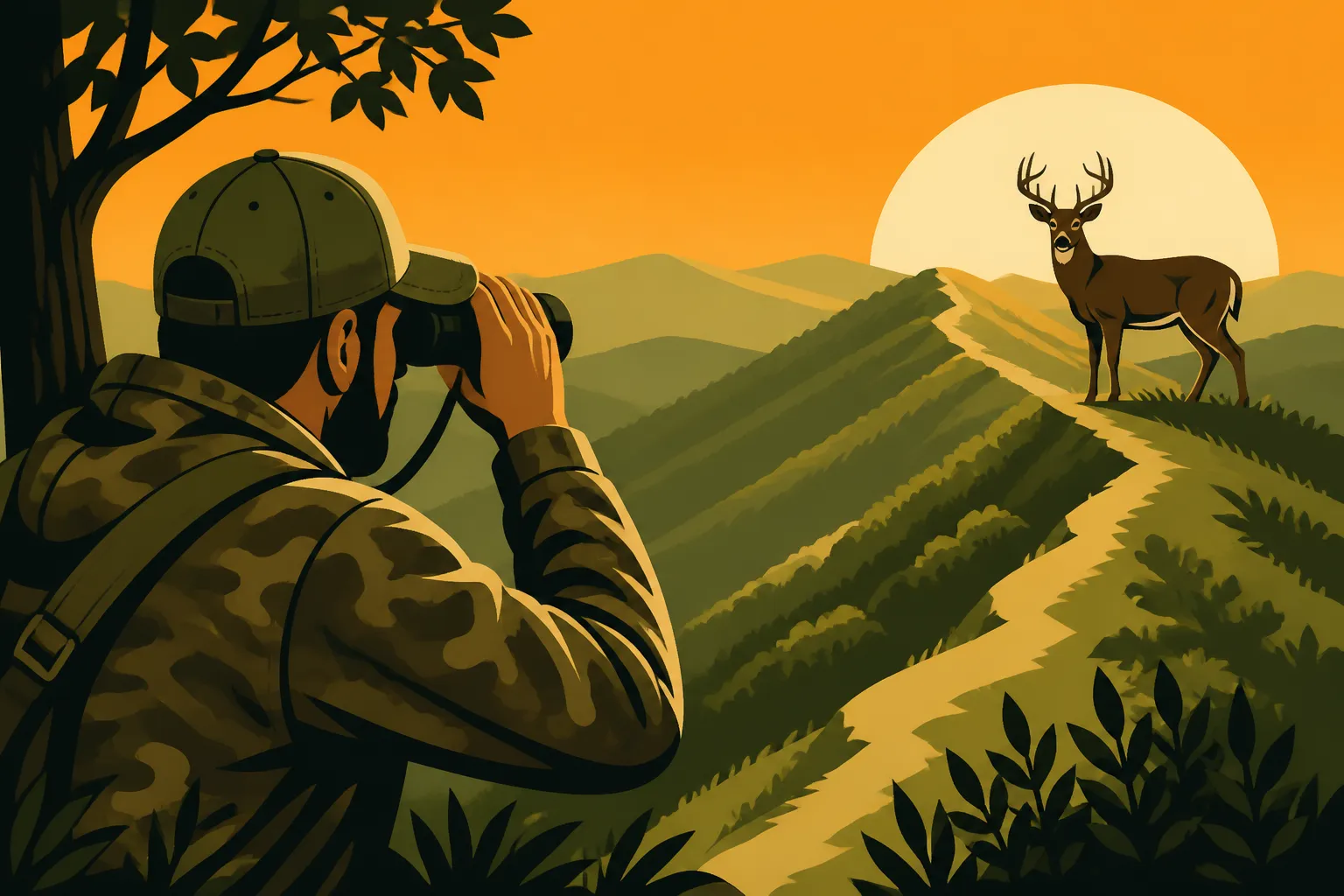
It’s a unique kind of frustration, isn’t it? You’re out in the central Louisiana woods, looking at a promising ridge line, but the deer seem to be invisible. You know they're there, but deciphering their movement patterns on these elevated landscapes can feel like cracking a secret code. This guide is dedicated to demystifying ridge hunting in central Louisiana, helping you understand deer behavior, identify key terrain features, and develop effective strategies to put you in the right place at the right time.
Unraveling the Secrets of Central Louisiana Ridges
Central Louisiana's landscape is a fascinating mix, often characterized by rolling piney woods and hardwood bottoms that transition into sloughs and creeks. The ridges here aren't the towering mountains of other states, but subtle undulations and elevated fingers that offer deer a distinct advantage and, consequently, unique hunting opportunities. Ignoring these elevation changes means you're missing a huge piece of the puzzle when it comes to consistently finding deer.
Understanding the Topography and Vegetation
When we talk about central Louisiana ridges, we're largely looking at areas within the Kisatchie National Forest or private timberlands that share similar characteristics. These aren't dramatic peaks, but rather elevated sections that rise above the surrounding lowlands, often dissected by drains, draws, and small creeks. The vegetation can vary wildly, which directly influences how deer use these areas.
You might find ridges dominated by mature pine plantations, where the understory is relatively open, allowing deer to move through with ease but offering less cover. On the other hand, some ridges might be a mosaic of mixed hardwoods—oaks, hickories, and sweetgums—especially along the edges of bottomland areas. These hardwood sections are goldmines, providing crucial food sources like acorns, especially in years when the mast crop is good. You’ll also encounter dense thickets of briars, young pines, and regenerating clear-cuts that act as impenetrable bedding sanctuaries for deer. Learning to differentiate these vegetation types on a ridge is paramount. A deer might bed in the thick, thorny growth on one side of a ridge and then travel to an open, mature pine section to feed on fallen acorns or browse. It's about recognizing these transitions, where two different types of habitat meet, because that's often where deer feel most comfortable moving between cover and food.
How Deer Utilize Elevation Changes
Deer are masters of efficiency and security, and ridges play directly into both. Think about it from a deer's perspective: a slight elevation offers a commanding view of the surrounding terrain, helping them detect predators (including us hunters!) from a distance. On public lands, especially places like Kisatchie, where hunting pressure can be a factor, deer often gravitate towards higher ground for safety.
These subtle elevation changes create natural travel corridors. Instead of slogging through swampy bottoms or dense thickets, deer will often take the path of least resistance along a ridge spine. Ridges also offer superior bedding locations, particularly when combined with dense cover. A buck might bed on a ridge point with the wind at his back, allowing him to smell anything approaching from behind, while his elevated position provides visual detection of anything coming from the front or sides. During the rut, these ridges become highways for bucks cruising for does, making them prime spots for intercepting movement. Understanding Hunting a Ridge-Top Saddle for Rutting Bucks can be a game-changer when you consider these dynamics. They're not just moving; they're strategically moving, and that strategy is often dictated by the subtle nuances of the ridge itself.
Decoding Key Ridge Features for Deer Activity
Once you understand why deer use ridges, the next step is to identify the specific features on those ridges that deer favor. It's not enough to just know there's a ridge; you need to be able to "read" it, much like reading a map, but instead of towns and roads, you're looking for natural pinch points, feeding zones, and hidden trails.
Identifying Funnels, Saddles, and Benches
These three terms are critical to understanding deer movement on any undulating terrain, and especially on central Louisiana ridges.
- Saddles: Imagine two high points on a ridge with a slight dip in between. That dip is a saddle. These are absolute magnets for deer movement because they offer the easiest crossing point from one side of the ridge to the other. Deer, being creatures of efficiency, will naturally funnel through these low spots. During the rut, saddles become cruising lanes for bucks checking for does on both sides of the ridge. If you can find a prominent saddle, especially one connecting two good bedding areas or a bedding area to a food source, you've found a high-odds ambush point. It's a classic example of a "pinch point" where terrain forces deer into a predictable path.
- Benches: These are flat spots or shelves that break up a steep hillside. Deer love benches. They're perfect for bedding, especially on a south-facing slope that catches the morning sun on a cold day, or a north-facing slope that offers shade during warmer periods. Deer also use benches as staging areas before heading to a primary food source or as safe havens to chew their cud. Look for benches that have thick cover on them, as these are often preferred bedding sites. The edges of benches, where the terrain changes again, are also great places to find deer sign.
- Funnels: While a saddle is a type of funnel, broader funnels can exist where terrain features—like a steep draw, a thick clear-cut, or even an old fence line—constrict deer movement into a narrower path. These can be less obvious than a saddle but just as effective. For example, a narrow strip of mature timber between two expansive clear-cuts could act as a significant funnel. Identifying these funnels on maps (a good mapping app like GoHunt can be invaluable here) and confirming them on the ground is key to intercepting deer.
Locating Rubs, Scrapes, and Trails on Ridges
Deer sign tells a story, and on a ridge, that story is often amplified. Rubs, scrapes, and trails are not just random markings; they indicate areas of consistent deer activity and often provide clues about the size and number of deer in the area.
- Rubs: These are made by bucks rubbing their antlers on saplings and small trees, usually to mark their territory and shed velvet. On ridges, rubs often line travel corridors, especially leading to and from bedding areas or along primary ridge spines. Larger rubs on bigger trees suggest a more mature buck. Pay attention to the direction the rub is facing and the angle, as this can give you a clue about the buck's direction of travel.
- Scrapes: A scrape is an area on the ground where a buck has pawed away leaves, typically under an overhanging branch (the "licking branch"). Bucks urinate in the scrape and rub the licking branch with their preorbital glands, leaving scent. Scrapes are communication hubs. On ridges, you'll often find scrapes on points, along the edges of benches, or near saddles – places where bucks expect other deer to pass. Fresh scrapes with moist earth and a strong scent are hot indicators. Multiple scrapes in a line (a "scrape line") indicate a well-used travel route, often during the pre-rut and rut.
- Trails: Deer trails are the most obvious sign. On ridges, look for well-worn paths that connect key features. Deer will often have a "main highway" trail along the spine of a ridge, with smaller "feeder" trails branching off to bedding areas, water sources, or down into draws. Pay attention to the size of tracks and droppings on these trails. Fresh, muddy tracks, or droppings that are still moist and shiny, indicate recent activity. When Finding Sign in Big Kisatchie Timber, it's crucial to distinguish between old, leaf-covered trails and those that are actively being used. Over time, you'll learn to recognize subtle indentations in the leaf litter that might be faint but heavily used trails.
Water Sources and Food Plots near Ridge Systems
While ridges offer great cover and travel, deer ultimately need food and water. The proximity of these essential resources to a ridge system often dictates how and when deer use it.
- Water Sources: Central Louisiana is crisscrossed with small creeks, seep springs, and ephemeral pools, especially after rain. Deer need water daily, and a reliable water source near a ridge can significantly increase its attractiveness. Look for small spring heads coming out of a hillside, or even damp depressions that hold water. A small, often-overlooked water source can be an absolute magnet, especially during dry periods or early season when temperatures are higher. Deer will often travel along draws or small creek beds that feed into a ridge.
- Food Plots: On private land, strategically placed food plots are designed to draw deer. If a food plot is situated at the base of a ridge or on a bench, deer will often bed on the ridge and then move down to feed in the evenings or mornings. Knowing the location and type of food plots is key to understanding the deer's daily routine. Even on some public lands or adjacent private properties, natural "food plots" of native browse, berries, or specific mast crops (like a cluster of white oaks) will dictate movement. Late-Season Food Sources for Louisiana Whitetails become even more critical near ridges when other browse diminishes. Observing deer movement from the ridge down to a food source, or vice-versa, offers prime ambush opportunities.
Strategizing Your Hunt: Wind, Access, and Stand Placement
Understanding the terrain and deer sign is only half the battle. The other half is using that knowledge to formulate a successful hunting strategy. This involves meticulous planning around elements like wind direction, quiet access, and the perfect stand location.
Mastering Wind and Thermals on Ridge Lines
This is arguably the most critical factor for hunting deer on ridges. Deer rely heavily on their sense of smell, and a misplaced stand or a noisy entry with the wrong wind can ruin your hunt before it even begins.
- Wind Direction: The prevailing wind is your primary concern. Always try to set up so your scent is carried away from where you expect deer to approach or travel. However, ridges complicate things. Wind doesn't just flow in a straight line over a ridge; it can eddy, swirl, and be pushed around by the topography. This is where experience and careful observation come into play. A mapping app with a wind overlay can help you visualize how the wind should behave, but always confirm it with a milkweed pod or puff bottle once on site.
- Thermals: These are currents of air that rise and fall with temperature changes. In the mornings, as the sun heats the ground, warm air (and your scent) rises, moving up the ridge. In the evenings, as the air cools, it sinks, moving down the ridge. This phenomenon is especially pronounced in timbered areas where temperature changes are more gradual. So, if you're hunting an evening hunt, your scent will likely fall down into the valleys and draws. For a morning hunt, it will rise. Understanding Wind and Thermals in Swamp Bottomland can be adapted to ridge hunting, as the principles of air movement remain similar. A common strategy is to hunt the side of a ridge in the morning or evening, letting the thermals carry your scent parallel to the ridge, or slightly away from the expected deer approach.
Stealthy Entry and Exit Routes
You could have the perfect stand setup on a ridge, but if you spook deer on your way in or out, your efforts are wasted. Deer quickly learn to associate human presence with danger.
- Approaching Your Stand: Plan your entry route to minimize scent contamination and noise. This often means walking along creek beds, through open clear-cuts, or along the very bottom of a draw, staying out of the primary deer travel zones until you reach your stand. Avoid walking over ridges or directly through saddles, as these are high-traffic areas. Use existing logging roads or trails if they don't directly interfere with deer movement, but be mindful that deer use these too. Early morning, when it's still dark, offers the best cover for a quiet approach.
- Exiting Your Stand: Just as important as entry, your exit strategy needs to be carefully considered. Try to exit during a period of low deer activity, perhaps in the middle of the day if you're doing an all-day sit, or wait until well after dark. Again, use routes that avoid disturbing bedding areas or feeding zones. The goal is to leave the hunting area as undisturbed as possible, ensuring that deer continue to use it without associating it with human intrusion.
Optimal Stand and Blind Placement
Once you've scouted a ridge, identified key features, and understood the wind/thermals, it's time to pick your spot. This is where all your hard work comes together.
- Treestands: For ridges, hang-on stands or climbing stands are often preferred due to their portability and adaptability. Look for mature, straight trees that offer good concealment and a clear view of the saddle, bench, or trail you're targeting. Always position your stand downwind or crosswind of the expected deer movement. When Hanging a Stand on a Kisatchie Ridge, consider how the sun will hit your position in the morning and evening, avoiding direct backlight that can silhouette you. Also, identify potential shooting lanes and trim minimal branches for clear shots, but don't over-cut, as cover is your friend. Aim for a height that gives you a good vantage point but still allows for natural concealment against the tree trunk.
- Ground Blinds: While less common on ridges due to the need for elevation, ground blinds can be effective in specific scenarios, especially where thick cover already exists. If you're hunting a bench or a dense thicket on a ridge, a ground blind can offer excellent concealment and scent containment. You'll need to brush it in well, making it blend seamlessly with the environment. Remember the wind and thermals are even more critical at ground level.
- Shot Opportunities: Always consider your shooting lanes. What's your maximum effective range? What obstacles are in the way? A perfect stand location means nothing if you can't get a clean shot. Visualize potential shot opportunities from different angles before you commit to a spot.
Leveraging Technology and Advanced Tactics
In today's hunting world, we have more tools than ever to help us understand and navigate the deer woods. Combining these modern aids with classic hunting wisdom can give you a serious edge on central Louisiana ridges.
Utilizing Mapping Apps for Pre-Season Scouting
Gone are the days when you relied solely on paper maps and intuition. Digital mapping apps have revolutionized scouting, allowing you to "hunt" from your couch before ever stepping foot in the timber. Brands like GoHunt, OnX Hunt, and BaseMap offer incredible detail, making them indispensable for anyone serious about hunting ridges.
These apps provide topographical maps that show elevation changes, contours, and potential saddles or benches with astonishing clarity. You can switch to aerial imagery to examine vegetation types, identify old logging roads, clear-cuts, or even subtle differences in tree canopy that might indicate a productive hardwood bottom versus a dense pine thicket. By overlaying property boundaries, you can ensure you're hunting legally on public land or within your lease. Before the season even begins, you can pinpoint several potential stand locations, mark entry and exit routes, and identify areas that might act as funnels. Reading Aerial Photos for Central Louisiana Deer becomes a strategic exercise, allowing you to visualize deer movement without leaving home. This remote scouting saves you countless hours of unproductive walking and helps you prioritize your on-the-ground scouting efforts when the time comes.
Still-Hunting and Post-Front Strategies
Sometimes, sitting in a stand isn't the most effective strategy, especially if you're trying to cover a lot of ground or you're hunting pressured deer. Still-hunting, a method of slow, deliberate movement through the woods, can be incredibly productive on ridges.
- Still-Hunting: This isn't just aimlessly wandering. It's about moving five steps, then stopping for five minutes (or more), observing your surroundings with intense focus. Use your binoculars constantly to pick apart dense cover. Listen for subtle sounds – a twig breaking, a rustle in the leaves, the flick of a deer's tail. Move into the wind or crosswind, always paying attention to your scent. Still-hunting is particularly effective during the rut when bucks are cruising, or on very cold days when deer are likely to be up and feeding at midday. It takes immense patience and discipline, but it can put you on deer that a static stand hunt might miss. Places like the Still-Hunting Kisatchie Hills Wilderness exemplify areas where this tactic can shine.
- Post-Front Strategies: A significant weather change, particularly a strong cold front, can dramatically impact deer behavior. After a cold front rolls through, accompanied by clear skies and dropping temperatures, deer often become much more active, especially during daylight hours. They'll be driven to feed to replenish energy stores and often move more freely. This is a prime time to target ridges. Bucks that might have been nocturnal will extend their movements, and does will be more visible. Focus on areas where food sources are plentiful near ridge bedding areas. Hunting After a Cold Front means understanding this increased activity and adjusting your strategy to be in the woods when deer are on the move.
Understanding Deer Pressure and Adaptability
Hunting public land in central Louisiana often means dealing with other hunters. Deer are incredibly adaptable creatures, and they quickly learn to adjust their behavior in response to human pressure.
- Pressure Points: On popular WMAs or accessible parts of Kisatchie, deer will often become more nocturnal or move into the thickest, nastiest cover during daylight hours. They will learn to avoid well-traveled trails and open areas. This means you need to be willing to go where others won't – deeper into the woods, into dense briar patches, or across difficult terrain.
- Finding Overlooked Pockets: Use your mapping app to identify areas that are difficult to access, perhaps requiring a longer walk, a boat ride across a slough, or navigating through dense bottomland before climbing onto a ridge. These "unpressured pockets" can hold older, wiser deer. Don't be afraid to put in the miles; often, the best hunting on public land is found by those willing to walk the farthest. Deer also utilize transitional zones – the edges of clear-cuts, the fringes of swamps, or areas where two distinct habitat types meet – as these often offer both cover and food, even under pressure. Understanding Hunting Pressure on Louisiana Public Land is key to finding success when others are struggling.
- Adapting to Shifting Patterns: Deer patterns are not static. Food sources change, pressure fluctuates, and deer adapt. Be ready to change your strategy. If a particular ridge isn't producing, re-evaluate. Did the acorns run out? Did hunting pressure shift the deer? Use trail cameras (where allowed) to monitor new movement patterns. Being flexible and continually scouting, even during the season, will significantly improve your long-term success on central Louisiana ridges.
| Ridge Feature | Typical Deer Use | Optimal Hunting Strategy |
|---|---|---|
| Saddle | Primary travel corridor, rutting activity, cruising | Ambush point, set up overlooking both sides |
| Bench | Bedding, staging area, feeding (if food present) | Hunt edges, watch for deer moving off/on |
| Point | Rubs/scrapes, territorial markers, visual vantage | Check for fresh sign, ambush point for cruising bucks |
| Draw/Gully | Covered travel, thermal sink, hidden bedding | Hunt downwind, focus on where draws meet ridges |
| Thicket/Clear-cut | Dense bedding cover, security | Hunt downwind on edges, intercept deer entering/exiting |
| Hardwood Pocket | Primary food source (acorns, browse) | Morning/evening sits, watch for deer feeding |
Disclaimer
Hunting is an inherently dangerous activity. Always prioritize safety, understand and follow all Louisiana Department of Wildlife and Fisheries (LDWF) regulations, and obtain proper licenses and permits before heading afield. This guide is for informational purposes only and does not replace professional instruction or local regulations. Be aware of your surroundings, inform others of your hunting plans, and practice ethical hunting at all times.