Louisiana’s Chronic Wasting Disease Zones
Oh, the ever-evolving world of hunting regulations! It can feel like you need a law degree just to figure out where you can hunt and what you can do with your hard-earned deer. Dealing with new rules, especially those tied to something as serious as Chronic Wasting Disease (CWD), adds a whole new layer of complexity and concern for Louisiana hunters. This guide is here to untangle the specifics of Louisiana's CWD zones, helping you understand the rules, manage your harvest responsibly, and keep our deer herd healthy for generations to come.
Understanding Chronic Wasting Disease in Louisiana
Chronic Wasting Disease (CWD) is one of those phrases that can send a shiver down a deer hunter's spine, and for good reason. It's a serious neurological disease that affects cervids, which include our beloved white-tailed deer, elk, moose, and caribou. Unlike bacterial or viral infections, CWD is caused by abnormal proteins called prions. These prions essentially turn the animal's brain into a spongy mess over time, leading to a host of debilitating symptoms that are always fatal. There's no cure, no vaccine, and once it's in a deer population, it's incredibly difficult to eradicate.
What CWD Is and Why It Matters
Imagine a deer that's literally wasting away. That's where the "wasting" in CWD comes from. Infected animals might appear emaciated, stumble, drool excessively, have a vacant stare, or exhibit abnormal behavior like being less wary of humans. These symptoms can take months or even years to manifest after infection, which is part of what makes CWD such a silent threat. The prions can persist in the environment – in soil, plants, and even water – long after an infected animal has died. This environmental persistence means that once CWD is detected in an area, managing its spread becomes a monumental task. For hunters, it matters deeply because it threatens the very foundation of our hunting heritage: healthy deer populations. It also raises concerns about the safety of consuming venison, though there's currently no strong scientific evidence that CWD can be transmitted to humans. However, public health organizations like the CDC still recommend against eating meat from CWD-positive animals, just to be safe.
The History of CWD in Louisiana
For years, Louisiana was one of the few states in the Deep South that had avoided detecting CWD in its wild deer herd. We all watched with apprehension as it popped up in neighboring states, knowing it was probably just a matter of time. That unfortunate day arrived in January 2022, when the Louisiana Department of Wildlife and Fisheries (LDWF) confirmed the state's first-ever case of CWD in a deer harvested in Tensas Parish. This discovery immediately triggered a comprehensive response plan. LDWF had been proactively testing deer for years as part of a surveillance program, and that diligence paid off in identifying the disease early. The initial finding, a buck from the northeast corner of the state, meant immediate action was necessary to try and contain the spread. Understanding how this disease could potentially spread and impact Louisiana's deer herd is crucial for every hunter, whether you're chasing bucks in the piney woods or the vast river bottoms. For a broader look at how the disease arrived, check out our guide on How CWD Reached Tensas Parish.
Louisiana's CWD Management Zones Explained
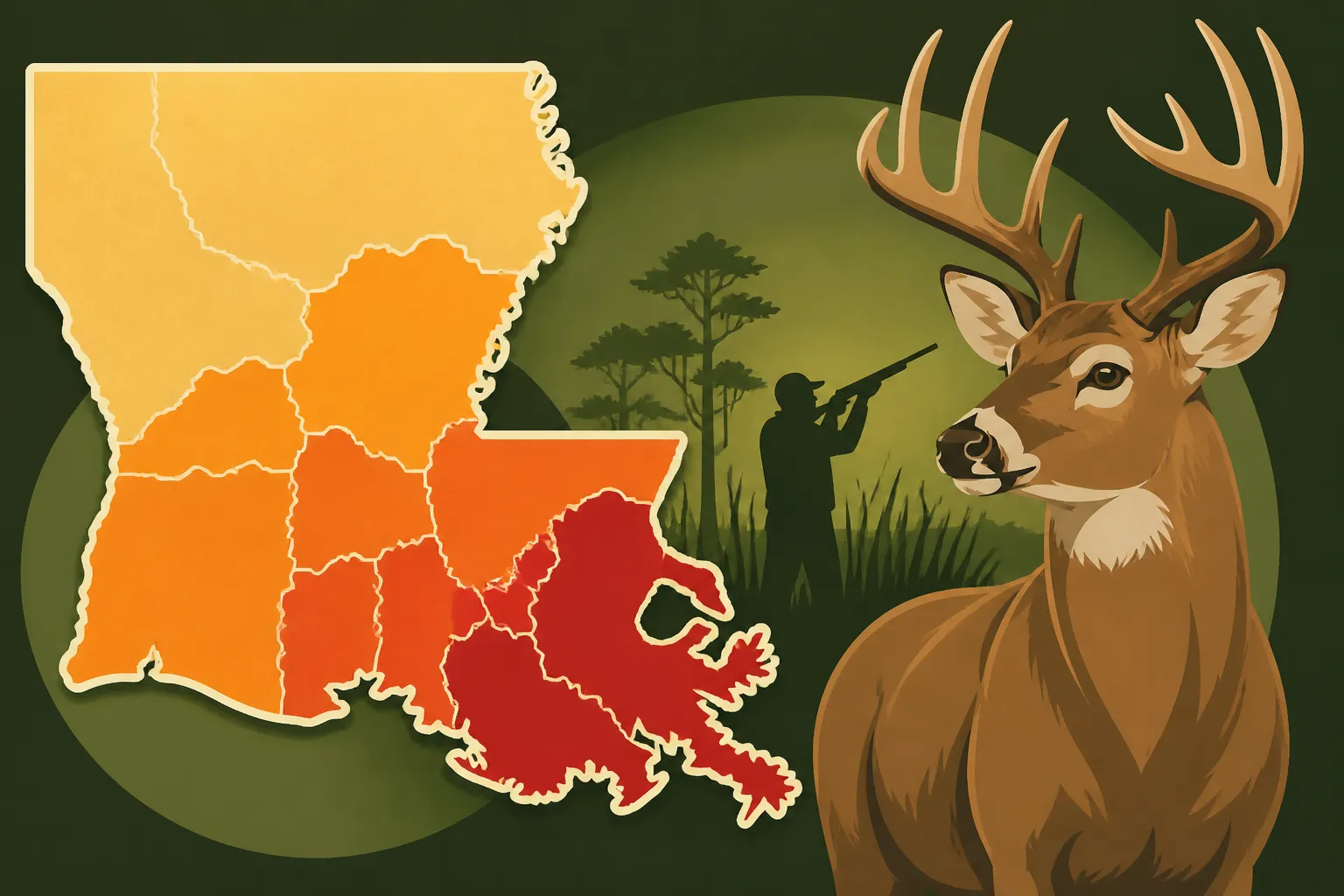
Once CWD was detected, the LDWF quickly established a multi-tiered management strategy, creating specific zones with different rules to try and slow the disease's spread. These zones aren't just lines on a map; they dictate everything from baiting practices to how you can transport your deer, so it's vital to know where you stand. Ignoring these rules isn't just a minor infraction; it carries significant penalties and, more importantly, jeopardizes the health of our state's deer.
The Enhanced Mitigation Zone
The Enhanced Mitigation Zone (EMZ) is the hot zone, the area immediately surrounding where CWD-positive deer have been found. This is where the most stringent rules apply, and for good reason. The primary goal here is to reduce potential disease transmission and gather as much data as possible. Currently, this zone primarily encompasses portions of Tensas and Madison Parishes, with specific boundaries set by LDWF.
Within the EMZ, hunters face strict regulations designed to limit deer congregation and the movement of potential infectious materials. This includes a complete ban on baiting and supplemental feeding of deer. That means no corn feeders, no mineral blocks, no food plots planted specifically for attracting deer. LDWF wants to discourage any activity that brings deer together in high concentrations, as this increases the likelihood of CWD spreading from animal to animal. Additionally, there are specific carcass movement restrictions (which we'll dive into more detail on shortly) and mandatory CWD testing requirements for all harvested deer within this zone. If you're planning to hunt in this area, you absolutely need to be aware of The Enhanced Mitigation Zone Baiting Ban and all other specific regulations. Tools like the LDWF app or mapping services such as GoHunt can be invaluable for pinpointing these precise boundaries and ensuring you're compliant before you even step foot in the woods.
The CWD Buffer Zone
Surrounding the Enhanced Mitigation Zone is the CWD Buffer Zone. Think of this as a secondary line of defense, an area where the risk is considered elevated, but perhaps not as immediate as in the EMZ. This zone typically extends about 15 miles out from the EMZ boundaries. While the rules here are less restrictive than in the EMZ, they are still more stringent than general statewide regulations.
In the Buffer Zone, baiting is still allowed, but with some key caveats. For instance, in many CWD buffer zones across various states, specific restrictions apply to the types of bait allowed or the duration it can be left out. Louisiana's rules in the buffer zone generally allow supplemental feeding and baiting, but it's crucial to always double-check the latest LDWF regulations, as these can change based on new CWD detections. The primary focus in the Buffer Zone often shifts to carcass movement and continued surveillance. While mandatory testing isn't always required for every harvested deer in the Buffer Zone, LDWF encourages voluntary testing and continues to conduct active surveillance to monitor for any further spread. Keeping an eye on the official LDWF website is your best bet for the most up-to-date information regarding The CWD Buffer Zone Baiting Rules and other specific guidelines, as these can be dynamic.
Statewide CWD Regulations
Even if you're hunting miles away from the current CWD zones, there are statewide regulations that apply to all hunters in Louisiana. These rules are designed to prevent the introduction or spread of CWD from other states and to create a baseline of responsible hunting practices. The most significant statewide rule often revolves around carcass importation.
Louisiana prohibits the importation of whole deer or elk carcasses from any state or province where CWD has been detected. This is a critical measure to prevent hunters from unknowingly bringing infected material into our state. You can usually bring in deboned meat, clean skull plates, antlers, hides, and finished taxidermy products, but whole carcasses are a no-go. This is a rule that applies to every hunter, every season, everywhere in Louisiana. It’s also important to remember that general deer hunting regulations, such as those covered in Louisiana Deer Hunting Area by Area, still apply alongside CWD rules. Always be aware of the source of any deer or elk products you might bring into Louisiana, even if it's from a seemingly "clean" area out of state, because the rules are based on any detection in the source state.
Navigating Carcass Movement Restrictions
One of the trickiest parts of CWD management for hunters is understanding what you can and cannot do with your deer after the shot. The prions that cause CWD are concentrated in certain parts of the animal, like the brain and spinal cord. Moving these high-risk materials unnecessarily can rapidly spread the disease. LDWF has implemented specific rules to minimize this risk.
Allowed and Prohibited Carcass Parts
Within the Enhanced Mitigation Zone, and sometimes even in Buffer Zones or statewide for imported carcasses, there are very specific rules about what parts of a deer you can legally move. Generally, you can transport deboned meat, antlers, clean skull plates (with no brain tissue attached), hides, and teeth. These are considered low-risk materials because the prions are not typically found in muscle tissue or bone that has been thoroughly cleaned.
What you cannot move out of an EMZ, or bring into the state from a CWD-positive area, are high-risk parts. This includes the whole carcass, the head (especially brain and eyes), spinal column, and any entrails. The idea is to keep these parts within the zone where the animal was harvested. This means field dressing your deer in the field, leaving the gut pile there, and often quartering or deboning the animal at your hunting camp or a processing facility within the EMZ before transporting the legal parts out. It's a logistical challenge, for sure, especially if you're used to just throwing a whole deer in the back of the truck, but it's a necessary step to protect the larger deer herd. Remember, even if you’re processing a deer from a zone outside of the EMZ, you still need to follow general Louisiana Carcass Movement Restrictions if you are planning to take it across state lines.
Rules for Transporting Deer Across State Lines
If you're lucky enough to harvest a deer in Louisiana and want to take it home to another state, or vice-versa, the rules get even more complicated. Most states have their own CWD regulations, and they often mirror Louisiana's in prohibiting the import of whole carcasses or high-risk parts from CWD-positive states. This is where pre-planning becomes absolutely essential.
Before you even leave for your hunt, if you anticipate taking a deer across state lines, you need to check the regulations for both Louisiana and your home state. You might be able to process your deer in Louisiana and transport only the deboned meat and cleaned skull plate back to Arkansas, Mississippi, or Texas. Conversely, if you hunt in, say, Wisconsin (a CWD-positive state), you cannot bring a whole deer carcass back to Louisiana. You'll need to process it there, bringing back only the allowed parts. Always err on the side of caution and adhere to the strictest regulations between the two states involved. A quick call to the wildlife agencies in both states can save you a lot of headache, and potential fines, down the road.
Mandatory CWD Testing and Sampling for Hunters
In areas where CWD has been detected, particularly the Enhanced Mitigation Zone, mandatory testing of harvested deer is a cornerstone of the management strategy. This isn't just about enforcement; it's about data collection. Each test provides valuable information to LDWF about the prevalence and spread of the disease, guiding future management decisions.
Finding a CWD Sampling Station
When mandatory testing is in effect, LDWF sets up CWD sampling stations within or immediately adjacent to the Enhanced Mitigation Zone. These stations are typically staffed by LDWF personnel or trained volunteers who can quickly and efficiently collect the necessary samples. You might find them at public land check stations, local sporting goods stores, or designated drop-off points.
It's your responsibility as the hunter to deliver your harvested deer to one of these stations within a specific timeframe, usually within 48 hours of harvest. This means you need to know the location and operating hours of these stations before you go hunting. The LDWF website and their mobile app are usually the best sources for this information. Imagine getting a deer late in the day and realizing the nearest station closes in an hour and is an hour away – planning is everything. For precise locations and any changes, consulting LDWF's official CWD information page is a must, and mapping apps like GoHunt might also integrate these locations for ease of access. For more information on reporting in general, you can check out Louisiana Deer Reporting Requirements.
The Deer Testing Process
Once you arrive at a CWD sampling station, the process is usually straightforward. LDWF staff will ask for your hunting license information, the location of your harvest, and possibly some basic details about the deer (age, sex, etc.). They will then collect a sample, typically lymph node tissue from the deer's neck or a portion of the brainstem. This process is relatively quick and doesn't significantly damage the carcass for processing or taxidermy.
After the sample is collected, you'll be given a tracking number or receipt. The sample is then sent to a diagnostic lab for analysis. Depending on the lab's workload, results can take anywhere from a few days to several weeks. This waiting period can be anxious, especially if you're concerned about consuming the meat. If your deer tests positive, LDWF will contact you directly with instructions. It's important to follow these instructions closely and responsibly dispose of any meat that tests positive. For specifics on what to expect, refer to the detailed guide on Louisiana CWD Testing for Hunters.
Understanding Your Results
Once the lab analysis is complete, you'll receive your test results. Most often, the results will come back as "not detected" or "negative," which is fantastic news and means you can proceed with processing and consuming your venison with peace of mind. However, if a deer tests "positive" for CWD, it’s a different story.
Should your deer test positive, LDWF will likely advise you against consuming the meat and will provide guidance on proper disposal. This can be a tough pill to swallow after a successful hunt, but it's crucial for public health and disease management. This data also helps LDWF track the spread of the disease, allowing them to adjust management zones and regulations as needed. Knowing How Many Deer Have Tested CWD-Positive in Louisiana helps us all understand the scale of the challenge we face. It's a difficult situation, but compliance is key to protecting our state's wild game resources.
Here's a quick overview of the key differences in CWD zones:
| Feature | Enhanced Mitigation Zone (EMZ) | CWD Buffer Zone | Statewide Rules |
|---|---|---|---|
| Baiting/Feeding | Prohibited | Generally Allowed (check for updates) | Generally Allowed |
| Carcass Movement | Only deboned meat, clean skull plates, antlers, hides allowed out of zone. | Whole carcass allowed within zone; check local rules if moving out of Buffer Zone. | Whole carcasses from CWD-positive states prohibited. |
| Mandatory Testing | Required for all harvested deer | Voluntary testing encouraged; surveillance ongoing | No mandatory testing |
| Primary Goal | Containment, data collection, reduce transmission | Monitor spread, prevent expansion | Prevent introduction from outside sources |
| Current Location | Portions of Tensas & Madison Parishes | Surrounding EMZ (approx. 15-mile radius) | All parishes in Louisiana |
Hunting Practices and Prevention in CWD Areas
Hunting in CWD zones isn't just about following rules; it's about adopting practices that contribute to slowing the disease. Your actions as a hunter play a massive role in protecting the future of Louisiana's deer herd. This means thinking about everything from how you attract deer to how you handle your harvest.
Baiting Restrictions and Their Impact
The ban on baiting and supplemental feeding in the Enhanced Mitigation Zone isn't arbitrary. It's directly tied to how CWD spreads. When deer congregate around a feeder or a mineral site, they exchange saliva, urine, and feces. These bodily fluids can contain CWD prions. If an infected deer visits a bait site, it can contaminate the area, leaving prions that can then infect other deer who visit later.
It's a tough pill to swallow for many hunters who rely on baiting as part of their strategy, especially on private land. Many hunters feel frustrated that a tradition they've enjoyed for years is suddenly off-limits. However, LDWF's decision to implement The Enhanced Mitigation Zone Baiting Ban is based on scientific understanding of CWD transmission. While it changes hunting tactics, it's a critical measure to protect the herd. Instead of bait, hunters in these zones need to pivot to strategies that rely more on scouting, understanding deer movement patterns, and identifying natural food sources. This might mean dedicating more time to scouting for natural browse or focusing on transition areas where deer naturally funnel.
Best Practices for Hunters
Beyond just following the regulations, there are several best practices every hunter can adopt, especially if you hunt in or near a CWD zone. These practices not only help prevent the spread of CWD but also contribute to ethical and responsible hunting overall.
First, consider harvesting older, healthier-looking deer where regulations allow. While any deer can carry CWD, older bucks tend to have a higher prevalence rate. Second, always practice good hygiene when field dressing. Wear gloves, and clean your knives and equipment thoroughly. If you're quartering a deer in the field, leave the high-risk parts like the head and spine there, as close to the kill site as possible. Avoid dragging carcasses long distances unnecessarily. Third, if you're processing your own deer, use dedicated tools and surfaces, and clean them thoroughly with a bleach solution afterward. Finally, never dispose of deer carcasses or parts in landfills that don't specifically accept them, or in public waterways. Follow LDWF guidance for proper carcass disposal within CWD zones. Being mindful of your actions helps mitigate risk, and tools like scouting with the LDWF App can help you understand habitat without relying on attractants.
The Long-Term Outlook for CWD in Louisiana
The detection of CWD in Louisiana marked a new chapter for deer management in the state. It's a challenge that will require ongoing vigilance, research, and adaptation from both wildlife agencies and hunters. There's no quick fix, but there is a clear commitment to mitigating its impact.
LDWF's Ongoing CWD Monitoring Efforts
The Louisiana Department of Wildlife and Fisheries is not just reacting to CWD; they are actively engaged in long-term monitoring and research efforts. This includes continued surveillance testing across the state, not just in the CWD zones, to get a clearer picture of where the disease exists and how prevalent it is. They work with landowners, hunters, and partner agencies to collect samples and track data. This comprehensive approach is essential for understanding the disease's movement and making informed management decisions.
LDWF biologists also analyze data from other states to learn from their experiences and adapt strategies to Louisiana's unique ecosystems and deer populations. This proactive monitoring extends to educating the public, engaging with hunting clubs, and updating regulations as new scientific information becomes available. The goal is to develop sustainable, science-based strategies that protect the health of our deer herd and ensure hunting opportunities for future generations. For more context on wildlife health, you can look at topics like Louisiana Wildlife Disease Monitoring.
Hunter's Role in CWD Management
Ultimately, the success of CWD management in Louisiana hinges on the cooperation and understanding of hunters. We are the first line of defense; we spend the most time in the field, and our actions directly impact the spread of the disease. It's easy to feel frustrated by new rules, but viewing them as a collective effort to preserve our passion is crucial.
Your role extends beyond just following the legal requirements. It means staying informed by regularly checking LDWF's official CWD updates. It means participating in voluntary testing programs if you hunt outside the mandatory zones. It means having conversations with fellow hunters, educating them on the facts, and dispelling misinformation. It also means adapting your hunting strategies. Whether you're hunting in the Atchafalaya Basin, Kisatchie National Forest, or the Florida Parishes, every hunter has a part to play in protecting our shared wildlife resources. We have a rich tradition of hunting in Louisiana, from Bowhunting Louisiana's Long Archery Season to Primitive Firearms Deer Hunting in Louisiana, and ensuring the health of the game is vital to keeping those traditions alive.
Common Questions About CWD Rules
When new regulations come out, especially for something as serious as CWD, it’s natural to have a ton of questions. Let’s tackle some of the common ones that pop up in deer camps and online forums.
Why is Baiting Banned in the CWD Zones?
This is probably one of the most common and debated questions. As we touched on earlier, the ban on baiting and supplemental feeding in the Enhanced Mitigation Zone is a direct, science-backed strategy to reduce deer density at specific points. When deer gather frequently at a feeder, mineral block, or even a highly-concentrated food plot, they increase physical contact with each other and with the environment. This constant interaction facilitates the transmission of CWD prions through saliva, urine, and feces.
Think of it like this: if you have a group of kids playing together when one of them has a cold, the cold is more likely to spread quickly among them. The same principle applies to deer and CWD prions. By eliminating baiting, LDWF aims to reduce these high-density gathering points, thereby limiting the opportunities for direct and indirect transmission of the disease. It's a tough ask for many hunters, but it's considered a critical tool in the fight to slow CWD's spread.
Can I Still Process My Deer At Home?
Yes, for most of Louisiana, you can absolutely still process your deer at home. However, if you harvest a deer within the Enhanced Mitigation Zone, you need to be very mindful of the carcass movement restrictions. This typically means that you would need to field dress your deer and either process it entirely within the EMZ, disposing of high-risk parts there, or transport only the legally allowed low-risk parts (deboned meat, clean skull plate, antlers, hide) out of the zone for further processing.
It's all about ensuring that the parts most likely to contain CWD prions – namely the brain and spinal cord – stay within the zone where the animal was harvested. If you're outside of an EMZ, normal processing practices apply, but remember the statewide ban on importing whole carcasses from CWD-positive states. Always check the latest LDWF guidelines for your specific hunting location before you start gutting that buck.
What Happens If I Don't Comply with CWD Rules?
Non-compliance with CWD regulations isn't taken lightly, and for good reason. These rules are put in place to protect the health of Louisiana's entire deer herd, which is a public resource. Violations can lead to significant penalties, including fines, confiscation of your harvested deer, and even suspension of your hunting privileges. These penalties are designed to be a strong deterrent, emphasizing the seriousness of the issue.
Beyond the legal repercussions, non-compliance also carries ethical implications. By not following the rules, you could inadvertently contribute to the spread of CWD, jeopardizing hunting opportunities for everyone in the future. Wildlife agencies like LDWF rely on the cooperation of hunters to manage diseases effectively. So, while it might feel like a hassle at times, understanding and adhering to CWD rules is a critical part of being a responsible hunter in Louisiana today. It's another aspect of the game, just like knowing when Louisiana's Archery Season Opens or which license add-ons you need.
Disclaimer
The information provided in this guide is for general informational purposes only and does not constitute legal advice. Hunting regulations, including those pertaining to Chronic Wasting Disease (CWD), can change frequently. It is the sole responsibility of each hunter to consult the most current Louisiana Department of Wildlife and Fisheries (LDWF) regulations and laws before participating in any hunting activities. Always verify specific dates, rules, and zone boundaries directly with LDWF or through their official publications.