Duck Migration Timing Through Louisiana
One of the biggest frustrations for Louisiana duck hunters is the uncertainty of when those northern birds are truly going to arrive. You scout, you prepare, and you wait, sometimes feeling like you're talking to an empty sky. This comprehensive guide will pull back the curtain on the mysteries of duck migration timing through Louisiana, helping you understand the factors at play and how to better predict when the flocks will start filling our skies and marshes.
Understanding the Factors Driving Duck Migration to Louisiana
Duck migration isn't just some random flight south; it's a symphony of instinct, weather, and available resources. For us here in Louisiana, at the very bottom of the Mississippi Flyway, we're the grand finale of a long journey for millions of waterfowl. Understanding why and how they get here is key to predicting when.
The Urge to Migrate: Why They Come South
Ducks don't just pack up and leave on a whim. Their migration is primarily driven by changes in photoperiod (daylight hours) and, more acutely, by decreasing food availability and freezing water in their northern breeding grounds. As autumn progresses, the days shorten, signaling to their ancient instincts that winter is coming. When the shallow wetlands and agricultural fields up north start to freeze over, cutting off access to aquatic invertebrates, seeds, and waste grain, the birds have no choice but to push south to find open water and sustenance. It’s a matter of survival, plain and simple. We’re their winter pantry, their warm refuge when the northern larder closes up.
You see it every year. The first few cold snaps in the Dakotas or the Canadian prairies aren't just uncomfortable for us; they're a siren call for the ducks. They know that once those ice sheets start to spread, their time up north is limited. This is why a sustained cold front far to our north often precedes a significant push of new birds into our state. It's a natural rhythm, one that hunters have observed and tried to predict for generations.
The Flyway Funnel: Louisiana's Strategic Location
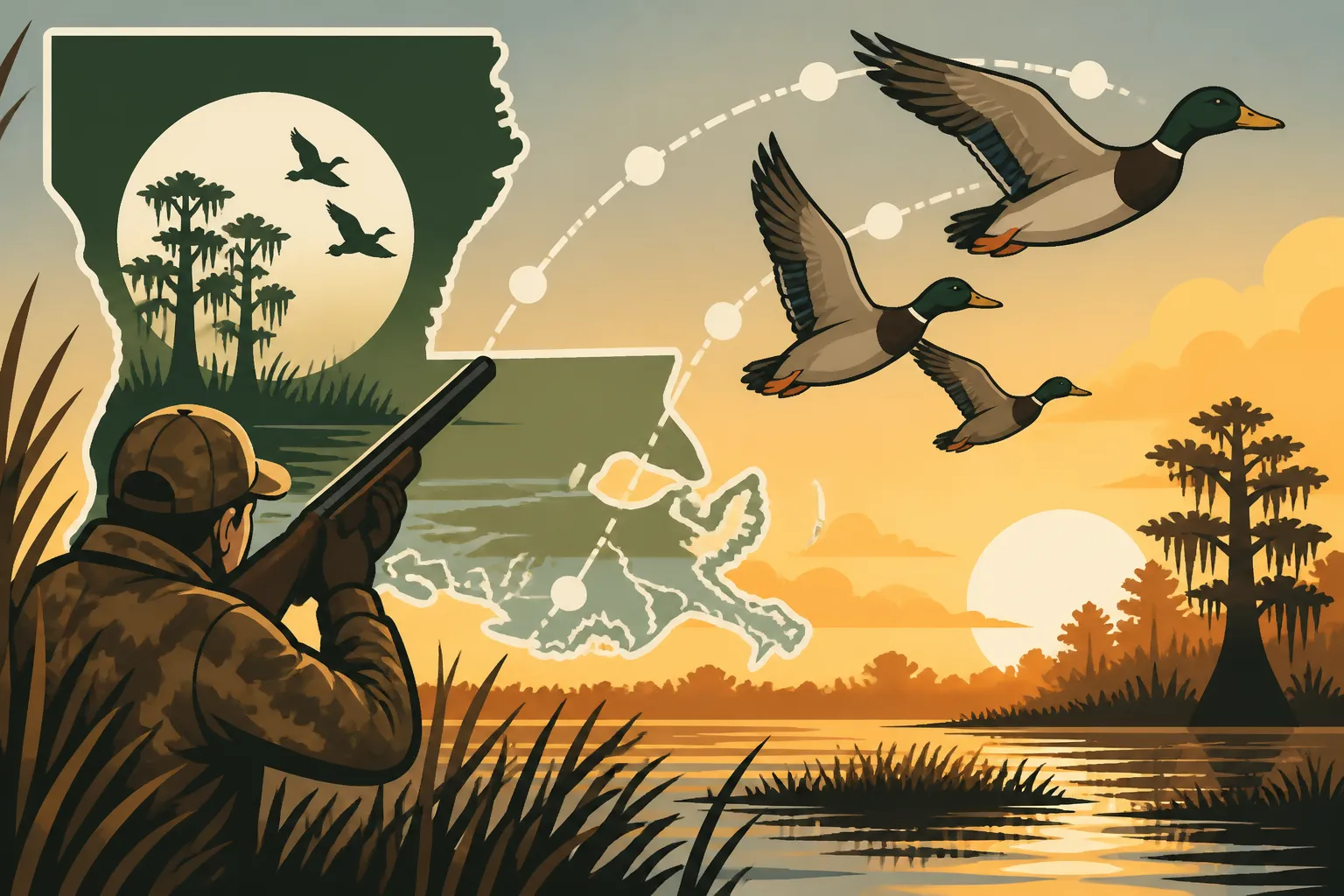
Louisiana isn't just on the Mississippi Flyway; we're essentially the collection point, the giant funnel where many routes converge. The Mississippi Flyway is like a superhighway stretching from the Arctic tundra all the way down to the Gulf Coast, and our state offers an incredible diversity of wintering habitats. From the vast expanse of the Waterfowl Hunting the Louisiana Coastal Marsh to the flooded timber of the river bottoms and the productive rice fields of southwest Louisiana, there's a smorgasbord of options for weary travelers.
This strategic location means we get a mix of almost every duck species that travels this flyway. While other states might see certain species peak and then move on, many of the ducks that make it to Louisiana are here for the long haul, at least until spring beckons them north again. This makes our hunting season incredibly diverse, but it also means understanding the nuances of when different species tend to arrive.
Key Migration Periods and What to Expect
While every year is a little different, there are general windows when you can expect certain phases of the migration to hit Louisiana. It's not an exact science, but it gives you a much better shot than just blindly hoping.
Early Season Arrivals: Teal and Pintails
When our duck season first opens, especially those early teal seasons, you're primarily hunting resident birds and the earliest wave of migrants. Blue-winged teal are notorious for their early departure from northern breeding grounds, often pushed by the first hint of cold weather in late summer or early fall. They're quick, they're zippy, and they provide some incredible action when they're here. Many of these birds have already passed through by the time the main duck season opens, but some linger.
As the season progresses into early November, you'll start to see more pintails and gadwall making their appearance. These birds tend to tolerate slightly colder conditions than teal, but they're still among the first to feel the pressure from freezing water up north. They'll often hit the major river systems and coastal marshes first, looking for broad, open water and abundant aquatic vegetation. Sometimes you'll find them in large numbers in the freshwater marshes and even some of the flooded agricultural fields. This early influx sets the stage for the bigger push to come. For specific regulations during these times, it's always good to check the Louisiana Waterfowl Zones and Seasons.
Peak Migration: The Main Event
This is what most duck hunters dream about: the massive influx of birds that typically arrives from late November through December. This period often coincides with sustained, significant cold fronts pushing through the central United States. When the Dakotas, Nebraska, Missouri, and Arkansas really start to freeze up, the main body of mallards, wigeon, canvasbacks, and ring-necked ducks are forced south. They're looking for refuge, and Louisiana's mild climate and abundant food sources are precisely what they need.
During peak migration, you can expect to see huge flights of ducks. They'll be more vulnerable to decoys, especially early in their arrival, as they haven't seen much hunting pressure in Louisiana yet and are focused on finding food and rest. This is when patience and persistence really pay off. If you're targeting specific areas like the rice fields around Hunting Cameron Parish Marsh Ducks, this is often when you'll find the most consistent action. Keep an eye on weather forecasts far to the north; if there's a deep freeze brewing, get ready.
Late Season Holds: Battling the Cold Fronts
By January and into the early part of February, the migration has mostly settled. The birds that are here have established their wintering patterns, and new arrivals are less frequent. However, significant mid-winter cold fronts can still bring new pushes of birds, especially from states just north of us that might experience temporary thaws and then refreeze. These late-season birds can be incredibly wary, having survived weeks or months of hunting pressure.
During this period, ducks are often focused on the most nutrient-rich food sources. They've burned a lot of calories migrating and avoiding hunters, so they need to refuel constantly. This is when finding those untouched pockets of food or water can be absolutely crucial. The ducks are wise to decoy spreads and calls, so you often need to be more subtle, more hidden, and potentially willing to venture further off the beaten path. Look for areas with diverse forage options that haven't been hammered by hunters. Understanding Louisiana Duck Daily Bag Limit is always important, but especially so as the birds get warier.
How Weather and Water Influence Duck Movement
Weather isn't just a signal; it's a dynamic force that constantly reshapes duck migration patterns, even on a day-to-day basis once they're here. Water levels, too, play a massive role in where ducks choose to settle and feed.
North Wind's Push: When the Birds Drop
A strong, sustained north wind isn't just uncomfortable for us in the duck blind; it's often the harbinger of new birds. When a cold front sweeps down from the north, bringing with it dropping temperatures and those stiff winds, it provides a powerful tailwind for migrating ducks. They can cover hundreds of miles with less effort, and the dropping temperatures behind the front often force them to keep moving until they hit milder climes.
It's not just the temperature, but the wind direction and strength. A light southerly breeze might keep birds milling about, but a stiff northerly gale often means new birds are on the way. Once a cold front passes through Louisiana, the first few days afterward can be magical. New birds will be disoriented, actively seeking food and water, and often more responsive to calls and decoys. This is prime time to be in the blind, whether you're Working Flooded Timber for Mallards or hunting open marsh.
Water Levels and Habitat: Where They Settle
Ducks need water, obviously, but the right kind of water is critical. Water levels significantly impact habitat availability and accessibility. In a dry year, shallow marshes might be too low, forcing birds into deeper areas or agricultural fields. In a wet year, previously dry areas might become flooded, creating new feeding and resting grounds that ducks will quickly exploit.
Think about the dynamics of our coastal marshes. If freshwater diversions are active and water levels are ideal, the marsh vegetation thrives, providing abundant food and cover. If water levels are too low, salinity can increase, stressing the vegetation and making the area less attractive. Conversely, too much fresh water in some areas can dilute the salinity that certain preferred duck foods need to grow. Agricultural practices also play a huge role. If rice fields are flooded after harvest, they become prime feeding grounds. If they stay dry, those birds will move elsewhere. Observing these conditions, perhaps through tools like GoHunt's mapping features for landowners, can give you an edge in understanding where the birds should be.
Local Weather Effects: Day-to-Day Shifts
Even once birds are settled in Louisiana, local weather can dramatically affect their daily movements and feeding patterns. A sudden temperature drop can make them more active, seeking calories to stay warm. Overcast, drizzly days often see ducks flying lower and more consistently throughout the day compared to bright, bluebird days where they might "hole up" more.
Fog, in particular, can be a game-changer. It can temporarily ground ducks, holding them in certain areas, or make them fly very low, offering unique hunting opportunities. High winds can also make ducks seek sheltered coves or behind tree lines, making them harder to find in open water. Being aware of these micro-weather patterns is crucial for planning your hunts and setting up your spread. Don't just look at the high temperature; consider wind direction, cloud cover, and recent precipitation. These small details can make a huge difference in whether the ducks are flying or resting.
Beyond Timing: Maximizing Your Hunt
While understanding migration timing is essential, it's only one piece of the puzzle. Maximizing your success involves combining that knowledge with effective scouting, adaptable strategies, and utilizing the right tools.
Scouting and Adaptability: Being Ready
You can know all the migration timing in the world, but if you don't scout, you're still just guessing. Ducks are creatures of habit, but those habits can change daily based on pressure, food availability, and weather. Before and during the season, get out there and observe. Look for where birds are flying, where they're feeding, and where they're resting. This might involve looking for Reading a Marsh Pond for a Morning Flight or simply driving country roads at dawn and dusk.
Adaptability is key. Don't get stuck on one spot or one spread if it's not working. If the ducks aren't flying a particular line, move your blind or adjust your decoys. If they're shying away from a large spread, try scaling it back. Sometimes the smallest adjustment, like moving your decoys away from the bank or adding a few more puddlers to your mallard spread, can make all the difference. Always be willing to learn from the birds and adjust your strategy. Scouting Louisiana Public Land Before Season is invaluable for this.
Tools for Tracking: Resources for Hunters
In today's world, hunters have more resources than ever to help predict and track migration. Weather apps that provide real-time radar and detailed wind forecasts are indispensable. You can look at broad continental weather patterns to see those big cold fronts forming up north, giving you a heads-up on potential new bird arrivals.
Beyond weather, services like GoHunt offer incredible mapping technologies that can help you understand terrain, water features, and even recent aerial imagery to spot changes in habitat. These tools allow you to virtually scout, identify potential pinch points, and understand property boundaries, making your time in the field more efficient. Coupled with the Louisiana Department of Wildlife and Fisheries (LDWF) resources, including their harvest reports and weekly waterfowl updates, you can piece together a more complete picture of what's happening on the flyway. Understanding Louisiana Duck Zone Boundaries can help you focus your efforts.
Habitat Management's Role
While individual hunters can't control continent-wide migration, recognizing the importance of habitat management helps everyone. Organizations that work to restore and manage wetlands, both in Louisiana and along the entire flyway, are crucial for sustaining these migrations. Whether it's restoring coastal marshes, managing water levels in agricultural impoundments, or planting specific food crops, healthy habitats are what draw and hold ducks year after year.
As hunters, supporting these efforts ensures that future generations will also have the opportunity to experience the thrill of watching thousands of ducks descend on a Louisiana marsh. Every healthy acre of wetland or flooded field contributes to making Louisiana the ultimate wintering ground for these magnificent birds.
Disclaimer
This article is for general informational purposes only and does not constitute professional advice. Laws, prices and regulations vary by location and change over time. Consult a qualified professional for guidance on your specific situation.