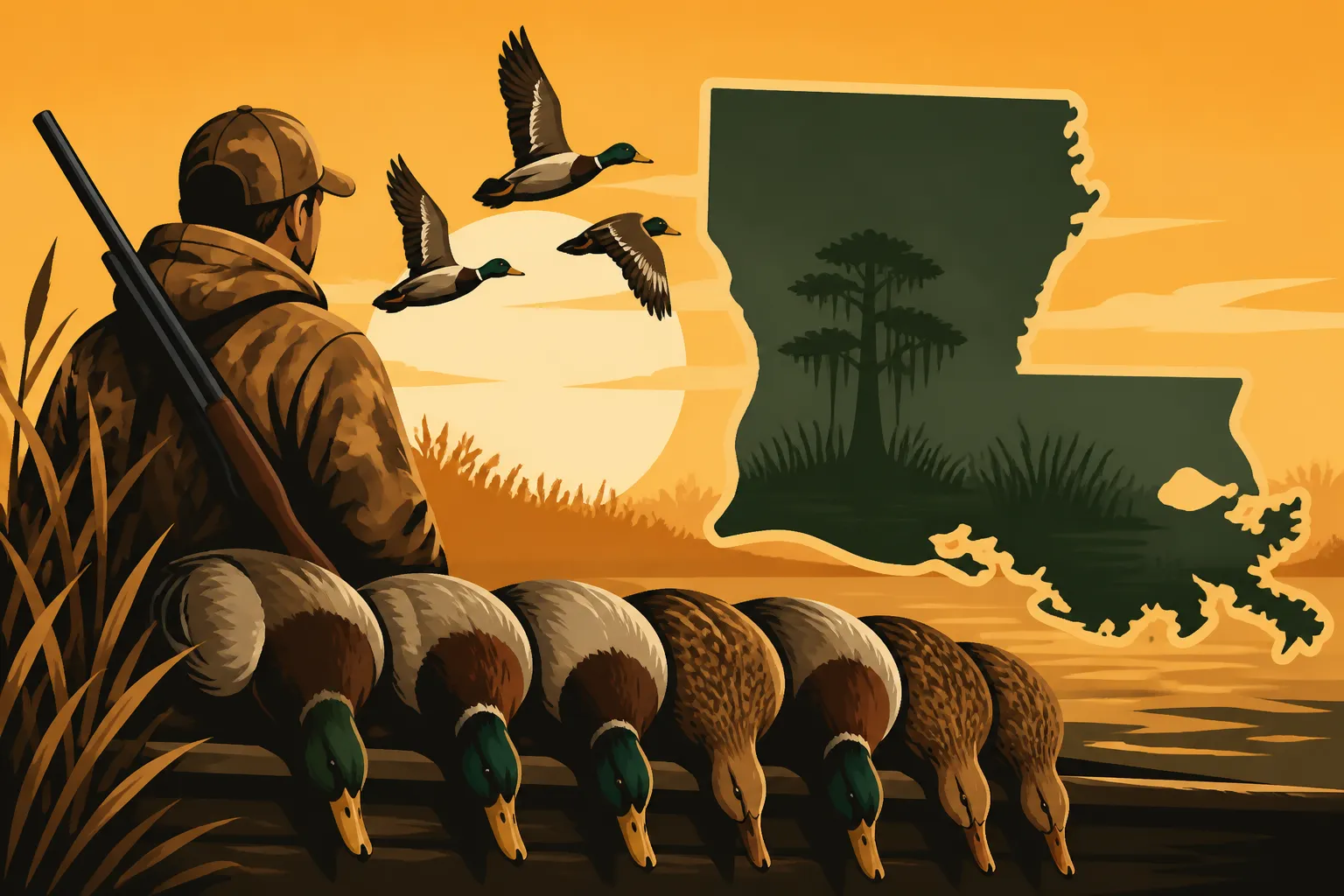
Louisiana Duck Daily Bag Limit
Oh, the joy and simultaneous headache of hunting ducks in Louisiana! You spend hours scouting the marsh, setting decoys just right, and enduring those chilly pre-dawn boat rides, only for a flock to cup their wings perfectly, and then a nagging thought creeps in: "Wait, how many mallard hens can I actually shoot today?" It's a common frustration, trying to keep all those species-specific and overall bag limits straight while the birds are working. This comprehensive guide is dedicated to clearing up all that confusion about the Louisiana duck daily bag limit, ensuring you can focus on the hunt with confidence, knowing you're always within the bounds of the law.
Navigating Louisiana's Daily Duck Bag Limits
It's easy to get tangled up in the various regulations when you're out chasing ducks across Louisiana's diverse waterways, from the coastal marshes to the flooded timber. The state's duck season is incredibly generous, but with that opportunity comes the responsibility of understanding the detailed rules that govern what you can take home. Many hunters make the mistake of only knowing the total duck limit, forgetting that specific species have their own, stricter quotas within that overall number.
Understanding the Aggregate and Species-Specific Limits
At first glance, the Louisiana duck daily bag limit seems simple: you're generally allowed to harvest a total of six ducks per day. But that's where the simplicity ends and the nuances begin. This overarching "aggregate" limit of six birds is a ceiling, not a free-for-all for any six ducks that fly past your blind. Within that total, there are precise restrictions on how many of certain species you can include in your bag. Think of it like a grocery cart with a total item limit, but also specific limits on how many cartons of eggs or loaves of bread you can buy.
For instance, you might be out in the rice fields, and a beautiful group of mallards commits to your spread. If you're having an incredible day, you might be tempted to just keep stacking greenheads. However, even if you've only shot four ducks total, you cannot have more than four mallards in that daily bag. This applies even more strictly to mallard hens, where the limit is even lower. It's a critical distinction that can easily trip up even seasoned waterfowlers. The idea is to manage the harvest pressure on certain species that are either less abundant, slower to reproduce, or particularly vulnerable. Always remember, the species-specific limits are subservient to the aggregate six-duck limit – you can't have six canvasbacks if the canvasback limit is two, nor can you have six ducks total if four of them are mallard hens.
Key Species and Their Daily Restrictions
Let's get down to the brass tacks and lay out the specific daily bag limits for the most commonly encountered duck species in Louisiana. These numbers are a result of extensive population surveys and management efforts by the Louisiana Department of Wildlife and Fisheries (LDWF) and federal agencies, designed to ensure healthy duck populations for years to come.
| Species | Daily Bag Limit |
|---|---|
| Total Ducks | 6 (cannot exceed this, even if species limits allow more) |
| Mallards | 4 (no more than 2 hens) |
| Pintails | 1 |
| Canvasbacks | 2 |
| Redheads | 2 |
| Mottled Ducks | 1 |
| Wood Ducks | 3 |
| Scaup (Bluebills) | 2 (may vary to 1 during specific periods of season) |
| Black Ducks | 2 |
| Other Species | Fall under the 6-duck total, no specific limit |
Understanding this table is paramount. Imagine you're hunting in the Atchafalaya Basin, and it's a stellar morning. You drop a pintail, two mallards (one hen, one drake), two wood ducks, and a gadwall. That's six ducks total, and you've met all your individual species limits. But if you were to drop a second pintail, even if you only had five ducks total, you'd be over the pintail limit. This kind of situation happens fast in the heat of a flight, which is why mental preparation is as important as your shotgun skills. Be mindful of those specific limits as each bird comes into range, especially for species like pintails, mottled ducks, and canvasbacks, which have particularly tight restrictions.
Possession Limits Beyond the Daily Hunt
Beyond the daily bag limit, there's also the crucial concept of the "possession limit." This isn't about how many ducks you can shoot in a single day, but rather how many migratory game birds you can have in your physical possession, whether at home, in your vehicle, or at a camp, after one or more days of hunting. For ducks in Louisiana, the possession limit is generally three times the daily bag limit. So, with a daily bag limit of six ducks, your possession limit is typically 18 ducks.
This regulation is particularly important for hunters who undertake multi-day trips, perhaps spending a long weekend at a lodge or a remote camp in the coastal marsh. You might legally harvest six ducks on Friday, another six on Saturday, and then another six on Sunday, bringing your total to 18 ducks. However, if you clean your birds each night, those processed birds count towards your possession limit. If you have 18 ducks in your cooler from previous days and then go out for another hunt, you'd better make sure you process and consume or distribute some of those birds before adding more to your possession. This rule prevents hunters from continually adding to their cache over an extended period without proper accounting, ensuring that the spirit of the daily bag limit is maintained over time. Always ensure that any game birds in your possession are properly tagged if they belong to someone else, or if you're transporting them across state lines, to avoid any misunderstandings with wildlife agents.
The Influence of Federal Regulations and Louisiana's Waterfowl Zones
Louisiana's waterfowl hunting opportunities are deeply intertwined with broader federal conservation efforts and the state's unique geographical position along one of North America's most important migration corridors. Understanding these foundational elements helps to demystify why bag limits are set the way they are and why they can sometimes change from year to year.
Federal Mandates and the Mississippi Flyway
The framework for waterfowl hunting seasons and bag limits across the United States is established at the federal level, primarily by the U.S. Fish and Wildlife Service (USFWS). This agency, working in conjunction with state wildlife departments, determines annual hunting regulations based on extensive population data, breeding ground surveys, and habitat conditions. Louisiana, as a critical wintering ground for millions of ducks and geese, plays an enormous role in the health of the entire Mississippi Flyway.
Each year, biologists assess the health of duck populations, particularly crucial species like mallards, pintails, and scaup, which are often indicators of the overall health of the flyway. The USFWS then sets "frameworks" – broad guidelines that define the earliest and latest possible season dates, and the maximum bag limits for various species. Individual states, like Louisiana, then select their specific season dates and bag limits within these federal frameworks, tailoring them to local conditions and hunter preferences. For a deep dive into how crucial our state is, consider learning more about Louisiana Waterfowl on the Mississippi Flyway. These decisions are not arbitrary; they are based on decades of scientific research and adaptive management designed to ensure sustainable hunting opportunities while protecting the resource.
How Louisiana's Duck Zones Impact Your Season
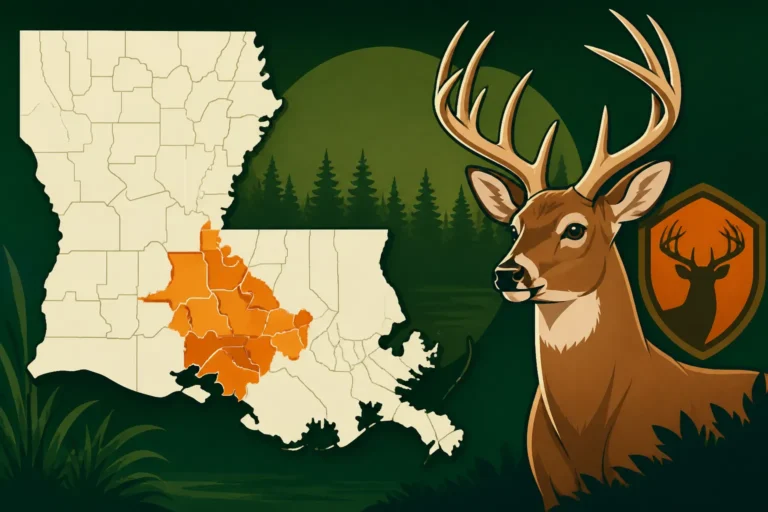
To further manage hunting pressure and align with regional migration patterns, Louisiana divides its duck season into distinct waterfowl zones. Historically, these have been the East Zone and the West Zone, each with its own specific opening and closing dates for duck season. While the daily and possession bag limits generally remain consistent across both zones, the timing of the seasons can significantly affect your hunting plans.
For example, the West Zone might open a week or two before the East Zone, or vice-versa, to better accommodate the arrival of migrating birds in different parts of the state. This means a hunter near Lake Charles might be in full swing while someone near Slidell is still waiting for their season to open. It's absolutely critical to know which zone you're hunting in to ensure you're not inadvertently hunting out of season. Many hunters rely on mapping applications to clearly delineate these boundaries, and a platform like GoHunt can be invaluable for visually identifying Louisiana Waterfowl Zones and Seasons and understanding how they overlay with public land access points. Double-checking the official LDWF regulations each year is non-negotiable, as these zones and their specific dates are subject to slight adjustments based on federal frameworks and observed duck migration timing through Louisiana.
Conservation and Population Management Behind the Numbers
It’s easy to focus solely on the act of hunting, but every regulation, including the specific duck bag limits, is rooted in deeply committed conservation efforts. The numbers aren't pulled out of thin air; they are the result of rigorous scientific research aimed at ensuring the long-term health and sustainability of waterfowl populations. Think about the intensive surveys conducted on breeding grounds in Canada and the northern U.S., where biologists count breeding pairs and assess habitat conditions. This data provides crucial insights into how many ducks are expected to migrate south.
When duck populations are robust, federal frameworks often allow for more liberal bag limits and longer seasons. Conversely, if certain species show declines, limits might become more restrictive to allow those populations to recover. The mottled duck, for instance, a resident bird that breeds and lives year-round in Louisiana, often has a conservative bag limit because its population dynamics are different from those of migratory species. Similarly, pintails have seen tighter restrictions in recent years due to long-term population concerns. These adaptive management strategies, informed by annual monitoring and research into vital areas like How Many Ducks Winter in Coastal Marsh, are a testament to the collaborative efforts of hunters, biologists, and conservation organizations to preserve Louisiana's rich waterfowl heritage. Every hunter's compliance with these limits directly contributes to these broader conservation goals, securing the future of the sport for generations to come.
Common Missteps and Smart Practices for Legal Duck Hunting
Even the most well-intentioned hunter can make an honest mistake. With ducks often whizzing through the decoys at high speed, and the adrenaline pumping, it’s all too easy to misidentify a bird or lose track of your bag. Being prepared and understanding the nuances of the rules can save you from an accidental violation and a hefty fine.
Avoiding Accidental Violations in the Heat of the Moment
One of the most frequent reasons hunters find themselves in a bind regarding bag limits is misidentification. When a flock of mixed ducks pitches into your spread, singling out a specific species like a pintail or accurately distinguishing a mallard hen from a drake can be incredibly challenging, especially in low light or fog. The key here is positive identification before you pull the trigger. If you're unsure, it's always better to let the bird pass. No duck is worth a citation or, more importantly, violating the principles of ethical hunting.
Consider a common scenario: you've been sitting patiently, and finally, a group of birds works perfectly. You drop a beautiful pintail—great start! Later, another single comes in hard and fast. In your excitement, you snap shoot it, only to realize on the retrieve it's another pintail. You've now exceeded your one-pintail daily limit, even if your overall bag is still low. This kind of mistake is preventable with careful identification. Take an extra second, use your binoculars if needed, and make sure you know exactly what you're shooting at. It's a skill that develops with experience, but conscious effort can speed up the learning curve and prevent those frustrating "oops" moments.
Understanding Baiting, Shooting Hours, and Other Rules
While the bag limit is central, it's just one piece of the puzzle. There are other crucial regulations that, if overlooked, can lead to severe penalties. For instance, knowing the precise Louisiana Federal Duck Stamp Requirement and ensuring you have your Louisiana HIP Certification for Bird Hunters is fundamental for any migratory bird hunter. Beyond licenses, the rules surrounding baiting are perhaps the most misunderstood and harshly enforced. Simply put, hunting ducks over bait—meaning any natural or artificial feed, grain, or salt distributed for the purpose of luring migratory birds—is illegal. This includes hunting over fields where crops have been manipulated or scattered in an abnormal way to attract birds, or hunting over water where corn or other grains have been spread. Even residual grain from farming operations can be considered bait if it's placed in a way that concentrates birds.
You also need to be acutely aware of shooting hours, which typically run from half an hour before sunrise to sunset. Firing a shot before or after these times is a direct violation. Always carry a reliable light and check a current sunrise/sunset table for your specific location. Furthermore, understanding legal methods, such as gun types and shot size, is critical. While not directly tied to bag limits, these auxiliary regulations form a crucial part of legal duck hunting, and ignorance is rarely an acceptable excuse. Always refer to the current LDWF regulations, or check reliable digital resources through platforms like GoHunt for updates on specific areas, especially after agricultural activity where baiting issues might arise.
Effective Strategies to Stay Within Limits
Staying within the legal limits isn't just about knowing the rules; it's about incorporating smart hunting practices into your routine. One effective strategy is pre-hunt planning. Before you even head out, visualize your desired bag. If you know you want a pintail, be extra vigilant for that one bird, and once you have it, consciously decide to pass on any others. This level of intentionality reduces the chance of accidental over-harvest.
Another key strategy involves careful game management during the hunt. If you shoot a bird and it falls in thick cover, make every effort to retrieve it immediately. Not only is this ethical, but it ensures you accurately account for your bag. Losing a bird and then shooting another, only to find the first one later, could put you over your limit. Many experienced hunters will mark each retrieved bird by placing it in a designated spot or noting it down to keep a precise tally, especially when hunting species with tight limits. By combining knowledge of the rules with disciplined hunting habits, you not only stay legal but also uphold the highest standards of sportsmanship, helping to make the most of your Louisiana Duck and Goose Bag Limits.
Making the Most of Your Louisiana Duck Season
Louisiana offers some of the most phenomenal duck hunting opportunities in the country, but maximizing your success within the legal framework requires more than just knowing the bag limits. It involves strategic planning, skilled execution, and responsible post-hunt practices.
Scouting and Setup for Success
Success in duck hunting starts long before opening day, or even before you launch your boat on a given morning. Effective scouting is paramount. Ducks are creatures of habit, often returning to specific feeding or resting areas daily, especially as Duck Migration Timing Through Louisiana pushes new birds into the region. Identifying these patterns through pre-season reconnaissance, watching flight lines, and observing where birds are feeding can significantly improve your odds. There's nothing quite like pulling into a spot you know birds are using regularly.
Whether you're targeting puddle ducks in a flooded field or divers on a vast open bay, understanding the chosen habitat is crucial. For instance, if you're planning a trip to the iconic Cameron Parish marshes, learning about Hunting Cameron Parish Marsh Ducks tactics and local bird behavior will be invaluable. Mapping tools, such as those offered by GoHunt, can be a game-changer here. They allow you to analyze aerial imagery, pinpoint potential feeding areas, identify optimal access points, and even mark out potential blind locations on public lands or leases before you ever step foot in the field. This diligent preparation helps you set up in the right spot the first time, increasing your chances of success without having to rely on sheer volume of shooting, which can lead to bag limit issues. Think about how a strategically placed Layout Blind Hunting Coastal Rice Fields might dramatically improve your concealment compared to a hastily constructed pit.
Decoy Spreads and Calling Etiquette
Once you've identified your spot, your decoy spread and calling technique become your primary tools for enticing birds within legal shooting range. The type of spread you use often depends on the species you're targeting and the environment you're in. For mallards and other puddle ducks in flooded timber, a smaller, more natural-looking spread might be effective, mimicking loafing birds. If you're Working Flooded Timber for Mallards, sometimes less is more. For pintails or wigeon on a big sheet of water, a more open, extended spread with plenty of motion can be key. When it comes to layout blinds, consider how the spread looks from above, as ducks have an excellent vantage point.
Calling is another art form that, when done well, can bring birds into your pocket. While aggressive calling can be effective for getting a distant flock's attention, knowing when to quiet down and let the decoys do the work is equally important, especially for pressured birds. Over-calling can make wary ducks flare, sending them out of range and reducing your opportunities to legally harvest your limit. Observe the birds' reactions; if they're cupping their wings, a soft chuckle or simple greeting might be all that's needed. Learning to read the subtle cues of incoming birds, much like Reading a Marsh Pond for a Morning Flight for signs of movement, allows you to adjust your calling to seal the deal effectively and ethically.
Post-Hunt Responsibilities and Game Care
The hunt doesn't end when the last bird hits the water. Post-hunt responsibilities are just as vital to upholding the traditions and legality of waterfowl hunting. Properly field dressing your birds as soon as possible, especially in Louisiana's warm climate, is crucial for preserving meat quality. Getting the guts out quickly helps cool the carcass and prevents spoilage.
When transporting your ducks, particularly if you're on a multi-day trip or bringing birds home for friends, remember the possession limits and any specific tagging requirements. If someone else is transporting your birds, ensure they have proper documentation or a tag with your name, address, hunting license number, and the dates of harvest. This prevents any ambiguity for wildlife agents. By understanding the Louisiana Duck and Goose Bag Limits and adhering to proper game care and transportation protocols, you complete the hunting cycle responsibly. Moreover, maintaining a good relationship with landowners, WMA managers, and fellow hunters by respecting regulations and ethical practices ensures continued access and a positive reputation for the hunting community as a whole.
Disclaimer
The information provided in this guide is for general informational purposes only and does not constitute legal advice. Hunting regulations, including bag limits, season dates, and licensing requirements, are subject to change annually by the Louisiana Department of Wildlife and Fisheries (LDWF) and federal agencies. While we strive to provide accurate and up-to-date information, it is the sole responsibility of each hunter to review and comply with the most current official LDWF hunting regulations and federal migratory bird laws before engaging in any hunting activities. Always refer to the official LDWF website or printed regulations pamphlet for the definitive rules.