Feral Hogs Across Louisiana
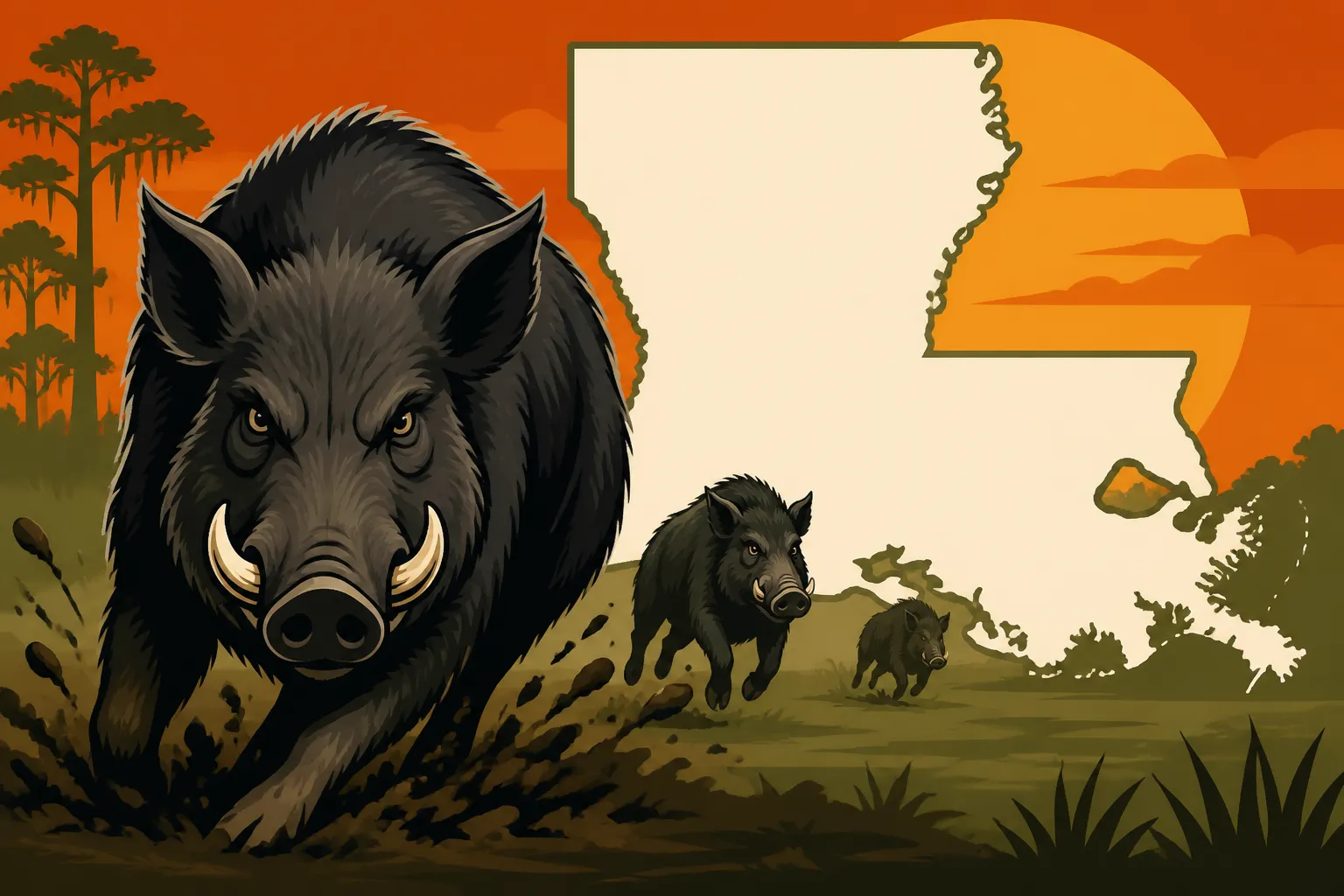
The relentless march of feral hogs across Louisiana presents a truly daunting challenge for landowners, farmers, and even wildlife managers. It feels like an uphill battle, often leaving folks frustrated and financially drained as these destructive animals tear through crops, pastures, and delicate ecosystems. This guide aims to pull back the curtain on the widespread problem of feral hogs in our great state, delving into their behavior, where they're causing the most trouble, and practical, effective strategies to manage and hunt them, whether you're protecting your land or just looking to help curb their population.
The Scourge of Feral Hogs in Louisiana
If you live in Louisiana, you've almost certainly seen the signs, or perhaps even the hogs themselves. These aren't your grandpa's domestic pigs that wandered off; these are tough, intelligent, and incredibly destructive animals that have become a pervasive problem statewide. They impact everything from agriculture to the natural environment, and understanding the depth of this issue is the first step in tackling it.
Why Hogs are Such a Problem
The damage caused by feral hogs is far more extensive than just a few overturned feeders or rooted-up garden patches. For farmers, it can mean the difference between a profitable harvest and a complete financial loss. Imagine waking up to find an entire field of corn or soybeans flattened and dug up overnight – it's a gut-wrenching sight that happens all too often. These animals use their powerful snouts to "root" for food, turning over vast areas of soil in search of roots, tubers, and invertebrates. This rooting behavior doesn't just damage crops; it destroys native vegetation, disrupts natural water flow in agricultural fields, and can even compromise levees and irrigation systems. The soil disturbance also makes fields more susceptible to erosion, especially during our heavy Louisiana rains. Beyond direct crop destruction, their presence can stress livestock, contaminate water sources, and spread diseases that can affect both domestic animals and humans. It’s a cascading problem that reaches deep into the fabric of rural life and the state’s economy.
How They Spread So Rapidly
The sheer speed at which feral hogs multiply is a major reason they've become such an entrenched problem. Unlike many other game species, sows can breed as young as six months old, and they can have two litters, sometimes even three, in a single year. Each litter can range from four to twelve piglets, sometimes even more. Do the math, and you can see how quickly a small group of hogs can explode into an unmanageable population. This incredibly high reproductive rate, combined with a lack of natural predators in many areas and their amazing adaptability, allows them to outpace any management efforts. They thrive in almost any habitat Louisiana offers, from dense swamp bottoms and hardwood forests to piney uplands and wide-open agricultural fields. Their intelligence also plays a role; they quickly learn to avoid traps or human activity, adapting their movements and feeding times to escape detection. This rapid spread and shrewd survival instincts are critical factors in understanding why "How Wild Hogs Spread Across Louisiana" is such a concerning topic for wildlife officials and landowners alike. They are not merely surviving; they are flourishing and expanding their territory relentlessly.
Where Feral Hogs Roam in Louisiana
Feral hogs are truly ubiquitous across Louisiana, but some areas feel their impact more intensely than others. Understanding their preferred habitats and where they congregate can be a game-changer for effective hunting and management.
Key Hog Hotspots by Parish
While you'd be hard-pressed to find a parish in Louisiana untouched by feral hogs, some areas are definitely more inundated than others. Generally, regions with extensive bottomland hardwoods, swamp ecosystems, and vast agricultural landscapes tend to support the densest populations. For instance, the parishes bordering the Mississippi River, like Tensas, Concordia, and Madison Parishes, are notorious hotspots. These areas offer a perfect blend of cover in the river bottoms and an endless buffet of crops in adjacent fields. The Atchafalaya Basin, spanning parishes like St. Martin, Iberville, and St. Mary, is another prime example. Its dense swamps provide impenetrable cover and consistent food sources, allowing hogs to thrive unseen.
Likewise, many of the Florida Parishes in southeast Louisiana, with their mixture of pine forests and agricultural plots, also grapple with significant hog issues. Even areas like Vernon and Sabine parishes in western Louisiana, with their extensive timberlands, see considerable hog activity, especially where pine plantations border creek bottoms or small farms. The sheer number of sightings and the amount of damage reported across these varied landscapes consistently reinforce concerns about "Which Louisiana Parishes Have the Most Hogs". It’s clear they exploit any available resources, and their presence is a constant concern for rural communities statewide.
Habitat Preferences and Behavior
Feral hogs are opportunists, and their habitat preferences reflect that. They gravitate towards areas that offer three critical things: food, water, and cover. Our vast river bottoms and swamp systems, such as the Pearl River Wildlife Management Area or the numerous tracts within the Atchafalaya Basin, provide all three in abundance. The dense canopies offer shade and concealment, while the constant presence of water from rivers, bayous, and sloughs is essential for drinking and wallowing – a critical behavior for cooling down and ridding themselves of parasites. These muddy wallows are often clear indicators of hog activity, along with rooted-up areas and rub marks on trees.
Beyond these natural havens, hogs are drawn to agricultural fields like magnets. Standing corn, soybeans, rice, and even sugar cane provide not only a ready food source but also excellent concealment, especially for sows with young piglets. They often use the edges of these fields, or nearby creek drainages, as travel corridors to move between feeding areas and bedding cover. Their behavior tends to be nocturnal in areas with high human pressure, retreating to dense cover during the day and emerging at dusk to feed. However, in more remote areas or during cooler weather, they might be active throughout the day. Understanding these patterns, like where a particular sounder might bed during the day or how they travel between food and water, is crucial intelligence for any hunter using tools like the GoHunt app for aerial scouting or mapping out potential entry and exit routes. This adaptability to both wild and agricultural landscapes makes them incredibly resilient and challenging to manage.
Understanding Louisiana's Feral Hog Regulations
One of the unique aspects of dealing with feral hogs in Louisiana is the broad latitude given to landowners and hunters, reflecting the state's urgent need to control these destructive animals. The regulations are designed to facilitate year-round efforts to reduce their numbers.
Year-Round Hunting on Private Land
For those dealing with hogs on their own property or private land with permission, Louisiana offers incredible flexibility. The state categorizes feral hogs as an exotic, outlaw quadrupeds, meaning there is no closed season, no bag limit, and no time-of-day restrictions on private land. This means you can hunt them 24/7, 365 days a year. This generous approach is a direct acknowledgment of the severe damage they inflict and the need for constant vigilance. Landowners can employ a wide array of methods, including baiting, trapping, and even night hunting with lights and thermal or night vision equipment, without needing special permits beyond a basic hunting license for the individual doing the hunting. This "Louisiana's Year-Round Hog Rule on Private Land" truly empowers private citizens to take immediate and aggressive action against these pests, which is essential given their rapid reproduction rate and destructive nature. It’s a common sight to see landowners setting up elaborate trapping systems or planning night hunts with specialized gear, all in an effort to protect their property and investment.
Public Land Rules and Restrictions
Hunting feral hogs on public lands, however, comes with a different set of rules, which vary depending on the specific Wildlife Management Area (WMA) or National Wildlife Refuge (NWR) you plan to visit. While the overall statewide stance on hogs is aggressive eradication, public land regulations are often more structured to manage hunter safety and other game species. Generally, on WMAs, hog hunting is permitted during any open hunting season for deer, squirrel, or other specified game, and only with the legal weapon for that open season. For example, if it's archery season for deer, you can only use archery equipment for hogs. If it's primitive firearms season, you're limited to those specific weapons.
Special hog-only seasons are rare but do occur on some WMAs, allowing more flexibility in weapon choice. Baiting is typically prohibited on all public lands, as are certain methods like night hunting with lights, unless specifically authorized. Trapping on public lands is almost always forbidden for individuals and is usually only conducted by authorized LDWF personnel for population control. Before heading out, always consult the specific WMA regulations pamphlet or the Louisiana Department of Wildlife and Fisheries (LDWF) website for the area you intend to hunt. This due diligence is crucial to avoid violations, as "Louisiana Feral Hog Regulations" on public land can be quite detailed and restrictive compared to private property. For example, some WMAs might have restrictions on "Trapping Louisiana Feral Hogs" for recreational hunters, while others might allow it under strict conditions.
Effective Strategies for Hunting Feral Hogs
Hunting feral hogs isn't just about reducing their numbers; it's about employing smart, adaptable strategies against a highly intelligent and resilient animal. Success often comes down to combining knowledge of their behavior with the right tactics.
Still-Hunting and Stalking Tactics
Still-hunting and stalking are classic hunting methods that can be incredibly effective for feral hogs, especially in areas with good cover and active hog sign. This approach demands patience, stealth, and a keen eye for detail. The key is to move slowly, often just a few steps at a time, pausing frequently to scan the woods, listen for subtle sounds, and sniff the air for that distinct musky hog odor. You’re looking for fresh rooting, tracks, scat, and active wallows. Hogs are creatures of habit, often using the same travel corridors between bedding areas, water sources, and feeding grounds. Identifying these pathways, especially along creek bottoms, dense palmetto thickets, or field edges, is crucial.
Wind direction is paramount; always hunt into the wind to keep your scent from carrying to the hogs. Early morning and late evening are typically the best times, as hogs are most active during these cooler periods. Focus on dense cover where they might be bedded during the day, or transition zones where they emerge to feed. Unlike deer, hogs often travel in "sounders" – family groups – so if you spot one, there are likely more nearby. A quiet approach, good camouflage, and the ability to freeze instantly can put you in a prime position for multiple opportunities. Using mapping tools like the GoHunt app can really help here, allowing you to mark fresh sign, visualize terrain, and plan quiet approach routes through dense cover, giving you an edge over these wily creatures.
Baiting and Trapping Operations
For sheer numbers, baiting and trapping are often the most efficient methods for reducing feral hog populations, particularly on private lands where allowed. The concept is simple: attract hogs to a specific location with food, then either shoot them over the bait or capture them in a trap. Corn is the most common bait, often fermented or mixed with other strong-smelling attractants to draw hogs from a distance. When establishing a bait site, consistency is key. "Building and Freshening a Hog Bait Site" regularly will habituate hogs to the location, making them more comfortable and predictable.
Trapping, however, offers the potential for removing entire sounders at once. Modern hog traps range from simple box traps to large, circular corrals with specialized rooter-style gates or remotely triggered drop gates. The trick to successful trapping is pre-baiting. For several days, or even weeks, leave the trap door open and consistently bait inside and around the trap, allowing hogs to enter and exit freely, building trust. Once a sounder is regularly feeding within the trap, you can set it. This patience often leads to catching multiple hogs at once. Trapping is a long-term commitment, requiring regular checks and re-baiting, but it yields significant results. Remember, on public lands, baiting and trapping are generally prohibited for individual hunters, so these methods are primarily for private land management.
Hunting with Dogs and Thermal Imaging
Hunting hogs with dogs is a deeply ingrained tradition in Louisiana, and it's an incredibly effective, albeit physically demanding, method. Often involving a combination of "bay dogs" (which corner and hold a hog by barking) and "catch dogs" (which engage the hog to hold it in place), this method allows hunters to navigate dense swamps and thickets where still-hunting would be impossible. The dogs track the hogs by scent, pushing them out of cover or holding them at bay, allowing hunters to move in for a shot. It's a high-adrenaline hunt that requires well-trained dogs, tough protective gear for the dogs, and a good understanding of how to read dog behavior. Safety is paramount, as hogs are dangerous animals, especially when cornered. For those interested in this method, understanding the nuances of "Running Dogs on Louisiana Feral Hogs" is crucial for both success and safety.
Another increasingly popular and highly effective method, especially on private land, is night hunting with thermal imaging or night vision devices. Since hogs are often nocturnal, these technologies level the playing field, allowing hunters to locate and target hogs that would be invisible in the dark. Thermal scopes detect heat signatures, making hogs stand out vividly against a cool background. This is particularly effective in agricultural fields where hogs emerge after dark to feed. Combined with legal lights (on private land), hunters can be incredibly efficient. The ability to spot hogs from a distance and plan a stalk under the cover of darkness dramatically increases success rates. For those looking to maximize their efforts in reducing hog populations on private land, especially in agricultural areas, learning about "Night Hunting Hogs With Lights on Private Land" is a game-changer. These technological advancements have revolutionized hog control efforts.
Equipment and Gear for Hog Hunters
Having the right gear can make all the difference when pursuing feral hogs. These animals are notoriously tough, and the environments they inhabit often demand durable, reliable equipment.
Recommended Firearms and Ammunition
When it comes to firearms for feral hogs, reliability and sufficient stopping power are key. Hogs have a thick hide, dense bones, and a gristle plate over their shoulders that can turn away lesser projectiles. While many calibers can be effective with proper shot placement, popular choices include the .308 Winchester, .30-06 Springfield, .270 Winchester, and even the 6.5 Creedmoor for rifles. For semi-automatic platforms like the AR-15, calibers such as .223/5.56mm (with heavier, bonded bullets), 6.8 SPC, and .300 Blackout are common. Many hunters also favor shotguns loaded with slugs, particularly in dense cover where shots are likely to be close and fast.
A critical aspect is ammunition selection. Opt for well-constructed, heavy-for-caliber bullets designed for deep penetration and expansion. Soft-point, bonded, or monolithic copper bullets are excellent choices, as they hold together well and drive through tough hide and bone. Avoid light, frangible bullets that might expand too quickly or break apart without reaching vital organs. "Shot Placement on a Feral Hog" is crucial; unlike deer, a hog's vitals are further forward and lower in the chest, behind the shoulder. Aiming for the ear or eye is effective for headshots, especially at closer ranges, while a broadside shot to the "pocket" behind the shoulder aims for the heart and lungs. Practice is essential to ensure you can make ethical, clean shots under pressure.
Optics, Lights, and Other Essentials
Beyond the firearm itself, a range of optics and accessories can significantly enhance your hog hunting success. A good quality scope with sufficient magnification and clear glass is essential for rifle hunters, allowing for precise shot placement, especially at varying distances or in low light conditions. For close-quarters work or hunting with dogs, a red dot sight or a low-power variable optic (LPVO) on a shotgun or AR-platform can provide rapid target acquisition.
When considering hunting hogs at night, thermal imaging monoculars or scopes are invaluable. Brands like Pulsar and ATN offer a range of thermal devices that can detect a hog's heat signature from hundreds of yards away, even in complete darkness or through light cover. This is a game-changer for identifying hogs before they become aware of your presence. For those on a tighter budget, good quality night vision devices can also be effective, although they rely on ambient light. A powerful spotlight or headlamp (used legally on private land) is also critical for recovering downed animals after dark. Other essentials include a sturdy knife, game bags for quartering larger hogs in the field, protective gloves, and robust boots suited for navigating Louisiana's often wet and muddy terrain. For scouting and planning, utilizing digital mapping platforms is key. Services like GoHunt can provide detailed topographical maps, satellite imagery, and public land boundaries, helping hunters identify potential hog activity zones, track historical movements, and plan their approach routes well before setting foot in the woods.
The Economic and Ecological Impact of Feral Hogs
The unchecked proliferation of feral hogs isn't just a nuisance; it's a profound economic burden and an escalating ecological disaster for Louisiana. Their impact reverberates throughout various sectors, costing the state millions annually and threatening our delicate natural heritage.
Crop Damage and Agricultural Losses
Louisiana's agricultural industry, a cornerstone of its economy, bears the brunt of the feral hog problem. These animals have an insatiable appetite and a destructive feeding style, leading to staggering financial losses for farmers. Imagine growing fields of corn, soybeans, rice, sweet potatoes, or sugarcane, only to have a sounder of hogs systematically root through and devour vast sections overnight. The cost isn't just in the lost yield; it's also in the expense of replanting, repairing damaged irrigation systems, and maintaining fences that hogs routinely breach.
For instance, a single sounder of hogs can destroy acres of mature corn ready for harvest in a matter of days. Their rooting behavior compacts soil, reduces crop quality, and creates conditions ripe for erosion, further impacting future yields. The cumulative effect of "Crop Damage Hogs Cause in Louisiana" is estimated to be in the tens of millions of dollars each year, making it a significant drain on farmers' profits and the state's agricultural output. This economic pressure puts immense stress on rural communities and highlights the urgent need for comprehensive control measures. It's a constant battle for farmers who are already facing thin margins, and the presence of hogs can truly jeopardize their livelihoods.
Environmental Degradation and Disease
Beyond agriculture, feral hogs are an ecological bulldozer, tearing through Louisiana's precious natural environments. Their rooting disrupts native plant communities, turning lush forest floors and wetland edges into barren, muddy tracts. This destruction not only eliminates food sources and habitats for native wildlife like ground-nesting birds, small mammals, and reptiles but also contributes to soil erosion, polluting waterways and altering natural drainage patterns. Our unique coastal marshes and cypress-tupelo swamps, vital nurseries for countless species, are particularly vulnerable to this kind of habitat degradation. The rooting can also destroy rare and endangered plant species, further diminishing biodiversity.
Furthermore, feral hogs are known carriers of numerous diseases that pose risks to domestic livestock, wildlife, and even human health. They can carry diseases like brucellosis, pseudorabies, leptospirosis, and tuberculosis. While some of these diseases primarily affect other animals, brucellosis can be transmitted to humans. Their habit of wallowing in and contaminating water sources can spread these pathogens across vast areas. This disease vector role adds another layer of complexity to their management, making it crucial for hunters and trappers to handle carcasses carefully and practice good hygiene. The pervasive presence and destructive habits of these animals represent a clear and present danger to Louisiana's environmental health and the future of its native ecosystems.
Public Land Hog Hunting Opportunities
While private land offers the most flexibility for hog control, Louisiana's extensive public land system provides valuable opportunities for hunters to help manage feral hog populations. These areas require careful planning and adherence to specific regulations, but they can be incredibly rewarding.
Top WMAs for Hog Hunting
Louisiana boasts numerous Wildlife Management Areas (WMAs) and National Wildlife Refuges (NWRs) that hold significant feral hog populations. For hunters looking to pursue hogs on public ground, certain WMAs are consistently mentioned as prime locations. Areas like the Sherburne WMA, located in the vast bottomlands of the Tensas River Basin, and the Richard K. Yancey WMA, nestled in the Atchafalaya Basin, are renowned for their dense hog numbers. These WMAs offer extensive tracts of challenging, often wet, terrain that hogs favor for cover and food. Other areas, such as the Pearl River WMA in southeast Louisiana and the Red River WMA in the central part of the state, also provide good opportunities, especially along river corridors and sloughs.
However, it's critical to remember that "Hunting Louisiana's Year-Round Feral Hogs" on public land is tied to the open seasons for other game species. You must use the legal weapon for the season that is currently open. For instance, during archery season, only archery equipment is allowed for hogs. This often means scouting specific WMAs for their hog activity and then planning your hunt to coincide with an appropriate season. Always check the individual WMA regulations carefully, as special restrictions on methods, specific hunt dates, or even access points can vary greatly. Using tools like the LDWF WMA maps, often available through their website or apps, is indispensable for understanding the boundaries, access roads, and camping rules for these areas. This helps in "Finding a Louisiana WMA Near You" that offers promising hog hunting prospects.
Utilizing Digital Tools for Scouting
In today's hunting world, digital scouting tools have become indispensable, especially when tackling the vast and often challenging landscapes of Louisiana's public lands. Before you even set foot in the woods, platforms like the GoHunt app or other reputable mapping services can provide a treasure trove of information that greatly increases your chances of encountering hogs. These apps offer high-resolution satellite imagery, topographical maps, and clearly defined public land boundaries. You can use them to identify potential hog habitats such as dense bottomland swamps, creek drainages, or even areas adjacent to agricultural fields that might be accessible from public ground.
Look for key features like known water sources, bedding thickets, and travel corridors. Many of these apps also have layers that show recent burns or timber cuts, which can either push hogs into new areas or create new food sources. Marking potential hog sign like wallows or rooted areas from previous scouting trips or even reports from other hunters can help you build a comprehensive picture of hog movement. Additionally, the LDWF website often provides detailed WMA maps and current regulations, which you can cross-reference with your mapping app. Being able to drop pins, measure distances, and plan your approach routes virtually can save you countless hours of unproductive walking and dramatically improve your efficiency in the field. This blend of technology and traditional scouting is a powerful combination for any serious hog hunter.
| Method | Pros | Cons | Ideal Scenario |
|---|---|---|---|
| Still-Hunting | Low cost, high engagement, adaptable to various terrains | Requires extreme patience and stealth, success rate can be lower for large numbers | Dense cover, river bottoms, for individual hogs or small sounders |
| Stalking | Exciting, silent approach, good for open areas or field edges | Demands precise movement and wind awareness, very difficult in thick brush | Field edges, open timber, when hogs are visible and feeding |
| Baiting | Effective for habituating hogs, can draw them from a distance | Prohibited on public land, requires consistent maintenance, can attract other animals | Private land, consistent hog presence, for observation or shooting over bait |
| Trapping | Most effective for removing large numbers/entire sounders at once | High initial cost, requires significant time for pre-baiting and monitoring, challenging setup | Private land, high hog density, for population reduction |
| Hunting with Dogs | Excellent for dense cover, high success rate in flushing out hogs | Requires well-trained dogs and specialized gear, physically demanding, potentially dangerous | Thick swamps, impenetrable brush, for active pursuit and flushing |
| Night Hunting (Thermal/NV) | Capitalizes on nocturnal activity, highly effective for large sounders | Requires expensive specialized equipment, only legal on private land with specific gear | Private land, agricultural fields, high hog pressure, for maximum harvest |
Disclaimer
Please remember that hunting regulations and land access rules can change. Always consult the most current Louisiana Department of Wildlife and Fisheries (LDWF) regulations and ensure you have all necessary licenses and permits before engaging in any hunting activity. Safety should always be your top priority in the field.