Trapping Louisiana Feral Hogs
The relentless expansion of feral hogs across Louisiana is a constant headache for landowners and hunters alike. These destructive animals tear up fields, spread disease, and compete with native wildlife, leaving a trail of costly damage in their wake. If you've ever walked out to your property to find your carefully maintained food plots rooted up overnight, or a perfect deer bedding area turned into a muddy wasteland, you know the frustration firsthand. This guide is dedicated to a highly effective, sustained approach: trapping. We'll dive deep into the best strategies and techniques to help you reclaim your land and control these tenacious invaders.
Understanding the Feral Hog Problem in Louisiana
Feral hogs aren't just a nuisance; they're an ecological and agricultural disaster in progress. Their numbers seem to grow exponentially, and their impact on Louisiana's rich natural resources and vital farming operations is profound. Before we talk about how to trap them, it's crucial to understand just what we're up against.
The Impact of Feral Hogs on Louisiana Ecosystems
Louisiana's diverse ecosystems, from the piney woods to the coastal marshes, are incredibly delicate, and feral hogs wreak havoc on all of them. These animals are opportunistic omnivores, meaning they'll eat just about anything – acorns, roots, insects, small mammals, ground-nesting bird eggs, and even fawns. Imagine a deer food plot you've spent time and money cultivating, only for a sounder of hogs to come through and plow it under in a single night. This isn't just a loss of potential deer forage; it's a direct competition for food sources that deer, turkeys, and other native species rely on.
Beyond their diet, their rooting behavior causes extensive damage. They literally till the soil, destroying native vegetation, impacting water quality in streams and wetlands, and creating erosion issues. This disturbance fundamentally alters habitats, displacing native species and paving the way for invasive plants. It's a domino effect that can drastically change the landscape, leading to long-term ecological degradation that's incredibly difficult and expensive to reverse.
Their Rapid Reproduction Cycle
One of the primary reasons feral hogs are so challenging to control is their astonishing reproductive rate. A sow can become sexually mature as early as six months old and can have two litters of four to twelve piglets per year. Do the math, and you'll quickly realize that a small sounder can explode into a massive population in just a few years. It's not uncommon for a single sow to produce up to 20 offspring annually under ideal conditions.
This rapid turnover means that even if you remove a significant number of hogs, the remaining population can quickly rebound if left unchecked. It's like trying to empty a bathtub with the faucet still running full blast. Understanding this biological reality is key to developing a trapping strategy that focuses on sustained removal, not just sporadic hunting, which often only creates temporary relief. This is why tactics like Hunting Louisiana's Year-Round Feral Hogs need to be combined with consistent trapping efforts.
Why Trapping is an Effective Strategy
While hunting certainly has its place in feral hog control, trapping often proves to be the most efficient and sustainable method for significant population reduction. It addresses the issues that other methods sometimes exacerbate, leading to more comprehensive and lasting results.
Advantages Over Other Control Methods
Unlike spot-and-stalk hunting or even Night Hunting Hogs With Lights on Private Land, trapping allows for the removal of multiple animals at once, often entire sounders. When you shoot one or two hogs, the rest of the sounder often becomes wary, scattering and becoming more nocturnal and harder to target. Trapping, especially with well-designed corral traps, can capture an entire group without them associating human presence with danger.
Another significant advantage is the ability to target hogs consistently, regardless of weather conditions or time of day. Baited traps are always "working," drawing in hogs even when you're not actively hunting. This passive yet highly effective method allows for continuous pressure on the population, which is crucial given their rapid breeding cycle. It's a systematic approach to control, rather than a reactive one.
Minimizing Pressure and Spooking Hogs
Hogs are incredibly intelligent and learn quickly. If they regularly encounter hunting pressure, they become educated, nocturnal, and harder to find. They associate human scent, vehicle noise, and gunshots with danger, making them more elusive. This "trap shy" or "hunter shy" behavior makes them even more difficult to manage in the long run.
Trapping, when done correctly, minimizes this pressure. By slowly conditioning hogs to feed at a trap site over several days or weeks before actually setting the trigger, you can habituate them to the structure. They begin to see the trap as a reliable food source, rather than a threat. This strategy increases your chances of catching entire sounders, ensuring that you're removing more hogs without making the survivors even warier. Think of it as a stealthier, more consistent attack on the problem.
Different Types of Feral Hog Traps
When it comes to trapping feral hogs, there's no one-size-fits-all solution. The best trap for your situation will depend on the size of the sounder you're targeting, your budget, and the specific terrain you're dealing with. Knowing your options is the first step to success.
Corral Traps and Their Benefits
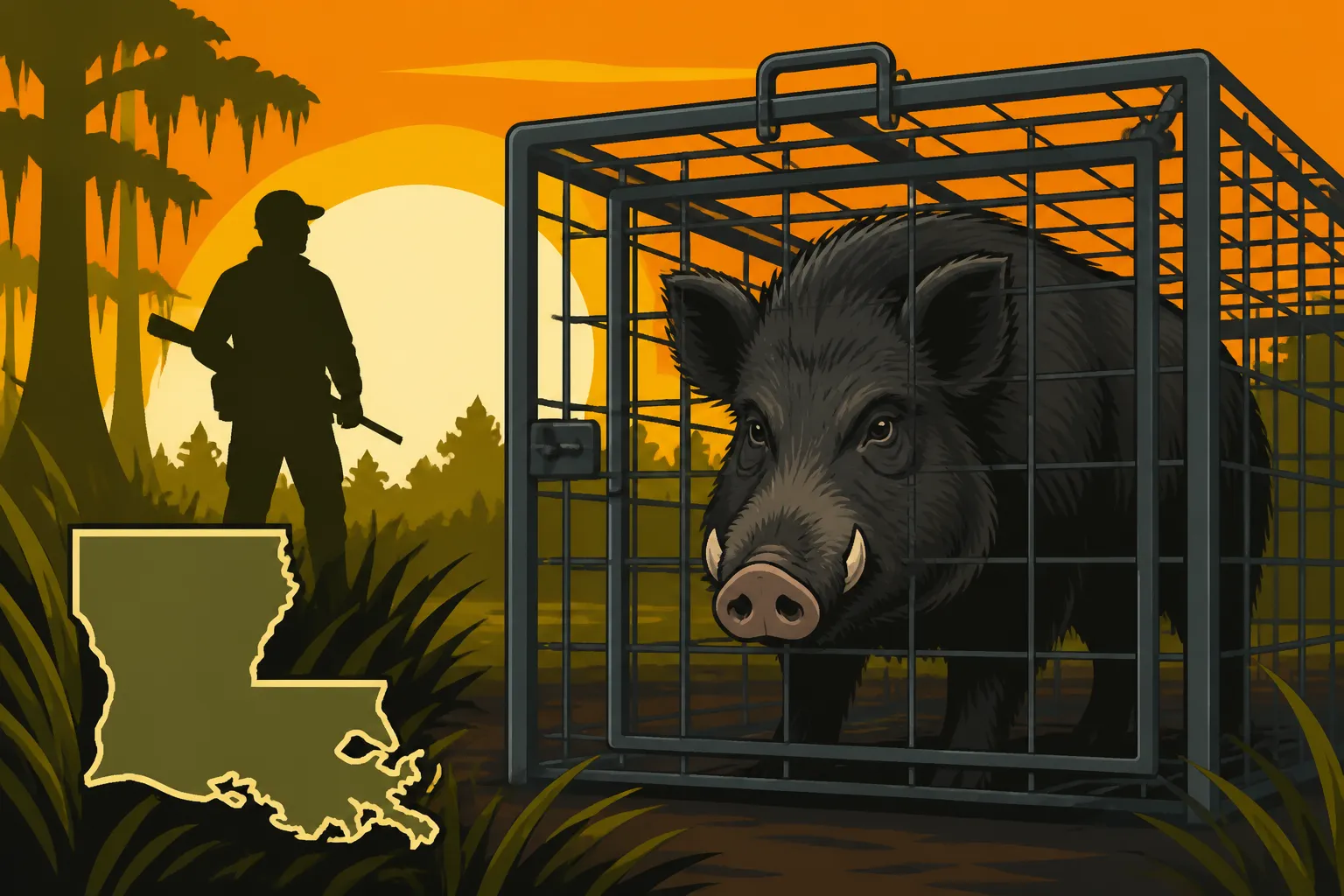
Corral traps are arguably the most effective tool for capturing entire sounders of feral hogs. These large, circular or square enclosures are typically constructed from heavy-duty hog panels or cattle panels, creating a robust perimeter that hogs can't easily escape. The key to their success lies in their size and design, which allows for multiple hogs to enter freely. Modern corral traps often feature sophisticated rooter gates or guillotine gates that can be triggered remotely via cellular camera systems, allowing you to monitor activity and drop the gate only when the entire sounder is inside.
The benefits of a well-placed and properly utilized corral trap are immense. You can pre-bait for an extended period, allowing hogs to become comfortable feeding within the trap's confines. This reduces trap shyness and increases the likelihood of capturing every hog in a sounder. They're particularly effective for large properties and persistent hog problems, as they offer the capacity and durability for ongoing management. While the initial investment in materials and time can be greater, the long-term effectiveness often outweighs these factors.
Box Traps for Smaller Sounders
For those dealing with smaller, more localized hog issues or smaller sounders, box traps can be a cost-effective and manageable alternative. These traps are typically constructed from metal mesh or sturdy wood and are designed to capture one to a few hogs at a time. They're often portable, making them easier to deploy in various locations, and can be a good option for targeting specific problem areas or when you don't have the resources or space for a large corral trap.
Box traps usually employ a trip plate or trip wire mechanism that causes a door to drop or swing shut once a hog enters. While they might not catch an entire sounder in one go, they can be highly effective when multiple traps are deployed strategically. They're also a solid choice for landowners who might just be starting their hog control efforts and want to test the waters before investing in larger setups. Just remember that hogs can be incredibly strong, so ensure any box trap you use is built to withstand their power.
Advanced Smart Trapping Systems
The world of feral hog trapping has entered the 21st century with advanced smart trapping systems. Companies like Jager Pro or HogEye provide remote-controlled trap gates and sophisticated monitoring technology that revolutionized how we manage these pests. These systems typically involve a large corral trap outfitted with a gate that can be triggered remotely via a smartphone app. High-definition cellular cameras provide real-time video feeds, allowing you to observe hog activity without disturbing the site.
The beauty of smart traps is precision. You can watch the sounder enter the trap, count the number of hogs, and wait until every last one is inside before you drop the gate with a tap on your phone. This eliminates false catches, allows for optimal timing, and significantly increases your success rate, especially with wary sounders. While these systems represent a higher upfront investment, the efficiency and effectiveness they offer for systematic removal can pay dividends quickly, especially for large-scale operations or for those wanting maximum control over the trapping process. You can even use mapping tools like GoHunt to pinpoint optimal trap locations, integrate camera data, and track your success over time.
Setting Up and Baiting Your Trap Successfully
Setting up a trap isn't just about throwing it on the ground and tossing in some corn. There's a method to the madness, a careful dance of location, bait, and patience that will determine your success. Understanding these nuances is what separates a frustrating empty trap from a successful capture.
Choosing the Right Trap Location
Picking the perfect spot for your trap is paramount. Hogs are creatures of habit, often following established travel corridors between bedding areas, feeding grounds, and water sources. Look for fresh sign: rooting, tracks in soft soil or mud, rubs on trees, and droppings. Creeks, ditches, old logging roads, and fence lines often serve as natural funnels that hogs use regularly. Pay close attention to areas around agricultural fields that show damage or near known bedding thickets.
Consider accessibility for yourself. You'll need to haul bait in and potentially haul hogs out, so having vehicle access nearby is a huge plus. However, you also want a spot that offers some cover for the trap, to help it blend into the environment and reduce suspicion from wary hogs. Using an app like GoHunt can be invaluable here. Its detailed aerial imagery and topo maps can help you identify potential travel corridors, water sources, and bedding areas without ever stepping foot on the property, saving you precious scouting time. When you are scouting, look for evidence of where hogs are Reading Louisiana Mud for Fresh Deer Movement and adjust your trap location accordingly.
Effective Baiting Strategies
When it comes to baiting, think "irresistible." While whole kernel corn is the undisputed champion of hog bait, it's often best used as a base that you enhance with powerful attractants. Fermented corn, often called "sour corn," has a pungent aroma that hogs can detect from a distance and find incredibly appealing. You can easily make it by soaking corn in water for several days, allowing it to ferment. Adding a packet of yeast or some sugar can speed up the process.
Beyond sour corn, consider mixing in other ingredients:
- Commercial attractants: Many companies offer liquid or granular attractants specifically designed for hogs. These often have strong anise or fruit scents.
- Sweet treats: Candies, stale pastries, or even cheap molasses can be mixed with corn to add an extra layer of sweetness and aroma.
- Used cooking oil: Pouring used cooking oil over your corn pile adds a greasy, attractive scent that hogs love to root through.
Start with a generous amount of bait, scattered widely around the trap and leading into the entrance. You want them to find it easily and associate the area with a consistent food source. For more detailed insights, checking out Building and Freshening a Hog Bait Site can provide additional tips on maximizing your bait's appeal.
Pre-Baiting and Conditioned Response
This is arguably the most critical step for consistent trapping success. Pre-baiting means conditioning the hogs to feed at the trap site, including inside the trap, without having the gate set to catch them. Begin by spreading bait around the trap, then gradually move it closer to the entrance, and finally, place a large pile well inside the trap. Do this for several days, or even a couple of weeks, allowing the hogs to come and go freely.
The goal is to eliminate any suspicion they might have about the trap structure. You want them to feel completely safe and comfortable entering, knowing it's a reliable source of food. Monitor the bait consumption. If the bait inside the trap is being eaten consistently, and you see multiple tracks going in and out, you know they're conditioned. Only then, once you're confident that an entire sounder is regularly entering and feeding, should you activate the trigger. This patience is key to catching multiple hogs and avoiding "trap-shy" individuals who learned to avoid the structure.
Best Practices for Sustained Trapping Success
Trapping isn't a one-and-done solution. It requires ongoing effort, careful management, and a willingness to adapt. Sustainable success against Louisiana's feral hog populations demands dedication and a thoughtful approach to every aspect of the process.
Monitoring and Maintenance
Once your trap is set and baited, consistent monitoring is non-negotiable. If you're using an advanced smart trapping system, this means regularly checking your cellular camera feed and app notifications. For traditional traps, daily physical checks are necessary. This allows you to confirm that hogs are visiting, assess bait consumption, and, crucially, to know immediately when you've made a catch. Prompt removal of trapped hogs is essential for humane treatment and to prepare the trap for its next use.
Regular maintenance also plays a vital role. Traps, especially those left in the humid Louisiana environment, can suffer from wear and tear. Check for damaged panels, gates that don't operate smoothly, or any weaknesses that a powerful hog might exploit. Keep the area around the trap clear of excess vegetation that could interfere with gate mechanisms or alert wary hogs. A well-maintained trap is a consistently effective trap.
Handling Trapped Hogs Humanely and Legally
Once you've successfully trapped hogs, knowing how to handle them humanely and legally is paramount. In Louisiana, feral hogs are not considered game animals and can be killed year-round with appropriate permits and landowner permission. However, the method of dispatch should be quick and ethical. A well-placed shot to the head or neck with a firearm is the most common and humane method. Ensure you have a clear shot and are using an appropriate caliber for quick dispatch, considering the hog's thick skull.
| Hog Trap Type | Target Sounder Size | Initial Cost | Mobility | Remote Trigger Option | Best Use Case |
|---|---|---|---|---|---|
| Corral Trap | Large (10+ hogs) | High | Low | Yes (with add-ons) | Persistent, large sounder problems, long-term control |
| Box Trap | Small (1-5 hogs) | Low to Medium | High | No | Small properties, isolated hog issues, testing new areas |
| Smart Trap System | Large (10+ hogs) | Very High | Low | Yes (integrated) | Max efficiency, precise timing, minimal human presence |
Disposing of carcasses legally and safely is another consideration. You generally cannot transport live feral hogs without specific permits, due to the risk of spreading disease, particularly Chronic Wasting Disease (CWD) if you're in a management zone, although CWD specifically impacts deer. Refer to Louisiana's Chronic Wasting Disease Zones for deer regulations. Most often, hogs are field-dressed and processed for meat or buried/disposed of on-site where they were trapped, adhering to local ordinances. Be sure to understand Louisiana Feral Hog Regulations thoroughly before you act.
Adjusting Tactics for Wary Hogs
Hogs can be incredibly smart, and some individuals, particularly older boars or those that have been previously trapped or hunted, can become "trap shy." If you notice hogs approaching the trap but refusing to enter, or only smaller, younger hogs are getting caught, it's time to adjust your tactics.
- Change Bait: Experiment with different bait mixes. Sometimes a novel scent or flavor can entice wary hogs. Try using something intensely sweet, like donuts, or a strong-smelling attractant.
- Move the Trap: Hogs might avoid a particular spot if they've had a negative experience there. Relocating the trap to a fresh travel corridor can reset their caution.
- Increase Pre-Baiting Time: Extend the pre-baiting period. Leave the gate open and keep baiting for an extra week or two, allowing the most wary hogs to gain confidence.
- Camouflage: Add more natural camouflage around the trap. Brush, branches, and even tall grass can help the trap blend in better, making it appear less threatening.
- Minimize Scent: Hogs have an incredible sense of smell. Wear rubber boots and gloves when servicing your trap and handling bait to minimize human scent. Avoid smoking or strong perfumes near the trap site. Sometimes, the subtle presence of a new element is all it takes to make them shy.
Remember, persistence and adaptability are your greatest allies in the fight against wary hogs. They didn't spread as far as How Wild Hogs Spread Across Louisiana without being intelligent and adaptable.
Legal Considerations and Ethical Trapping
Before you even think about setting a trap, you need to be fully aware of the legal framework surrounding feral hog control in Louisiana. Ignoring these rules can lead to fines, penalties, and even loss of hunting privileges. Ethical considerations also play a huge role in responsible wildlife management.
LDWF Regulations on Hog Trapping
The Louisiana Department of Wildlife and Fisheries (LDWF) generally classifies feral hogs as an exotic, nuisance species. This means they are not protected game animals and can be hunted and trapped year-round, day or night, with no bag limits on private land, provided you have landowner permission. However, there are nuances, especially concerning public lands. On most Wildlife Management Areas (WMAs) and National Forests, trapping may be restricted or require special permits, and specific regulations on trap types, baiting, and removal methods often apply. Always check the specific WMA or public land regulations before setting a trap.
While you don't typically need a hunting license to trap hogs on private land, if you intend to carry a firearm for dispatch, it's always wise to have a basic hunting license to avoid any ambiguity, particularly if you are also hunting other game species. Furthermore, it's illegal to transport live hogs off the property without specific authorization, primarily to prevent the spread of disease and to curb illegal stocking. Understanding these rules is critical for any serious hog control effort.
Safety Protocols and Property Owner Communication
Safety should always be your top priority. When operating and checking traps, especially large corral traps, be mindful of pinch points and potential hazards. When dispatching trapped hogs, always follow proper firearm safety rules: identify your target, be aware of your backdrop, and ensure no one else is in the line of fire. Wear appropriate personal protective equipment, including gloves, as hogs can carry diseases like brucellosis and pseudorabies, which can be transmitted to humans.
Crucially, if you are trapping on someone else's property, clear and consistent communication with the landowner is essential. Discuss trap locations, baiting schedules, and dispatch plans beforehand. Make sure they are aware of the potential for trapped animals and any associated noise or activity. If you're using remote-trigger systems, confirm who has access and how decisions are made about triggering the gate. Good communication prevents misunderstandings and ensures a smooth, effective hog removal program that benefits everyone involved.
Disclaimer
Please note: The information provided in this guide is for informational purposes only and is not a substitute for consulting the official regulations set forth by the Louisiana Department of Wildlife and Fisheries (LDWF). Hunting and trapping regulations can change, and it is the responsibility of each individual to stay informed and comply with all current state and federal laws. Always prioritize safety and ethical practices in all hunting and trapping activities.