Landing an Alligator From a Small Boat
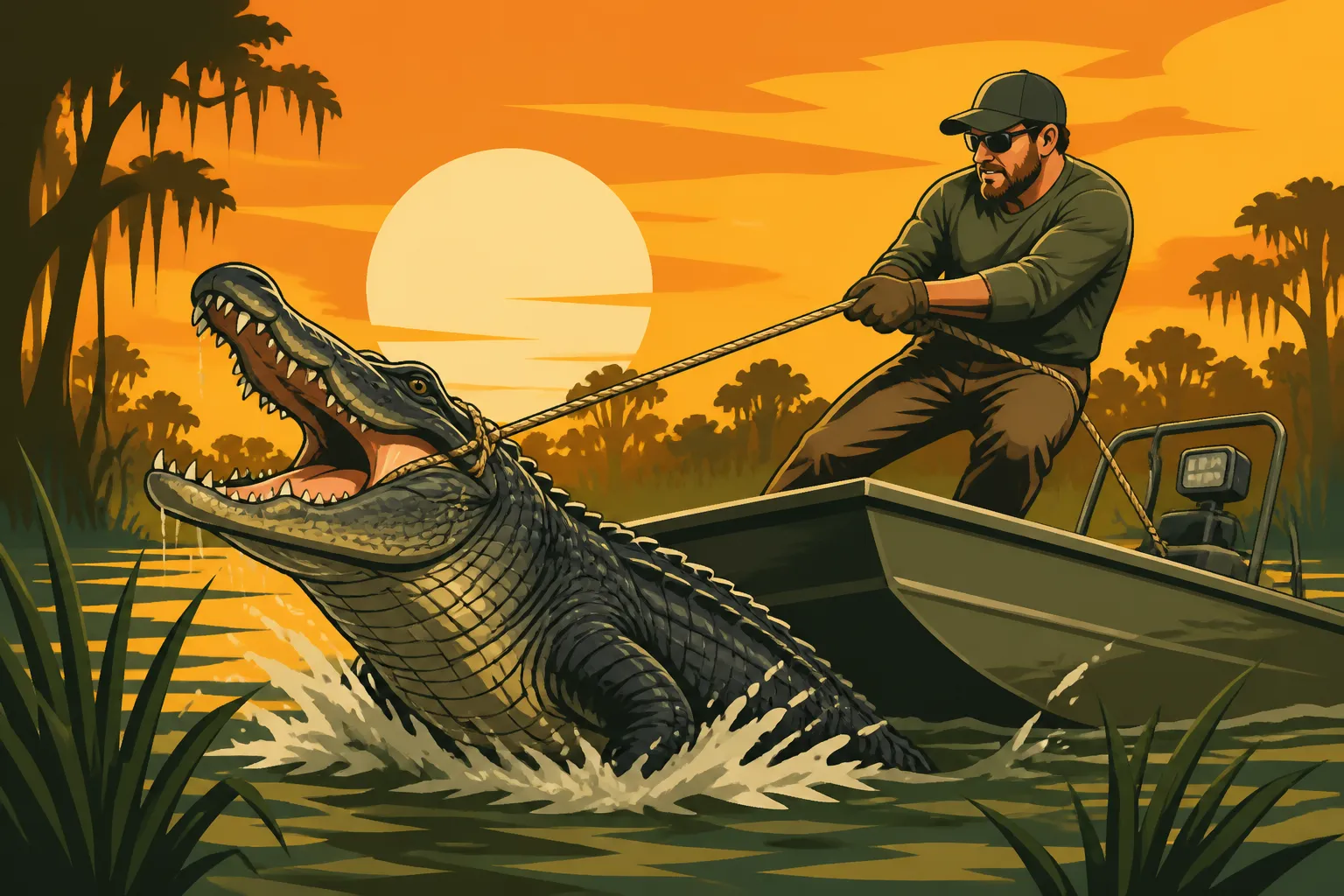
Landing a big alligator from a small boat in the swamps and marshes of Louisiana is an experience unlike any other, thrilling and challenging in equal measure. Many hunters underestimate the sheer power and unpredictable nature of these ancient reptiles, especially when they're fighting for their lives from the confines of a smaller vessel. This guide is here to walk you through the essential techniques, safety protocols, and crucial considerations for safely and effectively bringing your alligator aboard, ensuring a successful and responsible hunt.
The Unique Challenges of Landing Gators from Smaller Vessels
Hunting alligators from a small boat presents a specific set of challenges that larger, more stable vessels simply don't face. You're dealing with limited space, reduced stability, and the raw power of a formidable predator in close quarters. Understanding these dynamics is the first step toward a successful and safe harvest.
Understanding an Alligator's Power and Behavior
When hooked, an alligator isn't just a fish on a line; it's a living tank with immense strength, incredible speed over short distances, and a powerful tail capable of serious damage. A thrashing alligator in the water next to a small boat can easily cause instability, sending gear flying or even capsizing the vessel if you're not prepared. Their primary defense mechanism, beyond biting, is that powerful tail. A single sweep can hit boat sides, engines, or even hunters, so maintaining control and anticipating their movements is paramount. They will often roll, dive deep into the mud, or run for thick cover, creating substantial drag and stress on your lines and equipment.
The size of the alligator directly correlates to the challenge. A smaller gator, say a 6-footer, is manageable, but a 10-foot bull gator requires a whole different level of respect and strategy. These larger animals have bone-crushing jaws and can exert incredible force, easily twisting off lines or bending hooks if given the opportunity. Knowing the typical behavior of a hooked gator—their initial explosive run, followed by periods of stubborn submergence, and then the final thrashing fight at the surface—allows you to anticipate and react rather than merely respond. Remember, the goal is always to wear them out while maintaining a safe distance, slowly bringing them to a position where they can be effectively secured.
Essential Safety Gear and Pre-Hunt Checks
Before you even think about setting out, a thorough check of your safety gear and boat is non-negotiable. This isn't just about adhering to Louisiana Department of Wildlife and Fisheries (LDWF) regulations, but about personal safety when engaging with a powerful predator. Your small boat, whether it's a flatboat, pirogue, or johnboat, needs to be in tip-top shape. Check your engine, fuel, and battery, especially if you'll be navigating remote sections of the Alligator Hunting Louisiana's Coastal Marsh. Make sure you have enough life vests for everyone aboard, a fully charged communication device, a first-aid kit, and plenty of fresh water.
Beyond general boat safety, specific gear for alligator hunting is critical. You'll need sturdy lines, heavy-duty hooks (if using Hook-and-Line Alligator Setups), a strong snatch hook (for Snatch-Hook Alligator Tactics), a harpoon with a break-away tip, and a bangstick or .22 caliber pistol for humane dispatch. It's also wise to have a catch pole or snare, sturdy gloves, and eye protection. Consider wearing sturdy boots and clothing that offers some protection from scrapes and minor impacts. Before each trip, inspect all lines, hooks, and hardware for any signs of wear or damage. The last thing you want is a critical piece of equipment failing when you're wrestling a feisty gator. Having a reliable GPS, perhaps integrated with a mapping tool like those offered by GoHunt, can also be a lifesaver for navigating the labyrinthine bayous and ensuring you can find your way back, especially if you're out late.
Mastering Boat Maneuvering and Teamwork for Control
Bringing an alligator alongside a small boat and securing it requires precision in boat handling and seamless coordination with your hunting partners. Without these, the situation can quickly escalate from challenging to dangerous.
Strategic Boat Positioning for a Smooth Landing
Once you've got an alligator hooked and it's tiring out, the next crucial step is to position your small boat correctly. You want to get the alligator to the side of the boat, not directly behind or in front, where it can be difficult to control or present a danger to the propeller. Ideally, you want to bring the gator to the side of the boat where your primary harpooner or dispatch person has the best angle and leverage. This often means slowly circling or backing down on the alligator, always keeping the line taut but not stressing it to the point of breaking.
Pay close attention to the wind and current. A strong current can make holding your boat in position tricky, pushing the gator further away or dragging it under the boat. Try to use the elements to your advantage, or at least neutralize them. If possible, try to work the gator towards an area with less current or open water where you have room to maneuver. For example, if you're hunting in a narrow bayou, you might try to work the gator into a wider bend or intersection. Having an electric trolling motor can be a huge asset here, allowing for silent, precise adjustments without the noise and disruption of a gas outboard. A good understanding of local waterways, perhaps enhanced by detailed maps from resources like GoHunt, can help you identify these ideal landing zones even before you encounter a gator.
The Critical Role of a Well-Coordinated Team
Alligator hunting from a small boat is absolutely a team sport. Trying to do it solo is not only incredibly difficult but also significantly increases the risk of injury or losing the gator. Assigning roles before you even leave the dock is vital. Typically, you'll have a boat operator, a line handler, and a harpooner/dispatch person. The boat operator's job is to keep the boat stable and in the optimal position relative to the alligator, anticipating its movements. The line handler manages the lines, keeping tension, reeling in slowly, and being ready to pay out line if the gator makes a sudden run.
The harpooner or dispatch person needs to be ready to act quickly and decisively once the alligator is alongside. Clear, concise communication is key. Shouting or panicking will only add to the chaos. Instead, use calm, direct commands and observations like "He's coming up on the starboard side," or "Ease back, he's diving." Everyone needs to be aware of each other's positions and movements to avoid accidental injury, especially when the gator is close to the boat. Practicing these roles and communications, even on dry land, can make a huge difference when the adrenaline starts pumping on the water.
Tools and Techniques for Securing and Dispatching
Once you have the alligator alongside your small boat, the immediate priority shifts to securing it safely and then dispatching it humanely and legally. This phase demands specialized tools and a clear understanding of the process.
Choosing the Right Gear: Snare, Harpoon, and Bangstick
The tools you use for the final securing and dispatch are specifically designed for the job and are critical for both effectiveness and safety.
-
Snare or Catch Pole: Before a harpoon is deployed, a catch pole or snare is often used to get additional control, especially on larger, more active gators. This tool allows you to slip a loop over the alligator's head or tail, giving you another point of contact and more leverage to keep it alongside the boat. This is especially useful in a smaller boat where space to maneuver is limited, and you need to keep the gator from getting under the boat.
-
Harpoon: The harpoon is your primary securing device. It consists of a long pole with a detachable, barbed tip (often called a "toggle" or "dart") connected to a separate, heavy-duty retrieval line. The idea is to penetrate the alligator's thick hide and have the toggle embed itself, allowing you to secure the gator with the retrieval line. Accuracy is crucial; aim for the soft spots behind the head or along the spine, avoiding the bony plates or the animal's vitals if you intend to harvest the hide for taxidermy. Many hunters carry multiple harpoons or spare darts, as it's not uncommon to miss or have a dart pull out during the struggle.
-
Bangstick (or .22 Caliber Pistol): For humane dispatch, the Louisiana Alligator Legal Methods allow for a bangstick or a .22 caliber pistol. A bangstick is a device that holds a firearm cartridge and fires upon impact. It's designed to be inserted directly into the alligator's brain, located just behind the eyes, for an instant and humane kill. The .22 caliber pistol serves the same purpose, requiring precise shot placement in the same area. Safety is paramount when using these tools in a small, potentially unstable boat. Always handle them with extreme care, ensuring the area is clear and only deploying them when the alligator is secured and completely under control.
The Process of Snaring and Harpooning Your Gator
Once your boat is positioned and the gator is somewhat subdued, the real work begins. The goal is to first get a snare on the gator for added control, then secure it with a harpoon.
First, gently bring the gator as close to the boat as safely possible. The line handler should slowly work the gator in, keeping tension but allowing for small runs if needed. This is where the initial work of tiring the gator pays off. The snare operator then attempts to slip the loop of the catch pole over the gator's head, behind its front legs, or around its tail, depending on the gator's position and activity level. Once the snare is tight, you have a secondary point of control, which is incredibly reassuring in a small boat.
With the gator somewhat immobilized by the initial lines and perhaps a snare, the harpooner steps in. They will carefully drive the harpoon dart into the thick hide, aiming for the area just behind the alligator's skull or along its neck for maximum holding power. Once the dart is set, the harpoon pole detaches, leaving the retrieval line firmly attached to the gator. Now, you have the gator securely tethered to your boat by multiple lines, allowing for a safer and more controlled dispatch. Remember to always ensure you're within the legal length limits; you'll want to be able to accurately perform Judging a Legal Forty-Eight-Inch Alligator before taking the final step.
Safely Bringing the Alligator Aboard and Post-Harvest Steps
The final moments of the hunt, from dispatch to secure transport, are just as critical as the initial catch. A large, freshly harvested alligator can still present challenges in a small boat.
Maneuvering the Harvested Gator into the Boat
Once the alligator has been humanely dispatched, the challenge shifts to getting its considerable weight into your small boat. This is not a task for one person, especially with larger gators. Even a dead alligator can be dangerous due to its weight and awkward shape, not to mention its sharp teeth and claws.
First, ensure the gator is truly deceased and unmoving. Then, with multiple people, carefully pull the gator alongside the boat. For smaller gators, you might be able to lift it over the side. For larger ones, you'll need a more strategic approach. Many hunters will try to get the gator's head into the boat first, then use a combination of pulling and pushing to slide the rest of the body in. Tilting the boat slightly with careful weight distribution can help reduce the height you need to lift. Be mindful of the boat's balance; a sudden shift in weight can still cause stability issues. Protect your boat's interior from potential damage by sharp claws or teeth. This is where having a tarp or designated "gator area" in your small boat can be incredibly useful.
Immediate Post-Harvest Regulations and Transport
Congratulations, you've landed your alligator! But the work isn't quite done. Louisiana has specific regulations for what happens immediately after a harvest, particularly concerning tagging and reporting. As soon as you've successfully brought the gator aboard, you must immediately attach your official Louisiana alligator tag. These tags are issued when you win the Applying for the Alligator Recreational Lottery and are specific to the zone and size limits. The tag must be securely fastened to the alligator's tail within one foot of the tip, or if using a pre-assigned tag, it might need to be attached to another specific location as indicated on the tag itself or by the LDWF. Make sure you understand all the requirements for Louisiana's New Recreational Alligator Season.
Once tagged, your next priority is proper transportation. Keep the alligator cool, especially if you're out in the warm Louisiana sun for an extended period. Large coolers, ice, or simply covering the gator with a wet tarp can help preserve the meat and hide. Be aware of your boat's weight capacity and how the gator's bulk might affect handling. When heading back to the boat launch or camp, be mindful of other boaters. A large alligator carcass can be an impressive sight, but ensure it's secured and doesn't pose a hazard. Upon returning, you'll need to report your harvest to the LDWF, following their specific instructions, which often involves an online system or checking stations. This is also a good time to consult with your GoHunt app or other mapping tools to mark your successful spot for future reference.
Alligator Landing Gear Essentials
Bringing an alligator into a small boat requires specific tools to ensure safety and success. Here’s a quick overview of what you’ll typically need.
| Gear Item | Primary Purpose | Key Features for Small Boats | Safety Considerations |
|---|---|---|---|
| Alligator Line | Initial Hooking & Tiring | Heavy-duty, abrasion-resistant, visible in water | Avoid entanglement, maintain tension. |
| Snare/Catch Pole | Secondary Control | Long reach, strong loop, secure locking mechanism | Keep gator at arm's length, prevent sudden lunges. |
| Harpoon | Final Securing & Tethering | Detachable dart with heavy-duty retrieval line, sharp point | Accurate aim, secure dart, protect boat from pole swing. |
| Bangstick / .22 | Humane Dispatch | Reliable firing mechanism, easy to handle, precise. | Extreme caution with firearms in unstable conditions. |
| Gloves | Hand Protection | Thick, cut-resistant, good grip | Protect from teeth, claws, and rope burn. |
| Life Vests | Personal Safety | USCG approved, comfortable for movement | Wear at all times, especially during the landing. |
| First-Aid Kit | Emergency Care | Well-stocked with bandages, antiseptic, pain relievers | Easily accessible, waterproof. |
| Boat Hook / Gaff | Maneuvering | Strong, long handle, blunt hook for pulling | Avoid direct contact with gator, use for lines/carcass. |
| GPS / Maps | Navigation & Planning | Waterproof, reliable signal, pre-loaded with local waterways | Essential for finding your way and identifying habitat. |
Disclaimer
This guide provides information for landing alligators from small boats in Louisiana based on general hunting practices and regulations. Hunting regulations can change, and individual circumstances vary. Always consult the latest Louisiana Department of Wildlife and Fisheries (LDWF) regulations and ensure you have all required licenses and tags before engaging in any hunting activity. Safety should always be your top priority.