Entry Routes Through Standing Soybeans
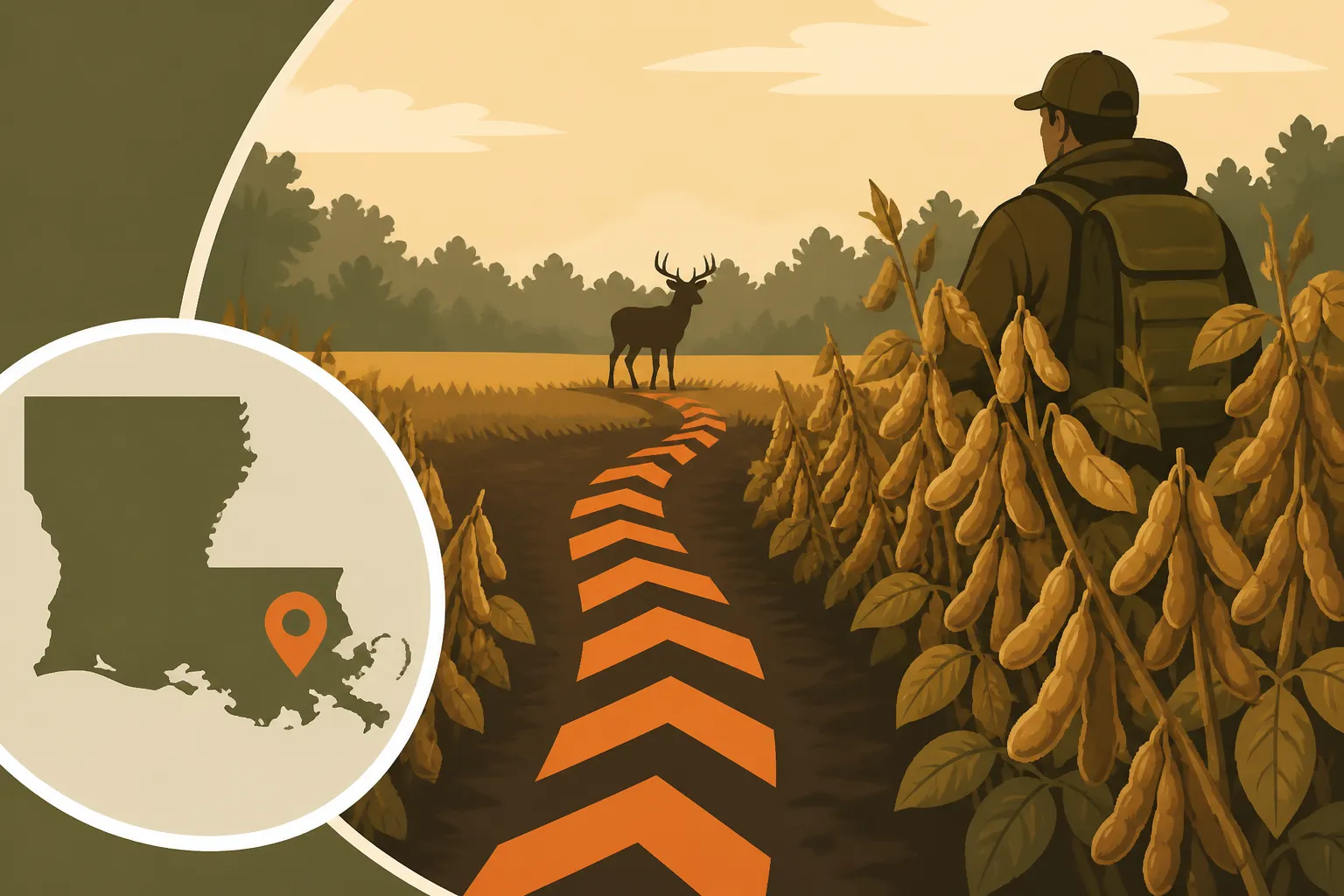
Navigating dense, standing soybean fields to get to your deer stand or to stalk effectively can feel like trying to sneak through a brittle, waist-high maze made of noise and zero visibility. Many hunters throw their hands up, believing these fields are unhuntable until after harvest, but with the right strategy for entry and exit, you can turn these green fortresses into prime ambush locations, especially when deer are heavily utilizing them for food and cover. This guide will walk you through how to successfully penetrate and egress these challenging environments in Louisiana.
Understanding the Challenge of Standing Soybeans
Louisiana's agricultural landscape is dotted with vast soybean fields, and while they are a crucial food source for deer, they present unique challenges for hunters. Unlike open pastures or even cut fields, standing soybeans offer incredible cover, making it tough to spot deer and even tougher to move silently.
The Deer's Perspective: Food and Security
Think about it from a deer's point of view. A standing soybean field, particularly as the plants mature and the pods fill, is an all-you-can-eat buffet combined with a secure bedding area. These plants grow thick and tall, often providing chest-high or even head-high cover for deer, making them feel incredibly safe. Deer will often bed right in the middle of these fields during the day, emerging only to feed casually before retreating back into the dense cover. This constant availability of food and security means deer spend a significant amount of time in and around these fields, especially during the early archery season and leading into the firearms season.
The frustration for us hunters is obvious: you know the deer are in there, probably by the dozen, but seeing them is nearly impossible without spooking them. Furthermore, the stalks are rigid and dry, making a quiet approach seem like a pipe dream. Every step can sound like breaking glass, alerting every deer within a hundred yards. This makes traditional still-hunting almost impossible within the field itself, forcing us to think differently about how we approach.
Noise, Scent, and Visibility Concerns
The main obstacles are threefold: noise, scent, and visibility.
- Noise: As mentioned, moving through mature soybeans is incredibly loud. The dry stalks snap and crackle, broadcasting your presence far and wide. This isn't just a minor inconvenience; it's a deer alarm system.
- Scent: Airflow inside a dense soybean field can be unpredictable, even on a breezy day. Your scent cone can swirl, getting picked up by deer bedded deep within the field, even if they're downwind of your direct path. You might think you're clear, but a slight thermal shift or eddy current can give you away.
- Visibility: For you, visibility is essentially zero beyond a few feet. For the deer, they often have an advantage, hearing you first and then using their low vantage point to slip away before you even know they were there. This combination of factors often leads to frustrated hunters walking out of the field empty-handed, convinced it's impossible. But with careful planning, it's far from impossible.
Scouting for Effective Entry and Exit Points
Success in hunting standing soybeans hinges almost entirely on your scouting before you ever step foot in the field with your bow or rifle. This isn't just about finding deer sign; it's about understanding how deer use the field and, more importantly, how you can get in and out undetected.
Aerial Reconnaissance and Topographical Maps
Before you even think about walking the edges, spend significant time studying aerial photos of the field. Tools like GoHunt or other mapping apps are invaluable here. Look for subtle variations that might offer a less intrusive path.
- Drainage Ditches/Coulees: These are your golden tickets. Often, farmers dig drainage ditches or natural depressions run through or along the edges of these fields. These areas might have slightly different vegetation, perhaps taller grasses or even brush, which can offer a softer, quieter path. Crucially, they also provide a low-lying avenue that might keep your silhouette below the horizon.
- Field Edges and Woodlines: Pay close attention to where the soybeans meet the woods or other natural cover. Deer often use these transition zones as highways. Are there distinct trails leading from the woods into the beans? Are there areas where the treeline provides a screen for a quiet approach?
- Pinch Points/Funnels: Look for any natural funnels or pinch points that might concentrate deer movement, even within the vastness of a soybean field. This could be where a strip of trees juts into the field, or where a slight elevation change forces deer to walk a specific path.
- Elevation Changes: Even a slight dip or rise can make a difference. A low spot might collect moisture, leading to less brittle vegetation, or a subtle rise might offer a momentary increase in visibility for you.
When studying your maps, mentally trace out several potential entry and exit routes, keeping prevailing winds and potential stand locations in mind. Consider how you would approach a Hunting a Standing Cornfield in Farm Country – many of those same principles apply here.
Ground-Level Scouting and Sign Reading
Once you've identified potential routes from your aerial maps, it's time for boots on the ground, but with extreme caution. This scouting should ideally happen before the season opens or during off-peak times when deer activity is low.
- Walk the Edges: Never walk into the standing beans during your initial ground scout unless absolutely necessary. Stick to the edges. Look for tracks entering and exiting the field. Are there obvious deer trails that lead directly from bedding cover into the soybeans? These are high-traffic areas.
- Observe Deer Movement: If possible, spend some time glassing the field from a distance during evening hours to see where deer are entering and exiting. A good pair of binoculars or a spotting scope can reveal patterns that aren't visible on maps. Pay attention to specific points they cross into the field, or if they're coming out of certain corners or drainages.
- Wind Direction: Always scout with an awareness of wind direction. Your entry and exit routes must be planned so that your scent isn't blowing into where you expect deer to be. This is especially critical in flat, open fields where swirling winds can be a real problem.
- Trail Camera Reconnaissance: This is a powerful tool for standing soybeans. Place trail cameras along suspected entry/exit points, focusing on areas where deer trails intersect the field edge or where drainage ditches provide cover. Cameras can tell you not just if deer are using a spot, but when and how many, helping you determine peak activity times. Look for patterns, like deer consistently entering a certain corner just before dark, or crossing a specific logging road adjacent to the field.
Tactical Approaches for Navigating Soybean Fields
Once you've done your homework, it's time to consider the specific tactics you'll employ to hunt these challenging fields. It's not just about getting in; it's about setting up for success and getting out without blowing out the area.
Using Natural Funnels and Terrain Features
The key to successful navigation is finding or creating paths of least resistance that also offer cover.
- Drainage Ditches and Terraces: These are arguably the best natural features for entry and exit. The ground is often softer, allowing for quieter steps, and the depression provides a visual screen. When planning your approach, prioritize these. If a ditch runs partially into the field, it can be a fantastic way to penetrate quietly and set up a ground blind or small pop-up blind. You might find deer also using these ditches as travel corridors within the field.
- Fence Rows and Utility Lines: Sometimes, a fence row with overgrown brush, or the edge of a powerline cut that runs through or along a soybean field, can provide just enough visual and auditory buffer. The vegetation along these lines might be different, allowing for a quieter walk, and the slightly elevated or disturbed ground can create a natural lane.
- Adjacent Cover: Always leverage any adjacent cover. This could be a thick woodline, a fencerow choked with briars, or even a strip of taller grasses. Your goal is to stay hidden for as long as possible before entering the field itself. Think about how you might approach a stand using similar adjacent cover when Setting Up on a Coastal Prairie Field Edge.
Minimizing Your Footprint and Scent
No matter your chosen route, minimizing your impact is paramount.
- Pick Your Days: Wind is everything. You absolutely must hunt these fields with the wind in your favor, blowing your scent away from where you expect deer to be. A quartering wind is often ideal, allowing you to approach from one side of a funnel and have your scent blow across it, not down into it. Avoid calm days or days with highly variable winds, as your scent can swirl and betray you. This is where understanding Wind and Thermals in Swamp Bottomland becomes crucial, even in flatter terrain.
- Stealthy Movement: This isn't a race. Slow, deliberate steps are necessary. Lift your feet high, place them down gently, testing for brittle stalks. Wear soft-soled boots. If you have to break a stalk, do it slowly and intentionally, rather than crunching through a whole patch. In extremely dense areas, sometimes crawling on hands and knees is the only silent option, though it's incredibly slow.
- Scent Control: Even with favorable wind, meticulous scent control is essential. Shower with scent-eliminating soap, wear clean hunting clothes, and use scent-destroying sprays. Consider using an ozone generator if you have one, or simply hang your clothes outside to air out for several days before the hunt. The goal is to leave as little human odor as possible along your entry and exit routes. You don't want to educate deer about your presence.
Table: Soybean Field Entry Strategy Matrix
| Factor / Strategy | Quiet Entry Route Options | Stealth & Scent Management | Best Stand/Ambush Spot | Exit Strategy Considerations |
|---|---|---|---|---|
| Wind Direction | Always downwind of target area. | Use scent control, check thermals. | Downwind of primary travel/feed. | Avoid blowing scent into new areas. |
| Deer Activity | Low activity periods (midday). | Slow, deliberate movement. | Anticipate movement based on scout. | Wait until deer disperse, or dark. |
| Terrain Features | Drainage ditches, overgrown fence rows, slight depressions. | Stick to natural cover for visual & sound break. | Field edge overlooking drainage/trail, or concealed ground blind within. | Reverse entry path, or alternate exit if needed. |
| Visibility | Utilize low-light conditions (dawn/dusk). | Wear camo that blends with field (tans/browns as beans dry). | Maximize your shooting lanes. | Move when deer are less visible. |
| Pressure | Choose less obvious routes, avoid high-traffic areas. | Leave no trash/human sign. | Hunt fringe areas away from known bedding if possible. | Minimize disturbance to preserve future hunts. |
Executing Your Entry and Exit Strategy
Even with the best scouting and planning, execution on the day of the hunt is where success or failure truly lies. Every detail matters, from how you approach to how you leave.
The Dawn and Dusk Approach
Early morning and late evening hunts are often the most productive in soybean fields, but they also demand the most precise entry and exit.
- Morning Entry: For a morning hunt, you need to be at your stand well before daylight. This means navigating in the dark, which increases the risk of making noise. Use a headlamp with a red or green filter to preserve your night vision and minimize disturbance. Your entry route needs to be absolutely fool-proof for quiet navigation in the dark. Aim to be settled into your stand at least an hour before first light, giving the woods time to settle after your disturbance.
- Evening Approach: For an evening hunt, you can use the last hour or two of daylight to carefully observe the field from a distance, confirming deer movement patterns before making your final approach. However, getting into position before deer have already entered the field is key. Again, plan your route to minimize noise and scent. Once you make your kill, wait for full darkness to make your exit and retrieve your game, allowing other deer to move off naturally.
Remember, deer that use these fields are often accustomed to some level of human activity (farming equipment, etc.), but a hunter crashing through their sanctuary is a different story. If you're Hunting the Youth and Veterans Weekend, teaching young hunters these stealth tactics is invaluable for their long-term success.
Stand Placement and Ground Blind Options
Your stand placement, or choice of ground blind, is crucial for turning your entry route into a successful hunt.
- Field Edges: The most common and often most effective strategy is to set up along the field edge, particularly where a deer trail or drainage ditch enters the soybeans. This allows you to hunt deer as they transition in and out. Look for dense cover like a big oak, a thick pine, or a cluster of smaller trees to break up your silhouette. A well-brushed-in ground blind can be incredibly effective here, especially if you're targeting specific entry points. Consider the tips for Using a Ground Blind on Louisiana Public Land to make it blend seamlessly.
- Internal Ambush Points: If your scouting reveals a distinct travel corridor or a small island of cover within the soybean field, an internal ambush point might be an option. This is much riskier due to noise and scent, but if you can access a small patch of trees or a larger drainage ditch completely hidden from view, it can be deadly. A low-profile pop-up blind or even a simple natural blind made from cut branches can offer just enough concealment.
- Pre-Set Lanes: In some situations, especially on private land, a farmer might have left "skip rows" or a narrow path for equipment. These can serve as silent pathways if you clear any obstacles beforehand. If not, carefully pruning a very narrow path before the season, where legal, can create a quieter lane. Be extremely mindful of not overdoing it and creating a "human highway" that spooks deer.
The Crucial Exit: Don't Blow Your Spot
A successful hunt isn't just about the shot; it's about how you leave. A noisy, scent-filled exit can ruin future hunts in that area.
- Patience is Key: After the shot, especially if you're still-hunting or using a ground blind, wait. Allow the field to settle. If you spook other deer while trying to immediately recover your animal, they'll learn to associate that field with danger.
- Reverse Your Entry: Generally, you should reverse your entry path for your exit. This path is already known to you and hopefully has been navigated stealthily.
- Alternative Exit Routes: Sometimes, after a kill, you might need an alternative exit. For instance, if you entered via a quiet drainage ditch, but the deer ran into an extremely dense, noisy part of the field, a different, equally stealthy exit might be needed to recover the animal and then leave. This highlights the importance of having multiple escape plans from your initial scouting.
- Minimize Blood Trailing Disturbance: When blood trailing, especially in soybeans, try to keep your path as direct as possible to the animal, minimizing unnecessary trampling. Mark your trail with biodegradable markers or reflective tape as you go, particularly at night, to avoid getting lost in the dense cover.
Hunting standing soybeans in Louisiana is a challenge, no doubt, but it’s a challenge that can be incredibly rewarding. By understanding how deer use these fields, meticulously scouting, and executing a disciplined entry and exit strategy, you can unlock some fantastic hunting opportunities that many other hunters simply overlook.
Disclaimer
This information is for educational and entertainment purposes only. Always consult the latest Louisiana Department of Wildlife and Fisheries (LDWF) regulations and local ordinances before hunting. Hunting laws and seasons can change, and it is the hunter's responsibility to be fully informed and compliant. Practice safe hunting techniques and always prioritize ethical hunting practices.