Passing on a Cub or Sow With Cubs
The thrill of a bear hunt in Louisiana is an experience unlike any other, but it comes with a profound responsibility: making sure the bear you harvest is a legal one. Accidentally taking a cub or a sow with cubs is not only illegal but deeply detrimental to our recovering black bear population. This guide will walk you through the essential knowledge and practical strategies needed to confidently identify your target, ensuring you make the right call every time you're afield.
The Core Principle: Protecting Louisiana's Black Bear Population
Hunting black bears in Louisiana is a privilege that supports the species' continued recovery, but it requires adherence to strict ethical and legal guidelines. The foundation of responsible bear hunting in our state rests on understanding and protecting the reproductive segment of the population, specifically sows and their young.
Understanding Bear Biology and Reproduction
Louisiana's black bear population has been a remarkable conservation success story, thanks to dedicated efforts by the Louisiana Department of Wildlife and Fisheries (LDWF) and the support of hunters. A critical part of maintaining this success is ensuring the sustainability of their breeding cycle. Female black bears, known as sows, typically reach reproductive maturity around three to five years of age. After a gestation period of about seven months, they usually give birth to one to three cubs in their dens, often in late winter or early spring. These cubs are incredibly vulnerable, staying with their mother for about 18 to 24 months, learning vital survival skills such as foraging, identifying predators, and finding den sites.
During this extended period, the cubs are entirely dependent on the sow for sustenance and protection. If a sow is harvested, her cubs, especially those under a year old, face an extremely low chance of survival. Black bears also have a relatively slow reproductive rate compared to many other game species, often only producing a litter every two to three years. This makes the protection of breeding females and their dependent young absolutely paramount for the long-term health and stability of the overall population. Understanding these aspects of their life cycle underscores why regulations prohibit taking sows with cubs and juvenile bears.
Legal and Ethical Mandates in Louisiana
Louisiana is very clear about its bear hunting regulations, particularly when it comes to cubs and sows. It is strictly illegal to harvest a cub or a sow accompanied by cubs, and there's a specific weight minimum in place to help prevent accidental takes. Currently, any bear weighing less than seventy-five pounds is considered a cub and is off-limits. This legal minimum is a crucial safeguard.
Beyond the written law, there's a strong ethical mandate. Every hunter who applies for a Louisiana Bear Lottery Tag is required to attend a mandatory bear hunter training course. This course is specifically designed to educate hunters on bear biology, habitat, and, crucially, how to properly identify legal bears. It covers distinguishing between a mature bear and a younger, smaller bear, and identifying signs of a sow with cubs. The ethical responsibility falls squarely on the hunter to be absolutely certain of their target before taking a shot. This commitment to careful identification not only keeps you within the bounds of the law but also actively contributes to the health and continued recovery of Louisiana's black bear population. Hunters are frontline conservationists, and making the right, ethical decision in the field is a powerful act of stewardship. You can learn more about Attending the Mandatory Bear Hunter Course before your hunt.
Identifying Cubs and Sows with Cubs in the Field
The moment of truth in the field can be exhilarating, but it's also when clarity and quick, accurate identification are most vital. Distinguishing between a legal bear and a cub or a sow with cubs requires patience, knowledge, and a keen eye.
Visual Cues for Cub Identification
When you spot a bear, your first thought might be the excitement of the hunt, but immediately shift to identification. Cubs, particularly those less than a year old, are often noticeably smaller than adult bears. While the legal minimum weight in Louisiana is seventy-five pounds, judging weight accurately in the field can be tricky. Instead, focus on relative size. A cub will appear disproportionately small compared to what you'd expect for a mature bear. Their head might seem smaller in relation to their body, and they might have a more "gangly" or less muscled appearance than a mature, well-fed adult.
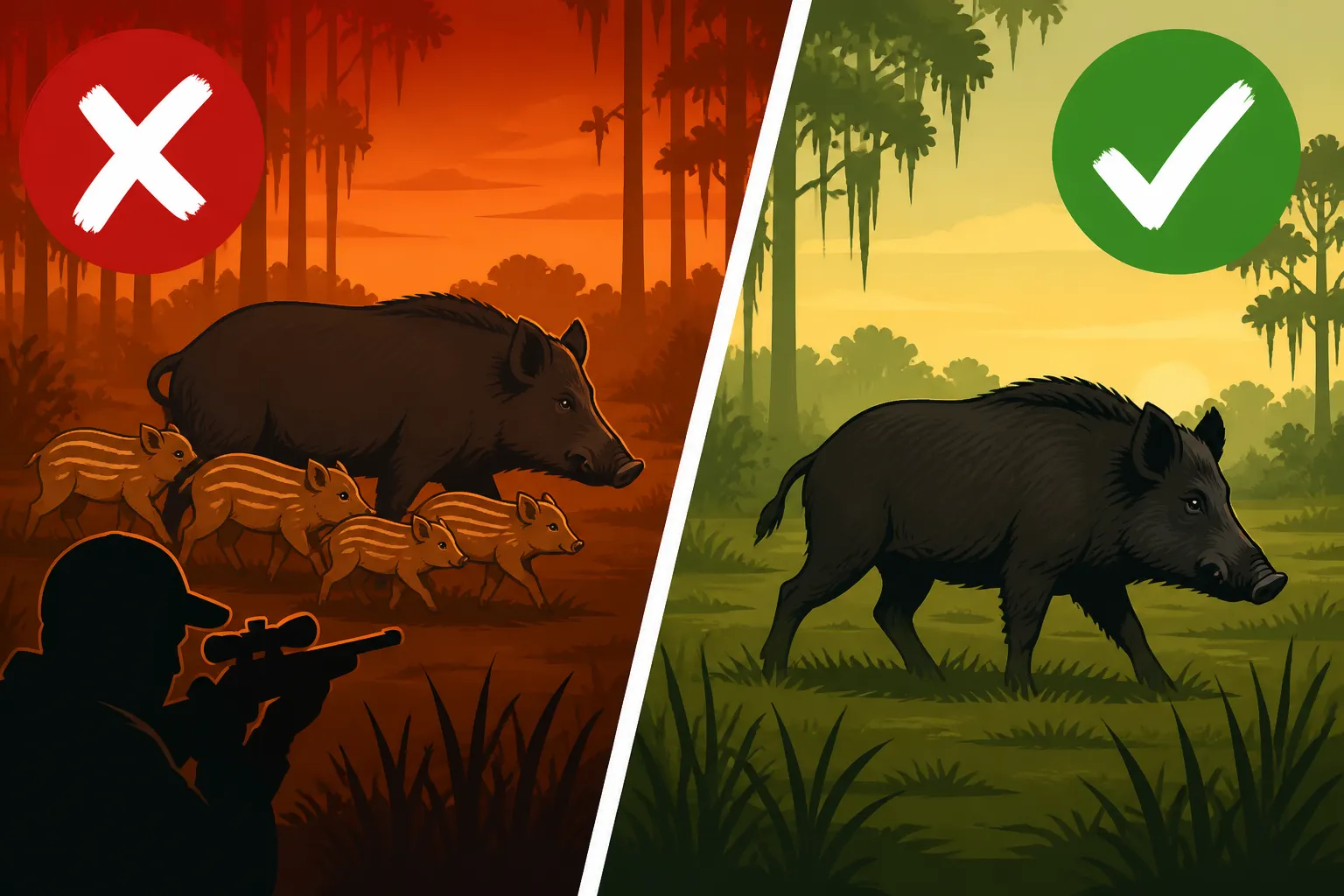
Beyond size, pay close attention to behavior. Cubs often exhibit playful antics, climbing trees, wrestling with siblings, or simply trailing behind a larger bear. If you see a bear with smaller bears acting in this manner, it's a strong indicator you're looking at a sow with her cubs. They might also appear more hesitant or timid than a solitary adult bear, often looking to the larger bear for cues or protection. Remember, if you see multiple bears together, especially one noticeably larger with one or more smaller ones, assume it's a sow with cubs and do not shoot.
Recognizing a Sow's Presence
A sow with cubs will almost always be accompanied by her offspring, but sometimes cubs can be momentarily out of sight due to dense cover or terrain. It's imperative to recognize the subtle cues that indicate a sow's presence, even if you only initially see what appears to be a solitary adult. A sow is typically very protective and cautious. She might constantly scan her surroundings, perhaps pausing frequently to sniff the air or listen intently. Her movements might seem more deliberate and less exploratory than a lone male, as she's often leading or keeping track of her young.
If you observe a bear exhibiting these cautious, protective behaviors, pause and observe for an extended period. Look for any movement in the brush nearby. Listen for subtle sounds – a cub's whimper, a rustle in the leaves. Sometimes, you might spot tracks of varying sizes in the mud or soft ground, indicating multiple bears. The crucial rule here is the "look twice, then a third" mantra. Never rush a shot. If you see what seems like a mature bear, but something about its behavior or the surrounding environment makes you suspect cubs might be nearby, hold your shot. It's always better to pass on a potential opportunity than to make an irreversible mistake. This principle is vital when you're hunting in areas known for bear activity, such as parts of the Tensas River Basin or the Atchafalaya Basin.
| Feature | Legal Bear (Boar/Lone Sow) | Cub / Sow with Cubs |
|---|---|---|
| Size/Weight | Generally large, often over 100 lbs (target 150+ lbs) | Small, less than 75 lbs (illegal to harvest) |
| Head Shape | Proportional to body, often blockier | Smaller in relation to body, sometimes more pointed/juvenile |
| Body Shape | Muscular, broad shoulders, filled-out | Leaner, sometimes "gangly" or less developed |
| Behavior | Often solitary, confident, focused on foraging | Accompanied by smaller bears, playful, cautious, protective |
| Movement | Deliberate, less hesitant | May follow a larger bear, stop frequently, appear timid |
| Vocalizations | Less common, may huff or growl if threatened | Cubs may whimper, squeal; sow may grunt to cubs |
| Group Size | Typically solitary | Two or more bears traveling together (sow with 1-3 cubs) |
| Legal Status | Legal to harvest (within season/tag limits) | ILLEGAL TO HARVEST |
Making the Right Call: Practical Field Scenarios
Even with all the knowledge in the world, making the right decision in the heat of the moment can be challenging. However, maintaining discipline and prioritizing ethical considerations will ensure you always make the responsible choice.
Patience is Your Best Tool
The woods can play tricks on your eyes, especially during those low-light hours or in dense cover. A brief glimpse of a bear might not be enough to confirm its legal status. This is where patience becomes your most invaluable tool. If a bear steps out, don't immediately shoulder your rifle. Take a deep breath, settle your nerves, and observe. Wait for the bear to present itself fully, ideally broadside, offering a clear view of its size, body structure, and, critically, allowing you to scan for any other bears that might be with it. This might mean waiting for several minutes, or even for the bear to move out of sight without you taking a shot.
Remember, a "successful" hunt isn't solely defined by pulling the trigger. Passing on a bear because you couldn't definitively confirm it was a lone adult, or because you suspected cubs were nearby, is a true mark of a responsible hunter. It means you upheld the ethical standards of our sport and contributed directly to the health of the Louisiana black bear population. The fleeting opportunity might feel like a loss, but it's a win for conservation. Never feel pressured to shoot if you are uncertain. Sometimes, the best shot is the one you don't take.
Shot Placement and Identification Challenges
While discussing shot placement for a clean kill is crucial for any game animal, it must always come secondary to positive identification when hunting bears. Only once you are absolutely 100% certain that the bear is a lone adult and meets the legal seventy-five-pound minimum should you even begin to consider shot placement. Aim for the vitals—the lung/heart area—to ensure a swift, humane harvest. If the bear is moving, partially obscured, or the light is fading, these are all valid reasons to hold your shot, regardless of how good the bear looks initially.
Dense Louisiana swamps and forests, common in areas where bears are found, such as the Richard K. Yancey Wildlife Management Area or the Pearl River Wildlife Management Area, can make identification extremely difficult. What might appear to be a solitary bear could quickly reveal an unseen cub from behind a cypress knee or thick palmetto patch. Your field of view might be limited, or the bear might be moving quickly, offering only fleeting glimpses. These challenging conditions amplify the need for extreme caution. Never compromise on ethical identification due to poor visibility, rushed movements, or the excitement of the moment. It is your responsibility to overcome these challenges by exercising patience, using binoculars, and, if doubt persists, letting the bear walk. If you need a refresher on ethical shooting practices, many resources cover Shot Placement on a Louisiana Black Bear.
Post-Harvest Responsibilities and Reporting
Even when you've done everything right and successfully harvested a legal bear, your responsibilities don't end. Proper reporting and understanding the conservation impact are the final steps in being a truly responsible Louisiana bear hunter.
Reporting a Bear Harvest in Louisiana
Louisiana has a mandatory reporting system for all harvested deer, turkeys, and bears. Once you have a bear on the ground and have ensured all legal requirements are met, you must report your harvest immediately. The LDWF utilizes this data to manage the bear population effectively, track harvest numbers, and refine future hunting opportunities. This usually involves checking the bear through the LDWF's official app or website.
It's a hunter's worst nightmare, but in the unlikely and regrettable event that a cub or sow with cubs is accidentally harvested despite your best efforts at identification, immediate and honest reporting to the LDWF is paramount. Do not attempt to conceal the harvest. Contacting the department immediately allows them to properly document the incident and take appropriate action. While the focus of this guide is prevention, understanding the reporting protocol for all scenarios is crucial for responsible participation in the lottery hunt. This transparency ensures the integrity of the state's conservation efforts and protects the future of bear hunting.
Contributing to Conservation Efforts
Every legal and ethical bear hunt in Louisiana is a direct contribution to the conservation and recovery of the species. The funds generated through license and tag sales support wildlife management programs, habitat restoration, and enforcement efforts that directly benefit black bears and countless other species across the state. By meticulously following the rules, especially those concerning the protection of cubs and sows, hunters demonstrate their commitment to the long-term health of Louisiana's wildlife.
The Louisiana Black Bear Conservation Program, for instance, has relied heavily on data collected from hunters and public support to understand population dynamics and expand bear range. Your careful identification in the field directly safeguards the reproductive potential of the population, ensuring that future generations of Louisiana hunters can also experience the thrill of a bear hunt. It reinforces the idea that hunters are not just participants but active stewards of our natural heritage, playing an indispensable role in maintaining the balance and abundance of game species. This dedication to ethical practices is a point of pride for our hunting community and helps ensure the long-term success of Louisiana's Recovering Black Bear.
Disclaimer
The information provided in this guide is for general informational purposes only and should not be considered legal advice. Hunting regulations can change, and it is the hunter's sole responsibility to consult the most current Louisiana Department of Wildlife and Fisheries (LDWF) hunting regulations pamphlet or website before participating in any hunting activity. Always confirm season dates, bag limits, legal weapons, and specific identification criteria directly with official LDWF sources.