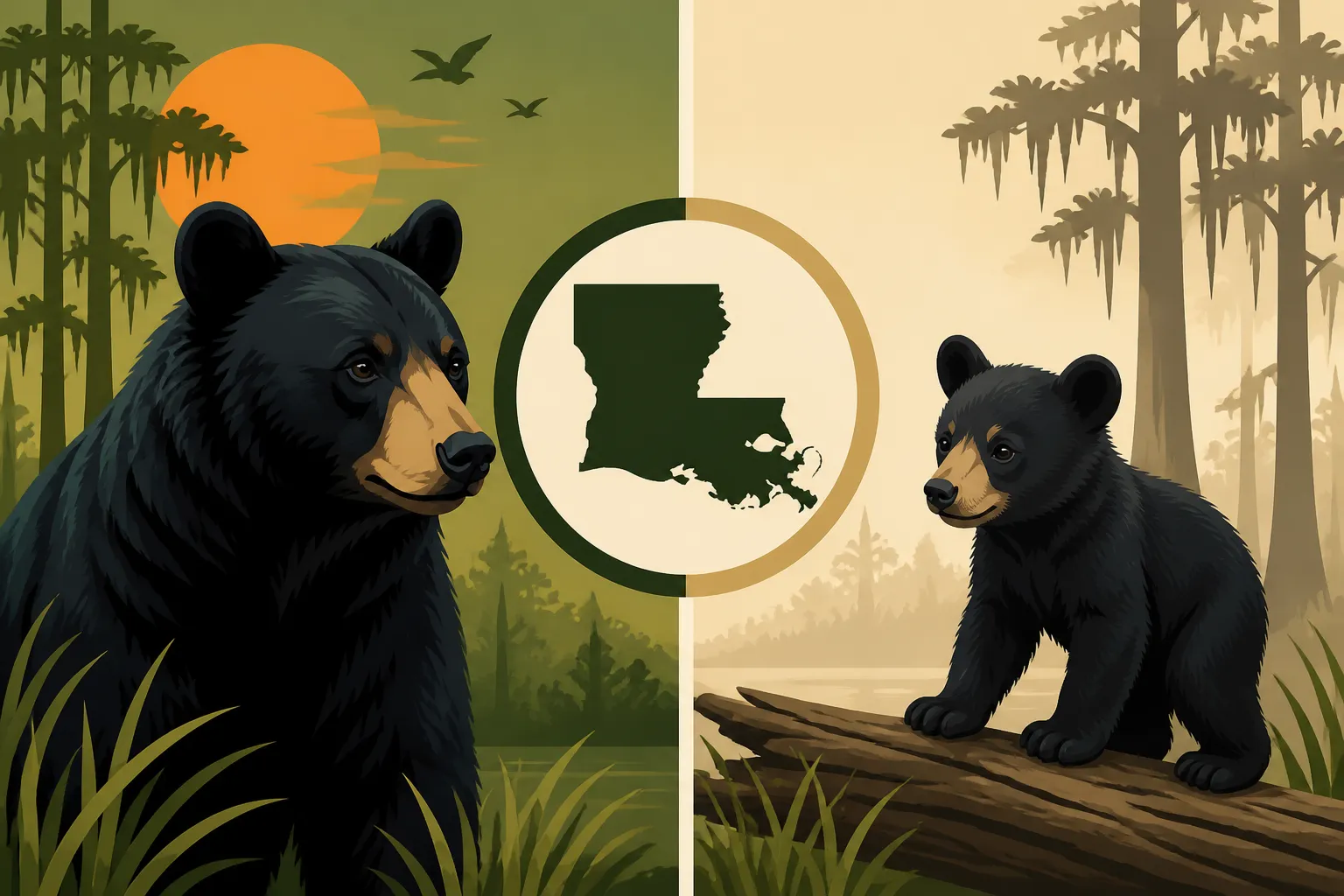
Judging a Legal Bear Versus a Cub
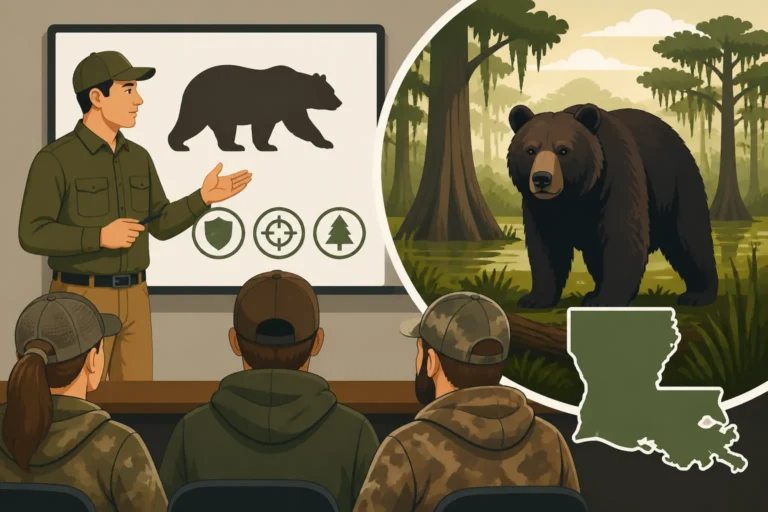
Many hunters who have been lucky enough to draw one of Louisiana's coveted black bear lottery tags find themselves facing a unique and often nerve-wracking challenge: accurately judging the size and independence of a bear in the field. The excitement of a potential shot can quickly be overshadowed by the anxiety of misidentification, as Louisiana regulations strictly prohibit harvesting cubs under 75 pounds or any bear accompanied by a sow. This guide aims to break down the crucial visual and behavioral cues that will help you confidently distinguish between a legal bear and a protected cub, ensuring a responsible and ethical hunt.
Understanding Louisiana's Black Bear Regulations
Louisiana's black bear population is a conservation success story, and the limited hunting opportunities are a testament to careful management. However, with that privilege comes a significant responsibility, especially concerning identifying legal game. The rules are in place to protect the future of the species, and every hunter needs to understand them intimately before heading into the woods. If you're considering applying for one of these unique opportunities, make sure you've familiarized yourself with the process, perhaps by reading up on Louisiana's Reinstated Black Bear Lottery and Applying for a Louisiana Bear Lottery Tag.
The 75-Pound Minimum: What it Means in Practice
The Louisiana Department of Wildlife and Fisheries (LDWF) sets a minimum weight of 75 pounds for harvested bears. This isn't just an arbitrary number; it's a critical threshold designed to prevent the accidental taking of juvenile bears that are still highly dependent on their mothers for survival. While it's nearly impossible to accurately field-judge a bear's weight down to the pound, this regulation means you need to be looking for a bear that is undeniably well past its cub stage, appearing substantial and mature. A bear that looks small, lanky, or otherwise underdeveloped should immediately raise a red flag. Think of it less as an exact weight estimate and more as a minimum size class – you're looking for a yearling or adult, not a tiny, scrawny youngster. This regulation directly protects the younger segment of the population, giving them a chance to grow and contribute to the bear population.
Avoiding Sows with Cubs: The Absolute Rule
Beyond the 75-pound minimum, the most crucial regulation is the prohibition against harvesting a sow with cubs. This is an absolute rule, with no exceptions, and for good reason. Black bear cubs typically stay with their mothers for up to 17 months, learning vital survival skills. Removing the sow means almost certain death for her dependent cubs. Even if the cubs aren't immediately visible, if you observe a bear acting in a maternal way – pausing, looking around, exhibiting protective behavior, or if you hear distress calls – you must assume cubs are present. This includes situations where a sow might be nursing or teaching her cubs how to forage. Even a large sow can be mistaken for a lone bear if her cubs are hidden in thick cover, which is why keen observation and patience are paramount. The LDWF even has a specific resource detailing Why Cubs Under Seventy-Five Pounds Are Off-Limits, emphasizing the importance of this rule.
Consequences of Misidentification: Beyond the Fine
Mistakes in the field can happen, but when it comes to bear hunting, the consequences of misidentifying a cub or a sow with cubs can be severe. Beyond the emotional toll of an unethical harvest, you could face substantial fines, loss of hunting privileges, and even jail time. Louisiana takes its bear conservation seriously, and violations are met with strict penalties. More broadly, misidentification tarnishes the reputation of all hunters and could jeopardize future hunting opportunities for the species. The public perception of hunting is heavily influenced by how ethically hunters conduct themselves, and incidents of misidentification can lead to calls for increased restrictions or even the cessation of bear hunting altogether. It's not just about avoiding a penalty; it's about safeguarding the privilege of hunting for everyone.
The Critical Importance of Ethical and Legal Identification
Hunting bears in Louisiana is a privilege, not a right, and it comes with a profound responsibility to the animal and the broader conservation community. The regulations for black bear hunting are designed to ensure the health and stability of the population, which means every hunter must be committed to ethical and legal identification. It's a cornerstone of responsible wildlife management and a reflection of a hunter's character.
Supporting Bear Conservation Efforts
Louisiana's black bear population has made an incredible comeback from near extirpation, a journey documented in resources like Louisiana's Recovering Black Bear. This recovery is a triumph of conservation, achieved through habitat protection, public education, and careful management. Every bear hunt conducted ethically contributes to the data that helps wildlife biologists understand the population dynamics. Conversely, every illegal harvest, especially of a cub or a sow with cubs, sets back these efforts, disrupting family units and impacting future recruitment into the population. Your role as a hunter is to be a part of the solution, not an impediment to the species' continued success. This means making a conscious effort to understand the population health, including details like How Many Black Bears Louisiana Has and where their major strongholds like The Atchafalaya Basin Bear Population are located.
Upholding the Hunter's Image and Responsibility
The image of the modern hunter is increasingly under scrutiny. Anti-hunting sentiments often highlight any perceived unethical behavior, and the accidental taking of a cub can become a major public relations crisis for hunting as a whole. By meticulously adhering to identification rules and demonstrating extreme caution, individual hunters uphold a positive image of hunting as a tool for conservation. It shows respect for the animal, for the regulations, and for the privilege itself. This personal responsibility extends beyond the shot, including proper reporting and handling, as detailed in articles like Handling a Bear After the Shot. We are stewards of the wild, and our actions reflect on the entire hunting community.
Maintaining Public Trust and the Future of the Hunt
The ability to hunt bears in Louisiana relies heavily on public trust and the continued support of non-hunting citizens. When hunters demonstrate a commitment to ethical practices and respect for wildlife, it reinforces the idea that regulated hunting is a legitimate and beneficial part of wildlife management. If instances of misidentification or unethical behavior become prevalent, it erodes this trust, making it harder for wildlife agencies to maintain or expand hunting opportunities. Ultimately, the future of bear hunting in Louisiana, and potentially other species, rests on the collective actions of its participants. Each ethical decision in the field helps secure the legacy of hunting for future generations.
Key Visual Cues: Distinguishing Size and Age
When that moment arrives and a bear steps into view, your heart will pound. But before you even think about raising your rifle or bow, you need to take a deep breath and apply a systematic approach to identification. Relying on a quick glance is how mistakes are made. Instead, focus on specific anatomical features and proportions.
Head-to-Body Proportion: A Primary Indicator
One of the most reliable visual cues for distinguishing a cub from an adult or large yearling bear is the proportion of its head relative to its body.
- Cubs have disproportionately large, round heads that often appear almost too big for their smaller, lankier bodies. This gives them a "cute," almost puppy-like appearance, similar to how human babies have larger heads relative to their bodies. Their snout might also seem shorter and wider.
- Adult or legal bears, on the other hand, have heads that appear much smaller in proportion to their robust, muscular bodies. Their heads are more elongated, and their snouts are typically longer and more defined. The overall impression is one of power and solid mass, not lankiness. If you look at a full-grown black bear, its head often seems surprisingly small compared to its shoulders and torso.
This proportional difference is a key identifier. Take your time to really study this before doing anything else.
Ear Size and Placement: The "Headlight" Effect
Another excellent visual indicator is the size and placement of a bear's ears. This is often referred to as the "headlight" effect.
- Cubs tend to have ears that appear larger relative to their heads, often standing more erect and further apart. When viewed head-on, their ears might look like two prominent headlights on either side of a relatively small face.
- Adult bears have ears that appear smaller and more proportional to their mature heads. They are often set a bit lower and closer to the sides of their head, creating a less prominent profile. They fit the overall head shape rather than dominating it.
Again, this is about proportion. If those ears look cartoonishly big or stick out like beacons, you're likely looking at a cub.
Body Shape and Stature: From Lanky to Robust
The overall body shape and stature provide crucial clues about a bear's age and size.
- Cubs are typically lanky, with long legs that might seem a bit gangly for their body size. Their midsection might appear thin, and they often lack the broad, muscled shoulders and hindquarters of an adult. They might appear more "stretched out" or slender. A cub will often have a higher leg-to-body ratio, making them look somewhat awkward and less filled out.
- Legal bears (yearlings and adults) are much more robust, blocky, and muscular. They have thick necks, broad shoulders, and a deeper, barrel-chested appearance. Their legs, while strong, are more proportional to their powerful torso, giving them a more compact and imposing stature. Think of a thick, heavy-set animal, not a lean one. You should see a noticeable depth and width to their body.
Here's a quick reference table to help visualize these key differences:
| Characteristic | Cub (Under 75 lbs / Accompanying Sow) | Legal Bear (Over 75 lbs / Independent) |
|---|---|---|
| Head Proportion | Appears larger, rounder, "cute" relative to body. | Smaller, more elongated, adult-like relative to body. |
| Ear Size/Placement | Appears larger, more prominent, set further apart ("headlight" effect). | Smaller, more proportional, set closer to sides of head. |
| Body Stature | Lanky, thin midsection, disproportionate, gangly legs. | Robust, muscular, blocky, barrel-chested, even proportions. |
| Movement | Less confident, often stays close to sow, plays. | Confident, deliberate, independent. |
| Sow Presence | Almost always with a larger sow; shows dependency. | Usually solitary, rarely with other bears unless breeding. |
Behavioral Tells: What Bears Do
Beyond physical characteristics, a bear's behavior can provide invaluable clues about its age, independence, and the presence of a sow or other cubs. Observing how a bear moves, reacts, and interacts with its environment can solidify your identification. This is where patience really pays off, allowing you to piece together the full picture.
Movement Patterns: Solo vs. Group Dynamics
How a bear moves through the landscape can tell you a lot.
- Cubs are rarely truly solitary. They might wander a bit, but they will consistently check back with a larger bear, typically their mother. Their movements might seem less confident, more exploratory, and they might spend time playing or investigating things with a juvenile curiosity. If you see a small bear moving somewhat erratically or frequently looking back, there's a very high probability a sow is nearby, even if not immediately visible. They tend to stay within a close radius of their mother, seldom venturing far on their own.
- Legal, independent bears (yearlings, subadults, or adults) move with a deliberate purpose. They will forage, travel, and investigate on their own, without constantly checking for another bear's presence. They exude a sense of self-reliance. While bears are generally solitary, you might occasionally see two adult bears together during the breeding season, but this is distinct from a sow-cub relationship. A lone bear moving with confidence, especially an older male, will appear entirely self-sufficient in its travels, often covering ground efficiently.
Always prioritize the possibility of cubs hiding. If you see a small bear, assume a sow is present until proven otherwise through extensive observation.
Reaction to Presence: Curiosity Versus Caution
A bear's reaction to your presence, or to other stimuli in its environment, can also offer insights.
- Cubs might exhibit more playful curiosity or, conversely, may quickly seek cover or remain hidden, relying on their mother's protection. If a small bear seems hesitant or frequently glances in a particular direction, it's often looking for its mother. They haven't yet fully developed the caution and wariness of a truly independent bear. They might be more prone to stand on their hind legs out of curiosity or to get a better view, actions often associated with younger bears.
- Adult bears, particularly those that have encountered humans before, are generally more cautious and wary. They might quickly detect your presence and either silently slip away or stand their ground briefly before retreating. Their reaction will be one of a mature animal assessing a potential threat, not a dependent one. A large bear will likely react with a strong sense of self-preservation, either by making a quick exit or, in rare cases, by showing dominance. They're not looking for mom to save them.
Observing these nuanced reactions requires patience and stillness. Don't rush to judgment.
Vocalization and Interaction: Listening for Clues
Sometimes, your ears can be as important as your eyes, especially in dense Louisiana cover.
- Cubs often communicate with their mothers through a variety of soft whines, grunts, or chirping sounds. If you hear these higher-pitched vocalizations, especially after a sow has moved through, it's a strong indication that cubs are present. A sow might also make huffing or blowing sounds to warn or gather her cubs. Listening for these subtle auditory cues, particularly in thick brush where visual confirmation is difficult, can be the deciding factor.
- Adult bears are generally much quieter. They may huff or snort if alarmed, but their vocalizations are typically deeper and less frequent. The distinct, higher-pitched sounds associated with communication between a sow and her offspring are usually absent in solitary adult bears.
In a dynamic environment like the Basin Tactics for Louisiana Swamp Deer or other dense cover, sounds can travel further than sight. Always pause and listen carefully.
Strategic Preparation for the Field
Successful and ethical bear hunting isn't just about what you do in the moment of truth; it's heavily influenced by your preparation long before you ever step foot in the woods with a tag in hand. Being prepared means being confident in your ability to make the right call, every time. Many hunters find resources like GoHunt incredibly helpful for pre-season planning and scouting, especially when navigating complex regulations and terrain.
Pre-Season Scouting and Familiarity
Knowing your hunting area intimately can provide critical context when judging a bear.
- Identify Bear Sign: Look for tracks, scat, rub trees, and feeding areas. Understanding typical bear movements in a specific location can help you anticipate where you might encounter them. Are there certain travel corridors or food sources, like stands of acorns, that attract bears?
- Understand Local Bear Patterns: Use trail cameras to observe bears in the area during the off-season. This can give you a baseline for what a "large" bear looks like in your specific hunting zone. You might even be able to identify individual bears and their sizes. Remember, sizes can vary between different regions; a large bear in one part of Louisiana might look different from one in another. GoHunt's mapping tools can be a fantastic resource for scouting remote areas and understanding terrain before you even get there.
- Know Your Cover: Be aware of areas of dense cover where cubs might hide or where a sow might lead them to safety. This knowledge can inform your decision-making if you see a lone, smaller bear near such areas. For instance, knowing how thick certain palmetto thickets are can help you understand how easily a cub could disappear from view.
Optimizing Your Optics for Clarity
Your optics are your best friend for ethical bear identification.
- High-Quality Binoculars: Invest in a good pair of binoculars (10×42 or 12×50 are excellent choices) and use them extensively. Practice holding them steady and quickly acquiring targets. High-quality glass makes a huge difference in low light conditions or when trying to pick out subtle features at a distance. Don't just own them; use them constantly, even when deer hunting, to build muscle memory.
- Spotting Scope (if practical): If you're hunting open areas or glassing from a distance, a spotting scope can provide even greater detail, allowing you to scrutinize head-to-body ratios, ear size, and body build with extreme precision. While often too bulky for dense swamp hunting, it can be invaluable in more open piney hills or powerline cuts.
- Rangefinder: While not directly an identification tool, knowing the exact distance to a bear can help mitigate target panic and allow you to calmly assess the animal through your optics without rushing the shot. It helps you decide if you even can get a clear enough view for accurate judging.
Remember, clear identification trumps a quick shot every single time.
Simulated Scenarios and Practice Judging
You can practice your identification skills even when you're not hunting.
- Review Photos and Videos: Spend time looking at photos and videos of black bears, both cubs and adults, from various angles and distances. Train your eye to pick out the subtle differences in proportions. Many wildlife organizations, including the LDWF, have extensive galleries.
- Field Practice: When you're out scouting, even if you don't see a bear, practice mentally "judging" other animals like deer or hogs for their size and proportions. This helps train your brain to quickly analyze visual cues under pressure. Imagine a deer in the distance; how would you describe its head-to-body ratio? Its leg length compared to its torso?
- Mandatory Hunter Education: Don't forget the vital information provided during your Attending the Mandatory Bear Hunter Course. These courses often include practical identification exercises and direct guidance from wildlife biologists, preparing you for the real deal. They are designed to equip you with the specific knowledge required for bear hunting in Louisiana.
The more you train your eye and mind, the more confident you'll be when the moment of truth arrives. GoHunt's platform might even offer articles or forums where experienced bear hunters share their judging techniques, providing additional learning opportunities.
The "If in Doubt, Don't Shoot" Philosophy
This phrase is not just a polite suggestion; it's a fundamental ethical imperative in bear hunting. When dealing with a species as important and carefully managed as the Louisiana black bear, removing all doubt is your primary responsibility. This philosophy underlies all Louisiana Bear Legal Harvest Rules and is crucial for both conservation and upholding the integrity of the hunt.
Prioritizing Conservation Over Opportunity
It’s easy to get caught up in the moment. You've drawn a rare tag, spent countless hours scouting, and now, finally, a bear is in your sights. That adrenaline rush can cloud judgment. This is precisely when you need to lean on the "if in doubt, don't shoot" principle.
- One Opportunity vs. Species Survival: Remember that missing one hunting opportunity, even if it means letting a legal bear walk because you weren't 100% sure, is a small price to pay compared to the potential harm of accidentally killing a cub or a sow. Your single opportunity should never jeopardize the long-term health of the species.
- Ethical Hunting First: The true mark of an ethical hunter is not just making the kill, but making the right kill. This means putting conservation values, and the well-being of the animal, above your personal desire for a harvest. This is especially true when applying strategies such as Spot-and-Stalk Tactics for a Bear Lottery Tag, where quick decisions are often required.
Making the Tough Decision: When to Pass
Sometimes, even after careful observation, you might still have a lingering doubt. Maybe the light is fading, the bear is partially obscured, or its behavior is ambiguous.
- No Clear Picture, No Shot: If you cannot get a clear, unobstructed view of all the critical identification features—head-to-body ratio, ear size, body mass, and behavioral cues—then you simply cannot take the shot. Wait for a better opportunity, or let the bear walk. It's far better to return home empty-handed than to make a mistake you'll regret forever.
- The Weight of Doubt: If a voice in the back of your head is whispering "cub" or "sow," listen to it. That doubt is your conscience telling you to reconsider. This is a moment of self-reflection and integrity. Passing on a bear in such circumstances demonstrates the highest level of respect for the animal and the hunting tradition. It shows you truly understand Passing on a Cub or Sow With Cubs is sometimes the only right decision.
Long-Term Impact on Hunting Opportunities
Every decision made in the field has ripple effects. Consistently ethical behavior by hunters builds a strong foundation for future hunting seasons.
- Maintaining Privilege: The privilege of hunting bears in Louisiana is precious and hard-won. Protecting it means adhering to the highest standards. If misidentification incidents become common, public outcry could lead to more restrictive regulations, shorter seasons, or even the cessation of the hunt.
- Sustainable Management: By only harvesting legal, independent bears, you directly contribute to the sustainable management model that ensures healthy bear populations for years to come. This aligns with the long-term goals of the LDWF and the conservation community.
The "if in doubt, don't shoot" rule is your ultimate safeguard, both for the bears and for the future of bear hunting in Louisiana. It’s a principle that guides every ethical hunter and ensures that the thrill of the hunt is always balanced with the responsibility of stewardship.
Disclaimer
The information provided in this guide is for informational purposes only and is not a substitute for official regulations. Always consult the most current Louisiana Department of Wildlife and Fisheries (LDWF) hunting regulations and attend any mandatory hunter education courses before participating in any hunting activity. Hunting regulations can change, and it is the hunter's responsibility to stay informed and compliant with all applicable laws.