How Many Black Bears Louisiana Has
For a long time, hearing about a black bear in Louisiana felt like spotting a unicorn – a rare and mythical occurrence that most folks only ever dreamed of. But I'm here to tell you those days are thankfully behind us! The resurgence of our state's black bear population is a conservation success story we can all be incredibly proud of. This guide will walk you through just how many black bears are believed to roam our swamps and forests today, where they tend to hang out, and what this incredible recovery means for the future of wildlife in our beloved Pelican State.
The Incredible Comeback: How Louisiana's Black Bear Population Rebounded
There was a time, not so long ago, when the Louisiana black bear was on the brink. Habitat loss, unregulated hunting, and human encroachment pushed these magnificent animals to alarmingly low numbers, to the point where they were federally listed as a threatened species. It felt like an uphill battle, a losing fight to save a truly iconic part of our wild heritage. But thanks to decades of dedicated conservation efforts, including habitat restoration, public education, and stringent protections, we've seen a remarkable turnaround. It’s a testament to what can be achieved when communities and wildlife agencies work together.
From the Brink to Resurgence: A Timeline of Recovery
The journey to recovery wasn't quick or easy. It involved critical steps like restoring bottomland hardwood forests, which are vital for bear habitat, especially in areas like the Tensas River Basin. Without these dense, often flooded woods, bears simply don't have the cover, food, or denning sites they need to thrive. Early conservation efforts focused on identifying the remaining isolated pockets of bears and protecting those core breeding populations. This often meant land acquisitions, working with private landowners to implement bear-friendly land management practices, and educating people on how to coexist with bears safely. It was a slow burn, but every small victory built momentum towards the larger goal of delisting the species and seeing bears flourish once more.
These concerted efforts led to a steady, albeit gradual, increase in numbers. Scientists and wildlife managers continually monitored bear movements, health, and cub production to gauge the success of their programs. They used techniques like live-trapping and collaring bears to track their range and understand their ecological needs. This scientific approach was crucial in making informed decisions about where to focus resources and how to adapt strategies as the population began to grow. Learning How Louisiana's Bear Population Recovered truly showcases the long-term commitment required for such a significant conservation achievement.
Estimated Population Numbers Today
While giving an exact, real-time number for any wild animal population is always tricky, wildlife biologists with the Louisiana Department of Wildlife and Fisheries (LDWF) use robust estimation methods to provide us with strong indicators. These estimates suggest that Louisiana's black bear population has grown significantly over the past few decades, reaching a healthy and sustainable level. The overall consensus is that the state is now home to a population numbering in the hundreds, possibly approaching a thousand individuals, spread across various suitable habitats. This is a far cry from the critically low numbers of just a few hundred bears that existed at the lowest point of their decline. The fact that we now have enough bears to even consider a limited hunting season in certain areas, as outlined in Louisiana's Reinstated Black Bear Lottery, speaks volumes about the success of these recovery efforts. It’s a conservation success story that brings immense pride to those of us who cherish Louisiana's wild places.
Where Louisiana's Black Bears Call Home: Understanding the Subpopulations
Louisiana's landscape is diverse, and so are the areas where our black bears have re-established themselves. While they are adaptable, they thrive best in certain types of environments, primarily those with extensive bottomland hardwoods, dense swamps, and plenty of natural food sources. Historically, bears were found across much of the state, but today their presence is concentrated in three main subpopulations. Understanding these distinct groups helps us appreciate the varied habitats and challenges each population faces. To get a better grasp on their distribution, you might use a powerful mapping tool like GoHunt to scout public lands, identifying prime habitat types like extensive swamps or river bottoms that often hold these animals.
The Tensas River Basin Subpopulation
The Tensas River Basin, located in northeastern Louisiana, is often considered the stronghold of the state's black bear population. This vast expanse of contiguous bottomland hardwood forest provides an ideal environment for bears, offering ample food, cover, and denning sites. This region has historically harbored the largest and most stable bear population, serving as a critical source for the species' recovery. The rich alluvial soils support a tremendous diversity of plant life, including oaks, pecans, and various fruit-bearing trees and shrubs that provide crucial forage for bears throughout the year.
The sheer scale of the Tensas Basin means bears have plenty of room to roam, minimizing conflicts with humans and allowing for natural expansion. The habitat here is incredibly productive, leading to good reproductive rates and cub survival. It's why this area, particularly around the Tensas River National Wildlife Refuge, holds the densest concentrations of bears. When you consider Why the Tensas Basin Holds the Most Bears, it boils down to the exceptional quality and quantity of contiguous habitat available, which is paramount for any large carnivore.
The Atchafalaya Basin Subpopulation
South-central Louisiana is home to the mighty Atchafalaya Basin, the largest river swamp in North America, and another vital area for black bears. This sprawling maze of cypress-tupelo swamps, bayous, and bottomland hardwoods supports a significant and growing bear population. Bears in the Atchafalaya Basin are well-adapted to this unique wetland environment, often swimming long distances between ridges and islands in search of food and mates. The challenges here are different, with fluctuating water levels and a more fragmented landscape in some areas, but the sheer size and wildness of the basin offer tremendous opportunities for bear growth.
The Atchafalaya Basin is a dynamic ecosystem, constantly reshaped by the Mississippi River's flow. Bears here utilize a variety of food sources, from acorns on higher ground to aquatic vegetation and insects found in the water. The dense cover of the swamp provides excellent refuge. As you explore the vastness of the area, perhaps even with a digital mapping tool like GoHunt to navigate the waterways and dense cover, you'll begin to appreciate the intricate network that makes up The Atchafalaya Basin Bear Population habitat. This population is seen as a key component of the state's overall bear recovery strategy, connecting populations and providing genetic diversity.
The Coastal Subpopulation Near Terrebonne
While smaller and more isolated than the other two, a distinct coastal subpopulation of black bears persists in the swamp forests and coastal marshes near Terrebonne Parish in southeastern Louisiana. These bears are particularly unique, having adapted to a brackish water environment and often utilizing smaller, fragmented patches of habitat. This subpopulation faces particular challenges, including ongoing coastal erosion and habitat loss, which make their recovery more delicate.
Conservation efforts in this region often focus on protecting remaining forest fragments and connecting them where possible. Bears here may even be observed venturing into marshy areas, highlighting their adaptability. The continued presence of The Coastal Bear Population Near Terrebonne is a testament to the resilience of the species and the importance of localized conservation efforts. This group, despite its smaller numbers, contributes significantly to the overall genetic diversity and distribution of Louisiana's black bears.
Bear Population Breakdown by Region
To summarize the general status of Louisiana's black bear subpopulations:
| Subpopulation | Primary Habitat Type | Estimated Status | Key Features |
|---|---|---|---|
| Tensas River Basin | Contiguous Bottomland Hardwoods | Largest & Most Stable | Excellent food resources, minimal fragmentation, high reproductive success. |
| Atchafalaya Basin | Cypress-Tupelo Swamps & Bottomlands | Significant & Growing | Adaptable to wetland environment, diverse food sources, vast and wild landscape. |
| Coastal (Terrebonne) | Fragmented Swamp Forests & Marshes | Smaller & Vulnerable | Unique adaptation to brackish environment, facing habitat loss challenges, critical for genetic diversity. |
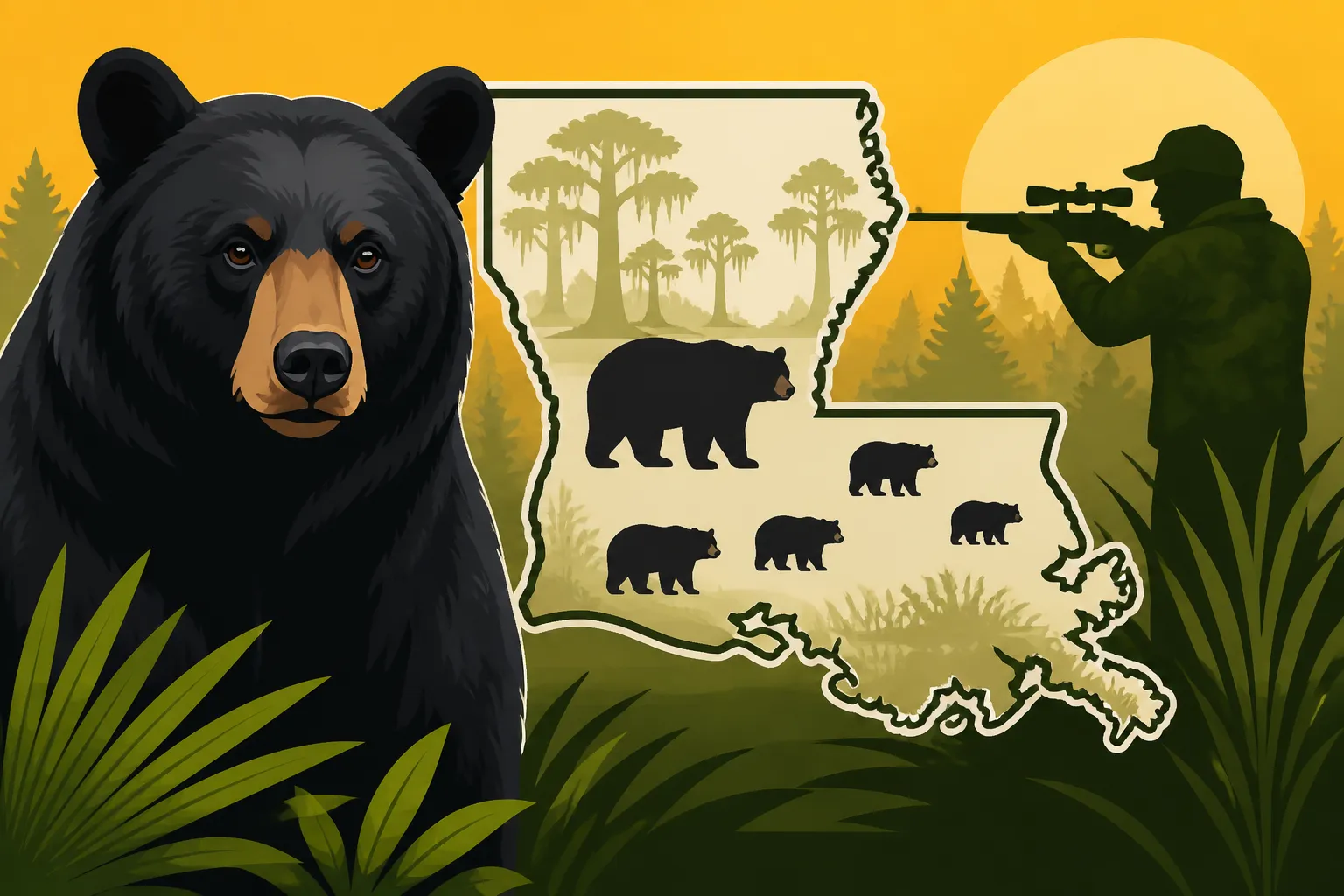
These three subpopulations collectively make up the estimated total number of black bears in Louisiana, demonstrating Where Louisiana Black Bears Range Today. Their continued growth and expansion into new areas, often leading to Bears Moving Into Central Louisiana, is a clear indicator of a successful conservation story.
Monitoring the Bear Population: Science and Conservation Efforts
Keeping tabs on a wild animal population, especially one as elusive as a black bear, is no small feat. It requires a dedicated team of biologists, advanced technology, and often, the cooperation of the public. The LDWF employs a variety of scientific methods to monitor the health and growth of Louisiana's black bear population, ensuring that conservation strategies remain effective and that management decisions are grounded in sound data.
Tracking and Research Methods
One of the primary ways biologists monitor bears is through trapping and collaring. This involves safely capturing bears, often using culvert traps or foot snares, tranquilizing them, and then outfitting them with GPS collars. These collars transmit data, allowing researchers to track bear movements, understand their home ranges, identify denning sites, and even estimate cub production. This real-time data is invaluable for understanding habitat use, identifying corridors for movement, and pinpointing potential areas of conflict with human development.
Beyond collaring, DNA analysis from hair samples collected at rub trees or bait stations provides insight into population genetics, connectivity between subpopulations, and individual bear identification without direct capture. Remote trail cameras are also increasingly used to capture images of bears, helping to estimate population density and observe behaviors without disturbing the animals. These tools are crucial for compiling comprehensive reports, like those that confirm Louisiana's Recovering Black Bear status.
Challenges in Population Management
Despite the successes, managing a recovering bear population comes with its own set of challenges. Habitat fragmentation continues to be a concern, especially in areas experiencing development pressure. Creating and maintaining wildlife corridors to allow bears to move safely between habitat patches is an ongoing effort. Conflicts with humans, though relatively rare, can arise when bears venture into agricultural areas or residential zones, often attracted by unsecured food sources like garbage or pet food. Educating the public on how to "bear-proof" their properties and what to do if they encounter a bear is a continuous, vital task.
Another challenge is securing funding and resources for long-term monitoring and habitat management. Conservation is an ongoing process, not a one-time fix. Biologists must also factor in external influences like climate change and its potential impact on food availability and habitat suitability. All these elements make for a complex, multifaceted approach to ensuring the continued prosperity of Louisiana's black bear population.
Living with Bears: What the Recovery Means for Hunters and Residents
The successful recovery of the black bear population has brought exciting new opportunities and responsibilities for Louisiana residents, particularly for hunters. After years of absence, a highly regulated black bear season has been reinstated, a clear sign of the species' robust health. However, living with a thriving bear population also means understanding how to coexist safely and respectfully.
The Reinstated Bear Hunting Season
The return of a limited black bear hunting season in Louisiana is a monumental achievement, signaling that the population is healthy enough to sustain controlled harvest. This isn't just about hunting; it's a testament to effective conservation. The season is managed through a lottery system, meaning only a very select number of hunters receive tags each year. This controlled approach ensures that the harvest remains sustainable and does not negatively impact the long-term health of the bear population. Hunters interested in participating must go through an application process, and if successful, often need to attend a mandatory bear hunter education course to ensure they understand specific regulations and ethical hunting practices. When the season opens, hunters must be familiar with Louisiana Bear Legal Harvest Rules and understand species identification to avoid accidental harvest of non-target bears, such as cubs or sows with cubs. The limited number of tags means that the success rate can be challenging, but it makes securing a bear all the more a once-in-a-lifetime opportunity for those who get the chance to participate in Hunting Louisiana's Reinstated Bear Season. Knowing how to apply for the Applying for a Louisiana Bear Lottery Tag is the first step for many hopeful participants.
Coexisting Safely with Black Bears
For general residents, the increasing bear population means a greater chance of encountering one, especially if you live near prime bear habitat. While bears are generally shy and avoid humans, it’s crucial to understand basic safety measures. The key is to eliminate attractants around your home. This means securing garbage in bear-proof containers, bringing pet food indoors, and cleaning outdoor grills. If you have fruit trees, consider picking ripe fruit promptly. These simple steps can prevent bears from becoming habituated to human food sources, which often leads to conflict.
If you do encounter a bear, remain calm. Do not run. Make yourself look as large as possible, make noise, and slowly back away. Never approach a bear, especially a sow with cubs, or a bear that is feeding. It's also important for hunters to be aware of bear presence when out in the woods, even if they aren't specifically Spot-and-Stalk Tactics for a Bear Lottery Tag. Familiarizing yourself with bear sign and behavior is a good practice for anyone spending time in Louisiana's wild places. Learning to identify tracks, scat, and rub trees can enhance your overall outdoor experience, and apps like GoHunt can help you visualize bear habitat overlays. Also, a critical reminder for all hunters is to know the regulations for Passing on a Cub or Sow With Cubs to ensure ethical hunting practices are always followed. The number of bears, and consequently, the number of successful harvests each year, like How Many Bears Louisiana's First Season Took, will continue to be closely monitored to ensure the long-term health of this incredible species in Louisiana.
Disclaimer
This article is for general informational purposes only and does not constitute professional advice. Laws, prices and regulations vary by location and change over time. Consult a qualified professional for guidance on your specific situation.