Where Louisiana Black Bears Range Today
If you've spent any time in the vast swamps and dense bottomlands of Louisiana, you might have heard whispers, or even seen signs, of a true wilderness survivor: the Louisiana black bear. For generations, these magnificent animals faced an uphill battle, teetering on the brink of extirpation. But thanks to dedicated conservation efforts, their numbers are on the rise, and understanding where these incredible creatures call home today is crucial for both hunters and outdoor enthusiasts alike. This guide will walk you through the current strongholds and emerging territories of Louisiana's black bear population, offering insights into their preferred habitats and the realities of coexisting with them.
Understanding Louisiana's Black Bear Comeback Story
It’s easy to forget that just a few decades ago, the idea of regularly encountering a black bear in Louisiana felt like a distant dream. Our state's unique landscape, from the ancient bottomland hardwood forests to the sprawling coastal marsh, once harbored thriving bear populations. However, habitat loss and unregulated hunting took a severe toll, pushing the Louisiana black bear to the very edge. Their story is one of incredible resilience and the profound impact of dedicated conservation.
A Legacy of Restoration
The journey to bring the Louisiana black bear back from the brink is a testament to the power of committed wildlife management. By the 1950s, the species was critically endangered, with only a handful of individuals remaining in isolated pockets. Recognizing the dire situation, the Louisiana Department of Wildlife and Fisheries (LDWF) embarked on ambitious restoration programs, including reintroductions from Minnesota and extensive habitat protection initiatives. These efforts, combined with the bear being listed under the Endangered Species Act in 1992, allowed the population to slowly but steadily rebound. It was a long, painstaking process, but seeing the bears reclaim their historical territories is a truly inspiring success story. If you're interested in the full scope, you can delve into How Louisiana's Bear Population Recovered for more details on this remarkable journey.
The Current Population Status
Today, the Louisiana black bear is recognized as a distinct subspecies, Ursus americanus luteolus, and while still carefully managed, their numbers are healthy enough that they were removed from the federal Endangered Species List in 2016. The LDWF now estimates a population well into the hundreds, possibly nearing a thousand, with a stable and growing trajectory. This recovery has led to a significant shift in how we interact with bears, moving from pure protection to careful management that includes limited hunting opportunities. Understanding Louisiana's Three Bear Subpopulations is key to grasping the current distribution and management strategies across the state. The fact that we now have regulated hunting seasons, like the one covered in Hunting Louisiana's Reinstated Bear Season, speaks volumes about how far we've come.
The Tensas Basin: A Bear Stronghold
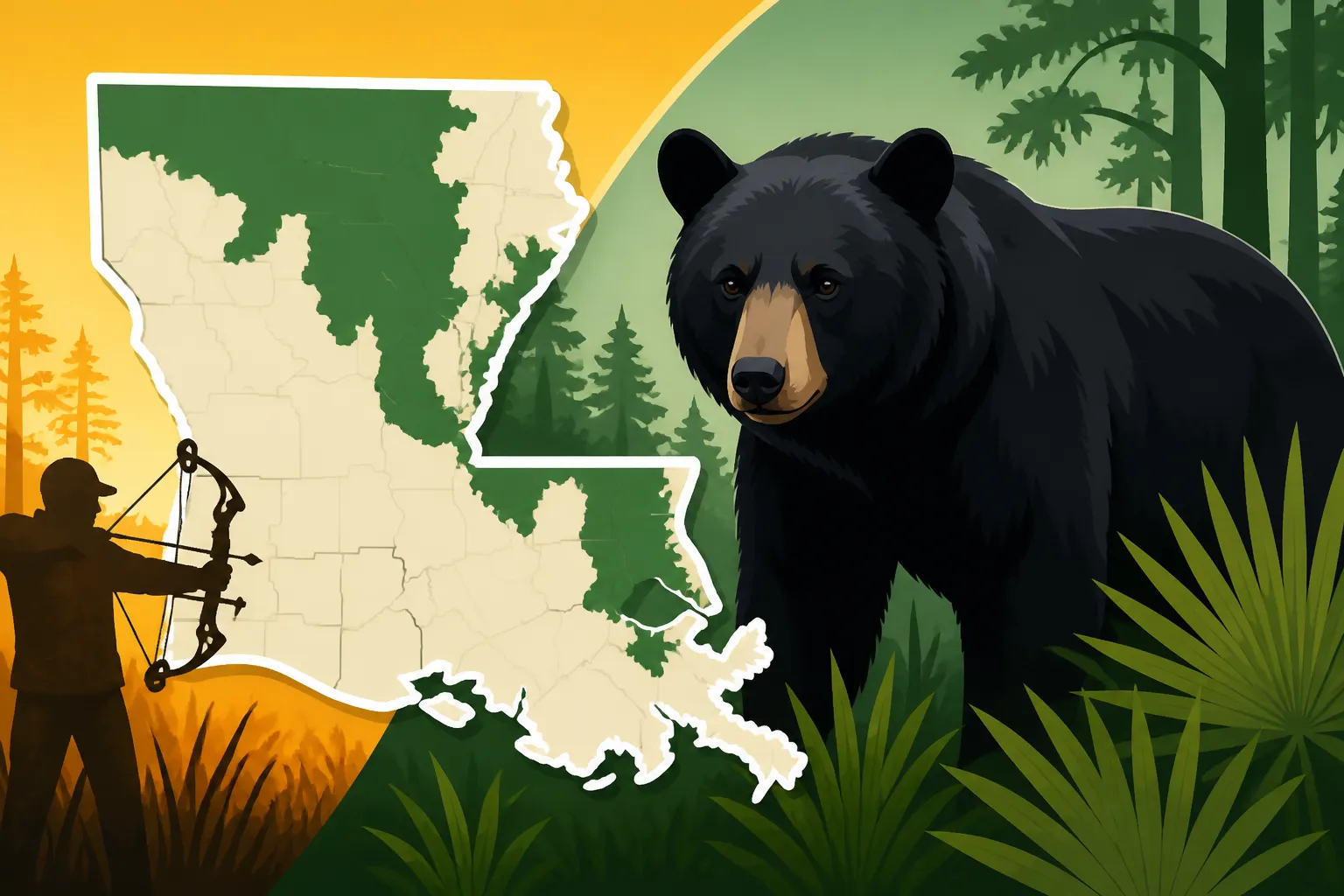
When most folks think about Louisiana black bears, their minds often drift to the vast, ancient forests of the Tensas River Basin in Northeast Louisiana. This region is, without a doubt, the undisputed capital of Louisiana's black bear population. It’s a place where the wild still reigns supreme, and the bears have found a perfect haven.
Prime Habitat and Food Sources
The Tensas Basin is characterized by extensive tracts of bottomland hardwood forests, a sprawling mosaic of oak, pecan, hackberry, and cypress trees. These rich ecosystems provide everything a black bear needs to thrive: dense cover for denning and security, abundant water sources, and, most critically, a diverse and reliable food supply. Acorns are a massive draw, providing critical fat reserves for bears preparing for winter. But it’s not just acorns; they feast on a smorgasbord of berries, wild fruits like persimmons and muscadines, insects, and even carrion. This bounty is precisely Why the Tensas Basin Holds the Most Bears, allowing them to reach impressive sizes and maintain a robust breeding population. When you're scouting this area, pay close attention to the mast crop; a good acorn year means bears will be moving through those woods, often leaving behind clear signs of their presence.
Navigating Bear Encounters in the Northeast
With such a concentrated bear population, encounters are becoming more common in the Tensas Basin, especially around areas like the Tensas River National Wildlife Refuge and the surrounding private lands. For hunters and outdoor enthusiasts, this means being bear-aware. While black bears are generally shy and avoid human contact, surprising one at close range, especially a sow with cubs, can be dangerous. It's smart to make noise while walking, store food properly, and never approach a bear. If you're camping or hunting in this region, secure your game and food sources, and know how to react if a bear doesn't immediately retreat. Understanding the nuances of Tensas River National Wildlife Refuge Hunting will often include specific guidelines for bear safety, given their prevalence in the area. Always check with the local LDWF office or WMA headquarters for current advisories.
The Atchafalaya Basin: An Expanding Frontier
South-central Louisiana boasts another massive, ecologically vital region: the Atchafalaya Basin. This is the largest swamp in the United States, a bewildering labyrinth of cypress-tupelo forests, bayous, and sloughs. Historically, this basin was a significant bear habitat, and after restoration efforts, the black bears are steadily making a strong comeback here, too.
Swamp Life and Bear Adaptations
Life in the Atchafalaya Basin is unique, and the bears here have adapted beautifully to its watery world. Unlike their more terrestrial cousins in the Tensas, Atchafalaya bears are often excellent swimmers, moving effortlessly through the bayous and across flooded timber. Their diet in the basin is similarly diverse, relying heavily on fish, crawfish, amphibians, and reptiles in addition to the various fruits and nuts produced by the swamp's flora. They'll also find den sites in hollow trees, under root balls, or in dense palmetto thickets, often in areas that are nearly impenetrable to humans. This specialized existence highlights The Atchafalaya Basin Bear Population's remarkable ability to thrive in such a dynamic, water-rich environment. Hunters exploring this area for deer or hogs might notice tracks or scat along higher ground or natural ridges.
Coexisting with Basin Bears
As the bear population grows within the Atchafalaya Basin, so does the potential for human-bear interaction. Many residents and hunters have camps deep within the basin, and proper waste management and food storage are paramount to prevent conflicts. Bears are opportunistic and will quickly learn that human structures mean potential food. If you're utilizing public access points or venturing into remote areas for activities like Hunting Atchafalaya Basin Swamp Deer or Basin Tactics for Louisiana Swamp Deer, understanding bear behavior and taking precautions becomes an integral part of your outdoor experience. Reporting nuisance bears to LDWF is crucial, but prevention through responsible practices is always the first line of defense. Utilizing mapping tools like GoHunt, which can show you detailed terrain and potential travel corridors, can help you identify areas where bears might be more active, allowing you to plan accordingly.
The Coastal Bear Population: A Unique Environment
While the two major basins are key, Louisiana also harbors a smaller, but incredibly important, coastal bear population. This group, primarily found in the marshlands and associated uplands of parishes like Terrebonne and St. Mary, represents a unique adaptation to a very different kind of habitat.
Marsh, Ridge, and Bear Movement
The coastal environment presents distinct challenges and opportunities for black bears. Here, vast expanses of brackish and saltwater marsh are interspersed with cheniers (relict beach ridges) and isolated tree islands, often along bayous and canals. Bears in this region navigate the marsh, foraging for a diet that includes marsh grasses, various plants, and even crabs or other marine life, in addition to whatever fruits and nuts they can find on the higher ground. They often travel along these natural ridges, which provide drier pathways through the soggy landscape. The Coastal Bear Population Near Terrebonne is a fascinating example of how adaptable these animals are, making a living in an environment that seems utterly unsuited for a large mammal. When scouting for waterfowl in areas like Hunting Cameron Parish Marsh Ducks, it's not unheard of to spot bear sign along the higher ground, a reminder of this hidden population.
Challenges of Coastal Bear Management
Managing a bear population in such a dynamic and human-impacted environment comes with its own set of challenges. Coastal erosion, saltwater intrusion, and human development all impact bear habitat. Bears in this region are often more visible near developed areas as they navigate fragmented landscapes, leading to increased potential for human-bear conflicts. Educating coastal communities and ensuring safe deterrent practices are vital to their long-term survival. LDWF actively monitors this population, working to minimize conflicts and secure crucial habitat corridors. Anglers and boaters exploring coastal waterways might find it beneficial to familiarize themselves with bear behavior, especially if they are frequently tying up or camping on isolated islands or ridges.
Beyond the Basins: Transient Bears and Future Expansion
While the Tensas, Atchafalaya, and coastal regions are the primary population centers, Louisiana's black bears are not strictly confined to these areas. Young bears, particularly males, are known to disperse great distances in search of new territory and mates, leading to sightings in areas where established populations are not yet present.
Tracking Solitary Wanderers
These solitary wanderers are a sign of a healthy, expanding bear population. Reports of black bears in places like Kisatchie National Forest, the Florida Parishes, and even closer to urban centers are becoming more frequent. These are often transient individuals, passing through as they seek out suitable habitat. For example, while not a core bear area, a bear sighting in a region where people frequently engage in Kisatchie National Forest Hunting or even closer to cities isn't entirely unexpected as the population expands. LDWF tracks these sightings diligently, using citizen reports and genetic sampling to understand bear movement patterns and identify potential new colonization areas. If you're a hunter who uses tools like GoHunt or the Scouting With the LDWF App, you might even be able to contribute to these efforts by reporting unusual sightings.
Potential New Habitats and Monitoring Efforts
The expansion of the Louisiana black bear range is an ongoing process. As populations grow, bears will naturally push into available, suitable habitat. Areas with good forest cover, water sources, and food availability, even if currently fragmented, could become new homes for bears. LDWF's monitoring efforts are crucial for understanding this expansion, assessing habitat suitability, and proactive management to mitigate future conflicts. This includes educating landowners and local communities in these emerging bear territories about best practices for living with bears. The hope is that over time, these transient sightings will lead to the establishment of new, viable breeding populations, further solidifying the black bear's place in Louisiana's diverse wildlife landscape.
Bear Hunting and Management in Louisiana
The successful recovery of the Louisiana black bear has led to the careful reinstatement of a limited, lottery-based hunting season. This isn't just about recreation; it's a vital tool in modern wildlife management, helping to manage population growth, distribute bears, and build public acceptance for the species by providing direct benefits to local communities.
Understanding the Lottery and Regulations
If you're interested in hunting a Louisiana black bear, it's not a simple over-the-counter tag. The season is strictly controlled through a lottery system, meaning only a very limited number of tags are issued each year, typically in specific management zones. This ensures that the harvest remains sustainable and doesn't negatively impact the overall population recovery. Applying for a tag is a process, and you can learn more about it in Applying for a Louisiana Bear Lottery Tag or by checking the Louisiana Bear Lottery Application Window. Additionally, prospective hunters are required to attend a mandatory bear hunter education course, which covers everything from bear biology and behavior to shot placement and carcass handling. You can find more information about this essential step in Attending the Mandatory Bear Hunter Course and Louisiana's Mandatory Bear Hunter Training.
Responsible Hunting Practices
For those fortunate enough to draw a tag, ethical and responsible hunting is paramount. This includes understanding and adhering to all regulations, such as minimum weight limits and prohibitions on taking sows with cubs, as outlined in Louisiana Bear Legal Harvest Rules. Bears are incredible animals, and their management requires a deep respect for the species. Hunters play a critical role in conservation, not just through financial contributions from license sales, but also by providing valuable data to LDWF biologists. By participating responsibly, hunters contribute to the continued health and sustainable management of Louisiana's black bear population, ensuring these magnificent creatures continue to roam our wild places for generations to come.
Here's a quick overview of Louisiana's primary bear range areas:
| Bear Population Area | Primary Habitat Type | Key Characteristics | Status (Approx.) | Common Food Sources (General) |
|---|---|---|---|---|
| Tensas Basin | Bottomland Hardwood Forests | Dense forest, ancient trees, rich mast production | Stronghold; well-established | Acorns, persimmons, muscadines, insects, carrion |
| Atchafalaya Basin | Cypress-Tupelo Swamp, Bayous, Sloughs | Water-rich, dense swamp, adapted to aquatic environments | Recovering; expanding | Fish, crawfish, berries, wild fruits, some mast |
| Coastal Plain | Coastal Marsh, Cheniers, Tree Islands | Saltmarsh, higher ridges, fragmented habitat | Smaller; unique adaptations | Marsh grasses, berries, crabs, small animals, whatever upland fruits |
| Transient/Emerging Areas | Mixed Forests, River Corridors | Scattered sightings, dispersal by young bears | Monitored; potential for future | Opportunistic; whatever is available in transit |
Disclaimer
Please remember that hunting regulations and wildlife populations are subject to change. Always consult the official Louisiana Department of Wildlife and Fisheries (LDWF) regulations handbook or website before planning any hunting trip or engaging in outdoor activities involving wildlife.