Why Ouachita Parish’s Case Worried Biologists
It's incredibly frustrating when something as serious as Chronic Wasting Disease (CWD) appears in our beloved deer herds, especially when it shows up in unexpected places. For many of us, the news of CWD hitting Ouachita Parish after its initial detection in Tensas Parish was a real gut punch, raising a lot of questions and anxieties about the future of deer hunting in Louisiana. This guide is going to dig into exactly why that particular case caused such a ripple of worry among wildlife biologists and what it means for those of us who cherish our time in the woods.
Understanding CWD's Initial Footprint in Louisiana
Before the Ouachita Parish discovery, Louisiana wildlife management efforts against CWD had a very specific focus. The disease, a fatal neurological condition affecting deer, elk, and moose, had first been detected in our state, creating an immediate need for concentrated action. Hunters and biologists alike understood that this was a serious threat, but there was a sense that the initial spread might follow a somewhat predictable pattern.
The Initial CWD Detection in Tensas Parish
Our journey with CWD in Louisiana truly began with the detection of the disease in Tensas Parish. This was a challenging moment for the state's deer management program and for all of us who hunt. Tensas Parish, with its rich river bottomlands, is a prime deer hunting area, and the confirmation of CWD there immediately triggered a series of protocols and concerns. It meant new rules, new responsibilities, and a lot of uncertainty for local hunters. The initial cases served as a stark reminder of the challenges posed by wildlife diseases.
The Louisiana Department of Wildlife and Fisheries (LDWF) swiftly moved to establish CWD Management Zones and began rigorous testing efforts. This was an unprecedented situation for many, requiring a significant shift in how we approached hunting and deer management. Everyone had to adapt quickly, from understanding new carcass movement restrictions to participating in mandatory sampling. You can learn more about How CWD Reached Tensas Parish if you want to understand the origins of the state's initial outbreak.
The "Expected" Spread Pattern
When CWD is first detected, wildlife biologists often develop models and predictions about its likely spread. These models are usually based on factors like deer density, landscape features, and known movement patterns of deer. In many cases, CWD tends to spread outward from an initial detection site, affecting contiguous areas as infected animals move, or as the environment becomes contaminated with prions (the infectious proteins that cause CWD). There's a certain "expected" pattern of slow, gradual expansion.
This is why, after the initial detections in Tensas and surrounding parishes, the focus was heavily on containing the spread within that region. Measures like the Enhanced Mitigation Zone baiting ban and increased surveillance were designed to limit local transmission and prevent the disease from jumping to distant, unaffected areas. The hope was that by acting quickly and decisively in the primary zones, the overall geographical footprint of CWD could be kept relatively small, preventing a statewide crisis.
The Ouachita Parish Case: A New Level of Concern
Then came the news from Ouachita Parish, and suddenly, those "expected" patterns were thrown into question. This wasn't just another case in an adjacent parish; it was a significant geographical leap that changed the whole calculus for biologists and left many hunters scratching their heads, wondering what it meant for the future.
The Geographic Leap and Unconnected Outbreak
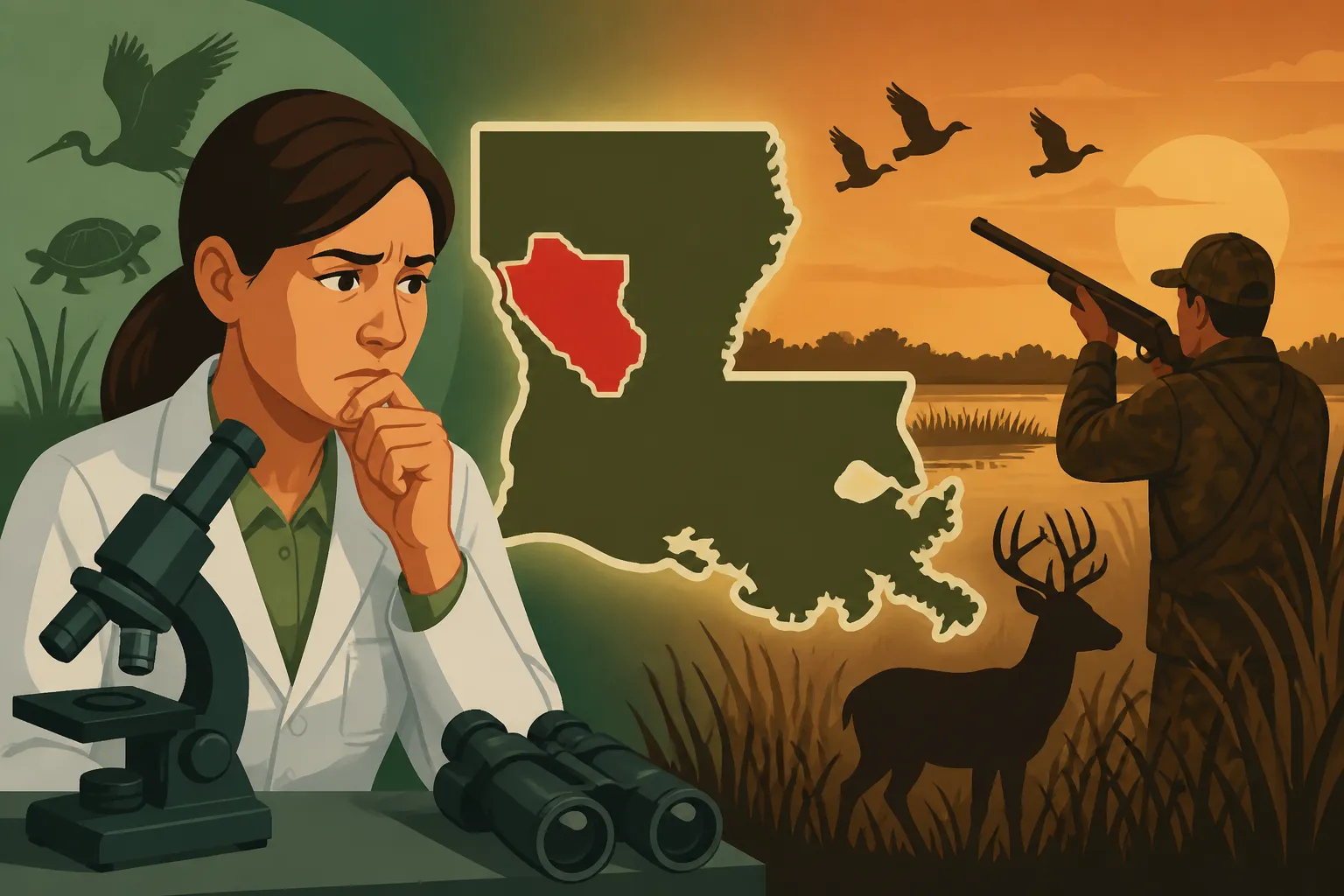
The discovery of a CWD-positive deer in Ouachita Parish was a major turning point because it represented a significant geographical jump from the established CWD Management Zone in the northeastern part of the state. Tensas and Concordia parishes were the initial focal points, with follow-up detections reinforcing the disease presence in that localized area. Ouachita Parish, however, is not directly adjacent to these original zones. This meant that the CWD found there didn't appear to be a simple, contiguous spread from the known outbreak.
Such a leap immediately raises several alarming possibilities for biologists. Was it an undetected, widespread infection that had been brewing silently in intervening parishes? Was it the result of human-assisted movement of an infected carcass or live animal, perhaps unknowingly? Or did it point to entirely new, unknown pathways of transmission? This "jump" suggested that the disease was either more pervasive than initial surveillance indicated or that vectors of spread were more complex and far-reaching than previously assumed, making containment incredibly difficult.
Implications for Disease Management and Containment
An unconnected outbreak like the one in Ouachita Parish fundamentally complicates disease management and containment strategies. When CWD spreads contiguously, efforts can be focused on specific geographic boundaries and local populations. However, a remote, isolated positive means that the disease could pop up virtually anywhere, making targeted management incredibly challenging. It's like trying to put out a fire when sparks are landing miles away in unpredictable locations.
This scenario mandates a broader, more vigilant approach to surveillance across the entire state, rather than just within defined zones. It also puts added pressure on hunters everywhere to understand and follow regulations, especially regarding carcass movement, which is one of the most significant risks for human-assisted spread. The Ouachita case underscored the reality that CWD is not just a "Tensas problem" but a statewide concern that demands collective action and ongoing adaptation from both wildlife agencies and the hunting community.
Why the Ouachita Parish's Case Worried Biologists
The primary reason why the Ouachita Parish CWD case created such profound worry among biologists boils down to the unpredictable nature it introduced to the disease's spread. Up until that point, while CWD was a serious concern, there was a working assumption that it would progress in a more linear, observable fashion from the known focal points. The Ouachita detection shattered that assumption. It wasn't merely another positive deer; it was a positive deer in a place that didn't fit the expected spread model, seemingly disconnected from the primary outbreak area.
This geographical disconnect forced biologists to confront the possibility that either CWD had been silently spreading across a much larger footprint than previously understood, or that human activity—such as the movement of infected carcasses or live deer—was playing a more significant role in its dispersal. Both scenarios are deeply concerning. An undetected, widespread presence means the disease has a stronger foothold and is harder to manage. Human-assisted spread, while preventable, is also incredibly difficult to police, relying heavily on public awareness and compliance. Essentially, the Ouachita case transformed CWD from a regional problem with a somewhat predictable trajectory into a more widespread, unpredictable threat that could surface almost anywhere, anytime, requiring a recalibration of the entire state's response. This is also Why Ouachita Parish's Case Worried Biologists so much, indicating a tougher battle ahead.
The Biological and Ecological Ramifications
The biological and ecological ramifications of CWD, particularly with a scattered presence like the Ouachita Parish case suggests, are far-reaching. It’s not just about one sick deer; it’s about the health of the entire herd, the integrity of our ecosystems, and the future of hunting traditions in Louisiana.
Challenges in CWD Surveillance and Testing
With CWD detections popping up in seemingly unconnected areas, the challenges for surveillance and testing become immense. Instead of focusing resources on a confined zone, biologists now face the daunting task of broader, more expansive testing across a wider geographical area. This demands more personnel, more sampling stations, and greater cooperation from hunters across many parishes. It's simply harder to keep tabs on the disease when you don't know exactly where its next manifestation might be.
The financial and logistical strain of such widespread surveillance is considerable. Furthermore, getting a clear picture of CWD prevalence becomes more difficult when the disease isn't concentrated. You might be sampling vast areas with very low infection rates, making it harder to detect the disease until it reaches a more advanced stage or a higher local prevalence. This means that the Ouachita case not only signaled a potential wider spread but also made the act of monitoring that spread significantly more complex and resource-intensive for the state. Using tools like the LDWF app or even commercial mapping platforms like GoHunt can help hunters stay informed about specific sampling locations and CWD zone boundaries.
Potential Impact on Deer Populations and Hunting
The long-term impact of CWD on Louisiana's deer populations and, consequently, our hunting traditions, is what truly keeps biologists and hunters up at night. While CWD doesn't typically cause massive, rapid die-offs like some other diseases, its chronic nature leads to a slow, debilitating decline in infected animals. Over time, in areas with high prevalence, CWD can lead to reduced deer populations, skewed age structures (fewer older bucks), and lower reproductive success. This could dramatically alter the quality and availability of hunting opportunities.
The thought of smaller, less healthy deer herds is a tough pill to swallow for anyone who loves hunting in Louisiana. It means fewer animals to pursue, potentially shorter seasons, or even changes in bag limits to manage the herd more conservatively. The specter of CWD can also affect the perception of venison, even though there's no evidence of human transmission. All of these factors combine to pose a serious threat to the deeply ingrained hunting culture that defines so much of our outdoor lifestyle, potentially impacting the success rates mentioned in Louisiana Deer Harvest Records.
The Role of Hunter Cooperation in Mitigation
Hunter cooperation is, without a doubt, the single most critical factor in mitigating the spread of CWD. Wildlife agencies can set rules and conduct surveillance, but without the active participation and understanding of hunters, their efforts are severely hampered. Hunters are the eyes and ears of the woods; they are the first to observe changes in deer behavior, and they play an indispensable role in providing samples for testing.
Following regulations on carcass movement, submitting deer for testing, and avoiding baiting in CWD zones are not just legal requirements—they are acts of stewardship that directly impact the health of the entire deer herd. Every hunter who takes the time to check the Louisiana's Chronic Wasting Disease Zones before a hunt or participates in a voluntary sampling program is contributing directly to the fight against CWD. This collective effort is our best defense against the disease taking an even stronger hold and further impacting our cherished hunting traditions.
Living and Hunting with CWD in Louisiana
Living with CWD means adapting, learning, and staying informed. It’s a new reality for Louisiana hunters, but one we can navigate successfully if we all pull together.
Current CWD Management Zones and Rules
Following the CWD detections, including the one in Ouachita Parish, the LDWF established specific CWD Management Zones and buffer areas across the state. These zones come with particular rules and regulations designed to limit the spread of the disease. It’s absolutely vital for every hunter to know if their hunting area falls within one of these zones, as the rules can significantly impact how you hunt, process your deer, and even what you can bring out of the area.
These regulations often include mandatory testing for harvested deer, especially during specific timeframes, and strict rules regarding the movement of deer carcasses or certain parts out of the zone. This is a crucial step in preventing human-assisted spread, which could lead to further unexpected cases like the one in Ouachita. Before you head to the woods, always check the latest regulations for your specific hunting location. Understanding Louisiana's New CWD Management Zone Law is essential for compliance and good stewardship.
Mandatory Testing and Carcass Movement Restrictions
If you're hunting in a CWD Management Zone, there's a strong likelihood that mandatory testing for harvested deer will be in effect. This typically means you'll need to present your deer at a designated sampling station or check any online reporting requirements within a specific timeframe after harvest. The purpose of this testing is to monitor the prevalence of CWD in the area and to identify any new outbreaks as quickly as possible. It's an inconvenience, yes, but a necessary one to protect the herd.
Equally important are the carcass movement restrictions. These rules dictate which parts of a deer harvested in a CWD zone can be moved out of that zone. Generally, you can move deboned meat, clean antlers, hides, and taxidermy-ready skulls out of a zone, but the brain and spinal cord material must remain behind. This is because these tissues are where the CWD prions are most concentrated. Knowing and adhering to these rules, especially regarding Moving a Deer Carcass Out of a CWD Zone, is critical to preventing the unintentional spread of the disease to new areas. You can use mapping applications like GoHunt to mark your harvest location and cross-reference it with CWD zone boundaries, making sure you adhere to all regulations.
How Hunters Can Help Slow the Spread
As hunters, we are on the front lines in the fight against CWD. Our actions directly influence the disease's trajectory. Beyond adhering to the mandatory regulations, there are several ways we can actively contribute to slowing the spread. First, remain vigilant for any deer exhibiting symptoms of CWD, such as extreme weight loss, stumbling, or unusual behavior. Report any suspicious sightings to the LDWF immediately.
Second, understand and respect the regulations in place, even if they seem inconvenient. This includes avoiding baiting in enhanced mitigation zones as detailed in The Enhanced Mitigation Zone Baiting Ban and participating in voluntary CWD surveillance efforts by submitting samples even when not mandated. Using an app like GoHunt can help you identify official CWD zones and buffer areas, ensuring you're always in compliance with local regulations. Furthermore, proper carcass disposal is key: if you butcher your deer at home, ensure all high-risk parts (brain, spinal cord, etc.) are double-bagged and disposed of in a landfill, not left out in the woods. By becoming informed, compliant, and proactive, hunters become essential partners in protecting Louisiana's deer for generations to come.
| CWD Spread Characteristic | Initial Tensas/Concordia Expectation | Ouachita Parish Discovery Implications |
|---|---|---|
| Geographic Spread | Contiguous, localized expansion | Disconnected, long-distance jump |
| Primary Concern | Containment within known areas | Undetected, wider prevalence or human transfer |
| Surveillance Strategy | Focused within defined zones | Broader, more extensive statewide effort |
| Hunter Impact | Regional rule changes | Potential for statewide rule impacts |
| Management Complexity | Manageable, predictable progression | Highly complex, unpredictable challenges |
Disclaimer
This article is for general informational purposes only and does not constitute professional advice. Laws, prices and regulations vary by location and change over time. Consult a qualified professional for guidance on your specific situation.