Tensas River National Wildlife Refuge Hunting
Ah, the Tensas River National Wildlife Refuge. For many of us Louisiana hunters, just the name conjures images of ancient bottomland hardwoods, sprawling oxbow lakes, and the phantom echoes of truly giant whitetails. But let's be real, navigating federal refuge rules can feel like trying to track a mature buck through a hurricane – confusing, frustrating, and prone to missteps if you don't know the lay of the land. This guide is here to untangle the complexities of hunting this iconic federal land, helping you understand the unique regulations and tactics needed to pursue game in one of Louisiana's most storied deer habitats.
Understanding Tensas River National Wildlife Refuge
The Tensas River National Wildlife Refuge isn't just another patch of public hunting land; it's a living relic of Louisiana's past, a testament to conservation, and a challenging but rewarding place to hunt. Understanding its foundation is key to appreciating why its rules and opportunities are unique.
Location and Unique Habitat
Nestled primarily in Madison and Tensas parishes in northeast Louisiana, the Tensas River National Wildlife Refuge sprawls across a vast expanse of what was once a majestic bottomland hardwood forest, part of the larger Mississippi Alluvial Valley. This isn't your typical piney woods or coastal marsh; we're talking about towering oaks, hackberry, sweetgum, and cypress trees that stand sentinel over a mosaic of sloughs, bayous, and oxbow lakes like the famed Lake Bruin. The seasonal flooding from the Tensas River and its tributaries plays a massive role in shaping the ecosystem, creating incredible natural funnels and isolated islands of high ground that deer and other wildlife depend on.
Hunting here means immersing yourself in a true wilderness experience, a stark contrast to some of the more managed state wildlife management areas. The sheer scale and density of the timber, combined with the complex hydrology, demand a different kind of hunter – one who is patient, observant, and willing to get a little bit lost (and then find themselves again, of course!). This landscape is why the area has such a storied history for deer. It’s a rich, diverse habitat that historically produced some of the biggest bucks in the state, and still holds that potential for those who learn its secrets.
Jurisdiction and Management
Here's where things get a little different. Unlike Louisiana's Wildlife Management Areas (WMAs) which are managed by the Louisiana Department of Wildlife and Fisheries (LDWF), Tensas River NWR is federal land, overseen by the U.S. Fish and Wildlife Service. This means that while Louisiana's general hunting laws still apply, you also have to contend with a separate layer of refuge-specific regulations. It's like having two sets of parents with slightly different house rules – you need to know both!
These refuge-specific rules often dictate things like permissible hunting methods, dates that might not align perfectly with state seasons, what kind of stands you can use, and even where you can park or launch a boat. The goal of the U.S. Fish and Wildlife Service is broader conservation, not just hunting access, so their rules are designed to protect the overall ecosystem and a wider variety of species, sometimes leading to more restrictive measures for hunters. Always, and I mean always, check the current Tensas NWR hunting regulations pamphlet directly from the refuge office or their official website before you plan your trip. Don't rely solely on the state's hunting guide; there's often an addendum or entirely separate document for the refuge.
Historical Significance and Big Bucks
Tensas NWR, and the broader Tensas River Basin it sits within, has legendary status among Louisiana deer hunters. This region, particularly before the widespread logging and agricultural conversion of the last century, was known for producing some of the largest white-tailed deer in North America. The rich, alluvial soils and abundant mast crops from the mature hardwoods provided optimal nutrition, allowing bucks to reach incredible body weights and antler growth. It's often spoken about in the same hushed tones as regions like the Golden Triangle in Mississippi, a place where truly monster bucks roamed.
While decades of habitat change and increased hunting pressure have altered the landscape, the genetic potential for big deer still exists within the refuge. Hunters still regularly harvest impressive animals, and the dream of a true "river bottom monarch" is a powerful draw. It's not uncommon to hear tales around the deer camp fire about a buck seen deep in the refuge, a ghost of the past, that keeps hunters coming back year after year. The challenge of hunting such a vast and wild place, combined with the real possibility of encountering a buck of a lifetime, is a huge part of Tensas's allure. You can learn more about the broader area in Hunting the Tensas River Basin.
Accessing Tensas NWR for Hunting
Getting into the heart of Tensas NWR can be an adventure in itself. It's not always as simple as pulling off a highway and walking in. Strategic planning for access is crucial to your success and safety.
Permit and Application Process
Here's a critical difference: many federal refuges, including Tensas, may require special permits for hunting in addition to your regular state hunting license and deer tags. While not always the case for all species or seasons, it's common for deer hunting, especially during certain firearm seasons, to be managed through a quota or lottery system. This means you might need to apply for a permit well in advance of the season, and there's no guarantee you'll draw one. The application period usually has a strict deadline, so marking your calendar is essential.
Even if a specific lottery isn't required for your chosen season, you might still need a general refuge permit that allows access. This is often a free permit that you can pick up at the refuge office or download from their website, but it's mandatory to possess it while hunting. These permits help the refuge track hunter numbers and ensure everyone is aware of the specific rules. Always verify the current permit requirements for the exact dates and species you plan to hunt. Don't get caught without the proper paperwork; it could lead to a ruined hunt or worse.
Entry Points and Road Systems
Tensas NWR has several designated entry points, primarily off Highway 4 and other smaller parish roads. However, the internal road system can be a mixed bag. Some roads are well-maintained gravel or dirt roads that allow vehicle access for a portion of the year, while others might be seasonal, closing due to wet conditions or for wildlife management purposes. It’s common for large sections of the refuge to be accessible only by foot or boat, especially deeper into the timber. Pay close attention to maps and signs indicating vehicle restrictions, parking areas, and designated boat launches. Trying to drive down a closed road could lead to getting stuck or even a citation.
For hunters looking to get truly away from the crowds, boat access via the Tensas River, Big Creek, or various oxbow lakes can open up vast, less-pressured areas. However, this comes with its own set of challenges, including navigating flooded timber, strong currents, and knowing safe passage points. Before heading out, grab a detailed refuge map, or better yet, use a robust mapping app like onX Hunt or GoHunt to mark entry points, parking, and potential boat launches. These tools are invaluable for understanding the terrain and avoiding accidental trespass onto adjacent private property.
Boundary Lines and Navigation
One of the biggest headaches when hunting large public tracts like Tensas NWR is knowing exactly where you are and where the boundaries lie. The refuge borders a patchwork of private timber company lands, agricultural fields, and smaller private landholdings. Without clear markers on the ground (which can be scarce in dense woods), it's incredibly easy to inadvertently cross a property line. This is where digital mapping tools become your best friend.
Using a GPS unit or a smartphone app with aerial imagery and public land layers is practically a necessity. Before your hunt, take the time to study the refuge boundaries and mark potential "hot spots" where deer might cross between private and public land. Remember, accidentally trespassing, even if unintentional, can lead to serious consequences. Always err on the side of caution. Keep an eye out for boundary signs, flagging, or changes in habitat that might indicate a property line. Finding Louisiana Property Lines covers this in more detail. In such vast and wild country, proper navigation isn't just about finding your way to a stand; it's about staying legal and safe.
Hunting Regulations and Restrictions within Tensas NWR
Hunting federal land comes with its own distinct rulebook, and Tensas River NWR is no exception. These rules are designed to balance hunting opportunities with the refuge's overarching conservation goals, and they often differ significantly from statewide regulations.
Deer Seasons and Methods
The deer hunting seasons in Tensas NWR typically follow the general framework of Louisiana's Deer Area 8 or a similar zone, but with specific modifications unique to the refuge. Expect variations in opening and closing dates, as well as distinct windows for different hunting methods:
- Archery Season: Usually the longest season, offering ample opportunity. Crossbows are typically allowed during this period, but always check the specific regulations. Crossbow Rules During Louisiana Archery Season provides more context for state rules, but refuge rules might have their own nuances.
- Primitive Firearms Season: Often a shorter, dedicated window. This typically means muzzleloaders or single-shot breech-loading rifles. Be sure your primitive firearm meets the refuge's specific definition. Louisiana Legal Firearms for Deer Hunting will give you a good overview, but refuge details are paramount.
- Modern Firearms Season: This is usually the most restricted, often limited to a few specific days or weeks, and might even be a lottery-drawn hunt to control pressure. Rifle calibers may have specific minimum requirements, and some areas might be shotgun-only with slugs.
The bag limits and antler restrictions (e.g., specific antler points or spread) usually align with state regulations for the deer area, but again, always consult the refuge's current pamphlet. They might implement special antlerless days or restrictions to manage the local deer population. The key takeaway here is to never assume the state rules are identical to the refuge rules; they rarely are.
Small Game and Other Species
While deer hunting often takes center stage at Tensas NWR, the refuge also offers opportunities for hunting other species, primarily small game. Squirrel and rabbit hunting can be excellent in the diverse bottomland habitat, especially during mast years. The dense woods and abundant cover provide ideal conditions for these critters. However, just like with deer, the seasons and specific methods for small game may also differ from state regulations.
For example, there might be specific areas open or closed to small game hunting, or particular dates when small game hunting is prohibited to avoid conflicts with other hunts or management activities. Always check the refuge's regulations for squirrel and rabbit season dates, bag limits, and any method restrictions (like permissible shot sizes). You can also find general information on Squirrel and Small Game Hunting in Louisiana, but remember to cross-reference with Tensas-specific rules. Occasionally, opportunities for migratory birds like doves or woodcock might exist, but these are often highly managed and may require special permits or limited access periods.
Baiting, Stands, and Blinds
Here's where many hunters accustomed to private land or even some WMAs run into trouble:
- Baiting: Generally, baiting is strictly prohibited on federal refuges like Tensas. This includes corn, rice bran, mineral blocks, protein pellets, or any other substance used to attract deer. This rule is often vigorously enforced, so don't even think about it. The presence of food plots is also generally not allowed if they are intended for hunter attraction rather than broad wildlife benefit.
- Tree Stands: You can use portable tree stands, but permanent stands are almost always forbidden. Furthermore, many refuges require that portable stands be removed daily or at the end of each hunt, or at least before the end of the season, and cannot be left unattended for extended periods. Check the specific rules on how long a stand can remain in place and if it needs to be clearly marked with your name and license number. Damages to trees (e.g., screwing in steps, using certain climbing methods) are also often restricted. For a general idea of public land rules, see Treestand Rules on Louisiana Public Land, but again, Tensas has its own spin.
- Ground Blinds: Ground blinds are usually allowed, but they must also be portable and follow similar removal rules to tree stands. You cannot construct permanent blinds or clear large areas of vegetation for a blind. Brushing in a natural ground blind is usually fine, but be mindful of the impact on the habitat.
The overarching theme for these restrictions is to minimize human impact on the refuge environment and maintain a wild, fair-chase hunting experience. Violating these rules, even unknowingly, can lead to fines, loss of hunting privileges, and even confiscation of gear.
Tactics for Success in Tensas NWR
Hunting in the Tensas River National Wildlife Refuge is a unique beast. It's not a place for the faint of heart or the unprepared. Success here often hinges on understanding the specific challenges of a bottomland hardwood environment and adapting your strategies accordingly.
Scouting the Bottomland
Effective scouting is paramount in Tensas. This isn't a landscape you can just roll up to on opening day and expect to find deer without prior knowledge. The key difference here is the dynamic nature of water levels and the sheer density of cover.
First, aerial maps are your best friend. Use onX Hunt or similar tools to study the topography before you even set foot on the ground. Look for subtle elevation changes, especially ridges, sloughs, and high spots that create pinch points or travel corridors when the water rises. Deer will gravitate to these higher grounds during periods of flooding, making them excellent places to focus your efforts. Identify oxbow lakes, old river channels, and small ponds, as these can create natural funnels or barriers to deer movement. Reading Aerial Photos for Central Louisiana Deer is an excellent resource for this.
Second, focus on food sources. While baiting is forbidden, natural food sources are abundant. Look for mast-producing trees like white oaks and pin oaks that drop acorns in the fall. During late season, deer might shift to browse or remaining soft mast. Identifying these preferred food sources is crucial. Also, pay attention to agricultural fields bordering the refuge. Deer will often utilize these private lands at night and retreat into the refuge's cover during the day, creating obvious entry and exit points.
Finally, water levels impact everything. A mild fall means deer are spread out, but a wet one concentrates them on high ground. Scout during similar water conditions to what you expect during your hunt, if possible. Look for fresh tracks along dry slough bottoms, rubbed trees, and active scrape lines. Understanding seasonal changes in the environment will drastically improve your odds. Scouting Louisiana Public Land Before Season will offer broader public land insights.
Hunting Strategies for Big Timber
Once you've done your scouting homework, it's time to adapt your hunting strategy to the vastness of the Tensas bottomland.
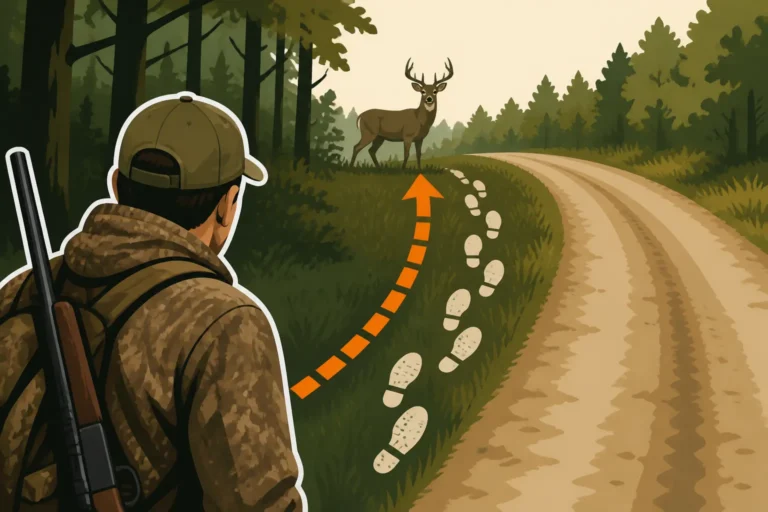
- Still-Hunting and Ground Hunting: In dense bottomland, still-hunting can be incredibly effective. Moving slowly and deliberately, taking a few steps then pausing to observe and listen, allows you to cover ground and intercept deer in their natural environment. The thick cover provides excellent concealment for hunters moving quietly. For those who prefer to stay put, ground blinds (portable, of course!) can be very productive when set up along natural travel corridors or near bedding areas, especially if you get off the main roads and deep into the refuge.
- Stand Placement in Funnels: Deer in bottomland timber are masters of using natural features for travel. Focus on placing your stands or blinds in natural funnels:
- Between a slough and a high ridge: Deer will often walk the edges of water features.
- Where two different timber types meet: For example, a patch of thick palmettos next to more open hardwoods.
- Along the edges of old logging roads or trails: Even if overgrown, these often offer easier travel for deer. Hunting a Funnel Between Two Sloughs explores this strategy in depth.
- Near isolated patches of thick cover: These are often bedding areas, and deer will be moving in and out at dawn and dusk.
- Thermals and Wind: Don't forget how wind and thermals work in this environment. In flat bottomlands, morning thermals tend to rise, and evening thermals fall. Always position yourself so your scent is carried away from where you expect deer to approach. The dense timber can swirl winds, so having multiple stand options for different wind directions is smart.
Managing Pressure and Competition
Tensas NWR is a renowned hunting area, and with that reputation comes pressure, especially during the more popular seasons and opening weekends. You're going to encounter other hunters. The key to success often lies in getting away from them.
- Go Deeper, Go Harder: Most hunters won't venture more than a mile or so from a main road or parking area. The further you're willing to walk or paddle, the better your chances of finding undisturbed deer. This means being in good physical shape, having reliable navigation tools, and being prepared to drag a deer a long way out.
- Utilize Water Access: If you have a boat or even a canoe/kayak, you can access areas that are much harder to reach on foot. This allows you to circumvent areas of high foot traffic and discover hidden pockets of deer habitat. Just remember the current regulations on boat use and motors.
- Hunt Mid-Week: If your schedule allows, hunting on a Tuesday or Wednesday instead of Saturday or Sunday can drastically reduce the number of hunters you encounter. Deer will often pattern hunters, and less pressure means more natural movement.
- Focus on Overlooked Features: Everyone looks for the obvious oak flats. Try focusing on thickets, areas with heavy palmetto growth, or brushy edges that other hunters might deem "too thick." These are often bedding areas that pressured deer retreat to. Understanding Hunting Pressure on Louisiana Public Land can help you adapt to shared spaces.
The Tensas bottomland holds big deer, but they are hard-earned. Patience, persistence, and a willingness to put in the effort to get off the beaten path are what truly pay off here.
Challenges and Considerations for Hunting Tensas NWR
Hunting in a place like Tensas River National Wildlife Refuge offers incredible rewards, but it also comes with a unique set of challenges that every hunter needs to be aware of. Being prepared for these can make or break your hunt.
Weather and Water Levels
If there's one thing that defines hunting in the Tensas Basin, it's water. The refuge sits within the Mississippi Alluvial Valley, meaning it's highly susceptible to seasonal flooding from the Tensas River and its associated bayous and sloughs.
- Impact on Access: High water levels can completely inundate roads, parking areas, and even vast tracts of timber, making foot access impossible. Boat access might become your only option, but navigating flooded woods in a boat has its own dangers. Always check the refuge's website or call the office for current water conditions and road closures before you head out. Don't rely on assumptions – conditions can change rapidly after heavy rains upriver.
- Impact on Deer Movement: Deer movement is directly tied to water levels. During periods of extensive flooding, deer will concentrate on the highest available ground, creating natural islands or strips of dry land. These can be prime hunting spots, but also subject to higher hunting pressure. Conversely, during dry periods, deer might be more spread out across the landscape, making them harder to pattern. Understanding these dynamics is crucial for planning your hunt. Always pack waterproof gear, rubber boots, and be prepared for muddy, wet conditions, even if it hasn't rained recently, as the water lingers.
CWD Zone Considerations
Louisiana is actively managing Chronic Wasting Disease (CWD), and Tensas Parish, where a significant portion of the refuge lies, is within a CWD Management Zone. This is a critical consideration for any hunter heading to Tensas NWR.
- Mandatory Testing: Hunters harvesting deer within a CWD Management Zone, including areas of Tensas NWR, may be subject to mandatory CWD testing requirements. This means you will need to bring your harvested deer to a designated sampling station within a specific timeframe. Always check the LDWF regulations and any specific refuge rules regarding CWD testing before your hunt. Louisiana CWD Testing for Hunters provides broader information on this.
- Carcass Movement Restrictions: There are strict rules about moving deer carcasses out of a CWD Management Zone. Generally, you cannot transport an entire carcass, or high-risk parts like the brain and spinal cord, outside the zone boundary. This means you need to be prepared to process your deer at camp or at a local processor within the zone, and only transport deboned meat, clean skull plates, and capes out. Failure to comply can result in serious penalties. Moving a Deer Carcass Out of a CWD Zone details these important regulations.
- Enhanced Mitigation Zone: Parts of Tensas Parish may also fall under an Enhanced Mitigation Zone, which can have even stricter rules, including a complete ban on baiting, mineral sites, and even feeding deer. Make absolutely certain you understand which CWD zone (or sub-zone) you are hunting in and adhere to all associated rules. The refuge's regulations will incorporate these state-mandated CWD rules.
Safety and Preparedness
Hunting in a large, remote federal refuge demands a higher level of safety and preparedness than hunting a small private tract.
- Navigation Tools: As mentioned, robust GPS devices or mapping apps like onX Hunt or GoHunt are non-negotiable. Save offline maps because cell service is often spotty or non-existent in the deep woods. Carry a compass and know how to use it as a backup.
- Communication: A satellite messenger or two-way radio can be a lifesaver if you get lost, injured, or need to contact someone. Don't rely solely on a cell phone. Let someone know where you are going and when you expect to return.
- Wildlife Hazards: You're in wild country. Be aware of venomous snakes (cottonmouths, rattlesnakes), alligators, and even bears (Tensas NWR is prime black bear habitat, and parts of it are within Louisiana's bear range). While encounters are rare, knowing how to react and taking precautions (e.g., watching where you step, making noise, carrying a whistle) is smart.
- First Aid: Carry a well-stocked first-aid kit, and know how to use it for common injuries, snake bites, or allergic reactions.
- Blaze Orange/Pink: During firearm seasons, blaze orange or blaze pink requirements are strictly enforced for hunter visibility. Make sure you and everyone in your party meets these requirements.
- Physical Demands: Be honest about your physical conditioning. Dragging a deer out of deep swamp timber is physically grueling. Plan your extraction strategy before you pull the trigger.
Hunting Tensas River NWR is an amazing opportunity, a chance to connect with a truly wild Louisiana landscape and chase some incredible animals. But it demands respect, thorough preparation, and a deep understanding of its unique rules and environment. Go prepared, stay safe, and enjoy the hunt of a lifetime.
Tensas NWR Hunting at a Glance
For a quick reference, here's a comparison of some common regulations as they might differ between a general Louisiana WMA and a Federal National Wildlife Refuge like Tensas. Keep in mind, these are generalizations, and specific Tensas NWR regulations for the current year are always the final authority.
| Feature | General Louisiana WMA | Tensas River NWR (Typical) |
|---|---|---|
| Managing Authority | Louisiana Department of Wildlife and Fisheries (LDWF) | U.S. Fish and Wildlife Service |
| Permit Required | WMA Access Permit (often an add-on to license) | Refuge-specific permit often required, sometimes free, sometimes lottery-based for certain hunts |
| Baiting | Prohibited on WMAs, sometimes allowed in certain CWD zones (check specific WMA rules) | Strictly prohibited, including mineral blocks and food plots for attraction |
| Tree Stands | Portable stands allowed, must be removed daily/season's end, marked with license info | Portable stands allowed, often must be removed daily, marked with license info, no tree damage |
| Permanent Stands | Not allowed | Not allowed |
| Vehicle Access | Designated roads/trails, often seasonal closures | Designated roads/trails, often seasonal closures, stricter limits on off-road travel |
| Boats/ATVs | Specific rules per WMA; ATVs often restricted | Specific rules per refuge for boats; ATVs generally restricted to designated trails/seasonal |
| CWD Zone Rules | State CWD regulations apply, including testing/carcass movement | State CWD regulations apply (e.g., mandatory testing, carcass movement restrictions) |
| Seasons/Dates | Follows Area-specific dates, but WMA-specific dates may differ | Follows Area-specific dates, but NWR-specific dates/methods will differ and be more restrictive |
| Camping | Designated campgrounds, primitive camping sometimes allowed | Designated campsites only, strict rules on primitive camping (check local refuge rules) |
This article is for general informational purposes only and does not constitute professional advice. Laws, prices and regulations vary by location and change over time. Consult a qualified professional for guidance on your specific situation.