Louisiana Bear Legal Harvest Rules
Hunting for black bears in Louisiana is a unique opportunity, a testament to incredible conservation efforts, but it comes with a strict set of regulations designed to protect this recovering population. Many hunters feel a little overwhelmed trying to decipher all the rules, especially when it comes to the legal criteria for harvest and what to do once a bear is down. This guide is here to walk you through Louisiana's bear legal harvest rules, helping you understand the specifics to ensure a legal and ethical hunt.
Understanding Louisiana's Black Bear Comeback Story
The return of the black bear to Louisiana's hunting landscape is truly a remarkable conservation success, a story that every hunter should appreciate and understand. It wasn't that long ago that the idea of a bear season seemed like a distant dream, but thanks to dedicated efforts, the Louisiana black bear is not only surviving but thriving in certain areas. This journey has shaped the stringent rules we follow today.
The Journey of Recovery and Population Growth
For many years, the Louisiana black bear was listed as federally threatened, its numbers dwindling due to habitat loss and historical overhunting. It felt like a ghost, a mythical creature in our swamps and forests, rarely seen and fiercely protected. Decades of hard work by the Louisiana Department of Wildlife and Fisheries (LDWF) and other conservation partners, focusing on habitat restoration, protection, and reintroduction efforts, slowly but surely brought them back from the brink. The Tensas River National Wildlife Refuge, for example, played a critical role in providing core habitat and a breeding ground for recovery. This sustained recovery led to the eventual delisting of the bear in 2016, opening the door for regulated hunting as a management tool. It's a testament to what we can achieve when we prioritize wildlife.
When you think about the bear hunt today, remember that it's built on this foundation of recovery. The limited tags, the specific harvest criteria, and the mandatory hunter education aren't just arbitrary rules; they are direct reflections of a management plan designed to ensure the population remains healthy and continues to grow. We're not just hunting; we're participating in a carefully managed system that preserves the future of these magnificent animals for generations to come.
Where the Bears Roam: Major Subpopulations and Range
Louisiana's black bear population isn't evenly spread across the state; it's concentrated in a few key areas, reflecting the historical strongholds and successful recovery efforts. Understanding these geographical concentrations is crucial for any hunter hoping to draw a tag and successfully plan their hunt. The three main subpopulations are the Tensas Basin, the Atchafalaya Basin, and a smaller, more fragmented population along the coastal plain, particularly near Terrebonne Parish. Each of these areas offers unique challenges and opportunities for a hunter.
The Tensas Basin, especially within parishes like Tensas, Madison, and Franklin, is often considered the heart of the bear population. It boasts vast tracts of bottomland hardwood forest, providing ideal habitat and plentiful food sources. Many of the bears moving into Central Louisiana are believed to originate from this robust Tensas population. The Atchafalaya Basin, a sprawling wetland ecosystem, also supports a significant number of bears, offering incredibly dense cover and a diverse diet of swamp-dwelling creatures and plants. This area presents its own set of challenges, often requiring boat access and an intimate knowledge of the cypress-tupelo swamps. While bear sightings might occur in other parishes, these three regions are where the primary management efforts and hunting opportunities are focused. Knowing these areas, perhaps through a detailed hunting app like GoHunt, can help you visualize the habitat you'd be targeting if you're lucky enough to draw a tag.
The Essentials: Licenses, Lottery, and Education
Before you even think about the specifics of legal bear harvest, you have to jump through a few hoops that ensure only dedicated and informed hunters are pursuing these animals. The process is designed to be selective and educational, emphasizing responsible stewardship. It's not a general tag you can pick up over the counter; it's a privilege earned through a specific application and training.
Navigating the Bear Lottery Application Process
Unlike deer or turkey hunting, securing a Louisiana bear tag isn't as simple as buying a license. It operates on a lottery system, meaning only a limited number of tags are issued each year for specific hunting areas. This exclusivity is a direct reflection of the bear's status as a recovering species and the careful management approach taken by LDWF. The application window for the Louisiana bear lottery typically opens in the summer months, often around June or July, and closes a few weeks later. You'll need an active Louisiana hunting license to apply, and there's usually a non-refundable application fee.
The odds of drawing a tag can vary year to year, depending on the number of available tags and the pool of applicants. It's a waiting game, and many dedicated hunters apply for years before their name is finally drawn. When applying for the Louisiana bear lottery, pay close attention to the specific zones or areas designated for bear hunting that particular season, as these can sometimes be adjusted based on population data. Staying informed about application deadlines and requirements, perhaps by checking the LDWF website regularly or using resources like GoHunt for updates, is absolutely critical. Once you receive that coveted notification that you've drawn a tag, the real planning for your hunt can begin.
The Mandatory Bear Hunter Education Course
If you're one of the fortunate few who draw a Louisiana bear lottery tag, your journey isn't over yet. Before you can even step foot in the woods with your tag, you are required to attend and successfully complete a mandatory bear hunter education course offered by the LDWF. This isn't just another certification; it's an immersive and crucial step designed to equip you with the knowledge and understanding needed to participate in a responsible and legal bear hunt. This requirement highlights the unique challenges and responsibilities associated with hunting a large carnivore.
The course covers a wide range of vital topics, going far beyond basic hunter safety. You'll learn about Louisiana bear legal harvest rules, including specific regulations like the minimum weight requirement and how to avoid harvesting sows with cubs. The curriculum delves into bear biology, behavior, habitat identification, and ethical hunting practices. Crucially, it educates hunters on proper shot placement on a Louisiana black bear to ensure a quick and humane harvest, as well as what to do in the immediate aftermath, including reporting protocols and carcass handling. Think of it as specialized training to ensure every hunter drawing a tag is fully prepared and knowledgeable. This course is not just a hurdle; it’s an invaluable educational experience that underscores the serious commitment required for bear hunting in Louisiana.
Louisiana's Legal Bear Harvest Criteria
This is where the rubber meets the road. Louisiana doesn't just let you harvest "a bear." There are extremely specific criteria that must be met to ensure the health and growth of the population, especially focusing on protecting breeding sows and ensuring sustainable take. Ignoring these details can lead to severe penalties, so understanding them thoroughly is non-negotiable.
The Critical Minimum Weight Requirement
One of the most distinctive and stringent rules for hunting black bears in Louisiana is the minimum weight requirement. A legally harvested bear must weigh at least 75 pounds. This rule is in place primarily to protect juvenile bears, giving them a chance to grow and contribute to the breeding population. It's a direct management tool to ensure that hunters are targeting mature animals, or at least sub-adults that are well past their cub stage.
Judging a bear's weight in the field can be incredibly challenging, and it's a common source of anxiety for hunters. Bears often look bigger than they are, especially when their fur is fluffed or they are viewed from a distance or in low light. This is why the mandatory hunter education course spends significant time on how to judge a legal bear versus a cub. Factors like body proportions, head-to-body ratio, ear size relative to the head, and gait are all indicators. A cub will often appear more "leggy" with a proportionally larger head and ears compared to its body, while a 75-pound bear will have a more compact, muscular appearance. If there is any doubt about the weight, the rule of thumb is simple: do not shoot. It's far better to let a potential bear walk than to mistakenly harvest an illegal one. After harvest, LDWF personnel will verify the weight during the mandatory check-in process, and if it's under the 75-pound minimum, there can be serious consequences.
Avoiding Sows with Cubs: The Ethical and Legal Imperative
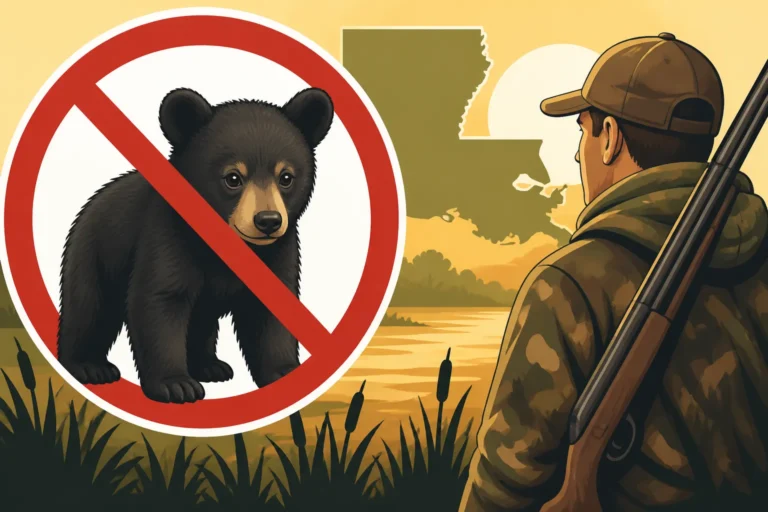
Perhaps even more critical than the weight requirement is the absolute prohibition against harvesting a sow (female bear) with cubs. This is not just an ethical guideline; it is a strict legal mandate with severe penalties for violations. The future of the Louisiana black bear population hinges on the reproductive success of its sows, and removing a mother bear can have devastating impacts on her dependent offspring, as young cubs are not yet capable of surviving on their own.
Identifying a sow with cubs requires extreme vigilance. Cubs can sometimes be hidden by vegetation, following their mother closely, or even lagging some distance behind. A sow might act defensively, or show signs of lactation if seen clearly. Hunters are advised to observe bears for extended periods before taking a shot, scanning the area thoroughly for any sign of cubs. Again, the mandatory course will emphasize judging a legal bear versus a cub, focusing on behavior and presence of other bears. If you see a bear that appears to be a sow, always assume there are cubs nearby, even if you can't spot them immediately. The responsibility falls entirely on the hunter to ensure the bear is solitary and does not have dependent offspring. It's a moment where patience and restraint are paramount, reinforcing the deeply ethical nature of bear hunting.
Permitted Hunting Methods and Weapons
Louisiana's bear season, while a significant achievement, is still managed with extreme caution. This extends to the methods and weaponry permitted for harvest, designed to ensure a fair chase, minimize suffering, and maintain ethical standards. It’s not a free-for-all; specific rules dictate how you can pursue and take a bear.
Legal Weapons:
For black bears in Louisiana, hunters generally have options including:
- Archery Equipment: This includes traditional bows, compound bows, and crossbows. Minimum draw weights and specific arrow/broadhead requirements usually apply to ensure lethality for a large animal.
- Firearms: Centerfire rifles of at least .270 caliber, muzzleloading rifles of at least .44 caliber, and shotguns 10 gauge or smaller using slugs are typically permitted. It's crucial to consult the most current LDWF regulations for exact specifications on bullet types and minimum energy requirements. Using a powerful enough cartridge, such as a .30-06 or .300 Win Mag, is highly recommended for bear.
- Handguns: Certain centerfire handguns of specific calibers are also usually allowed, but these often have stricter minimum energy and bullet specifications due to the challenge of humane harvest with shorter barrels.
Prohibited Methods:
Louisiana regulations explicitly prohibit certain methods for bear hunting to ensure fair chase and safety:
- Baiting: You cannot use bait to attract bears for hunting purposes. This differs significantly from hog hunting, where building and freshening a hog bait site is common.
- Dogs: The use of dogs for hunting bears is strictly prohibited. This is another major difference from how deer drives on Louisiana public land are sometimes conducted.
- Motorized Vehicles: Shooting from or harassing bears with motorized vehicles is illegal.
- Artificial Lights: Using artificial lights (spotlighting) to locate or shoot bears is forbidden. This is different from night hunting hogs with lights on private land.
Hunters must be thoroughly familiar with the current year's hunting digest or the LDWF website to verify all legal weapon types and methods. Failure to adhere to these rules is a serious offense, underscoring the importance of preparation and compliance.
Immediate Post-Harvest Responsibilities
Okay, you've successfully harvested a legal bear. Congratulations! But the hunt isn't truly over. In fact, a critical set of responsibilities kicks in the moment your bear is down. These steps are vital for legal compliance, data collection, and ensuring your hard-earned meat is properly cared for.
Tagging, Reporting, and Biological Sampling
The instant you confirm your bear is down and you've approached it safely, the clock starts ticking for a few critical steps. First, you must immediately attach your bear tag to the carcass. This tag, issued as part of your lottery permit, identifies your harvest and prevents any confusion. Don't delay this step; it's a legal requirement and your proof of a legal kill.
Next comes the reporting. Every legally harvested bear in Louisiana must be reported to the LDWF within a specific timeframe, usually within 24 hours. This can often be done through a dedicated phone line, online portal, or sometimes even the official LDWF app, similar to how you would report a deer through Louisiana's app. The LDWF will then instruct you on where and when to bring the entire bear carcass for mandatory biological sampling. This is not optional; it's a crucial part of the state's bear management program. Biologists will collect data such as weight verification (to confirm the 75-pound minimum), sex determination, tooth samples for aging, and possibly tissue samples for DNA analysis. This information is invaluable for monitoring the health, age structure, and population trends of Louisiana's three bear subpopulations. Failure to report your harvest or present the carcass for sampling is a serious violation.
Proper Field Care and Carcass Handling
Successfully harvesting a bear is one thing, but getting that meat from the field to your freezer in prime condition, especially in Louisiana's often warm climate, is another challenge entirely. Bear meat, when properly handled, is delicious, but like any game, it requires careful attention to detail immediately after the kill.
First, you'll want to field dress the bear as quickly and cleanly as possible. This involves removing the internal organs to allow the carcass to cool down rapidly. Given the size of a bear, this is a significant undertaking, and it's highly recommended to have assistance or be prepared for strenuous work. In warm-weather sitting strategy in Louisiana, rapid cooling is paramount to prevent spoilage. If you're hunting in a remote area or deep in a basin, consider bringing sturdy game bags, ropes, and possibly a cart or sled for extraction. The sheer weight of a bear, sometimes hundreds of pounds, means dragging a deer out of a swamp pales in comparison.
Once field dressed, getting the bear to a cooler location or ideally, to a professional processor or your butchering area as soon as possible is key. If you have a long haul, packing the chest cavity with ice can help. When handling a bear after the shot, remember to wear gloves and practice good hygiene. The meat should be skinned and butchered quickly. Bear fat can be rendered, and the meat can be cut into steaks, roasts, or ground for sausages. Given the potential for diseases like trichinosis, all bear meat should be cooked thoroughly to an internal temperature of at least 160°F (71°C).
Table: Louisiana Black Bear Harvest Quick Reference
| Requirement | Detail | Purpose |
|---|---|---|
| License | Valid Louisiana hunting license + Bear Lottery Tag | Regulates hunter numbers, supports conservation |
| Minimum Weight | At least 75 pounds (live weight) | Protects juvenile bears, ensures sustainable harvest |
| Sows with Cubs | Strictly Prohibited to harvest | Protects breeding population, ensures cub survival |
| Reporting | Within 24 hours to LDWF | Data collection, population monitoring |
| Sampling | Mandatory presentation of entire carcass to LDWF | Biological data collection (age, sex, health) |
| Weapons | Specific calibers/types for rifles, shotguns, handguns; archery equipment | Ensures humane, ethical harvest |
| Prohibited | Baiting, dogs, motorized vehicles, artificial lights | Fair chase, ethical hunting standards |
| Education | Mandatory bear hunter education course required upon drawing a tag | Ensures informed, responsible hunters |
Ethical Hunting and Common Challenges
Bear hunting in Louisiana is as much about ethics and responsibility as it is about adherence to the rules. The unique status of the Louisiana black bear means hunters operate under a higher level of scrutiny and with a greater responsibility to the resource and the public's perception of hunting.
The Importance of Bear Identification
We've touched on it, but it bears repeating: accurate bear identification is paramount. It’s not just about distinguishing a bear from another animal; it’s about making sure it’s a legal bear. The challenge is real. In the dense cover of Louisiana's bottomland hardwoods or the cypress-tupelo swamps, bears can be difficult to observe clearly. They might be partially obscured, moving quickly, or seen in the fleeting moments of dawn or dusk when light is poor. This can lead to misjudging size or failing to spot accompanying cubs.
This is why the LDWF's emphasis on hunter education, including visual aids and discussions on judging a legal bear versus a cub, is so critical. Experienced hunters often rely on multiple cues: the presence or absence of other bears (especially smaller ones), the bear's gait (a cub often has a more bouncy, less deliberate walk), body proportions (a 75-pound bear will look solid, not "leggy"), and even ear size relative to the head. When in doubt, let it walk. There’s no trophy worth violating the law or jeopardizing the future of the bear population. Hunters often spend years applying for the Louisiana bear lottery, so the last thing they want is to make a mistake in the field.
Navigating Public Versus Private Land for Bear
Hunting access for Louisiana black bears is primarily determined by where the lottery tags are allocated, which usually correspond to specific management areas where bear populations are healthy enough to support a harvest. While the general bear season dates apply, the location of your hunt will depend entirely on the zone specified on your tag. This means hunters won't simply be out scouting Louisiana public land before season and stumbling upon a bear; they will have a designated area.
Many of the designated bear hunting zones encompass significant portions of public lands, such as certain Wildlife Management Areas (WMAs) or National Wildlife Refuges, particularly in the Tensas and Atchafalaya Basins. For example, parts of Richard K. Yancey Wildlife Management Area or Tensas River National Wildlife Refuge may be included in the designated lottery hunt zones. Even on private lands within these zones, specific regulations apply, and of course, landowner permission is always required. Unlike general hunting where you might be knocking on doors in North Louisiana farm country for deer, bear hunting is far more controlled. It's not about finding just any good spot, but rather utilizing the specific area assigned by your lottery tag. Hunters should confirm exactly what type of land their tag permits them to hunt on and strictly adhere to those boundaries and any additional rules specific to that land type, which a good mapping tool like GoHunt can assist with.
Preparation and Safety in Bear Country
Hunting bears, regardless of their size, demands a higher level of preparedness and safety awareness than most other big game pursuits in Louisiana. You're entering the territory of a large, powerful wild animal, and while black bears are generally shy, understanding their behavior and being equipped for the environment is non-negotiable.
Essential Gear for a Louisiana Bear Hunt
Preparing for a Louisiana bear hunt involves more than just bringing your chosen legal firearm or archery equipment. The unique habitats and potential challenges mean you need a comprehensive gear list to ensure safety, comfort, and success.
- Navigation Tools: Given that many bear zones are in expansive, often remote areas like the Atchafalaya Basin, reliable navigation is critical. A GPS unit, a detailed paper map, and a compass are essential. Digital mapping apps like GoHunt can be invaluable for finding Louisiana property lines and understanding public land boundaries, even in areas with spotty cell service if you download maps beforehand.
- First-Aid Kit: A robust first-aid kit, capable of handling minor injuries, cuts, or sprains, is a must. Consider advanced items for trauma if you're deep in the backwoods.
- Communication: A fully charged cell phone (though service can be unreliable in remote areas), and potentially a satellite messenger or two-way radio, are vital for emergencies.
- Processing Gear: As discussed, field dressing a bear is a major task. Bring sharp knives, a bone saw, game bags, and enough rope or straps to assist with dragging a deer out of a swamp, let alone a bear. A portable scale to confirm the 75-pound minimum post-harvest could be beneficial if you're concerned.
- Water and Food: Carry ample water, especially if hunting in warm weather, and high-energy snacks.
- Protection: While black bear attacks are rare, carrying bear spray, knowing how to use it, and keeping it accessible can offer peace of mind. A large caliber sidearm, if legally carried and you're proficient with it, can also be a last resort.
- Weather Appropriate Clothing: Louisiana weather can be unpredictable. Be prepared for heat, humidity, rain, and sudden cold fronts. Layering is always a good strategy.
Having the right gear isn't just about comfort; it's about preparedness for the unexpected and ensuring you can complete your hunt safely and legally.
Understanding Bear Behavior and Safety Protocols
Black bears, while not typically aggressive, are wild animals that deserve respect and caution. Understanding their behavior is key to minimizing risks and ensuring a safe hunt. Bears are primarily driven by food, and they are most active during dawn and dusk, mirroring prime hunting times. They have an incredible sense of smell and good hearing, but their eyesight is not as sharp.
Safety Protocols to Keep in Mind:
- Make Noise: When moving through dense cover, especially areas with limited visibility, make noise to avoid surprising a bear. Most conflicts arise from unexpected encounters.
- Recognize Warning Signs: A bear might stand on its hind legs to get a better view or sniff the air. Snapping jaws, huffing, or pawing the ground are signs of agitation. Understand these signals and be prepared to slowly back away, speaking calmly.
- Never Approach a Bear or Cubs: This should be obvious, but never attempt to approach or feed a bear. If you encounter a sow with cubs, give them a wide berth. Even if they appear abandoned, leave them alone.
- Secure Food and Attractants: If you're camping in bear country, keep all food, trash, and scented items in bear-resistant containers or hung from a tree. This prevents habituating bears to human food sources, which can lead to nuisance behavior.
- After the Shot: Once you've shot a bear, wait a significant amount of time (at least 30-60 minutes for a good shot, longer for a questionable one) before approaching, especially if it ran. A wounded bear can be extremely dangerous. Approach cautiously, from an elevated position if possible, and with your weapon ready for a follow-up shot. Tracking a deer through Louisiana leaf litter is one thing, but tracking a wounded bear is another entirely.
Being prepared for potential encounters, understanding the nuances of bear behavior, and adhering to strict safety protocols are as much a part of the hunt as calling the Louisiana gobbler off the roost or working a bayou bank for late-season deer. It ensures a safe experience for both you and the wildlife.
Disclaimer
Always consult the most current Louisiana Department of Wildlife and Fisheries (LDWF) regulations and official hunting digests before planning or undertaking any hunting activity. Regulations can change annually, and it is the hunter's sole responsibility to ensure full compliance with all state and federal laws.