How Wild Hogs Spread Across Louisiana
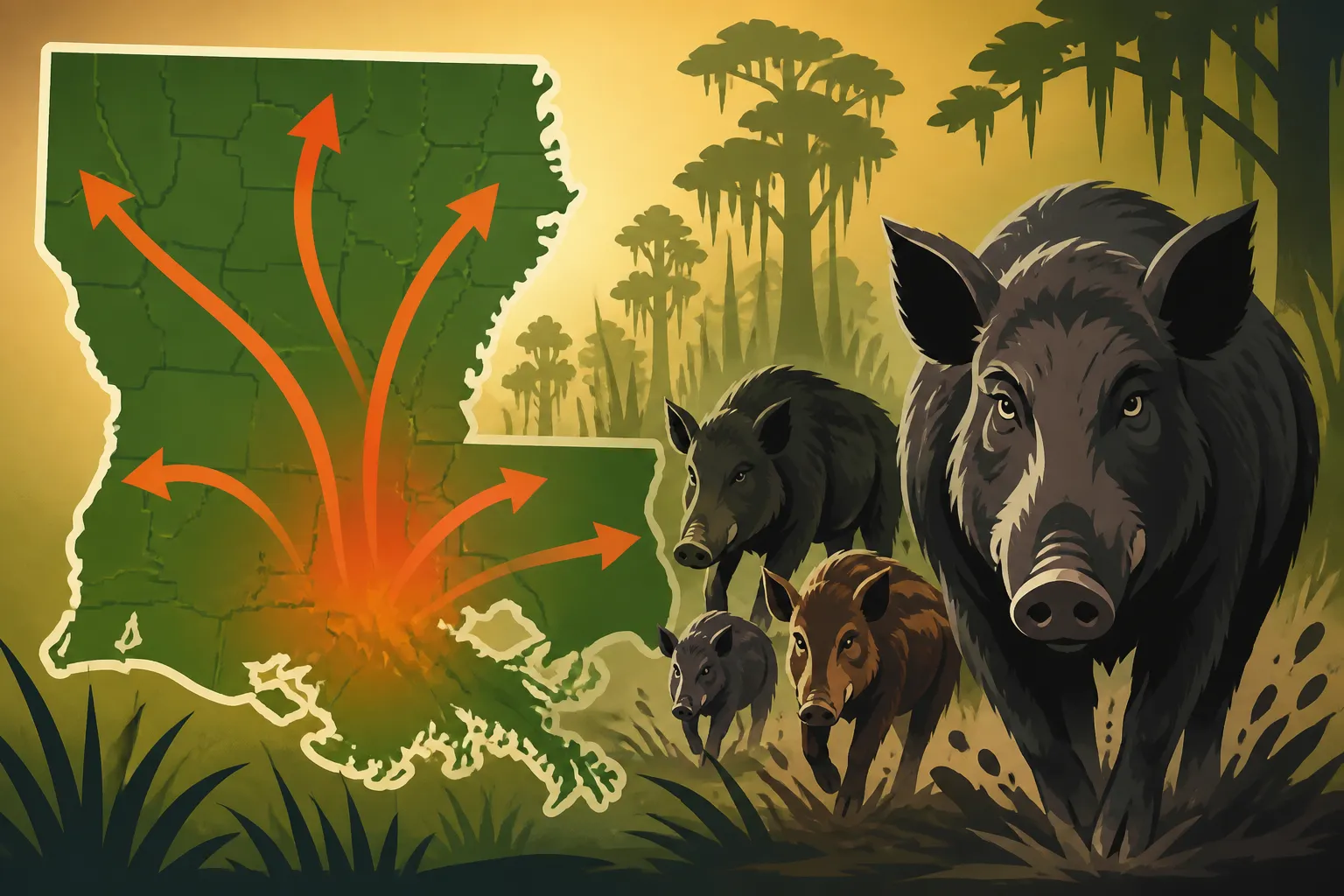
It's no secret that wild hogs are a constant, frustrating presence across Louisiana. If you've spent any time in our woods, fields, or even near suburban fringes, you've likely seen their destructive rooting, smelled their tell-tale musk, or even caught a glimpse of a sounder disappearing into the thicket. This guide dives deep into how these incredibly resilient animals managed to spread so pervasively across our beloved Sportsman's Paradise, exploring their history, biology, and the human factors that have contributed to their overwhelming numbers.
The Feral Hog Problem in Louisiana: A Relentless Expansion
For hunters, farmers, and even just folks enjoying our beautiful natural areas, the wild hog situation in Louisiana can feel like a losing battle. Their impact is undeniable, from torn-up food plots to decimated agricultural fields and damaged natural habitats. It's a problem that seems to grow exponentially, leaving many wondering how we got to this point.
The Overwhelming Presence and Ecological Damage
Walk through a bottomland hardwood forest after a sounder of hogs has passed, and you’ll see immediate evidence of their destruction. The ground looks like it’s been rototilled, with deep furrows and overturned soil where they’ve been rooting for tubers, grubs, and anything else edible. This isn't just an aesthetic issue; this constant rooting disrupts delicate ecosystems, leading to significant soil erosion, especially near waterways. It can destroy the understory vegetation that native wildlife, like deer and turkey, depend on for food and cover. They outcompete native species for acorns, vital mast crops that deer, squirrels, and bears need to survive the winter. Their presence fundamentally alters the landscape, making it less hospitable for the animals we cherish.
Beyond the visible damage, feral hogs are also significant predators, especially on fawns, turkey nests, and ground-nesting birds. A sow with piglets is particularly opportunistic, and if they stumble upon a vulnerable fawn hiding in the grass, it becomes an easy meal. This predation directly impacts the recruitment rates of our deer and turkey populations, adding another layer of challenge for wildlife management. Farmers, of course, bear the brunt of the economic impact, with millions of dollars in crop damage each year, particularly to corn, soybeans, and sugarcane, which are highly attractive food sources for these omnivorous animals.
The Sheer Numbers and Why They Seem Invincible
It often feels like no matter how many hogs you take out, two more appear in their place. This isn't just a feeling; it's a biological reality. While precise numbers are hard to pin down given their elusive nature and widespread distribution, estimates consistently place the Louisiana feral hog population in the hundreds of thousands, if not more, and it's certainly among the highest in the nation. This incredible density means that even with dedicated hunting and trapping efforts, the population can rebound with alarming speed.
The resilience of these animals contributes to their seeming invincibility. They are incredibly tough creatures, capable of surviving in diverse environments and adapting quickly to pressure. A sounder that's been heavily hunted will quickly become almost entirely nocturnal, moving only under the cover of darkness. They learn to avoid traps, often becoming "trap-shy" after a few close calls. This intelligent evasion, combined with their sheer reproductive output, makes sustained population control an immense challenge, often leaving hunters and landowners feeling overwhelmed by the sheer scale of the problem.
Historical Roots: How Hogs First Arrived and Escaped
To truly understand how wild hogs spread across Louisiana, we have to rewind the clock quite a bit. Their story isn't a recent phenomenon; it's one deeply intertwined with human settlement and agricultural practices dating back centuries.
Early Introductions and Colonial Era Dispersal
The initial introduction of domestic swine to North America began with European explorers, most notably Hernando de Soto, who brought hogs with him to the southeastern United States in the 1500s as a readily available food source. These animals, quite often, were allowed to free-range or simply escaped captivity, quickly adapting to the abundant natural resources of the landscape. Louisiana's rich bottomlands and swamps provided an ideal environment for these early feral populations to establish themselves, offering dense cover, water, and plenty of forage.
As French and Spanish colonists settled Louisiana, they, too, brought their domestic hogs. It was a common practice to let hogs roam freely, foraging for themselves until it was time to round them up for slaughter. In the vast, undeveloped wilderness of colonial Louisiana, many of these animals inevitably slipped through the cracks, disappearing into the swamps and forests to become truly wild. Over generations, these escaped domestic hogs underwent a process of feralization, shedding their domestic traits and developing the ruggedness, aggression, and thick coats we associate with wild hogs today. They were the foundation of what would become a widespread issue.
The Rise of Russian Boar Introductions
While these feral domestic hogs were already a presence, the genetic makeup of Louisiana's wild hog population took a significant turn in the early to mid-20th century with the intentional introduction of European wild boar, often referred to as "Russian boars." These animals were imported primarily for sport hunting, usually by private landowners or hunting clubs looking to establish exotic game populations. These true wild boars are inherently more aggressive, faster, and possess the distinctive tusks and bristly coats we often picture when we think of a "boar."
Inevitably, many of these European wild boars escaped their enclosures, either through accidental breaches or, in some cases, intentional releases. Once free, they quickly interbred with the existing feral hog populations that had descended from domestic stock. This genetic mixing created the hybrid "super pig" that is so prevalent today – an animal that combines the high reproductive rates of domestic hogs with the aggression, intelligence, and survival instincts of the European wild boar. This hybridization made the problem infinitely more complex and difficult to manage, producing a hardier, more destructive, and incredibly prolific animal.
The Biological Imperative: Why Hogs Are So Good at Spreading
Understanding the historical context is crucial, but the sheer biological prowess of wild hogs is arguably the most significant factor in their relentless spread. These animals are, quite simply, perfectly engineered for survival and population explosion.
Rapid Reproduction and Large Litter Sizes
This is arguably the number one reason why feral hog populations are so difficult to control. Female hogs, or sows, can reach sexual maturity at an astonishingly young age – sometimes as early as six months old, though typically around 8-10 months. And it's not just early maturity; they are incredibly prolific. A sow can produce multiple litters per year, often 2-3 litters annually, especially if food resources are abundant. Each litter can range from 4 to 12 piglets, with an average often landing in the 6-8 range.
Think about that for a moment: one sow, in optimal conditions, could potentially contribute dozens of offspring to the population in a single year. Even if a significant percentage of those piglets don't survive to adulthood, the sheer volume ensures that the population can quickly replace itself and even grow, even under heavy hunting pressure. Wildlife biologists often refer to a phenomenon called "compensatory reproduction," where populations under stress or reduced numbers will increase their reproductive efforts to compensate, making eradication efforts incredibly challenging. This is why even substantial culling efforts often feel like they're barely making a dent; the hogs are simply out-reproducing us.
Incredible Adaptability and Survival Skills
Beyond their reproductive capacity, wild hogs are generalist survivors, capable of thriving in an astonishing array of environments. Their dietary flexibility is unparalleled; they are true omnivores. They'll eat acorns, roots, tubers, mushrooms, insects, snakes, eggs, fawns, carrion, and of course, any agricultural crop they can get their snouts into. This means they are not limited by specific food sources and can adapt to whatever is available in a given area, from the deepest swamps to the driest pine forests. This dietary flexibility is a major reason why Feral Hogs Across Louisiana can be found in almost every parish.
Physically, they are incredibly tough animals. Their thick, bristly hides offer protection from thorns and minor injuries. They are surprisingly fast, capable of short bursts of speed, and are excellent swimmers, easily crossing rivers and bayous to expand their range. Their intelligence is also a huge factor; hogs quickly learn to associate human presence with danger. After just a few encounters with hunters or traps, they become incredibly wary, developing nocturnal habits and becoming expert at detecting and avoiding threats. This combination of high intelligence, physical hardiness, and an anything-goes diet makes them one of the most successful invasive species on the planet.
Modern Pathways: How Human Activity Fuels the Spread
While historical introductions and biological traits set the stage, modern human actions, both intentional and unintentional, continue to play a significant role in the ongoing spread and proliferation of wild hogs across Louisiana.
Illicit Trapping, Transport, and Release
It's a frustrating reality that despite their universally recognized destructive nature, some individuals still engage in the illegal trapping, transporting, and releasing of feral hogs. This practice is often driven by a desire to establish new hunting populations in areas where hogs may be scarce, or simply for the thrill of hunting an animal deemed "challenging." However, these actions are incredibly irresponsible and directly contribute to the expansion of hog populations into previously uninfested or lightly infested areas. This creates new problems for landowners, farmers, and wildlife managers, undermining years of control efforts.
The Louisiana Department of Wildlife and Fisheries (LDWF) has clear regulations against this activity, recognizing the immense damage these animals cause. Yet, the black market for live hogs, often for release onto private hunting lands or into fighting pits, persists. This human-assisted dispersal is one of the most challenging aspects of controlling the hog population because it bypasses natural dispersal barriers like large rivers or expansive open areas. A truckload of hogs released into a new region can quickly establish a breeding population, starting a whole new cycle of destruction. Understanding Louisiana Feral Hog Regulations is key to avoiding these pitfalls and reporting such activities.
Hunting Practices and Habitat Alterations
While hunting is our primary tool for managing wild hog populations, certain hunting practices can inadvertently contribute to their spread. Heavy, uncoordinated pressure in a specific area can cause hogs to simply move to adjacent, less disturbed properties. Hogs are smart; if they feel too much heat in one spot, they'll relocate to find sanctuary, potentially pushing into new areas they hadn't previously frequented. This highlights the need for a coordinated, sustained effort over broad landscapes.
Furthermore, human alterations to the landscape, particularly through agriculture and development, create ideal conditions for hogs. Large-scale farming, with its vast fields of corn, soybeans, or peanuts, provides an irresistible buffet for hogs, drawing them in and allowing them to thrive. These crops offer not just food but also dense cover for bedding and farrowing, particularly for sows with piglets. As suburban sprawl encroaches on wild lands, hogs are often pushed into new territories, sometimes even closer to human habitation, seeking refuge and food sources in green spaces and wooded lots. Even practices meant to help deer, like planting large food plots, can inadvertently become prime hog attractants if not properly managed.
Understanding the Landscape: Where Hogs Thrive and Move
Louisiana's diverse ecosystems offer a smorgasbord of habitats, and unfortunately, feral hogs have proven themselves adept at exploiting nearly all of them. From the dense, watery swamps to the open agricultural fields, they find ways to not only survive but to multiply.
Bottomlands, Swamps, and Marshes: Hog Havens
When you think of prime Louisiana hog habitat, the dense, watery bottomland hardwoods, vast swamps, and coastal marshes immediately come to mind. These areas are veritable hog havens for several crucial reasons. Firstly, they offer incredibly dense cover – thick palmetto patches, briar thickets, and cypress-tupelo stands – providing perfect hiding spots from both predators and hunters. Navigating these environments is tough for humans, giving hogs a significant advantage. Secondly, water is abundant, essential for drinking, cooling off, and wallowing to keep parasites at bay.
Perhaps most importantly, these areas are rich in diverse food sources. The annual mast crops of acorns from various oak species, along with roots, tubers, and invertebrates found in the soft, moist soil, provide a consistent food supply. Places like the Atchafalaya Basin Swamp Deer hunting grounds, the Pearl River Wildlife Management Area, and the Tensas River Basin are notorious strongholds for wild hogs. The sheer scale and inaccessibility of these wetland ecosystems make comprehensive hog control exceptionally difficult, allowing populations to flourish largely undisturbed in many pockets.
Agricultural Lands and Piney Woods: Expanding Frontiers
While swamps and bottomlands are their traditional strongholds, wild hogs have aggressively expanded into other habitat types, particularly agricultural lands and even the piney uplands of North Louisiana. Farmers know this all too well; a sounder can devastate a cornfield or a rice paddy overnight. These open, cultivated areas, while lacking the dense cover of a swamp, offer an incredibly concentrated and calorie-rich food source. Hogs adapt to this by becoming primarily nocturnal, venturing out from nearby wooded edges or drainage ditches under the cover of darkness to feast.
Even the seemingly less hospitable piney woods of central and north Louisiana have seen a significant increase in hog activity. While not as rich in diverse forage as the bottomlands, these areas still offer a mix of pine mast, scattered oak hammocks, and underground roots. Hogs are incredibly opportunistic and will travel significant distances to find food and water. This adaptability means that very few corners of Louisiana are truly free from their destructive presence, and new infestations are continually popping up in areas once thought immune.
The Unending Battle: Managing the Spread and Mitigating Impact
Given the widespread nature and incredible resilience of feral hogs, the question naturally arises: what can be done? It's a complex, ongoing battle that requires a multi-faceted approach involving state agencies, landowners, and, critically, hunters.
LDWF Strategies and Hunter Participation
The Louisiana Department of Wildlife and Fisheries (LDWF) classifies feral hogs as an exotic, invasive species. This designation is crucial because it means there are generally no closed seasons, bag limits, or size restrictions on private land, recognizing the urgent need for their control. Hunters are, by far, the most important tool in this management effort. LDWF actively encourages year-round hunting, trapping, and even night hunting with lights on private land, provided you have landowner permission and adhere to local ordinances. This continuous pressure is vital because of their rapid reproductive rate.
Beyond traditional hunting, various methods are employed to try and reduce their numbers. Trapping is highly effective for removing entire sounders, especially when utilizing large corral traps or smart traps that can be monitored remotely. Dog hunting for hogs, a long-standing tradition in some parts of Louisiana, is another effective method, particularly for accessing dense cover where still-hunting is difficult. The more informed hunters are about these methods, like proper Shot Placement on a Feral Hog or effective Trapping Louisiana Feral Hogs techniques, the more impactful their efforts can be. Every hog removed is a small victory in a very long war.
Integrated Management and Future Outlook
Effectively managing the spread of wild hogs requires an integrated approach that goes beyond just individual hunting efforts. It demands cooperation between landowners, hunters, and state agencies like the LDWF. This often involves strategic, coordinated trapping programs over large properties or across multiple neighboring properties to maximize impact. Community-wide efforts can prevent hogs from simply relocating from one property to another.
Technology also plays an increasingly vital role. Thermal imaging has revolutionized night hunting, allowing hunters to detect hogs in complete darkness, significantly increasing success rates. Tools from platforms like GoHunt, which often showcase various thermal imaging units and provide insights into effective hog hunting gear, can be invaluable resources for hunters looking to maximize their efforts. Drones equipped with thermal cameras can be used for scouting and locating sounders in vast, inaccessible terrain. While complete eradication of feral hogs in Louisiana is likely an impossible dream, a sustained, integrated management strategy combining relentless hunting, strategic trapping, and modern technology offers the best hope for mitigating their destructive impact and preventing further spread. The future of Hunting Louisiana's Year-Round Feral Hogs will certainly rely on continued innovation and dedication from everyone involved.
| Factor Contributing to Spread | Description | Impact on Louisiana Landscape |
|---|---|---|
| Reproductive Rate | Sows can breed as young as 6-8 months, producing 2-3 litters per year with 4-12 piglets each. | Rapid population growth, quick recovery from control efforts, constant pressure on natural resources and agricultural crops. |
| Dietary Adaptability | Omnivorous diet includes crops, roots, insects, small animals, carrion, and native forage. | Allows hogs to thrive in almost any habitat, from swamps to pine forests to extensive agricultural fields, making them ubiquitous. |
| Physical Hardiness | Tough hides, strong rooting capabilities, good swimmers, resilient to various weather. | Difficult to deter or contain, capable of long-distance travel and exploiting diverse terrain, evading hunters. |
| Behavioral Intelligence | Social sounders, learn quickly to avoid traps and hunters, primarily nocturnal in pressured areas. | Evade control measures, adapt to hunting pressure, and sustain populations despite significant efforts to reduce numbers. |
| Human Assisted Transport | Illegal movement and release for hunting, introducing hogs to previously uninfested areas. | Accelerates spread into new territories, creates new problem areas, and undermines local and state control strategies. |
Disclaimer
The information provided in this guide is for general informational purposes only and does not constitute legal advice. Hunting regulations, seasons, and licensing requirements can change, and it is the responsibility of the individual hunter to stay informed and comply with all current Louisiana Department of Wildlife and Fisheries (LDWF) rules and local ordinances. Always consult the official LDWF website and current regulations handbook before engaging in any hunting activities.