Shot Placement on a Feral Hog
Hunting feral hogs in Louisiana can be an exhilarating and often necessary endeavor, given their rampant population growth and the damage they cause to our precious agricultural lands and delicate ecosystems. However, these tough, wily creatures aren't like deer, and many hunters quickly learn that standard whitetail shot placement can lead to frustrating, often heartbreaking, results. This guide will meticulously walk you through the anatomy of a feral hog and pinpoint the most effective shot placements to ensure a quick, ethical harvest every time you pull the trigger or release an arrow.
Understanding Feral Hog Anatomy: More Than Just a Pig
When you're out in the Louisiana swamps or farm country, a hog might look like a plump target, but beneath that bristly hide lies a formidable anatomy that requires a different approach than what many deer hunters are accustomed to. Ignoring these differences is often why a seemingly good shot on a hog can end in a long, fruitless tracking job or, worse, a wounded animal.
The Shield and Bone Structure
One of the most significant anatomical differences in a mature feral hog, especially a boar, is the "shield." This isn't just a metaphor; it's a literal layer of thick, hardened cartilage and scar tissue that develops over the shoulders and ribcage. Formed from years of fighting and rubbing, this shield can be several inches thick and incredibly tough, designed by nature to protect them from tusks during territorial battles. When a bullet or arrow hits this shield, even from a decent caliber, it can sometimes stop or deflect the projectile before it reaches vital organs. This isn't just external; the bones themselves are denser and thicker than a deer's, particularly around the shoulder and skull. This means that a shot that would drop a deer in its tracks might only wound or deflect on a big boar. It's why aiming for the shoulder exactly as you would on a deer can be a critical mistake, as that dense bone and shield combination creates a formidable barrier.
Vital Organ Locations
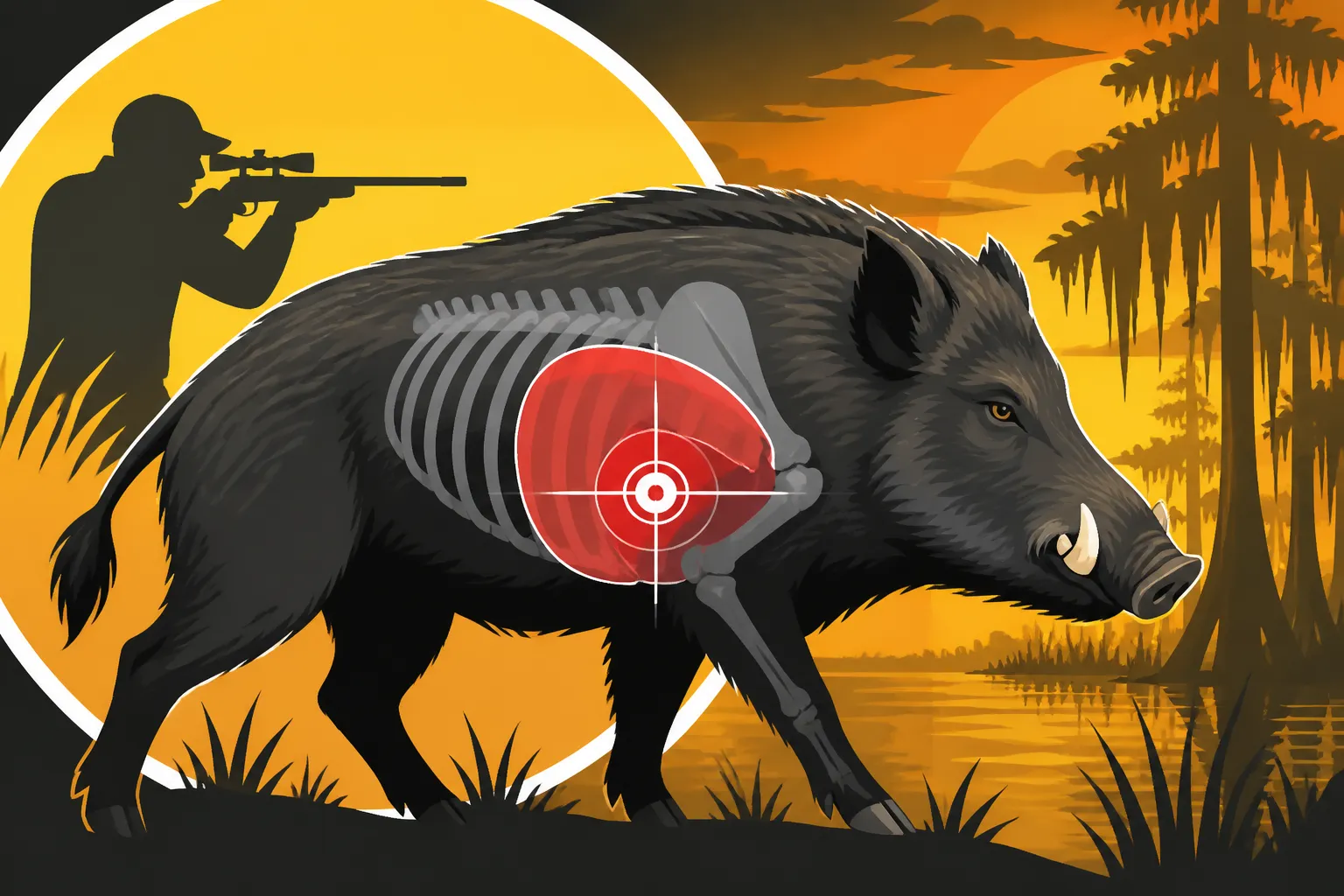
While hogs do have a heart and lungs like any other mammal, their placement relative to external landmarks is slightly different from a deer's, and often sits lower and more forward within the chest cavity. The heart, for instance, is situated further down and more centrally, tucked behind those formidable shoulders and shield. The lungs extend above and behind the heart. To complicate matters, a hog's shoulder blade and leg bone structure can obscure these vitals from certain angles, especially if the animal is quartering towards you or standing broadside but slightly angled. The brain is another vital target, but it's remarkably small for the size of the animal, often much smaller than hunters anticipate, and deeply recessed within a thick skull. A small deviation can mean a non-lethal hit or just a glancing blow that leaves the hog stunned but very much alive and extremely dangerous. Understanding this slight shift in organ placement is crucial for adjusting your aim.
Preferred Shot Placements for Feral Hogs
Given the unique anatomy of a feral hog, certain shot placements stand out as far more effective than others. These aren't just suggestions; they are time-tested methods for putting hogs down quickly and ethically, preventing needless suffering and wasted meat. Remember, these animals are tough, and you want to stack the odds in your favor.
The "Ear Hole" or Brain Shot
For many seasoned hog hunters, especially those engaged in Night Hunting Hogs With Lights on Private Land, the "ear hole" or brain shot is the gold standard for instant incapacitation. When executed correctly, this shot drops a hog immediately, like a switch being flipped. You aim for the base of the ear, or slightly behind it, where the skull meets the spine. This area is often less protected by the thick "shield" that covers the shoulders. The brain is the control center, and a direct hit here is lights out. This shot is particularly appealing when hunting with smaller calibers or when you need absolute certainty of a quick kill to prevent a wounded hog from escaping into dense cover. Many hunters swear by tools and apps like those from GoHunt that can help you visualize vital areas on different game species, aiding in precise shot placement training.
However, this shot comes with a significant caveat: the brain is a remarkably small target. If you miss by even a few inches, you risk a superficial head wound that will leave the hog in immense pain and send it fleeing, potentially creating a dangerous situation. It's a high-reward, high-risk shot, best reserved for situations where the hog is stationary, calm, and offering a clear, unobstructed view of the target area, typically at closer ranges. If you're not confident in hitting a 2-3 inch target under pressure, another shot placement might be a more ethical choice.
The "Crease" or Shoulder Shot
The traditional "crease" or shoulder shot, aimed just behind the shoulder and slightly lower than you might aim for a deer, is still a highly effective option for hogs, provided you understand its nuances. Instead of aiming directly for the center of the shoulder blade, which on a large boar might hit the shield or heavy bone, you want to target the area where the leg joins the body, just above the elbow. This trajectory aims to pass through the lower portion of the lungs and often catches the top of the heart, avoiding the densest part of the shield and thickest bone while still ensuring a vital hit. The key here is penetration. You need a bullet that can punch through some bone and tissue to reach those critical organs.
For this shot, a heavy, deeply penetrating bullet is essential. Frangible or rapidly expanding bullets designed for varmints or thin-skinned game might not perform optimally. Consider bullets designed for larger, tougher game. This shot is generally more forgiving than a brain shot in terms of target size and is a reliable choice for broadside presentations. If you're using a modern rifle, the ballistic information available through platforms like GoHunt can help you understand bullet drop and energy at various ranges, ensuring you select the right ammunition for the job.
The Quartering Away Shot
When a hog is standing with its head turned away from you, presenting its flank at an angle, the quartering away shot offers an excellent opportunity to bypass the formidable shoulder shield entirely and access the vital organs. For this shot, you want to aim slightly forward of the hog's opposite shoulder. This means if the hog is quartering away to your left, you'd aim for a spot behind the right shoulder. The projectile will travel through the ribcage, penetrating both lungs and often the heart, before potentially exiting near the off-shoulder.
This angle is particularly effective because it presents a larger target area for the vitals and minimizes the risk of hitting dense bone or the shield. It allows for deep penetration into the soft tissue of the chest cavity, causing massive internal damage. It's also an ideal shot for archers, as an arrow can often slip through the ribs more easily at this angle than attempting to punch directly through the shoulder from a broadside presentation. This shot requires a clear understanding of internal anatomy and projectile trajectory, but when done correctly, it's one of the most devastating and ethical shots you can make on a feral hog.
Shot Placements to Avoid and Why
Just as there are optimal shot placements, there are also positions that, while seemingly opportune, are fraught with peril and often lead to wounded animals and lost game. Avoiding these shots is not just about hunting success, but also about ethical responsibility. Feral hogs are incredibly resilient, and a poorly placed shot will not only cause unnecessary suffering but also make tracking difficult in Louisiana's dense swamps and thickets.
Frontal Shots
It might seem tempting to take a frontal shot when a hog is facing directly towards you, especially if you're excited. However, this is generally one of the riskiest shots you can attempt. From the front, a hog's chest cavity is protected by a heavy sternum, thick shoulder bones, and often a dense muscle structure that is incredibly tough to penetrate. The heart and lungs are deeply recessed behind this armor. A bullet or arrow might glance off bone, become lodged without reaching vitals, or simply not have enough energy to pass through the thickest parts of the animal.
While a perfectly placed shot directly down the spine from the front might sever the central nervous system, this is an extremely small target. The margin for error is minimal. More often than not, a frontal shot results in a non-lethal hit to the jaw, neck, or shoulder, leaving the hog injured and likely to escape. It's much better to wait for a broadside or quartering-away opportunity, even if it means being patient and letting the animal walk away. Remember, in Hunting Hogs Without Bait or Dogs, patience is often your most valuable tool.
Ham or Gut Shots
A shot into the ham or gut region is perhaps the most egregious error a hunter can make and should be avoided at all costs. While it might slow a hog down, it rarely results in a quick, ethical kill. A shot to the ham (hindquarters) typically only breaks bone or damages muscle, causing immense pain but no immediate threat to life. The hog will likely hobble away and suffer for a prolonged period. A gut shot is even worse. It can cause internal bleeding and infection, leading to a slow, agonizing death over hours or even days. The meat will also be compromised, often ruined by digestive fluids.
There's no ethical reason to take a ham or gut shot on a feral hog. If this is the only shot available, it's a clear signal that you should hold your fire and wait for a better opportunity. Losing a hog to a gut shot means wasted meat and unnecessary suffering, which goes against the principles of responsible hunting. If you're Running Dogs on Louisiana Feral Hogs, a wounded hog can also pose a serious threat to your hounds.
Caliber and Projectile Considerations
The right gear, particularly your choice of firearm caliber and bullet type, plays a crucial role in ensuring effective hog harvest in Louisiana. While shot placement is paramount, pairing it with appropriate ballistics dramatically increases your chances of a clean, ethical kill on these notoriously tough animals.
The Importance of Bullet Construction
For feral hogs, bullet construction is arguably more critical than for deer. As we've discussed, their thick hide, dense bones, and often present "shield" demand a projectile designed for deep penetration and controlled expansion. Lightly constructed, frangible bullets that dump all their energy quickly on impact, like those sometimes used for varmints or even smaller deer, are generally unsuitable. These bullets can fragment upon hitting the shield or shoulder bone, failing to reach the vitals or creating only superficial wounds.
Instead, opt for bullets designed for medium to large game, featuring bonded cores, heavy jackets, or solid construction. Brands like Barnes TSX, Hornady InterLock, Nosler AccuBond, and Federal Fusion are excellent examples of bullets engineered to retain their weight, penetrate deeply, and expand reliably even after encountering tough resistance. For bowhunters, fixed-blade broadheads with strong construction are often preferred for their superior penetration compared to some mechanical designs, especially on larger boars. Checking the latest ballistic data or reviews on hunter resources like GoHunt can help you pick the best bullet for your chosen caliber and hunting style.
Minimum Calibers for Hogs
While shot placement is always king, having enough power to punch through the defenses of a feral hog gives you a much-needed advantage. For centerfire rifles, a good starting point for feral hogs is typically .243 Winchester with a heavier bullet (90-100 grain), though many experienced hog hunters prefer something more robust. Calibers like .270 Winchester, .30-06 Springfield, .308 Winchester, and 6.5 Creedmoor (again, with appropriate bullet construction) are excellent choices that deliver ample energy and penetration for hogs of all sizes. Even the popular AR-15 platform can be effective with rounds like 6.5 Grendel or .450 Bushmaster, offering more punch than standard .223/5.56.
For handgun hunters, magnums like .357 Magnum, .44 Magnum, or .45 Long Colt (loaded hot) are recommended, focusing on heavier, hard-cast or bonded bullets for maximum penetration. If you're going after hogs with a shotgun, slugs are the clear choice, particularly rifled slugs or sabot slugs fired from a rifled barrel, which offer superior accuracy and energy over buckshot. While buckshot might wound, it rarely delivers a clean kill on a hog, especially at any significant range. Ultimately, choose a caliber that you can shoot accurately and pair it with a bullet designed for the task at hand. This combination will serve you well, whether you are utilizing Thermal-Assisted Hog Guide Packages or stalking hogs yourself.
Comparing Key Shot Placements
Here's a quick look at the advantages and disadvantages of the most common ethical shot placements for feral hogs:
| Shot Placement | Target Area | Pros | Cons | Best Use Scenario |
|---|---|---|---|---|
| Brain/Ear Hole | Base of ear/behind ear | Instant incapacitation, minimal meat damage. | Very small target, high risk of wounding if missed. | Stationary hog, close range, confident shooter, any caliber. |
| Crease/Shoulder | Just behind shoulder, lower | Good vital hit, more forgiving target size than brain, avoids thickest shield. | Requires good penetration, can hit bone/shield if not placed well. | Broadside hog, medium range, medium-to-large caliber. |
| Quartering Away | Forward of opposite shoulder | Bypasses shoulder shield, hits both lungs and often heart, large vital area. | Requires understanding of hog anatomy and trajectory angle. | Hog angled away, excellent for deeper penetration (archery too). |
Legalities and Further Considerations for Hog Hunting in Louisiana
Beyond shot placement, remember that hunting feral hogs in Louisiana comes with its own set of rules and best practices. While often viewed as a nuisance species with generous regulations, staying informed is key. For instance, understanding the specific Louisiana Feral Hog Regulations is vital, as rules can vary between private and public lands, and even regarding methods like Trapping Louisiana Feral Hogs.
Hogs cause extensive damage, costing Louisiana's agriculture millions annually by rooting up crops and pastures, destroying fences, and preying on newborn livestock. This widespread destruction is why strategies for Building and Freshening a Hog Bait Site are popular, allowing hunters to manage populations more effectively. Whether you're hunting with traditional methods or exploring modern approaches like those often highlighted by GoHunt for tracking and targeting, ethical shot placement is your ultimate responsibility.
Remember that even with their nuisance status, these are tough, intelligent animals. A quick, clean kill is not only humane but also reduces the risk of having to track a dangerous, wounded animal through challenging terrain, which can be particularly tough after the shot when you need to safely retrieve the animal to prevent Crop Damage Hogs Cause in Louisiana.
Disclaimer
The information provided in this guide is for educational purposes only and is not a substitute for professional hunting instruction or local regulations. Always consult the most current Louisiana Department of Wildlife and Fisheries (LDWF) regulations before heading into the field. Safety should always be your top priority when hunting.