Pass-Shooting Doves Over a Water Hole
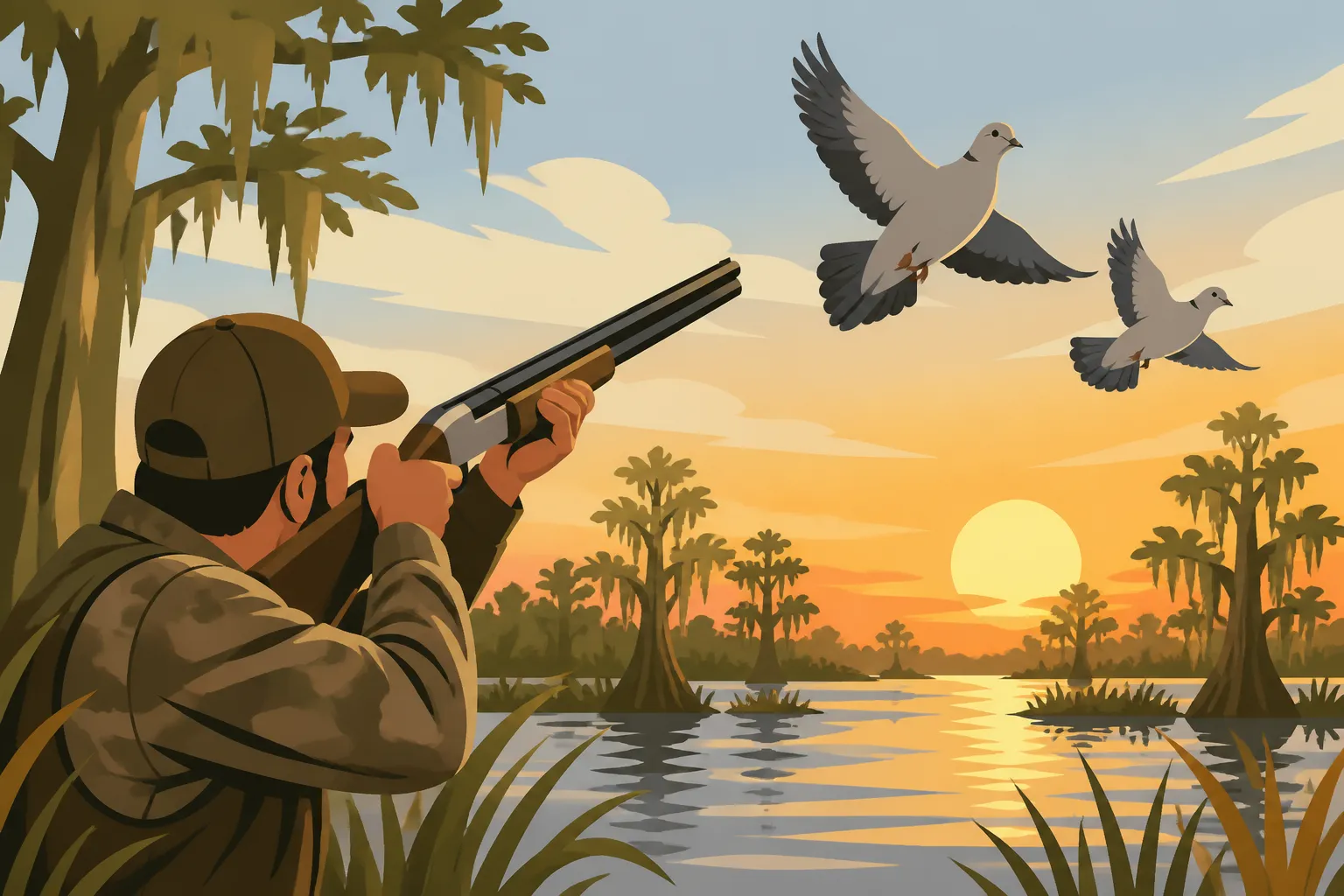
There’s nothing quite like a dove hunt in Louisiana. The quick, erratic flight of these birds can be incredibly challenging, and sometimes, those wide-open fields that seemed so promising on opening day start to dry up or get picked clean. When that happens, or when the weather heats up in the afternoon, doves become incredibly focused on one thing: water. Knowing how to effectively "pass-shoot" these fast-moving targets as they zip into a water hole can make all the difference between a frustrating day and a limit in the bag. This guide will walk you through everything you need to know to make those water hole hunts a success.
Understanding Dove Movement to Water in Louisiana
Doves are creatures of habit, and their need for water is a daily, non-negotiable part of their routine. If you can tap into this fundamental requirement, you're well on your way to consistent success.
Why Water is a Magnet for Doves Especially Late Season
Doves, like most birds, need to hydrate regularly. In the scorching heat and humidity of a Louisiana fall, this need becomes even more pronounced. They typically feed hard in the mornings and late afternoons, but sometime in the mid-to-late afternoon, they'll make a beeline for a water source. Think about it: after stuffing themselves with sunflower seeds or waste grain, they get thirsty. While early season hunts often focus on food sources, as the season progresses, fields get hammered by hunters and the birds get wise. They'll still visit food, of course, but their trips to water become less predictable for hunters and more of a guaranteed stop, especially if other sources are scarce. A hot, dry spell can turn an otherwise mediocre water hole into a dove hunting goldmine. This natural behavior is why a well-positioned water source can be a far more consistent draw than a picked-over field.
Reading the Landscape for Prime Water Holes
Not all water is created equal in the eyes of a dove. They aren't going to dive into a cypress-tupelo swamp or land right next to dense cane thickets. Doves prefer shallow water with bare, open edges where they can land safely, take a quick drink, and keep an eye out for predators. Ideal spots include cattle tanks, irrigation ditches with low banks, shallow edges of farm ponds, or even large, temporary puddles left after a heavy rain. The key is that open, exposed bank. They don't want to fight through tall grass or heavy brush to get a drink. When you're scouting, look for those subtle signs: dove feathers on the ground, little footprints in the mud around the edge, or even droppings. These are all indicators that birds are already using the spot. Tools like GoHunt can be incredibly useful here, allowing you to use aerial and topographic maps to identify potential water sources on private or public land and zoom in to examine the surrounding cover for those ideal bare banks. You're looking for that perfect balance of open access for the doves and just enough cover for you to hide.
Timing Your Hunt for Peak Water Hole Activity
Timing is crucial when it comes to water hole doves. While birds might hit water at various times throughout the day, the late afternoon is almost always prime time. As the sun starts to drop and the heat of the day begins to lessen slightly, doves will start their journey from feeding fields or roosting areas toward water. Often, this flight will intensify in the last two to three hours before sunset. On particularly hot days, you might even see some activity earlier in the afternoon. However, too much recent rain can spread the birds out. If every ditch and low spot is holding water, their need to congregate at one specific spot diminishes. Conversely, during a long dry spell, the fewer available water sources there are, the more concentrated the dove traffic will be at the remaining ones. Understanding these factors and combining them with observation will help you determine the absolute best window for your hunt.
Strategic Setup for Pass-Shooting Success
Once you’ve identified your water hole, your setup is critical. Doves have hawk-like vision, and even the slightest glint of sunlight off your shotgun or an unexpected movement can send them veering off course.
Choosing Your Hide and Blind Location
Concealment is paramount. For pass-shooting, you're not usually trying to get birds to land in front of you; you're shooting them as they fly by. This means you need to be out of sight from their typical flight paths. Look for natural cover first: a clump of briars, a brushy fencerow, the base of a large tree, or even a drainage ditch you can sit down in. If natural cover is sparse, a portable ground blind can be a lifesaver. When considering your position, always think about the sun. You want the sun at your back or to the side, never directly in your face, which can blind you and silhouette you against the sky. Conversely, a dove flying directly into the sun will struggle to see you. You'll also want to anticipate the most likely flight paths based on the surrounding landscape – where are the birds coming from? Where are they going? Position yourself to intercept them with comfortable, safe shooting lanes. Remember, safety first! When hunting public land, choosing a spot away from heavily trafficked areas is wise, and using a good ground blind like those discussed in Using a Ground Blind on Louisiana Public Land can provide excellent concealment.
Decoy Strategies Around Water
Decoys aren't always strictly necessary for pass-shooting, but they can be a significant advantage. Even if you're not trying to get birds to land, a few static dove decoys placed on the bare ground around the water's edge can provide visual interest and draw the attention of high-flying birds, encouraging them to dip lower or alter their flight path just enough to bring them into range. A spinning-wing decoy, like a Mojo, takes this a step further. Placed strategically near your hide, the flashing wings can be seen from a great distance, acting as a beacon. The trick with Mojos around water is not necessarily to make birds commit to landing right next to it, but to use it as a focal point to draw them closer to your shooting window. Position it so birds will pass within range on their approach. A simple spread of half a dozen static decoys with one or two spinning-wing decoys can be incredibly effective, especially if you've already put in the work Setting Up a Dove Field Before Opening Day or similar areas.
Shotgun and Ammunition Choices for Doves
Doves are quick, but they're not heavily armored, so you don't need heavy loads. Most hunters opt for a 12-gauge or 20-gauge shotgun, though a nimble 28-gauge can be a joy to shoot. For ammunition, shot sizes 7.5 or 8 are standard and highly effective. You want enough pellets for a good pattern but not so big that you're just sending a few large pellets that can easily miss. As for chokes, an Improved Cylinder or Modified choke is usually ideal for pass-shooting. It provides a good balance of pattern density and spread, allowing for a bit of forgiveness on those fast-moving, often erratic targets. Full chokes can be too tight, leading to misses, while open chokes might not deliver enough pellets at slightly longer ranges. Always check specific regulations for your hunting area, especially on public lands, as some may require non-toxic shot like steel, though lead is still generally permissible for doves on private land.
Mastering the Art of Pass-Shooting Doves
This is where the rubber meets the road. Doves are notoriously challenging aerial targets, and consistently connecting with them requires practice and a keen eye.
Leading Fast-Moving Targets
The biggest hurdle for most new dove hunters, and even experienced ones on a particularly good flight, is accurately leading these feathered rockets. Doves don't fly in straight lines; they dip, dart, and change direction with astonishing speed. There are generally two schools of thought for leading: the swing-through method and the sustained lead.
With the swing-through method, you start your swing behind the bird, accelerate the muzzle of your shotgun past it, and fire as you pass through it, continuing your swing. This method inherently builds in the lead as your barrel moves faster than the bird, and your body continues the motion. It's often intuitive for new shooters.
The sustained lead method involves establishing a consistent lead in front of the bird, maintaining that distance, and firing while continuing to swing. This requires more precision and practice to judge the exact lead needed for varying angles and speeds.
No matter which method you prefer, the absolute key is to keep your head on the stock and keep swinging through the shot. Don't stop your swing the moment you pull the trigger. Practice at a skeet or sporting clays range can translate directly to the field, helping you develop the muscle memory needed for these tricky shots. A dove flying across you at 40 yards requires a completely different lead than one coming straight at you at 20 yards. Pay attention to the bird's speed, angle, and distance, and make sure your shot selection is ethical.
Ethical Shooting and Shot Selection
While doves are plentiful, ethical hunting practices are still paramount. This means knowing your effective range and sticking to it. For most shotgunners, this is generally within 35-40 yards. Attempting shots beyond this range often leads to crippled birds that fly off to suffer, which is a waste of a valuable resource and a poor reflection on hunters. It's frustrating when doves seem to be just out of reach, but it’s far better to wait for a bird within your comfort zone than to pepper the sky hoping for a lucky pellet. Waiting for birds to commit and present a clean shot ensures a quicker, more humane kill. This commitment to ethical shooting is a core part of being a responsible hunter and helps ensure Pass-Shooting Doves Over a Water Hole remains a sustainable and enjoyable activity.
Dealing with Hunting Pressure and Other Hunters
Popular water holes, especially on public land or well-known private spots, can attract a crowd. It's an unfortunate reality of hunting that sometimes you'll find yourself sharing a spot. When this happens, communication and courtesy are vital. Talk to other hunters, establish safe shooting lanes, and respect their space. Trying to "sky-bust" birds just because they're in range for someone else is not only rude but also unsafe. It also makes the birds incredibly wary. Too much pressure and too many shotguns blazing can cause doves to flare high and wide, making them almost impossible to hit for anyone. Sometimes, the best strategy is to find an alternative, less-pressured spot using detailed maps from services like GoHunt that can show property boundaries and terrain features, or to simply pack up and try another water hole if the first one is too crowded. Remember, there's always tomorrow, and a more enjoyable hunt is worth seeking out.
Post-Hunt Considerations and Regulations
Your hunt doesn't end when the shooting stops. There are important considerations for retrieving, legal compliance, and handling your harvest.
Retrieving Birds and Safety
Doves are small, and they can be incredibly difficult to find in even sparse cover, especially when they hit the ground hard. A good retrieving dog is an absolute game-changer here. A well-trained Labrador or Springer Spaniel can save you countless minutes and prevent lost birds. If you don't have a dog, make it a habit to mark where every bird falls immediately. Pick out a landmark like a distinct tree or bush near the fall zone. Walk directly to that spot as soon as you've finished shooting or are in a lull. In Louisiana, with our warm temperatures, quick retrieval is also crucial for meat quality. A bird left to bake in the sun will spoil faster. Beyond retrieval, always be mindful of safety around water. Slippery banks, hidden obstacles, and uneven ground can lead to falls. If hunting near deep water, especially in the larger Louisiana Wildlife Management Areas or near the Atchafalaya Basin, wearing a life vest or having a buddy can be wise. Even for small game like doves, safety should never be an afterthought. This is equally important whether you're hunting small, urban-fringe properties like those in Hunting Small Woodlots Near Suburban Baton Rouge or vast rural areas.
Bag Limits and Reporting
Louisiana has specific bag limits for doves, and these are usually quite generous, but they are firm. For instance, The Louisiana Dove Season Bag Limit is typically 15 birds per day, with a possession limit of 45. It's easy to get excited when the birds are flying hot, but always keep a mental tally of your harvest. Exceeding the bag limit can result in fines and loss of hunting privileges. Additionally, all migratory bird hunters, including dove hunters, are required to be HIP (Harvest Information Program) certified. This is a federal requirement that helps wildlife agencies track harvest data for migratory species. Make sure you complete your Louisiana Migratory Bird Certification annually before hitting the field. Staying informed about current regulations is your responsibility as a hunter. Always check the latest Louisiana Department of Wildlife and Fisheries (LDWF) regulations pamphlet or website before each season.
Cleaning and Storing Your Harvest
Doves are delicious table fare, and they are relatively simple to clean. Most hunters opt to breast out their birds, removing just the breast meat, which is the most substantial part. To do this, simply pinch the skin around the breastbone, tear it open, and then pull the breast meat off the bone on both sides. It's a quick process, and you can process a limit of birds in no time. As mentioned earlier, keeping your birds cool immediately after harvest is essential for flavor and preventing spoilage. A cooler with ice is your best friend in the Louisiana heat. Once cleaned, the breast meat can be bagged and put on ice or refrigerated. For longer storage, vacuum sealing and freezing will keep your dove meat fresh for many months. Whether you're grilling them whole, wrapping them in bacon, or using them in a stew, properly handled dove meat is a true delicacy. Consider reading up on recipes and preparation techniques as part of your overall hunting experience!
| Shotgun Gauge | Typical Shot Size | Recommended Choke | Pros for Dove Hunting | Cons for Dove Hunting |
|---|---|---|---|---|
| 12 Gauge | 7.5, 8 | IC, Mod | Versatile, wide ammo selection, excellent patterns | Can be heavier, more recoil for some |
| 20 Gauge | 7.5, 8 | IC, Mod | Lighter, less recoil, still effective range | Slightly less pattern density than 12ga |
| 28 Gauge | 8, 9 | IC, Mod | Very light, minimal recoil, enjoyable to shoot | Limited effective range, less forgiving pattern |
Disclaimer
Hunting involves inherent risks, including injury and death. Always prioritize safety, follow all local and state regulations, and ensure you have proper training and equipment. The information provided in this guide is for educational purposes only and should not replace professional instruction or official wildlife department guidelines. Always consult the latest regulations from the Louisiana Department of Wildlife and Fisheries before hunting.