Chronic Wasting Disease Risk in Louisiana
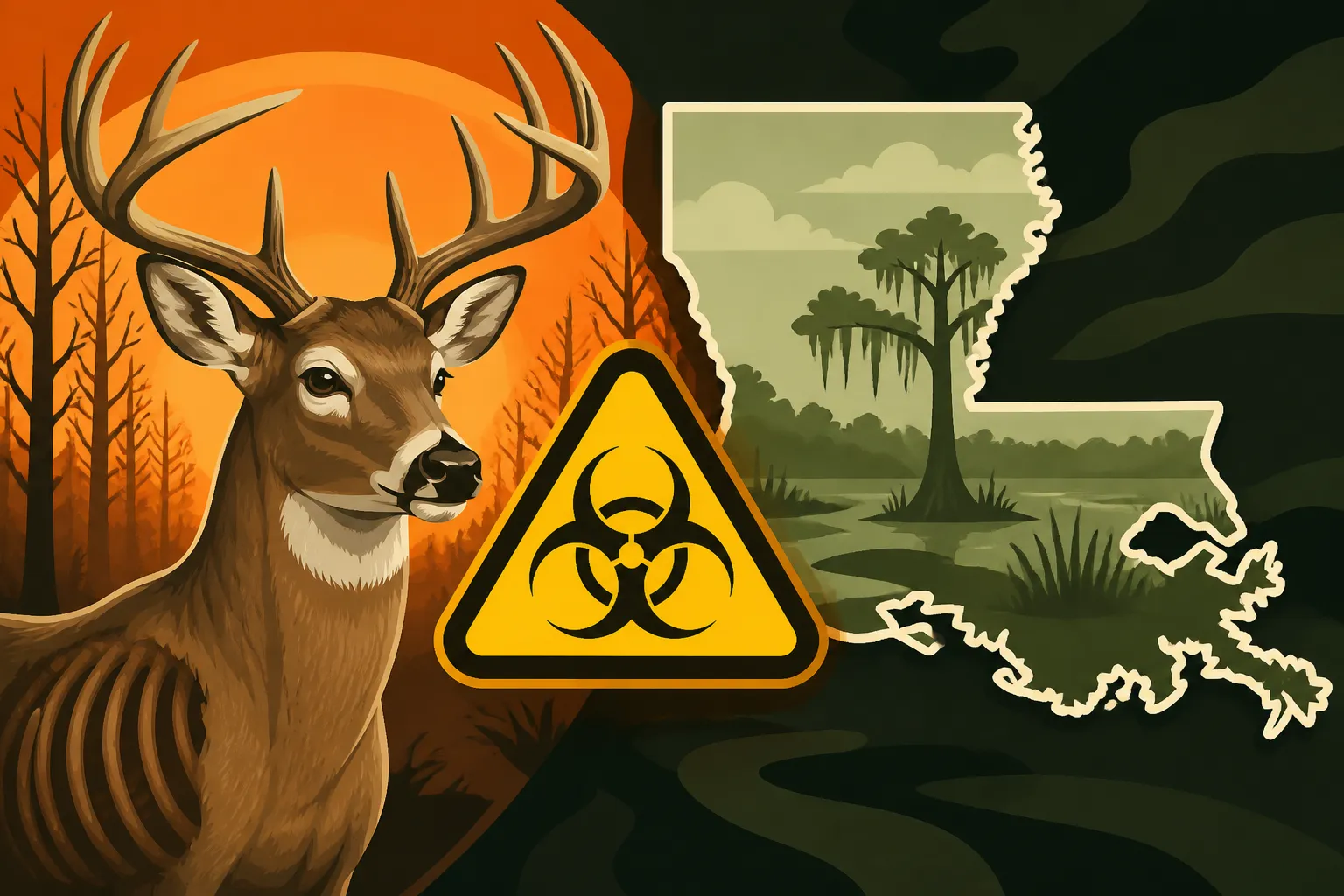
The news about Chronic Wasting Disease (CWD) arriving in Louisiana has been a gut punch for many of us who cherish our deer hunting traditions. It brings a lot of uncertainty and concern about the health of our deer herds and the future of hunting. This guide is here to break down what CWD is, how it affects Louisiana, and what we as hunters need to know and do to help manage this serious challenge.
What Exactly is Chronic Wasting Disease?
Chronic Wasting Disease is one of those topics that sends shivers down a deer hunter's spine, and for good reason. It's a fatal neurological disease that affects cervids – that's deer, elk, moose, and reindeer – and it's caused by abnormal proteins called prions. Think of it like a rogue protein that goes around converting normal proteins into more rogue proteins, slowly but relentlessly destroying the brain and central nervous system of the infected animal. It's a truly heartbreaking thing to witness, as affected deer essentially waste away, losing weight, exhibiting abnormal behaviors, and eventually succumbing to the disease. There's no cure, no vaccine, and once an animal contracts it, its fate is sealed.
The Unseen Threat: Prions and Brain Damage
What makes CWD so particularly insidious is its root cause: prions. Unlike bacteria or viruses, prions aren't living organisms. They're misfolded proteins that are incredibly durable and resistant to conventional sterilization methods. When a deer ingests these prions, they gradually accumulate in the brain and spinal cord, causing microscopic spongiform degeneration – essentially, the brain tissue becomes riddled with tiny holes, like a sponge. This damage disrupts normal brain function, leading to a host of symptoms that slowly but surely debilitate the animal. You'll see symptoms like extreme weight loss (the "wasting" part of CWD), stumbling, drooling, excessive thirst, and a lack of fear of humans. It’s a slow, agonizing process that can take months or even years to manifest after infection, making early detection in live animals incredibly difficult without specific testing.
These prions aren't just contained within the deer's body. They're shed into the environment through saliva, urine, and feces. This means that once an area has CWD, the soil, plants, and even water sources can become contaminated, potentially infecting other deer who come into contact with those prions. It creates a persistent environmental reservoir that can remain infectious for years, even decades. This longevity in the environment is a major reason why CWD is such a formidable challenge to manage, making it incredibly difficult to eradicate once it takes root in a wild deer population. It also highlights the importance of proactive measures and careful management once it's detected.
How CWD Spreads Among Deer
Understanding how CWD moves through a deer population is crucial for hunters and wildlife managers alike. Direct contact between infected and healthy deer is a primary transmission route. Think about deer interacting at a shared food source, rubbing on the same trees, or simply being in close proximity during the rut. A buck scent-checking a scrape where an infected deer has urinated or licked a branch could pick up prions. The constant social interaction within deer herds provides ample opportunity for these prions to spread. High deer densities can exacerbate this, as more deer in a smaller area means more opportunities for direct contact and environmental contamination.
Beyond direct contact, environmental contamination plays a huge, often underestimated, role. As we discussed, infected deer shed prions into the environment, which then become a source of infection for other deer. This is particularly problematic in areas where deer congregate regularly, like around bait sites or supplemental feeders. When multiple deer are eating from the same pile of corn or mineral block, they're not just sharing food; they're potentially sharing saliva, which could contain CWD prions. This is why baiting bans become a critical part of CWD management strategies, as they aim to reduce these artificial congregation points and slow the environmental spread. It’s a tough pill to swallow for hunters who’ve relied on these methods, but the science behind it is clear.
Louisiana's First Encounter: A Game-Changing Discovery
For years, Louisiana was one of the few states in the southeast without a confirmed case of Chronic Wasting Disease. We all knew it was out there, creeping closer, but we hoped against hope that our borders would hold strong. That hope was shattered in early 2022 when the Louisiana Department of Wildlife and Fisheries (LDWF) confirmed the state's first-ever case. It was a somber day for Louisiana hunters and wildlife enthusiasts, signaling a new era of deer management and a shift in how we approach hunting in certain parts of the state. The discovery immediately triggered a series of protocols and regulations designed to mitigate the spread and protect our precious deer herd.
The Initial Tensas Parish Case
The first confirmed case of CWD in Louisiana was identified in a hunter-harvested deer from Tensas Parish. Specifically, it was located within the northeast region of the state, an area known for its rich bottomland hardwoods and a robust deer population. This single detection immediately elevated Tensas Parish, along with parts of the surrounding parishes, into a critical focus zone for the LDWF. The deer was sampled as part of routine surveillance, and when the test results came back positive, it set off a cascade of actions. For local hunters in that region, it meant an immediate reevaluation of their practices, from how they processed their deer to how they thought about transporting venison. It wasn't just a biological finding; it was a personal disruption to long-held traditions.
This initial case didn't just pop up out of nowhere. The LDWF has been proactively monitoring for CWD for many years, collecting thousands of samples annually from hunter-harvested deer across the state. The fact that it was eventually found in Tensas Parish underscores the relentless nature of the disease and its ability to spread, despite preventative efforts. It also highlights the importance of hunter cooperation in providing samples, as it's often through these collective efforts that wildlife agencies get the data they need to identify and manage disease outbreaks. The discovery solidified the reality that CWD is not just a problem for other states; it's now a Louisiana problem, demanding our collective attention and action.
Why This Discovery Was So Alarming
The confirmation of CWD in Louisiana sent ripples of concern through the hunting community and beyond. The primary fear, of course, is the potential long-term impact on the health and sustainability of our deer population. CWD has been shown to reduce deer populations in other states, leading to fewer deer and, consequently, fewer hunting opportunities. For a state like Louisiana, where deer hunting is deeply embedded in our culture and economy, this threat is immense. Imagine fewer big bucks in the woods or the joy of Hunting Louisiana's Year-Round Feral Hogs being overshadowed by worries about the deer herd. It directly impacts the enjoyment and future viability of a cherished pastime.
Beyond the deer population itself, there are significant public health concerns, even if currently unsubstantiated. While there's no conclusive scientific evidence that CWD can be transmitted to humans, health organizations like the Centers for Disease Control and Prevention (CDC) advise against consuming meat from CWD-infected animals. This cautionary stance puts hunters in a difficult position, raising questions about the safety of venison they've harvested. The emotional toll of this uncertainty is real; hunters pride themselves on providing healthy, wild game for their families, and CWD introduces a layer of doubt that simply wasn't there before. It truly changed the game for how we view our wild venison, making robust testing and careful handling more critical than ever before.
Understanding Louisiana's CWD Management Zones
In response to the confirmed CWD case, the Louisiana Department of Wildlife and Fisheries swiftly implemented a multi-tiered management strategy, which includes the establishment of CWD Management Zones. These zones are geographical areas with specific regulations designed to prevent the further spread of the disease. It’s crucial for every hunter, whether you hunt within these zones or plan to travel through them, to understand what these regulations mean. These aren't just arbitrary lines on a map; they represent a concentrated effort to protect our entire state's deer population, and adherence to them is paramount. Understanding Louisiana's Chronic Wasting Disease Zones is now as important as knowing your deer areas.
The management zones are generally divided into two main categories: an Enhanced Mitigation Zone (EMZ) and a Buffer Zone. Each has its own set of rules, which can feel a bit confusing at first, but they are designed with specific goals in mind. The EMZ, as its name suggests, is where the most stringent rules apply, typically encompassing the immediate vicinity where CWD has been detected. The Buffer Zone surrounds the EMZ, acting as a protective perimeter to catch any potential outward spread. Navigating these zones requires diligence and a willingness to adapt traditional hunting practices to new realities.
The Enhanced Mitigation Zone Rules
The Enhanced Mitigation Zone (EMZ) is where the CWD positive deer was found and where the highest risk of CWD transmission is presumed. This zone, often detailed with a fifteen-mile radius around the detection point, has the most restrictive regulations. The most impactful rule for many hunters is the complete baiting ban. This means no baiting, no supplemental feeding, and no mineral licks. This ban is specifically designed to prevent deer from congregating in artificial high-density areas, which are known hotbeds for CWD prion transmission. It's a tough adjustment for hunters accustomed to using feeders, but it's a critical step in slowing the spread of the disease. Remember, the goal of The Enhanced Mitigation Zone Baiting Ban is to reduce nose-to-nose contact.
Beyond baiting, the EMZ also has strict carcass export restrictions. You cannot remove whole carcasses or certain high-risk parts (like the brain, spinal cord, or lymph nodes) from the EMZ, except for direct transport to a CWD sampling station or a licensed taxidermist or processor within the zone. This rule prevents hunters from inadvertently transporting infected prions to other parts of the state or beyond. You can take out deboned meat, clean antlers, and hides, but anything with nervous system tissue must stay within the zone unless it’s going directly for testing or processing. This level of detail in carcass handling is new for many hunters and requires careful planning and execution after a harvest. It's a significant change to traditional deer camp processing, but vital for containment.
Navigating the Buffer Zone Regulations
The Buffer Zone is an area surrounding the EMZ, designed to create a wider protective barrier. While its regulations are slightly less stringent than the EMZ, they are still crucial and demand attention from hunters. Similar to the EMZ, there are strict rules regarding carcass export. You generally cannot transport whole carcasses out of the Buffer Zone. However, often you might be allowed to take a whole deer directly to a CWD sampling station, taxidermist, or processor outside the Buffer Zone, provided it goes directly there for professional handling and testing. This distinction is subtle but important; it offers a bit more flexibility for hunters compared to the EMZ, while still maintaining a high level of biosecurity.
Another key difference often seen in Buffer Zones compared to EMZs is the rules surrounding baiting. While the EMZ has a complete baiting ban, the Buffer Zone might allow baiting, but often with specific stipulations. For example, some Buffer Zones might permit baiting but prohibit the use of certain types of feeders or require them to be placed a certain distance apart to discourage intense congregation. Always check the absolute latest LDWF regulations specific to the current CWD Buffer Zone boundaries, as these rules can change. A reliable resource like GoHunt's mapping tools or the official LDWF website can help you stay current. The general principle remains: reduce congregation, reduce risk.
Mandatory CWD Testing and Carcass Restrictions
One of the most immediate and tangible impacts of CWD in Louisiana is the implementation of mandatory testing requirements for deer harvested within the CWD Management Zones and, significantly, strict rules about how you can handle and transport deer carcasses. This isn't just a suggestion; it's a legal requirement that hunters must adhere to. It's a major shift from the traditional post-harvest routine, but it's an essential component of the state's strategy to monitor the disease and prevent its further spread. You'll need to know about Louisiana CWD Testing for Hunters and Louisiana Carcass Movement Restrictions if you plan to hunt in a CWD-affected area.
For many hunters, the thought of mandatory testing and carcass restrictions adds a new layer of complexity and sometimes frustration to an already challenging pursuit. We're used to processing our deer at camp or taking it straight home. Now, there are extra steps, extra stops, and precise rules about what you can and can't do. It can feel like an inconvenience, but it's truly vital work that allows wildlife biologists to track the disease, understand its prevalence, and make informed management decisions to protect the broader deer population. Your cooperation is not just about compliance; it's about being a responsible steward of our wildlife resources.
How to Submit a Deer for CWD Testing
If you're hunting in a CWD Management Zone, specifically the Enhanced Mitigation Zone, mandatory testing of your harvested deer is typically required. The process generally involves submitting the deer's head, or sometimes specific tissue samples from the head, to designated CWD sampling stations. These stations are often set up at specific locations like LDWF offices, cooperating deer processors, or self-service drop-off freezers at various public sites. It’s absolutely critical to check the current LDWF regulations for the most up-to-date information on exact locations and operating hours, as these can change by season and need.
When you submit a sample, make sure it's properly labeled with all the required information: your name, contact details, the date and parish of harvest, and ideally, the Deer Area. This information is crucial for epidemiologists to map the spread of the disease accurately. You might also be given specific instructions on how to handle the head before submission, such as keeping it cool or separating it from other deer. GoHunt's mobile app, for instance, often integrates LDWF CWD zone maps and sampling station locations, making it easier for hunters in the field to comply with regulations. Taking that extra step to properly submit a sample is one of the most powerful things you can do to help LDWF gather vital data on How Many Deer Have Tested CWD-Positive in Louisiana.
Rules for Transporting Deer Carcasses
The rules surrounding the transport of deer carcasses after harvest, particularly from CWD Management Zones, are designed to prevent the physical movement of CWD prions to unaffected areas. Generally, whole carcasses or certain high-risk parts (brain, spinal cord, eyes, spleen, lymph nodes) cannot be transported out of the Enhanced Mitigation Zone (EMZ). This means if you harvest a deer in the EMZ, you need to either debone the meat within the zone, leaving the carcass behind, or take the whole carcass directly to a CWD sampling station or an approved processor/taxidermist within that zone.
For the Buffer Zone, the rules might be slightly different. You might be allowed to transport a whole carcass directly to a CWD sampling station or a licensed processor/taxidermist outside the Buffer Zone, but it must be a direct route and for immediate processing or testing. You cannot, for example, take a whole carcass from a Buffer Zone deer home to another parish outside the zone for your own processing. It's vital to remember that deboned meat, cleaned skulls/antlers, and hides free of nervous system tissue are usually safe to transport out of both zones, but again, always verify the latest LDWF guidelines. Understanding Moving a Deer Carcass Out of a CWD Zone is a fundamental responsibility for any hunter.
Impact on Hunting Practices and Deer Management
The presence of CWD in Louisiana isn't just about testing and carcass disposal; it's fundamentally reshaping how we approach deer hunting and how wildlife agencies manage our herds. For decades, many of us have followed certain traditions and methods that are now being re-evaluated in light of this persistent threat. This means adapting our strategies, understanding the science behind new regulations, and embracing a proactive role in managing the disease. It's a challenging time, but also an opportunity to refine our conservation ethic.
From how we think about attracting deer to how wildlife biologists set harvest quotas, CWD is forcing a statewide reckoning. It requires us to move beyond what we've always done and consider what's best for the long-term health of the deer herd. While it might feel like an intrusion on our freedom to hunt, these changes are driven by the urgent need to protect a valuable natural resource that we all cherish.
Baiting Bans and Supplemental Feeding Rules
Perhaps one of the most contentious, yet critical, changes due to CWD is the implementation of baiting bans and restrictions on supplemental feeding. For generations, many Louisiana hunters have relied on corn piles, mineral blocks, or food plots to attract and hold deer on their property. This tradition, however, creates conditions ripe for CWD transmission. When deer gather frequently at a single bait site, they increase nose-to-nose contact and, critically, deposit saliva, urine, and feces—all potential vectors for CWD prions—into the environment. This constant exchange makes bait sites super-spreaders for the disease.
The outright ban on baiting and supplemental feeding in the Enhanced Mitigation Zone, and potential restrictions in Buffer Zones, is a direct response to this scientific understanding. It's about breaking those congregation habits. For hunters, this means a significant shift in strategy. Instead of relying on attractants, hunters must now focus more on scouting, understanding natural food sources, and patterning deer movement based on habitat and wind direction. It forces a return to more traditional hunting skills, emphasizing woodsmanship and observation. It’s a tough adjustment, particularly if you've invested in feeders, but it's a sacrifice deemed necessary to slow the disease. The specific rules for The Enhanced Mitigation Zone Baiting Ban are non-negotiable within those areas.
Altered Harvest Strategies and Population Control
CWD also directly influences how wildlife agencies manage deer populations and how hunters contribute to those efforts. In areas where CWD is detected, wildlife biologists often recommend increased harvest rates, particularly of antlerless deer. The reasoning here is twofold: firstly, reducing overall deer density can decrease the frequency of deer-to-deer contact, thereby slowing prion transmission. Secondly, removing more deer, especially does, means fewer potential carriers in the population over time. This might translate to more liberal bag limits or longer either-sex hunting days in CWD-affected areas.
Hunters often have a strong connection to harvesting mature bucks, and while that's still a part of the equation, the focus in CWD zones shifts towards overall population management. It means being willing to harvest does and younger deer if the regulations call for it. Your efforts in the field directly contribute to the scientific management goals of the LDWF. This approach also underscores the importance of every deer harvested being tested, especially within the CWD zones. By removing infected animals, even before they show symptoms, hunters become active participants in mitigating the spread and protecting the health of White-Tailed Deer Across Louisiana.
Protecting Yourself and Your Family: Venison Safety
The thought of CWD in the deer you hunt naturally raises questions and concerns about the safety of venison. It’s a perfectly valid worry, especially when you're accustomed to proudly putting wild game on the dinner table. While there have been no confirmed cases of CWD transmission to humans, reputable health organizations, including the Centers for Disease Control and Prevention (CDC), advise caution. The general consensus is to avoid consuming meat from any animal known to be infected with CWD. This means that proper handling and, most importantly, testing become paramount for hunters in affected areas.
The good news is that by following recommended guidelines, you can significantly reduce any potential risk and continue to enjoy the bounty of your hunting efforts. It's all about being informed, being careful, and taking those extra steps to ensure peace of mind for you and your loved ones. The aim isn't to create panic, but to empower hunters with the knowledge and practices necessary to make safe choices.
Safe Handling and Processing of Deer Meat
When hunting in or near a CWD management zone, safe handling of your deer becomes even more critical than usual. The first rule of thumb is to wear gloves when field dressing. This isn't just for CWD; it's good practice to prevent exposure to various bacteria and parasites. When field dressing, minimize contact with and avoid cutting into the brain, spinal cord, lymph nodes, and spleen. These are the tissues known to accumulate CWD prions at the highest levels. If you're not planning to submit the head for testing immediately, consider how you will transport it safely and legally, often in a separate bag or container.
Once the deer is field-dressed, and especially if it's going for professional processing, make sure your processor is aware the deer came from a CWD zone. Many processors have specific protocols for CWD-zone deer to prevent cross-contamination. If you're butchering the deer yourself, ensure your knives and cutting surfaces are thoroughly cleaned and sanitized after use. While prions are incredibly resilient, good hygiene is always the best defense against any potential pathogen. Debone the meat to ensure no bone, spinal cord, or brain material makes it into your venison packages. This meticulous approach to processing is an investment in your family's health and aligns with the best practices for venison safety.
Guidance from Health Agencies on Consumption
The public health agencies are clear: do not eat meat from a CWD-positive animal. This is why mandatory testing in CWD zones is so crucial. If you harvest a deer in one of these zones and submit it for testing, you should wait for the test results before consuming the meat. If the results come back positive, the venison should be properly disposed of, not consumed. While the risk of CWD transmission to humans is currently considered very low or theoretical, acting with an abundance of caution is the responsible approach.
Beyond avoiding known infected meat, the CDC recommends several other precautions:
- Avoid eating the brain, spinal cord, eyes, spleen, tonsils, and lymph nodes of any deer. These are the tissues that concentrate prions.
- If you're hunting in a CWD-endemic area, consider having your deer tested before consuming the meat, even if it's not mandatory. Knowledge is power, and resources like those provided by GoHunt can often help identify testing facilities.
- Minimize the handling of high-risk tissues, as mentioned in the processing section.
Ultimately, it’s about making informed decisions. The vast majority of deer harvested will likely be CWD-negative, but taking these precautions, especially within known CWD zones, provides a robust layer of safety and ensures that your wild game remains a healthy and cherished food source.
The Future of Deer Hunting in Louisiana with CWD
The arrival of Chronic Wasting Disease in Louisiana marks a significant turning point for deer hunting in our state. It's an unwelcome guest, but one that we must confront head-on with diligence, scientific understanding, and a unified approach from hunters and wildlife managers. The future of deer hunting with CWD will certainly look different than the past, but it's not a death knell for our traditions. Instead, it calls for adaptation, increased responsibility, and a deeper commitment to wildlife conservation. This challenge is not going away quickly, but with sustained effort, we can manage its impact.
We all share a common goal: healthy deer populations and sustainable hunting opportunities for generations to come. Achieving this in the face of CWD means staying informed, complying with regulations, and actively participating in monitoring and management efforts. It's about being proactive rather than reactive, and understanding that every action we take, or fail to take, can have consequences for the broader deer herd. Our ability to sustain White-Tailed Deer Across Louisiana will depend on these combined efforts.
Ongoing Research and Monitoring Efforts
The fight against CWD is a long-term battle, and continuous research and monitoring are its frontline. Wildlife agencies like the LDWF, in collaboration with universities and federal partners, are constantly working to better understand CWD – how it spreads, how it impacts different deer populations, and potential strategies for mitigation. This includes collecting thousands of samples annually from hunter-harvested deer, which helps track the disease's prevalence and geographic spread. Hunters play a crucial role in this process by submitting their deer for testing, particularly in the CWD Management Zones. This data is invaluable for scientific understanding and for informing future management decisions.
Beyond basic surveillance, research delves into more complex questions: How long do prions remain infectious in Louisiana's unique soil and climate conditions? Are there genetic factors in deer that make some more resistant to CWD? Can new diagnostic tools be developed for faster, more efficient testing? The answers to these questions will shape the future of CWD management. For hunters, staying updated on LDWF news releases and publications is essential, as new findings could lead to adjustments in regulations or recommendations. Organizations like GoHunt also often aggregate these research updates, making them accessible to the broader hunting community. The scientific community's dedication to this challenge offers the best hope for long-term solutions.
Hunter's Role in CWD Mitigation
As hunters, we are often the first line of defense and the most vital partners in wildlife conservation. Our role in CWD mitigation is absolutely critical. Firstly, understanding and adhering to all CWD regulations, particularly those concerning baiting bans, carcass transport, and mandatory testing in management zones, is non-negotiable. These rules are in place for a reason, and compliance protects the entire deer population. Your commitment to following these guidelines is a direct contribution to preventing the spread of the disease.
Secondly, active participation is key. If you hunt in a CWD zone, make it a priority to submit your deer for testing. If you see a deer exhibiting symptoms consistent with CWD (severe weight loss, stumbling, drooling), report it immediately to the LDWF. Your observations in the field provide critical intelligence. Beyond compliance and reporting, consider educating other hunters about CWD and its implications. Sharing accurate information from reputable sources helps foster a more informed and responsible hunting community. The future of Louisiana Deer Hunting Area by Area truly depends on every hunter stepping up to this challenge.
Disclaimer
This article is intended for informational purposes only and should not be considered legal advice. Hunting regulations, including those pertaining to Chronic Wasting Disease, are subject to change. Always consult the most current Louisiana Department of Wildlife and Fisheries (LDWF) official regulations and advisories before planning or engaging in any hunting activities.