North Louisiana Deer Density
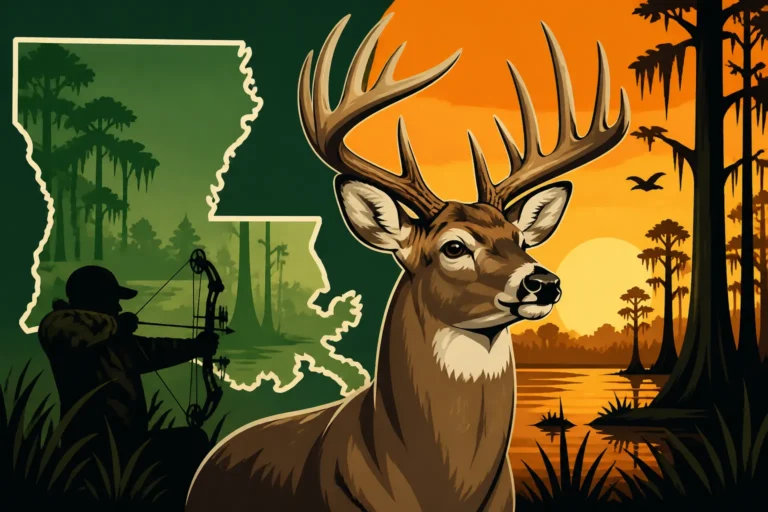
One of the biggest frustrations for hunters in North Louisiana is trying to figure out where the deer are, and more importantly, how many of them are actually running around in a particular spot. It’s not just about seeing one or two tracks; it’s about understanding the bigger picture of the local herd. This guide is here to shed some light on North Louisiana deer density, breaking down what it means for your hunts and how to use this knowledge to your advantage.
Understanding Deer Density: More Than Just Numbers
When we talk about deer density, we're really talking about how many deer are living in a specific area, usually expressed as deer per square mile or per 1,000 acres. It might sound like a purely biological term, but for us hunters, it's incredibly practical. A high deer density often means more opportunities to see deer, but it doesn't always guarantee a mature buck. Conversely, a lower density area might mean you work harder for a sighting, but the deer you do find might be older and larger due to less competition for resources. It’s a delicate balance that impacts everything from how often you fill your tags to the overall health of the herd.
Thinking about deer density helps you frame your expectations. If you're hunting a piece of land in the piney woods of North Louisiana known for lower densities, you probably won't see deer every sit, and that's okay. Your strategy will shift from quantity to quality, focusing on sign, bedding areas, and pinch points. On the other hand, a property in the rich river bottoms might offer frequent sightings, and your challenge there might be discerning a shooter from a crowd of younger bucks and does. It’s not just about a raw number; it’s about what that number implies for the deer’s behavior, movement, and overall health in a particular locale. Understanding Louisiana Deer Population Estimate is a good starting point, but drilling down to specific regions helps immensely.
Why Deer Density is a Hunter's Secret Weapon
Knowing the general deer density of an area helps you adjust your hunting tactics before you even step foot in the woods. Imagine scouting a new piece of public land. If you know historically that area has a high deer density, you might prioritize finding less pressured pockets or thick cover where older bucks might hide. If the density is typically lower, you'll put more effort into pinpointing prime food sources or concentrated travel corridors, knowing deer might be spread out. It influences everything from your stand placement to how aggressively you might call.
It also gives you a realistic benchmark for success. There’s nothing more frustrating than putting in hours of effort only to feel like you're hunting an empty forest. If you understand the density, you can set achievable goals. In a high-density area, you might aim for multiple deer or even be more selective. In a low-density zone, just seeing a deer, let alone getting a shot, can be a major win. This knowledge can save you from unnecessary frustration and help you appreciate the challenge each unique hunting spot offers. Plus, it ties into broader management goals—a healthy density often indicates a healthy habitat.
The Nuances of Deer Movement in Varied Densities
Deer movement isn't static; it's influenced heavily by how many other deer are around them. In areas with extremely high deer density, deer often become more nomadic, moving between fragmented food sources and pressured bedding areas. They might feed more often at night to avoid human interaction, or they might become incredibly sensitive to any perceived threat. Their home ranges can shrink or expand depending on resource availability and competition. This can make them harder to pattern, requiring more adaptive hunting strategies, like aggressive rattling and grunting or frequent repositioning.
Conversely, in lower-density environments, deer might have larger, more established home ranges and can be less skittish. With less competition for food and cover, their movements might be more predictable, especially if they feel secure. They might not feel the constant need to outcompete other deer, making their habits more regular. Understanding these nuances helps you adapt your approach. For instance, in higher-density areas, a quick run-and-gun approach might be more effective, while in lower densities, a patient, all-day sit over a primary food source could pay off more.
Key Factors Shaping North Louisiana's Deer Density
Deer density isn't just some arbitrary number; it's a dynamic reflection of several interconnected factors. In North Louisiana, these factors are particularly diverse, given our mix of pine forests, hardwood bottomlands, and vast agricultural fields. Understanding these influences helps us predict where deer might congregate and why. It's like piecing together a puzzle, where each element plays a crucial role in the overall picture of the herd.
Factors like habitat quality, food availability, and hunting pressure are constantly in flux, leading to shifts in local deer populations. A severe drought one year, followed by an abundant acorn crop the next, can dramatically alter where deer are found. Human activity, such as logging, development, or even specific hunting regulations, also leaves a significant mark. For serious hunters looking to maximize their odds, keeping an eye on these factors is almost as important as scouting itself.
Habitat Quality and Food Sources
The health and abundance of the local habitat are arguably the most critical determinants of deer density. North Louisiana offers a rich tapestry of ecosystems, from the vast timber tracts of the Kisatchie National Forest to the fertile farmlands of the Mississippi River Delta. Deer thrive where they can find reliable food, water, and cover. Areas with a diverse mix of browse, mast crops (like acorns), and agricultural fields tend to support higher deer numbers. For example, a property with mature oaks, dense thickets for bedding, and nearby planted food plots will naturally hold more deer than a monoculture pine plantation lacking diverse undergrowth.
Consider the difference between a prime hardwood bottomland and a recently clear-cut pine stand. The bottomland, rich in browse and acorns, offers a smorgasbord for deer, allowing for a higher concentration. The clear-cut, while potentially providing new browse in a few years, might initially displace deer, leading to a temporary drop in density until the habitat recovers. This is why knowing Hunting After a Poor Acorn Year can be crucial—deer will move to find alternative food, impacting local density. Resources like GoHunt can provide overlays on maps showing timber types or agricultural land, helping you pinpoint these crucial habitat components.
Hunting Pressure and Land Management Practices
Human influence, particularly hunting pressure and land management, significantly shapes deer density. On public lands or small private tracts that see heavy hunting pressure, deer often become more nocturnal and secretive, dispersing from easily accessible areas. This can give the illusion of lower density, even if the overall population is still relatively healthy; the deer are simply harder to find. Conversely, large, privately managed lands with strict harvest criteria, balanced doe tags, and selective buck harvests can maintain consistently high densities of healthy deer.
Landowners and clubs that actively manage their property through prescribed burns, food plots, and timber stand improvements directly impact local deer density. They're creating an optimal environment that can support more deer per acre. However, improper management, such as overharvesting does or allowing too many small bucks to be shot, can quickly depress a local population. This is where understanding Hunting Pressure on Louisiana Public Land comes into play; areas with less pressure can often hold more relaxed, visible deer.
Disease and Predation
While often less immediate than habitat and hunting pressure, disease and predation can still play a role in shaping localized deer densities. Chronic Wasting Disease (CWD) is a significant concern in certain parts of Louisiana, particularly in the northeast. While primarily a neurological disease, CWD can lead to deer mortality and, if left unchecked, could potentially impact regional populations. Understanding Louisiana's Chronic Wasting Disease Zones is vital for all hunters in affected areas, not just for compliance but for understanding potential long-term impacts on the herd.
Predators like coyotes are prevalent across North Louisiana and, while generally not the primary driver of adult deer population numbers, can impact fawn survival, especially in areas with very high predator densities or struggling deer herds. A healthy deer population can typically absorb some fawn predation, but in conjunction with other stressors, it can contribute to a subtle reduction in recruitment and, thus, overall density over time. It's a complex ecosystem where everything is connected, and a robust understanding includes these often-overlooked biological factors.
Navigating North Louisiana's Diverse Deer Regions
North Louisiana isn't a monolith when it comes to deer. The region boasts a fascinating mosaic of landscapes, and each one supports deer populations in its own unique way. What works for a hunter in the vast piney hills might not apply to someone sitting in a stand overlooking a soybean field near the Ouachita River. Understanding these regional distinctions is key to predicting deer density and, ultimately, to successful hunting. It's why a truly effective strategy considers the local terrain, not just generalized advice. For more detailed information on specific locations, checking out Louisiana Deer Hunting Area by Area can provide invaluable context.
Piney Hills and Uplands
Venture into the piney hills and rolling uplands of North Louisiana, particularly areas around Kisatchie National Forest, and you'll generally find a different deer density picture. These areas, characterized by extensive pine timber, mixed hardwoods, and often steeper, more broken terrain, tend to have lower deer densities compared to the fertile river bottoms or agricultural lands. The habitat here can be less nutrient-rich, and while deer are present, they are often more dispersed. It's not uncommon to work harder for a sighting in these big woods.
Despite lower overall densities, these areas can produce mature bucks that are masters of evasion. Hunters focusing on Hunting North Louisiana's Piney Hills often prioritize extensive scouting, looking for subtle funnels, oak flats, or isolated thickets that concentrate deer movement. You might not see dozens of deer, but the deer you encounter are often older and have proven their ability to survive. Patience and covering ground, often with the help of mapping tools like GoHunt to identify terrain features, become paramount in these environments.
River Bottoms and Agricultural Belts
Shift your focus to the rich river bottoms along the Mississippi, Ouachita, and Tensas Rivers, or the vast agricultural belts of parishes like Tensas, Madison, and Concordia, and you'll typically encounter higher deer densities. These areas boast incredibly fertile soils, leading to abundant natural browse and significant agricultural production—think massive fields of corn, soybeans, and winter wheat. This consistent, high-quality food source allows the land to support more deer per square mile, often leading to impressive herd numbers.
In these rich environments, deer density can be quite high, offering more frequent sightings. However, this also means deer can become heavily pressured, especially if public access or small private tracts are involved. Bucks here can grow large due to the nutrition, but they also become incredibly wary, often moving mostly at night or through dense cover. Hunters in these zones often focus on securing prime ambush points along field edges, pinch points between cover and food, or travel corridors through thick CRP or swamps. Hunting the Tensas River Basin is a great example of where these conditions are prevalent, and deer density can be excellent, though deer are smart.
Mixed Habitat Zones and Transitional Areas
Beyond the distinct piney hills and river bottoms, North Louisiana also features extensive mixed habitat zones and transitional areas. These might include areas where pine plantations meet bottomland hardwoods, or where smaller farm fields are interspersed with tracts of timber. These transition zones often provide the "best of both worlds" in terms of deer density. They offer the diverse food sources found in agricultural or bottomland areas, combined with the security cover of more extensive timber.
Deer densities in these mixed areas can be moderate to high, often supporting robust, healthy deer herds. The key here is to identify where these different habitat types converge, creating natural funnels and travel corridors. A field edge bordering a thick clear-cut, or a creek bottom winding through mixed timber, can be hotspots. These areas provide both abundant food and crucial cover, often leading to concentrated deer activity. Using platforms like GoHunt can help you visualize these transitions on aerial imagery, revealing patterns that might otherwise be invisible from the ground.
Leveraging Density Knowledge for Smarter Hunting
So, you’ve got a handle on what deer density is and the factors that influence it across North Louisiana. Now, how do you actually use this information to put more venison in the freezer or a bigger buck on the wall? It's not just academic; it's about translating biological understanding into practical, boots-on-the-ground hunting strategies that increase your chances of success. It's about working smarter, not just harder.
The beauty of understanding deer density is that it informs almost every decision you make in the field. From where you choose to hunt, to what kind of stand you set up, to how you approach calling, this knowledge is a cornerstone of effective deer hunting. It gives you a framework to analyze the landscape and the animals within it, helping you avoid common pitfalls and capitalize on subtle opportunities.
Adjusting Your Stand and Setup Strategy
Your stand placement and overall setup should be heavily influenced by the prevailing deer density. In high-density areas, deer trails can be abundant, making it easy to pick the "wrong" one. Here, your focus shifts to finding the most used trails, pinch points, or funnels that concentrate movement, knowing that deer might be moving in many directions. Often, an aggressive setup closer to bedding cover might be necessary to intercept a mature buck before he melts into the dense population. Elevated box blinds or ladder stands can be great for covering multiple trails in a high-density area.
In lower-density environments, you might need to hunt specific food sources or isolated cover patches more aggressively. Deer may travel longer distances between food and cover, so identifying those primary travel routes becomes critical. Rather than a network of trails, you might be looking for a single, well-worn path or a distinct rub line. A mobile setup, like a climber or saddle, that allows you to quickly adjust to fresh sign can be invaluable when deer are more spread out. No matter the density, Scouting Louisiana Public Land Before Season is paramount, and density estimates help guide that scouting.
Tailoring Your Calling and Decoy Tactics
Deer density also plays a significant role in how effective your calling and decoy strategies will be. In high-density areas, deer are constantly interacting with each other. This means vocalizations like grunts, bleats, and even rattling can be very effective, as deer are more accustomed to hearing other deer and are more likely to investigate. Bucks are often more competitive due to the presence of many other deer, making them more responsive to challenge calls. A decoy can also be highly effective in drawing deer in, especially in open areas where they can be seen from a distance.
| Density Type | Calling Strategy | Decoy Strategy | General Movement Pattern |
|---|---|---|---|
| High | Aggressive grunts, rattling, bleats; frequent calling. | Effective, use buck/doe decoys to simulate interaction. | Often fragmented, less predictable, high competition. |
| Moderate | Moderate grunts, bleats; less aggressive rattling. | Can be effective, consider single doe or small buck. | More predictable to prime food/cover, consistent. |
| Low | Soft grunts, subtle bleats; cautious rattling (less is more). | Less effective, deer might be wary of unknown figures. | Larger home ranges, travel longer distances, very wary. |
Conversely, in lower-density areas, deer can be more wary and less accustomed to frequent vocalizations. An overly aggressive calling sequence might spook them rather than draw them in. Soft grunts, subtle bleats, and light rattling might be more appropriate, aiming to pique curiosity rather than challenge. Decoys might be less effective or even counterproductive, as a solitary deer might be more cautious about an unfamiliar "deer" suddenly appearing. It's about reading the local temperament and adjusting your approach. For instance, Rattling Volume in Thick Cover will differ greatly depending on how many deer you expect to hear it.
Using Technology to Inform Your Density Estimates
Modern hunting technology has made understanding deer density and its implications much easier. Mapping applications like GoHunt offer incredible tools that can help you analyze habitat, identify potential bottlenecks, and even overlay public and private land boundaries. By studying aerial photos, topographic maps, and satellite imagery, you can begin to make educated guesses about where deer are likely to concentrate. You can see agricultural fields, timber cuts, swamps, and transitions—all factors that contribute to local deer density.
Many hunters also use trail cameras extensively. While not directly measuring density across a square mile, a well-placed network of cameras can give you a very localized sense of deer activity and population on your specific hunting tract. By analyzing the number of unique deer, buck-to-doe ratios, and age structures captured on camera, you can refine your understanding of the local density and how it compares to broader regional estimates. This information can be priceless for targeting specific animals or adjusting your harvest strategy to match the local population dynamics.
Disclaimer
This article is for general informational purposes only and does not constitute professional advice. Laws, prices and regulations vary by location and change over time. Consult a qualified professional for guidance on your specific situation.