When the Louisiana Rut Peaks by Area
One of the most talked-about, and often frustrating, aspects of deer hunting in our beloved Louisiana is figuring out when the rut actually hits its peak. Unlike some states where the whitetail breeding season might be a fairly consistent event across the entire region, our diverse landscapes, from the piney woods to the vast river bottoms, mean the peak of the rut is a dynamic and localized phenomenon. This guide will walk you through the distinct rut timing across Louisiana's various deer areas, helping you fine-tune your hunting plans for those magical weeks when bucks are truly on the move.
Understanding the Louisiana Rut and Its Regional Quirks
The rut, or the deer breeding season, is undeniably the most exciting time to be in the deer woods. It's when mature bucks, often elusive and nocturnal for much of the season, become far more visible and vulnerable as they actively search for does. But getting the timing right in Louisiana is half the battle, because our state’s whitetail herd isn't on a single, synchronized clock. This can be baffling for hunters, especially those new to a particular area or coming from states with more uniform rut activity.
Why the Rut Varies So Much in Louisiana
The primary reason for Louisiana's scattered rut dates comes down to genetics and historical deer stocking efforts. For decades, our deer herd was decimated by overhunting, habitat loss, and various other factors. To rebuild populations, the Louisiana Department of Wildlife and Fisheries (LDWF) undertook extensive restocking programs, bringing deer in from different parts of the state and even from other states like Wisconsin and Texas. These relocated deer brought their own genetic programming for rut timing, which, when mixed with existing local populations and influenced by varying habitat conditions, resulted in the staggered rut cycles we observe today.
Think about it: a doe brought from a northern state might be genetically predisposed to breed in early November, while a local Louisiana doe's ancestors might have historically bred in late December due to local environmental cues. When these deer interbreed, the offspring's rut timing can be a blend, or different populations in isolated areas maintain their distinct schedules. This mosaic of genetics, coupled with local environmental factors like nutrition and daylight hours, creates the complex rut picture we see across Louisiana's ten deer areas. It's a testament to the resilience of our deer, but certainly a head-scratcher for us hunters!
Key Indicators of Approaching Rut Activity
Even with the varied timing, the signs of an approaching rut are universal. Scouting your specific hunting area well before the season, and certainly during the early weeks, can give you critical clues. Look for rising numbers of scrapes and rubs as bucks begin to mark their territory and shed velvet. As the pre-rut progresses, you'll start seeing younger bucks chasing does, almost practicing for the main event. Checking reliable resources can also help. Many seasoned hunters utilize digital mapping platforms that allow for marking observations and reviewing historical data. A platform like GoHunt, for example, can be an invaluable tool for keeping track of your observations year after year, helping you identify trends specific to your hunting grounds.
The increase in daylight buck sightings, particularly those "cruising" through cover without actively feeding, is another strong indicator that the seeking phase is in full swing. Keep an eye on local harvest reports, if available, which can sometimes hint at when bucks are being taken with swollen neck or other rut-related physical indicators. Don't just rely on a calendar; let the deer themselves tell you what's happening on the ground.
Peak Rut Timing by Louisiana Deer Area
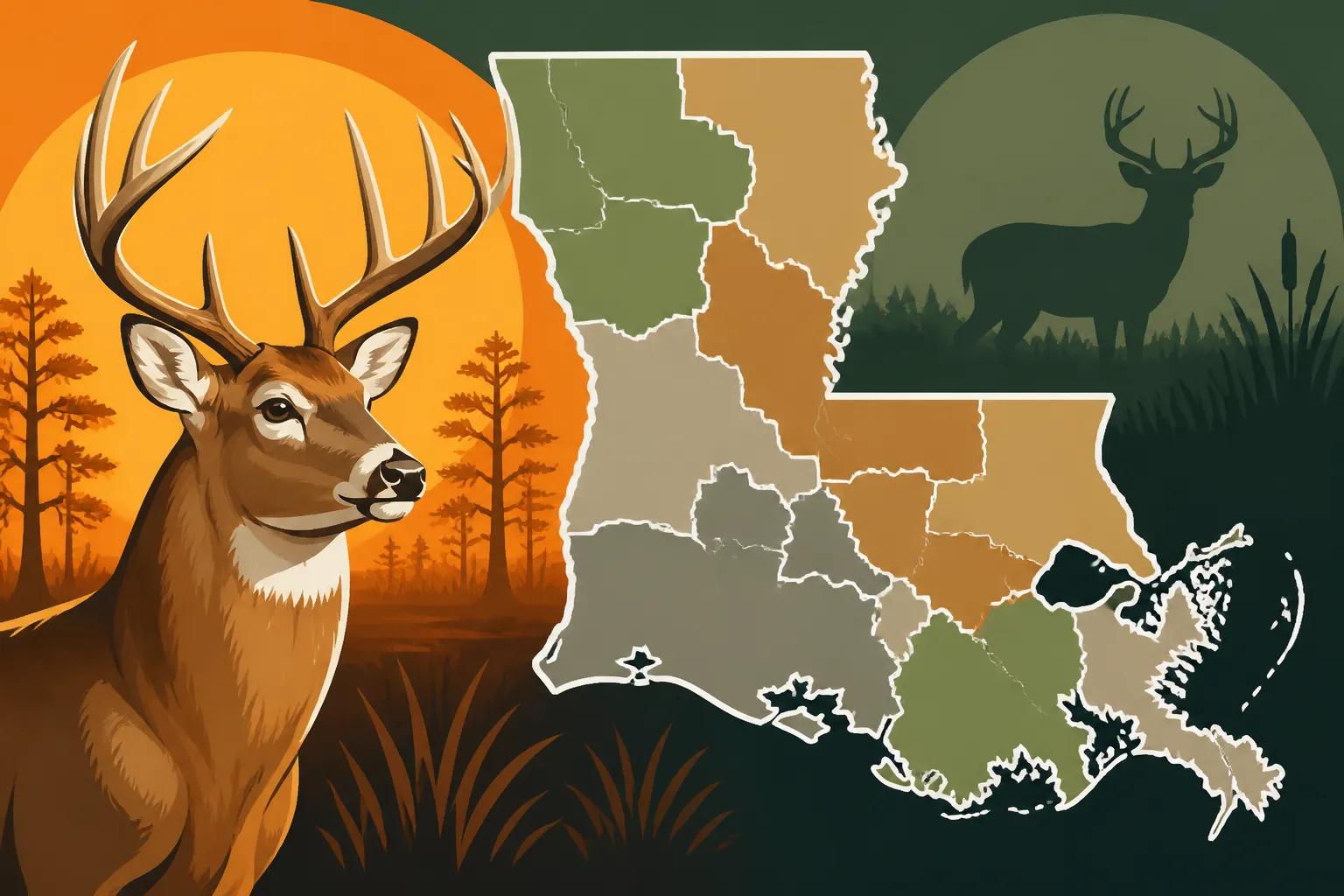
Now, let's dive into the specifics. Louisiana is divided into ten deer management areas, and within these, the rut timing can differ quite a bit. Knowing which area you're hunting in is paramount to understanding when the big boys will be focused on breeding rather than just eating.
Here's a breakdown of the general peak rut windows for each area. Remember, these are averages, and local conditions like weather or specific habitat pockets can cause slight variations. However, this table provides a solid starting point for your planning.
| Deer Area | General Peak Rut Window | Associated Parishes (Examples) |
|---|---|---|
| Area 1 | Early to Mid-November | Beauregard, Vernon, Sabine |
| Area 2 | Mid-November | Winn, Jackson, Bienville |
| Area 3 | Mid-December | Concordia, Tensas, Madison |
| Area 4 | Early to Mid-November | Grant, Rapides, Avoyelles |
| Area 5 | Mid-December | St. Landry, Evangeline, Acadia |
| Area 6 | Late December – Early Jan | St. Martin, Iberville, Lafayette |
| Area 7 | Mid-November – Early Dec | East Baton Rouge, West Feliciana, St. Helena |
| Area 8 | Mid-November | Ouachita, Morehouse, Franklin |
| Area 9 | Late December – Early Jan | Tangipahoa, Washington, St. Tammany |
| Area 10 | Mid-November | LaSalle, Caldwell, Catahoula |
As you can see, there's quite a range! Some areas are already wrapping up their peak rut before others even begin. This is why a "one size fits all" hunting strategy simply won't cut it in Louisiana. For those hunting in areas like 5, 6, and 9, you're looking at a much later rut, often extending into the cooler months of December and even January. This also helps explain why some areas have a Long Either-Sex Window in Areas 5, 6 and 9.
Early-Start Rut Areas (Areas 1, 2, 4, 7, 8, 10)
For hunters in these zones, the action starts relatively early compared to the southern parishes. The deer in these areas, particularly in the northern and central piney woods and some western parishes, tend to hit their peak breeding activity from early to mid-November. This means that by the time firearms season rolls around for many, the pre-rut seeking and initial breeding phase might already be in full swing.
Tactics during this time should focus heavily on intercepting bucks that are actively cruising for does or tending to a receptive doe. This often means sitting near traditional doe bedding areas, pinch points, or food sources where does are gathering. Bucks will move through these areas frequently, sometimes scent-checking for hot does, sometimes chasing them outright. Learning Hunting the Rut in the Early-Start Areas is crucial for success here. Don't be afraid to use calls; Rattling and Grunting in Louisiana can be incredibly effective when bucks are agitated and competitive during this period. Glassing open timber or field edges during early morning and late afternoon hours can reveal those cruising bucks that might otherwise slip by unnoticed in thicker cover.
Late-Window Rut Areas (Areas 3, 5, 6, 9)
If you hunt in the Mississippi River floodplains, the Atchafalaya Basin, or the Florida Parishes, your rut experience will likely be much later. Areas like 3, 5, 6, and 9 often see their peak rut in December and even into early January. This can be a huge advantage for hunters, as the weather is typically cooler, and deer may be more visible as browse thins out. However, it also means that many hunters might have already put away their gear, missing out on prime action.
The late rut can coincide with the firearms season for an extended period, offering some truly fantastic hunting. Bucks will still be actively chasing, but depending on how cold it gets, their movement patterns might shift slightly. During this time, focusing on thick cover adjacent to food sources becomes even more important. Bucks won't stray far from where does are feeding and bedding, especially as the temperatures drop. This is also a fantastic time to use aggressive calling tactics, as bucks are still very much looking for any advantage in finding a mate. Understanding Hunting the Rut in the Long-Window Areas can dramatically improve your odds. With fewer hunters often in the woods during these later windows, the deer might also be less pressured, leading to more natural movement.
Strategies for Hunting the Varied Louisiana Rut
With such diverse rut timing, your hunting strategies absolutely need to be flexible. What works in Area 1 in November might be completely ineffective in Area 6 in December. The key is adapting to what the deer are doing in your specific hunting area at that particular time.
Adapting to Pre-Rut and Seeking Phases
The pre-rut is characterized by increased buck activity, as they begin to make scrapes and rubs, and expand their home range in search of does. Bucks are generally still somewhat predictable, often visiting food sources, but they're also starting to cruise. This is a great time to hunt pinch points, funnels, and transition areas between bedding and feeding. Bucks will be scent-checking these travel corridors frequently.
As the seeking phase kicks in, usually a week or two before the peak, bucks become even more focused on finding receptive does. They will cover a lot of ground, often during daylight hours. This is when patience in a well-placed stand near a travel corridor or known doe bedding area pays off. Don't be afraid to sit all day during this period, especially if you see signs of fresh activity. Using deer calls sparingly but effectively can also draw a curious buck in. A soft Grunt Calls in Mature Louisiana Timber can sometimes be all it takes to stop a cruising buck or bring one closer to investigate.
Hunting During the Peak Breeding Phase
When the peak rut hits, things get wild. Bucks are actively chasing, tending, and breeding does. This is often the shortest, most intense phase. Bucks might be locked down with a doe for a day or two, making them harder to find, but then they're back on the prowl for the next one. This is when you want to be in the woods as much as possible. Focus on areas with high doe concentrations. If you can locate a hot doe, a buck won't be far away.
Hunting trails leading into thick cover, especially near known bedding areas, can be productive. Bucks will push does into these areas for breeding. Don't shy away from rattling antlers during this intense period; bucks are highly aggressive and competitive. Many hunters have found success with more aggressive calling sequences during the peak. Remember to always consider the wind and thermals, especially in dense swamp bottomland. Even during the rut, a buck's nose is his primary defense.
Post-Rut Strategies and Recovery
After the peak rut, bucks are often exhausted, having lost a significant amount of body weight. They will shift their focus back to feeding heavily to regain strength. This is the post-rut, and it can be a challenging time to hunt if you're still looking for chasing activity. However, it can also be a golden opportunity. Bucks are often less wary and more predictable as they hit reliable Late-Season Food Sources for Louisiana Whitetails.
Focus your efforts on the best available food sources in your area—acorn flats (if it was a good year), planted food plots, or agricultural fields. Bucks will be trying to pack on calories before the leanest winter months. This is also a good time to reconsider Using a Ground Blind on Louisiana Public Land if the cover has thinned out, as it offers concealment without having to worry about climbing trees. While the excitement of the chase might be over, smart hunting during the post-rut can still yield great results, especially for those looking to fill their freezer with delicious venison.
Planning Your Louisiana Rut Hunt
Successfully timing your rut hunt in Louisiana requires a blend of historical knowledge, current scouting, and adaptability. Don't just pick a week on the calendar; truly understand the nuances of the deer area you plan to hunt. Utilize resources like the LDWF website for official area boundaries and season dates.
Before the season, dedicate time to Scouting Louisiana Public Land Before Season or your private lease. Set up trail cameras in key areas, identify food sources, and look for early signs of buck activity like rubs and scrapes. Keep a detailed hunting journal (many digital apps allow for this, integrating with your GoHunt data) to record observations, weather conditions, and deer movement. Over time, you'll start to build a clear picture of the rut's progression in your specific location. This personalized knowledge, combined with the general guidelines provided here, will significantly increase your chances of being in the right place at the right time when Louisiana's bucks are truly on the move.
Remember, every year is a little different, but understanding these general patterns gives you a massive head start. Good luck out there, and may your stand be filled with rutting action!
Disclaimer
This article is for general informational purposes only and does not constitute professional advice. Laws, prices and regulations vary by location and change over time. Consult a qualified professional for guidance on your specific situation.