Which Louisiana Parishes Have the Most Hogs
If you've spent any time at all outdoors in Louisiana, you've probably encountered the undeniable nuisance that is the feral hog. These intelligent, prolific, and incredibly destructive animals are found in every parish across the state, rooting up fields, destroying habitat, and generally making a mess of things. For hunters looking to help manage their numbers and enjoy a challenging pursuit, knowing which parishes offer the most concentrated hog populations is key to a successful outing. This guide will dive deep into where these wild pigs thrive and why, helping you pinpoint the best areas for your next hog hunt.
Understanding Feral Hogs and Their Impact in Louisiana
Feral hogs are a pervasive problem across the entire state of Louisiana, and it's a battle that hunters, landowners, and wildlife managers are constantly fighting. These aren't just a minor annoyance; they're an ecological and economic disaster on four hooves. If you've ever driven past a freshly rooted field or seen the torn-up edges of a WMA, you know exactly what I'm talking about.
The Problem with Feral Hogs in the Pelican State
The damage caused by feral hogs is truly staggering. Agriculturally, they devastate crops like corn, soybeans, and rice, costing farmers untold amounts of money each year. Imagine planting an entire field, only for a sounder of hogs to come through overnight and destroy a significant portion of your hard work. This isn't just a hypothetical; it's a regular occurrence in many parts of the state. Beyond crop destruction, these pigs also carry diseases that can be transmitted to livestock, posing a serious threat to the state's cattle and hog industries. We're talking about direct financial losses that impact livelihoods. You can read more about the scope of this particular issue in Crop Damage Hogs Cause in Louisiana.
Ecologically, the impact is just as severe. Feral hogs are omnivores with an insatiable appetite and a highly destructive feeding habit of rooting. They tear up fragile wetland ecosystems, disrupt natural vegetation, and compete directly with native wildlife for food sources like acorns. This competition puts pressure on our beloved white-tailed deer and wild turkeys, impacting their populations and overall health. They also prey on ground-nesting birds, fawns, and even small alligators, further disrupting the delicate balance of our diverse Louisiana ecosystems. Their constant rooting also leads to soil erosion, particularly along stream banks and in sensitive marsh areas, further degrading the landscape.
How Wild Hogs Spread Across Louisiana
The incredible proliferation of feral hogs across Louisiana is a testament to their adaptability and high reproductive rate. A sow can breed at a young age, often having multiple litters a year, with each litter potentially consisting of several piglets. This means their numbers can explode in a very short period if left unchecked. Historically, domestic hogs escaped or were released and quickly reverted to a wild state, adapting to Louisiana's diverse habitats. Their intelligence and ability to learn and adapt to hunting pressure make them a formidable challenge for even the most experienced hunter.
Hogs are also incredibly mobile. They'll travel significant distances in search of food and water, often utilizing river systems and dense cover as natural highways. This natural movement, combined with historical and sometimes illegal translocation by humans, has allowed them to colonize every corner of the state. From the deep swamps of the Atchafalaya Basin to the agricultural fields of North Louisiana and the pine forests in the central regions, no area is truly safe from their presence. Understanding How Wild Hogs Spread Across Louisiana helps contextualize why they are such a widespread problem today.
Identifying High-Density Hog Parishes
When it comes to finding large concentrations of feral hogs in Louisiana, it's not simply about picking a parish at random. There are specific environmental and agricultural factors that create ideal conditions for these animals to thrive, leading to higher densities in certain areas. Knowing these factors is like having a secret weapon in your hog hunting arsenal.
Key Factors Driving Hog Concentrations
Several elements contribute to a parish becoming a hog hotspot. First and foremost is habitat. Hogs love dense cover – thick brush, bottomland hardwoods, cypress-tupelo swamps, and expansive marshlands provide them with refuge from hunters and the elements. These areas offer places to bed down, raise their young, and escape detection. The Atchafalaya Basin, for example, is famous for its thick, almost impenetrable cover, which makes it a natural sanctuary for hogs.
Food sources are another huge draw. Parishes with significant agricultural activity – think corn, soybean, and rice fields – are magnets for hogs. They'll frequent the edges of these fields, especially at night, to feed on crops. Areas near orchards or where pecans are grown can also attract them. Beyond agriculture, natural food sources like acorns, roots, tubers, and even small animals or carrion keep hog populations well-fed. Access to consistent water sources, whether it's sloughs, bayous, rivers, or marsh ponds, is also critical for hogs, especially in warm Louisiana weather, for drinking and wallowing. The combination of dense cover, abundant food, and reliable water creates a perfect storm for thriving hog populations.
Top Parishes for Feral Hog Activity
While feral hogs are present in all 64 parishes, some areas consistently show higher concentrations due to the factors mentioned above. Hunters and landowners in these parishes often report significant hog activity and damage.
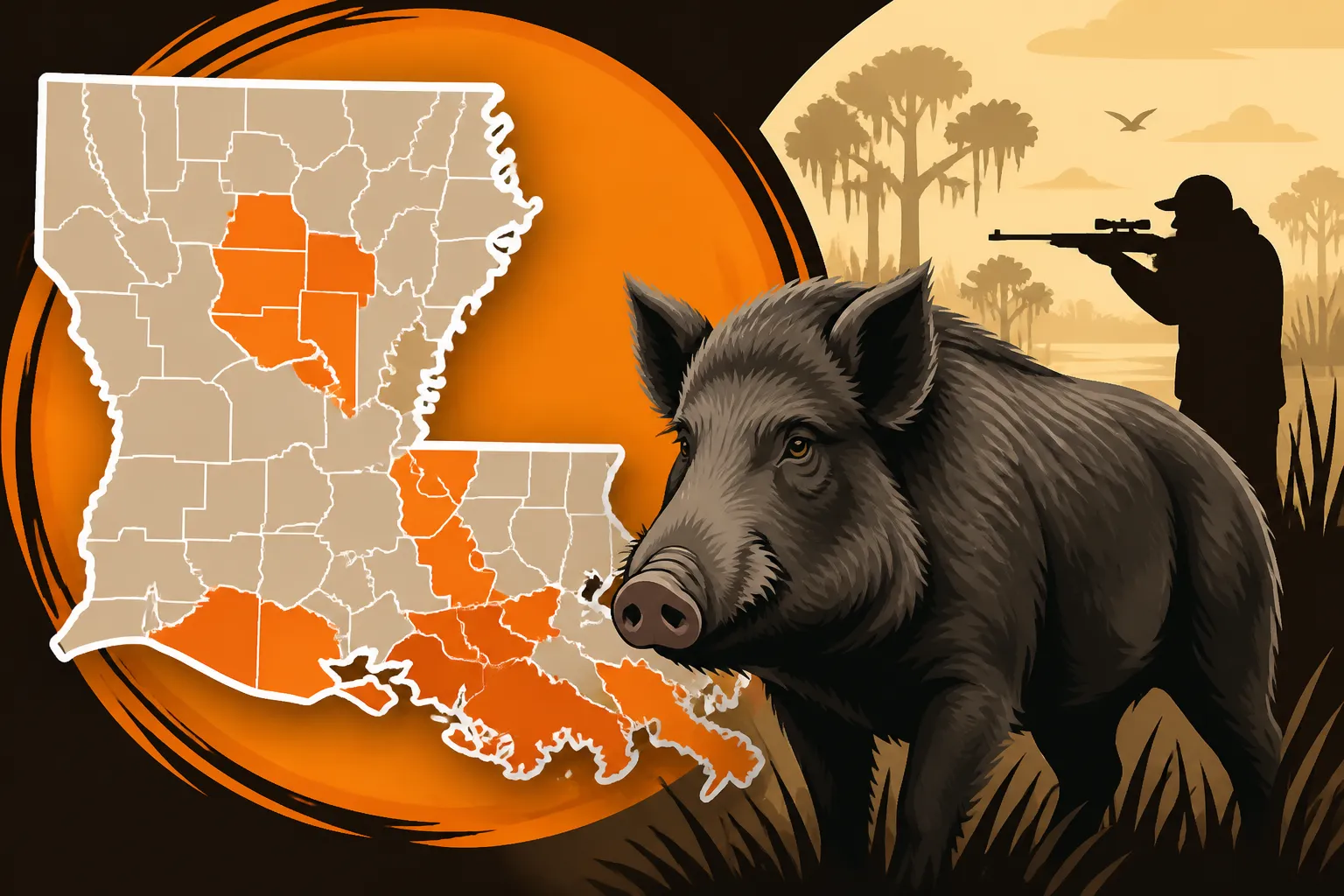
Here are some of the parishes frequently identified as having some of the highest hog populations:
- Tensas Parish: Located in Northeast Louisiana, Tensas Parish is a prime example of an agricultural area bordered by expansive river bottomland. The fertile fields provide an endless buffet, while the dense timber along the Mississippi River and its tributaries offer excellent cover. This combination makes it a hotspot for hog activity and a challenging environment for deer management, particularly with the added complexities of Louisiana's Chronic Wasting Disease Zones which also impacts this region.
- Concordia Parish: Right next door to Tensas, Concordia Parish shares many of the same characteristics. Extensive agricultural operations coupled with the cover of the Mississippi River batture lands create ideal conditions. Hunters in this area regularly encounter large sounders of hogs.
- East Carroll Parish: Further north along the Mississippi, East Carroll Parish is another agricultural powerhouse with significant hog issues. The mixture of vast croplands and riverine forests provides both food and security for these animals.
- Franklin Parish: Situated inland but still featuring rich agricultural land and substantial creek bottoms and timber, Franklin Parish also sees a lot of hog pressure. The numerous small drainages and thickets offer great places for hogs to hide and breed.
- St. Mary Parish: Moving south, into the heart of the Atchafalaya Basin and coastal marsh, St. Mary Parish stands out. The sheer amount of dense swamp, marsh, and bottomland timber provides almost impenetrable cover, making hog control incredibly difficult. The hogs here often feed on marsh vegetation and roots, adapting to a very different kind of environment. Hunting the Atchafalaya Basin for any game animal means you're almost guaranteed to encounter hogs.
- Iberia Parish: Similar to St. Mary, Iberia Parish has a significant portion of its land in the coastal marsh and edges of the Atchafalaya. The mixture of sugarcane fields, marsh, and swamp provides excellent habitat and abundant food sources for hogs.
- Pointe Coupee Parish: Located along the Mississippi River and encompassing parts of the Atchafalaya Floodway, Pointe Coupee Parish offers a mix of agriculture and dense riverine and swamp habitat. This provides a diverse landscape that supports high hog numbers.
- Avoyelles Parish: Situated centrally, Avoyelles Parish also benefits from significant agricultural acreage and proximity to large river systems and their associated bottomland forests, leading to consistent hog populations.
This isn't an exhaustive list, and hogs can be found in high numbers in many other parishes, but these areas consistently come up in discussions about where to find the most intense hog activity due to their unique blend of habitat and food sources.
Utilizing Data and Mapping Tools
For serious hog hunters, simply knowing which parishes have hogs isn't enough; you need to know where within those parishes to focus your efforts. This is where modern mapping and scouting tools become invaluable. Applications like GoHunt provide incredibly detailed aerial imagery, topographical maps, property boundaries, and even public land overlays. Using these tools, you can identify those key factors – dense cover, proximity to agricultural fields, and water sources – without ever stepping foot in the woods.
Before a hunt, I'll often spend hours on my computer, virtually scouting an area on GoHunt, looking for pinch points, bedding areas, travel corridors, and potential hog wallows. I'll mark specific spots where thickets meet crop fields or where a creek bottom provides a natural travel route. This kind of pre-hunt intelligence gathering is critical when targeting an animal as wary and elusive as the feral hog. It helps you prioritize where to set traps, place trail cameras, or plan your stalk. Understanding land ownership, easily visible on platforms like GoHunt, is also crucial to ensure you're hunting legally and with permission.
| Parish (Region) | Primary Habitat/Characteristics | Key Attractors for Hogs |
|---|---|---|
| Tensas (Northeast) | Mississippi River bottomland, extensive row crops | Corn, soybeans, dense riverine timber, floodplains |
| Concordia (Northeast) | Mississippi River batture, agricultural fields | Crop edges, river access, thick cover |
| East Carroll (Northeast) | River valleys, vast agricultural landscapes | Cereal grains, secluded pockets of timber |
| Franklin (Northeast) | Creek bottoms, hardwood forests, mixed agriculture | Acorns, root crops, dense undergrowth, water sources |
| St. Mary (South-Central) | Atchafalaya Basin swamp, coastal marsh, sugarcane | Impenetrable cover, marsh vegetation, cane fields |
| Iberia (South-Central) | Coastal marsh, swamp, sugarcane fields | Sugarcane, marsh roots, high water table |
| Pointe Coupee (Central) | Mississippi River floodway, agriculture, oxbow lakes | River access, flood-plain forests, diverse crops |
| Avoyelles (Central) | Bottomland hardwoods, agricultural fields, bayous | Timbered sloughs, corn, soybeans, water features |
Strategies for Hunting Hogs in Densely Populated Areas
Hunting hogs in Louisiana, especially in areas where they are abundant, can be a rewarding challenge. It's often less about the "trophy" and more about the opportunity to pursue an animal that desperately needs culling, all while putting some delicious wild game on the table. However, their numbers don't necessarily make them easy to hunt; their intelligence and adaptability often mean you need to be strategic.
Scouting for Hog Sign
Even in a high-density parish, hogs aren't evenly distributed. They congregate where the food, water, and cover are best. Therefore, effective scouting is paramount. You're looking for fresh hog sign that tells you they're actively using an area.
- Tracks: Look for distinct, cloven hoofprints. Hog tracks are generally rounder and wider than deer tracks, with dewclaws often showing clearly, especially in soft mud. The fresher the track, the closer the hogs.
- Rooting: This is perhaps the most obvious sign. Hogs use their powerful snouts to dig up the ground in search of roots, tubers, and invertebrates. Fresh rooting will be moist and turned over, indicating recent activity. Extensive rooting in a field or forest floor signals a feeding area.
- Rubs: Hogs often rub against trees, fence posts, or utility poles, especially in muddy areas. You'll see mud caked on the rubbing surface, sometimes with hair stuck to it. These are often near wallows or travel routes.
- Wallows: Hogs love to cool off and coat themselves in mud, particularly during Louisiana's warm months. Look for muddy depressions, often near water sources, that show fresh churned mud and possibly hog hair.
- Droppings: Hog scat varies widely depending on their diet but is typically cylindrical and often contains remnants of plants or seeds.
- Trail Cameras: Deploying trail cameras in areas with fresh sign is perhaps the most effective way to confirm hog presence, determine their travel patterns, and get an idea of their numbers and size. Placing cameras at bait sites or along known travel corridors can provide invaluable intel.
Effective Hunting Methods in High-Pressure Areas
Given their intelligence and the sheer numbers in some parishes, a variety of methods are often employed to control feral hog populations.
- Trapping: This is often the most efficient method for reducing large numbers of hogs. Large panel traps or corral traps can capture multiple hogs at once. Baiting these traps consistently with corn (sometimes soured) can draw hogs in. Success with trapping often requires patience and consistency, pre-baiting an area to habituate hogs before setting the trap mechanism. Details on Trapping Louisiana Feral Hogs can provide more in-depth information.
- Night Hunting: Many hogs become largely nocturnal in response to hunting pressure. Hunting at night with the aid of artificial lights, thermal optics, or night vision equipment is legal on private land in Louisiana under certain conditions. This can be incredibly effective, especially when hogs are moving into agricultural fields to feed. Understanding Night Hunting Hogs With Lights on Private Land is crucial for anyone considering this method.
- Dog Drives: In areas where it's permitted, utilizing trained hog dogs to locate, bay, and sometimes catch hogs is a traditional and highly effective method. This is particularly useful in dense cover where visibility is limited, such as thick swamps or pine plantations. This method requires specialized dogs and handlers, and rules can vary by WMA or private land. Find out more about Running Dogs on Louisiana Feral Hogs.
- Stalking/Still-Hunting: In larger timbered areas or along the edges of fields, careful stalking or still-hunting can be productive, especially early in the morning or late in the evening. Hogs have a keen sense of smell, so playing the wind is critical. Their eyesight isn't great, but their hearing is good, so moving slowly and quietly is essential.
- Baited Stands: Setting up a stand or ground blind over a consistently baited site can be effective, particularly on private land where baiting is legal. While you don't need a hunting application to scatter corn, using tools like GoHunt can help you pick the best stand locations relative to cover and wind direction near your bait. Maintaining a consistent bait site over several days or weeks can draw hogs into a pattern. For more on this, check out Building and Freshening a Hog Bait Site.
Navigating Land Access
Even if you know which parishes have the most hogs, you still need a place to hunt them. This often comes down to navigating land access, a perennial challenge for Louisiana hunters.
- Private Land: This is often where the most consistent hog hunting opportunities lie, especially for methods like trapping and night hunting. Farmers and landowners are usually eager to have hunters help reduce hog damage. Building relationships with landowners in these high-density parishes can open up many opportunities. Always ensure you have explicit permission, preferably in writing, to hunt on private land. The question of Do Feral Hogs Need Landowner Permission? is always important to confirm.
- Public Land: Louisiana has numerous Wildlife Management Areas (WMAs) and national forest lands where hog hunting is permitted. However, regulations can vary significantly between WMAs regarding specific hunting methods (e.g., dog hunting, night hunting, baiting) and season dates. Always check the Louisiana Department of Wildlife and Fisheries (LDWF) regulations for the specific WMA you plan to hunt. Public land can also see higher hunting pressure, making hogs warier and more nocturnal. Often, the best public land hog hunting involves getting deep into less accessible areas, away from roads and easy entry points. Hunting Louisiana's Year-Round Feral Hogs on public land often means year-round hunting, which is a huge bonus.
What to Do After the Harvest
Successfully harvesting a feral hog is a triumph, but the work isn't over when the shot rings out. Proper post-harvest care is essential, especially in Louisiana's often-warm climate.
Handling the Meat Safely
Feral hog meat can be absolutely delicious, but it requires careful handling to ensure its quality and safety. Due to Louisiana's generally warm weather, rapid cooling of the carcass is critical. Field dress the hog as quickly as possible to allow the body heat to dissipate. This means removing the entrails promptly. If you're far from a cooler or processing facility, consider skinning and quartering the hog in the field, placing the meat in game bags, and then packing it with ice.
Feral hogs can carry various parasites and diseases, notably trichinosis. While thorough cooking eliminates this risk, it's always wise to handle raw meat with gloves and practice good hygiene. Cook feral hog meat to an internal temperature of at least 160°F (71°C) to ensure any potential parasites are destroyed. Treating hog meat like domestic pork, in terms of cooking temperature and hygiene, is a good rule of thumb. Understanding Shot Placement on a Feral Hog not only helps with a quick, ethical kill but also minimizes damage to the prime cuts of meat.
Reporting and Management Efforts
While there's no mandatory statewide reporting for harvested feral hogs in Louisiana (unlike deer and turkey), hunters play a vital role in management efforts. By reducing hog numbers, you're directly contributing to the health of our ecosystems and protecting agricultural interests. Some landowners might ask you to report your harvest to them so they can track the impact of hunting efforts on their property.
Additionally, if you encounter any hogs showing signs of illness or unusual behavior, reporting it to the LDWF can help with disease monitoring. Your efforts, whether through trapping, hunting, or participating in organized control efforts, are a critical part of the ongoing battle against these destructive animals. Every hog removed is a win for Louisiana's wildlife and agricultural lands.
Disclaimer
This article is for general informational purposes only and does not constitute professional advice. Laws, prices and regulations vary by location and change over time. Consult a qualified professional for guidance on your specific situation.