Mange in Louisiana Coyotes and Foxes
It’s a sight that can stop any hunter or outdoor enthusiast in their tracks: a coyote or a fox, usually a symbol of wild cunning and health, looking ragged, emaciated, and almost pitiful. When you see an animal like that, with patchy fur and raw-looking skin, your first thought is often concern, quickly followed by questions about what's wrong and what it means for the local wildlife. This guide is here to shed some light on one of the most common culprits behind these distressing sightings in Louisiana: mange, explaining what it is, how to identify it, and what responsible hunters and landowners can do.
What is Mange and How Does it Affect Louisiana Wildlife?
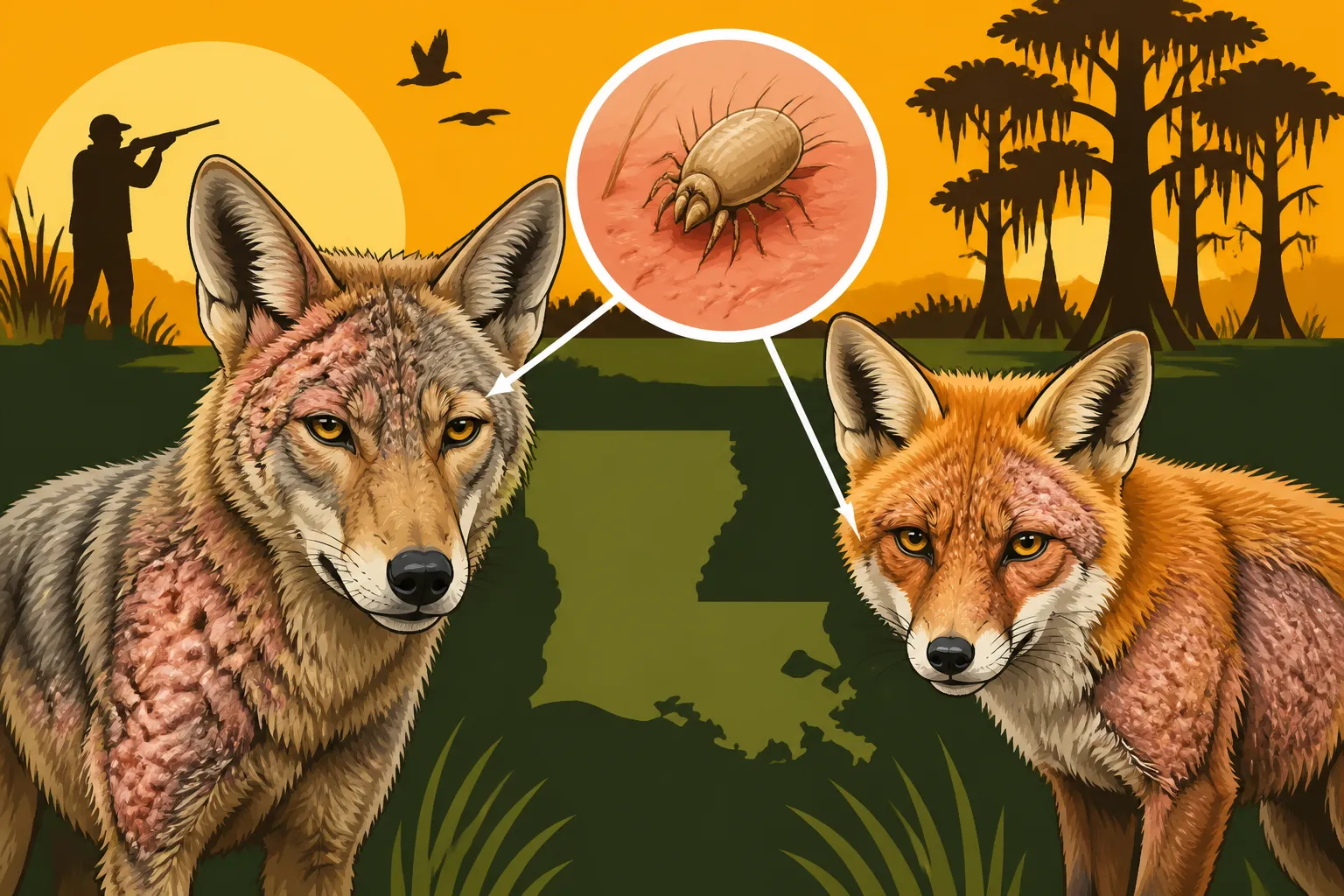
When we talk about mange in Louisiana’s wild canids – primarily coyotes and foxes – we’re almost always referring to sarcoptic mange. This isn't just a simple skin irritation; it's a deeply unpleasant and often debilitating condition caused by microscopic mites, Sarcoptes scabiei, burrowing into the animal's skin. Think about it: tiny creatures constantly digging and feeding beneath the surface, leading to an almost unbearable itch.
This incessant itching is the primary and most visible symptom. The affected animal scratches relentlessly, trying to get relief, but only succeeds in breaking the skin, leading to hair loss, open sores, and thickened, crusty scabs. It's a vicious cycle. What starts as a small patch of irritation can quickly spread across the entire body. Imagine being out in the Louisiana humidity, already dealing with mosquitos and gnats, but then also having your skin constantly under attack from within. The discomfort is immense, and it takes a heavy toll on the animal's energy and overall health.
Mange weakens these animals significantly. The constant itching and skin damage divert energy away from essential bodily functions like hunting, foraging, and maintaining body temperature. A mangy coyote, for example, will struggle to keep warm in a winter cold snap or cool in the sweltering summer. Their immune system becomes compromised, making them more susceptible to secondary bacterial infections from all the scratching. These infections can be quite severe, sometimes leading to death. We, as hunters and conservationists, rely on healthy Louisiana Coyote Range and Density to maintain ecological balance, and a widespread mange outbreak can definitely throw a wrench into that.
The mites spread through direct contact between animals, or even indirectly through shared bedding areas, dens, or popular travel corridors. So, if one coyote has it, it’s not long before others in the pack or those using the same territories might pick it up. This is particularly concerning in areas where coyote or fox populations are dense. While mange mites are species-specific to a degree, meaning a canine mite prefers a canine host, there is a possibility for transmission to domestic dogs if they come into contact with an infected wild animal or its contaminated bedding. This is why understanding and identifying mange is not just about wildlife, but also about protecting our own beloved companions.
Identifying Mange in Louisiana Coyotes and Foxes
Spotting mange in a wild animal, especially at a distance or in passing, isn't always straightforward, but there are distinct visual and behavioral cues that can help you confirm your suspicions. As someone who spends a lot of time in the woods, you learn to read the health of the animals around you.
Visual Clues: The Tell-Tale Signs on Their Coat and Skin
The most obvious visual sign is hair loss. This usually starts in patches, often around the tail, hindquarters, ears, and face. As the condition progresses, the hair loss can become extensive, leaving large areas of skin exposed. This is particularly noticeable on animals like foxes, whose thick, bushy tails can become thin and rat-like. The skin beneath the lost fur will appear inflamed, red, and often thickened and wrinkled, like old leather. You might see crusty scabs or scales, sometimes even open sores from constant scratching. In severe cases, the animal might look almost alien, with large bald patches and a ghastly appearance.
Think about a time you might have seen a squirrel with a few bare patches in its fur during the late winter – that’s often a sign of seasonal shedding or external parasites, but it's usually localized and the skin underneath looks healthy. Mange, however, is much more aggressive and damaging to the skin itself. A healthy coat is a sign of a healthy animal; a mangy coat is a red flag.
Behavioral Cues: More Than Just an Itch
Beyond the physical appearance, mangy animals often exhibit certain behaviors that stand out. The most prominent is excessive scratching and biting at their own skin. They might stop frequently to scratch, even when they should be focused on hunting or moving. You might see them rubbing against trees, logs, or even the ground, desperately trying to alleviate the intense itch.
Another heartbreaking sign is lethargy and emaciation. Because their body is fighting the mites and secondary infections, and they're expending so much energy on scratching and maintaining body temperature without their protective fur, they become weak and thin. Their ribs might be visible, and their movements might be slow and uncoordinated.
Perhaps one of the most concerning behavioral changes for hunters and landowners is a lack of fear of humans. A healthy coyote or fox is naturally wary and elusive. A mangy animal, however, might be so sick and weakened that its natural instincts are dulled. It might appear in open areas during the day, linger longer than it should, or not flee when it spots a human. This isn't a sign of aggression, but rather extreme debilitation, and it's a stark indicator of how severe their condition has become. If you're out Scouting Louisiana Public Land Before Season and come across an animal acting this way, it's definitely something to pay attention to.
Distinguishing Mange from Other Conditions
It’s important to remember that not all hair loss or skin issues are mange. Malnutrition, other parasites (like fleas or ticks), fungal infections (ringworm), or even environmental irritants can cause skin problems. However, the combination of widespread, progressive hair loss, thick crusty skin, and intense, relentless itching is highly indicative of sarcoptic mange.
Here's a quick comparison table to help distinguish mange from some other common issues you might encounter:
| Characteristic | Sarcoptic Mange | Nutritional Deficiency | Fleas/Ticks | Fungal Infection (Ringworm) |
|---|---|---|---|---|
| Primary Symptom | Intense, relentless itching, progressive hair loss | Dull coat, poor body condition, localized hair loss | Mild to moderate itching, small irritated spots | Circular patches of hair loss, scaly skin |
| Skin Appearance | Red, inflamed, thickened, crusted, scabby sores | Dry, flaky, sometimes thin or sparse hair | Red bumps, scabs from scratching, flea dirt | Red, raised ring-like lesions, flaking |
| Hair Loss Pattern | Patchy, widespread, often starting on tail/face | Generalized thinning, poor quality hair | Localized to areas of irritation, often ventral | Circular, clearly defined patches |
| Body Condition | Often emaciated, lethargic | Poor, underweight, but can still be active | Varies, usually normal if not severe | Varies, usually normal |
| Contagious? | Highly contagious | No | Contagious to other animals | Contagious to other animals and humans |
If you're using tools like GoHunt for mapping and scouting, you can even make notes about the general health and behavior of the animals you're observing. This kind of detailed observation helps build a picture of local wildlife health over time.
The Broader Impact of Mange on Louisiana's Ecosystem
Mange isn't just a problem for the individual animal suffering from it; it has ripples that can affect the wider ecosystem, impacting population dynamics and even the health of other species. As stewards of our wild places, understanding these broader implications is key.
Population Dynamics and Predator-Prey Relationships
When mange becomes prevalent in a local coyote or fox population, it can significantly impact their numbers. Severely affected animals often die from exposure, starvation, or secondary infections. This can lead to a localized decline in predator density. Now, you might think, "Great, fewer coyotes means more deer or rabbits!" And yes, in the very short term, a dip in predator numbers might mean a slight increase in prey species like those we track in Louisiana Deer Population Estimate or Louisiana Cottontail Population Trend. However, a healthy ecosystem relies on a balanced predator-prey relationship.
A reduced coyote population due to disease could, over time, lead to an overpopulation of prey animals, which then puts stress on vegetation and other resources. Conversely, weakened coyotes might become less effective hunters of their natural prey and instead turn to easier, more opportunistic food sources, sometimes bringing them into closer contact with human settlements or livestock. This can lead to increased conflicts with farmers or homeowners, which is not good for anyone involved.
Spillover Risk to Domestic Animals
While wild animals are our focus, it’s crucial to understand that sarcoptic mange mites can (and do) jump to domestic animals, particularly dogs. If your hunting dog, farm dog, or even a backyard pet comes into contact with an infected wild animal or spends time in an area recently frequented by a mangy fox or coyote, there’s a risk of transmission. The symptoms in domestic dogs are very similar: intense itching, hair loss, redness, and crusting.
This potential for spillover means that managing mange in wildlife also has a component of responsible pet ownership. Ensuring your dogs are on a regular parasite prevention program and are up-to-date on their veterinary care is a critical step in preventing them from contracting mange from wild sources. It’s also a good practice to clean and disinfect kennels or bedding areas regularly, especially if located in rural areas where wild animals might roam.
Overall Wildlife Health and Management
The presence of mange in a wildlife population can also be an indicator of other underlying issues. Stressed populations, perhaps due to habitat loss, food scarcity, or other diseases, might be more susceptible to severe mange outbreaks. This highlights the importance of comprehensive Louisiana Wildlife Disease Monitoring programs carried out by agencies like the Louisiana Department of Wildlife and Fisheries (LDWF). They collect data on disease prevalence, track trends, and implement management strategies to maintain the overall health of our state’s wildlife.
For hunters, encountering mangy animals means being vigilant about what you touch and how you handle any harvested game. While mange mites typically don't thrive on humans, they can cause temporary skin irritation, often called "scabies," if they burrow into your skin. It’s always best to wear gloves when handling any wild animal carcass, and to practice good hygiene after being in the field. This extends to understanding other diseases, like the rules around Louisiana's Chronic Wasting Disease Zones, which require a different but equally serious level of caution.
What Hunters and Landowners Should Do About Mange
Encountering a mangy coyote or fox can be unsettling, and the natural inclination is often to want to help. However, direct intervention with wild animals suffering from mange is generally not advised and can even be dangerous. Our role as hunters and landowners shifts from direct rescue to responsible management and reporting.
Reporting Sightings to LDWF
The first and most important step when you spot an animal you suspect has mange, especially if it’s severely affected, is to report it to the Louisiana Department of Wildlife and Fisheries (LDWF). They are the experts in wildlife health and population management. They can assess the situation, determine if there's a wider outbreak, and decide on the most appropriate course of action. This information is vital for their Reporting a Sick Animal in Louisiana efforts and helps them track disease prevalence across the state. Don't assume someone else will report it; your observation contributes to a larger picture of our state's wildlife health.
When you report, try to provide as much detail as possible:
- Location: Specific as you can be – parish, road, nearest landmark, or even GPS coordinates if you use a mapping tool like GoHunt.
- Date and Time: When you observed the animal.
- Species: Coyote or fox.
- Condition: Describe the extent of hair loss, skin condition, and behavior (lethargy, constant scratching, lack of fear).
- Number of animals: If you saw more than one.
Ethical Considerations for Harvesting Affected Animals
For hunters, especially during open seasons, the question of harvesting a mangy animal often arises. Generally, removing severely mangy animals is considered an ethical and beneficial practice for the local population. These animals are often suffering immensely, and their chances of recovery are slim. By removing them, you can prevent the further spread of mites to other healthy animals, and you're essentially providing a mercy killing to an animal that would otherwise succumb to a slow, painful death.
This isn't about trophy hunting; it's about population health management. Coyotes and foxes are furbearers and sometimes considered nuisance animals, so harvesting them is often permissible under Louisiana Small Game Season Rules or specific nuisance animal regulations, such as those related to Louisiana Feral Hog Regulations. Always check current regulations for the species and location you are hunting. When making such a decision, consider the animal's condition: is it clearly suffering, or is it just a minor patch of hair loss? Severely emaciated and lethargic animals are prime candidates for removal.
Proper Carcass Disposal and Hygiene
If you do harvest an animal with mange, proper carcass disposal is absolutely critical to prevent further spread of the mites. Do not simply leave the carcass in the open where other animals, wild or domestic, could come into contact with it. The best practice is to bury the carcass deeply or incinerate it if allowed and feasible. This ensures the mites, and any other potential pathogens, are contained.
Personal hygiene is also paramount. Always wear gloves when handling a mangy animal. After handling the carcass, clean and disinfect any tools, clothing, or boots that came into contact with it. Wash your hands thoroughly with soap and water. Remember, while humans are not typical hosts for these mites, temporary skin irritation can occur. This level of caution is consistent with the best practices taught in Louisiana Hunter Education Requirements.
Protecting Domestic Animals
For landowners, especially those with dogs, vigilance is key. If you know there are mangy wild animals in your area, take precautions with your pets.
- Supervise Outdoor Time: Keep dogs on a leash or in a fenced area to prevent direct contact with wild animals.
- Parasite Prevention: Ensure your dogs are on a veterinarian-prescribed flea, tick, and mite preventative. This is the best defense.
- Monitor Pet Health: Regularly check your pets for excessive scratching, hair loss, or skin lesions. If you notice any of these signs, consult your veterinarian promptly.
- Cleanliness: Regularly clean and disinfect outdoor kennels, dog houses, and bedding.
By taking these proactive steps and acting responsibly, hunters and landowners can play a vital role in minimizing the impact of mange on Louisiana's beautiful wildlife.
Disclaimer
This article is for general informational purposes only and does not constitute professional advice. Laws, prices and regulations vary by location and change over time. Consult a qualified professional for guidance on your specific situation.