Louisiana Coyote Range and Density
It can feel like coyotes are absolutely everywhere in Louisiana these days, and if you've spent any time in the woods or even just driving through rural areas, you've probably seen or heard them. For hunters, landowners, and even just folks living near undeveloped land, understanding where these clever canines are most prevalent and why their numbers seem to be booming is crucial for managing their impact and navigating the landscape. This guide will dive deep into the fascinating, sometimes frustrating, world of Louisiana coyotes, exploring their geographical spread and the factors that influence their population density across our diverse state.
Understanding the Coyote's Presence in Louisiana
The perception that coyotes are a relatively new fixture in Louisiana's ecosystem isn't far off the mark. While they are now firmly established residents, their journey to becoming ubiquitous across the state is a relatively recent chapter in our wildlife history. They're incredibly adaptable animals, which is why they've managed to thrive in so many different environments, from dense timber to suburban fringes.
Historical Arrival and Spread Across the State
Unlike many of our native game species, coyotes aren't indigenous to Louisiana's historical landscape. Their presence here is a testament to their incredible resilience and adaptability, as they expanded their range from the western plains states. You see, as larger predators like wolves were pushed out of their historical territories, coyotes, being the opportunists they are, began to fill that ecological void. This expansion wasn't a sudden invasion but a gradual creep, primarily starting in the early to mid-20th century. They followed river drainages and fragmented agricultural landscapes, steadily moving eastward and southward into our state.
It's fascinating to consider just how quickly they colonized Louisiana. Imagine an animal that can survive on almost anything, reproduce prolifically, and learn from every encounter—that's the coyote. They didn't need pristine wilderness; in fact, human alteration of the landscape, such as clearing forests for farming and ranching, actually created ideal conditions for them. This provided a mosaic of cover, open hunting grounds, and an abundance of small prey animals like rabbits and rodents, all of which are coyote staples. For more details on this historical journey, you might find our article on When Louisiana Coyotes First Arrived to be a fascinating read. They truly are masters of adaptation, turning what many other species see as challenges into opportunities.
General Distribution: Where They Are and Aren't
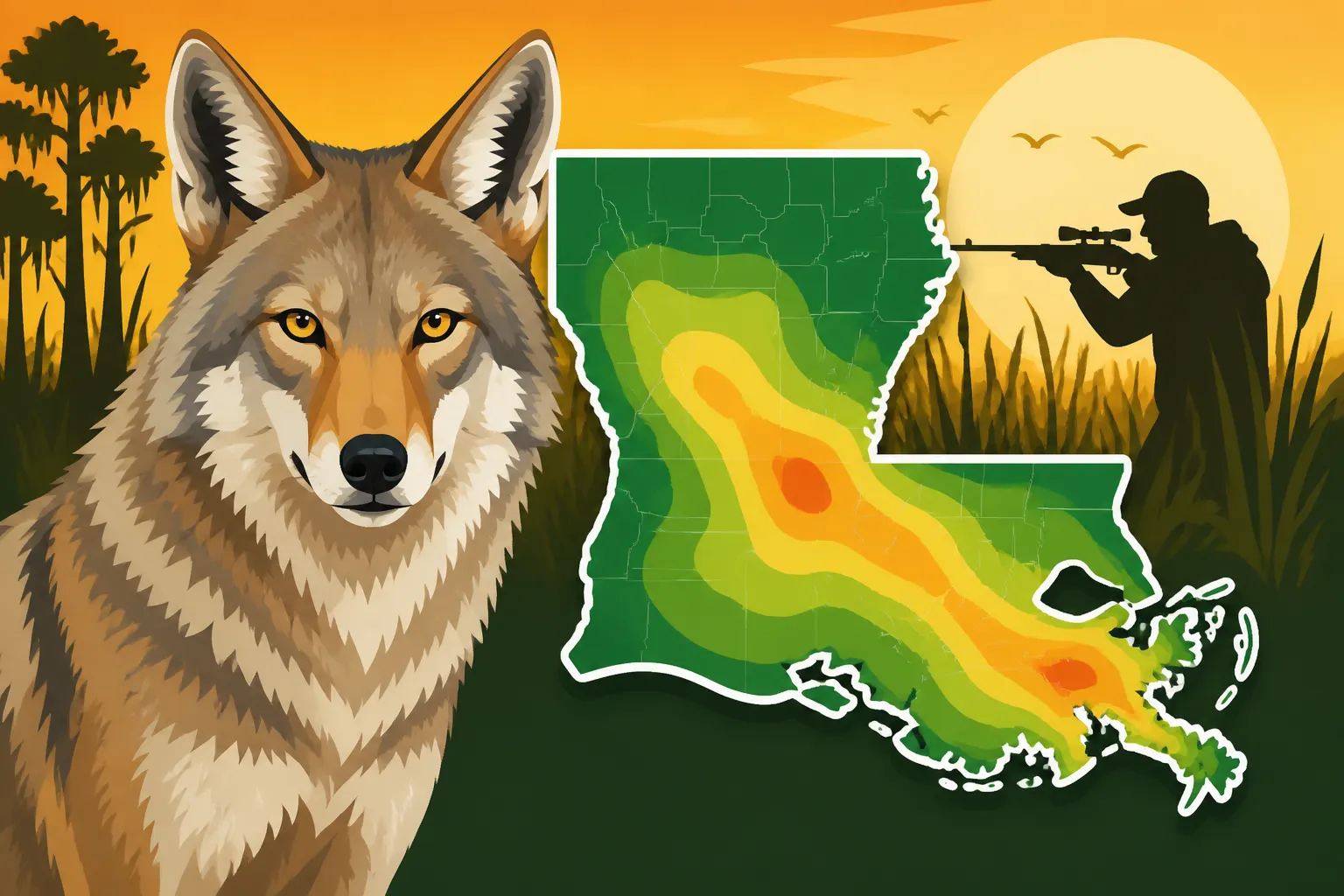
Today, it's fair to say that coyotes are found in all 64 parishes of Louisiana. That's right, from the piney woods of the north to the coastal marshes, there isn't really a corner of the state where they haven't established at least some presence. However, their density, or how many coyotes you're likely to encounter in a given area, varies significantly. You're far more likely to see or hear a coyote in the agricultural fields of northeast Louisiana or the sprawling pine plantations of the central part of the state than you are deep in a dense, inaccessible cypress-tupelo swamp.
The key to understanding their distribution really comes down to habitat and food. Areas with a mix of open fields, brushy cover, and scattered timber, often found in agricultural or transitional zones, tend to hold higher numbers. These environments offer prime hunting grounds, easy travel corridors, and plenty of denning sites. While they might traverse deep swamps or marshes, these aren't typically their preferred core habitats for raising pups or finding consistent food sources, although they will adapt to exploit opportunities even there. Even in suburban areas, coyotes are increasingly making a home, often going unnoticed, utilizing green spaces, drainage ditches, and undeveloped lots. They are truly one of the most widespread predators we have now, and their ubiquitous nature means that anyone hunting or managing land in Louisiana needs to consider them.
Factors Influencing Coyote Density
You might wonder why some areas seem to be absolutely overrun with coyotes, while in others, they're more of a rare sighting. It’s not just random chance; several key ecological factors play a huge role in determining how many coyotes an area can support. Understanding these dynamics is crucial for anyone trying to manage wildlife populations or even just protect their livestock.
Habitat Preferences and Adaptability
Coyotes are the ultimate generalists when it comes to habitat. They don't demand pristine old-growth forests or vast, untouched plains. Instead, they thrive in edge habitats—the places where two different ecosystems meet. Think about the transition zone between a dense timber stand and an open agricultural field, or where a sprawling subdivision meets a patch of woods. These "edges" provide a perfect blend of cover for security and denning, along with easy access to open areas for hunting prey. They utilize dense brush, fallen timber, drainage ditches, and even abandoned structures for shelter and raising their young. This incredible adaptability means they can make a home almost anywhere that offers a basic combination of food, water, and cover, which is why you can find them from our suburban backyards to our most remote public lands.
In Louisiana, this often translates to higher densities in areas with fragmented forests, extensive agricultural lands, and even the periphery of urban and suburban developments. They exploit pipeline rights-of-way, logging roads, and creek bottoms as travel corridors and hunting routes. A hunter utilizing tools like a GoHunt mapping app might notice how coyote sign often follows these linear features, using them as highways through the landscape. They’ve even figured out how to navigate the slightly more challenging terrain of the coastal marsh, using higher ground, levees, and spoil banks to their advantage. Their survival strategy is simple: be flexible, be opportunistic, and make the most of whatever the landscape offers. This is a big reason why they've been so successful in spreading across the state.
Prey Availability and Food Sources
If habitat is their home, then food is the fuel that drives coyote populations. And when it comes to diet, coyotes are just as opportunistic as they are with habitat. They are omnivores, meaning they’ll eat almost anything, but their primary diet consists of small to medium-sized mammals and birds. This includes a heavy reliance on cottontail rabbits, mice, rats, and even insects when times are tough. Where these prey animals are abundant, coyote populations are almost guaranteed to be higher. Consider a robust population of Louisiana Squirrel and Rabbit Populations, and you’ve got a buffet line for coyotes.
Beyond small game, coyotes are notorious for preying on deer fawns. This predation, particularly during the fawning season, can have a significant impact on local deer populations, which is why understanding Louisiana Deer Fawn Survival Rates is so important for wildlife managers. They also aren't shy about scavenging carrion, including deer killed by vehicles or other hunters, and will readily exploit unattended pet food, garbage, and even domestic poultry or small livestock if given the opportunity. In agricultural areas, they might consume fruits, berries, and even crops like watermelons. It’s this incredibly diverse diet that allows them to maintain high densities even when specific prey populations fluctuate. If one food source is scarce, they simply switch to another, ensuring their survival and continued expansion.
Human Impact and Management Efforts
Humans, whether intentionally or unintentionally, play a significant role in influencing coyote density across Louisiana. Our land use practices, hunting regulations, and even our casual behaviors all contribute to shaping their populations. For instance, extensive clear-cutting and subsequent regrowth in timber operations can initially create ideal conditions for coyotes, offering dense young growth for cover and attracting small prey, leading to a temporary increase in local densities. Conversely, intensive agriculture might reduce some natural cover, but the edges of fields and the abundance of rodents drawn to crops can still support thriving coyote populations.
Hunting and trapping are the most direct forms of human impact designed to manage coyote numbers. In Louisiana, coyotes are considered an unprotected quadrupeds, meaning they can be hunted year-round without specific seasons or bag limits on private land, and with minimal restrictions on public lands. Many hunters engage in Predator Calling Louisiana Farm Country to help control their numbers, especially to protect deer and turkey populations. However, studies often show that lethal control, while effective locally and in the short term, rarely leads to significant, long-term statewide population reductions due to their high reproductive rates and compensatory mechanisms. They respond to pressure by producing larger litters and dispersing into new areas more readily. Urbanization, while seeming counter-intuitive, can also lead to higher coyote densities as they adapt to human environments, finding refuge in green spaces and feasting on readily available food sources like garbage and rodents, often becoming bolder as they habituate to human presence.
Regional Differences in Coyote Populations
Louisiana is a state of incredible ecological diversity, from the northern uplands to the southern coastal marshes. This variety in landscape and land use means that coyote populations don't look the same everywhere you go. Each region presents a unique set of challenges and opportunities for these adaptable predators, leading to distinct patterns in their range and density.
North Louisiana: Piney Hills and Farm Country
If you're talking about high coyote density in Louisiana, you're often talking about North Louisiana. This region, characterized by its rolling piney hills, mixed hardwood bottoms, and extensive agricultural fields, provides nearly perfect habitat for coyotes. The pine plantations, particularly those in various stages of growth, offer a mosaic of dense cover and open hunting ground. Clear-cuts quickly grow into thickets that are perfect for denning and concealing young pups, while older stands offer travel corridors and scattered prey. The numerous creek drainages and river bottoms, like those in the Tensas River Basin, provide additional cover, water sources, and abundant prey.
The vast stretches of farm country, especially in the northeastern part of the state, are also hotbeds for coyote activity. Fields of corn, soybeans, and cotton provide excellent foraging opportunities, attracting rodents, rabbits, and birds—all prime coyote food. The edges of these fields, bordered by tree lines, ditches, and brush, are classic "edge habitats" where coyotes thrive. Landowners here often face challenges with coyotes preying on calves or poultry, making proactive management a regular part of life. You'll hear more howls and see more tracks in these regions, making it a prime area for hunters looking to engage in predator control, especially when trying to protect deer and turkey populations.
Central and Southwest Louisiana: Kisatchie and Prairie Edges
Moving into Central and Southwest Louisiana, the coyote picture shifts slightly but remains robust. This area is home to significant tracts of public land, including the Kisatchie National Forest, which offers vast expanses of mixed pine and hardwood forests. While these larger blocks of timber might seem less "edgy" than farm country, coyotes are still prevalent, utilizing the logging roads, clear-cuts, and natural openings. They adapt to the forest environment, focusing on deer fawns, rabbits, and squirrels found within the diverse understory. Hunters exploring Kisatchie National Forest Hunting will undoubtedly encounter coyote sign.
Further west and south, towards the prairie regions around Lake Charles and Lafayette, the landscape opens up dramatically. Here, coyotes adapt to the more open grasslands, using fencerows, small woodlots, and the edges of agricultural fields for cover and hunting. The prevalence of cattle ranches in these areas means that coyotes often encounter easy meals in the form of afterbirth or even vulnerable calves, leading to potential conflicts with livestock owners. While perhaps not as densely populated as the mixed agricultural zones of the northeast, the coyote population here is still strong, thriving on the combination of open hunting grounds and available cover along ditches and tree lines. Understanding the terrain, especially with a good mapping tool, is crucial for finding them in these expansive areas.
South Louisiana: Basin and Coastal Marsh Considerations
South Louisiana presents the most unique habitat challenges for coyotes, and consequently, their densities are generally lower than in other parts of the state. The sprawling Atchafalaya Basin, with its dense cypress-tupelo swamps, deep sloughs, and frequently flooded terrain, isn't traditionally prime coyote country. Movement is harder, and consistent dry ground for denning can be scarce. However, even here, coyotes have established a presence. They utilize higher ground, spoil banks, levees, and the edges of drier bottomland hardwood forests, adapting their hunting strategies to the aquatic environment. If you're Hunting the Atchafalaya Basin, you might still come across them, especially on the periphery of the basin where it meets higher ground.
The coastal marsh parishes, such as Cameron, Vermilion, and Terrebonne, offer another distinct environment. While extensive open marsh may seem uninviting, coyotes are found on cheniers (ridges of higher ground), natural levees, and human-made spoil banks created by canals and oilfield operations. These elevated areas provide dry ground for denning and travel, and they often hold abundant prey like rodents, rabbits (on the higher ridges), and even some waterfowl. Their diet in these areas can be quite diverse, including crabs, fish, and birds. While not as numerous as in the piney woods, their presence in even these challenging environments speaks volumes about their incredible adaptability and why managing them is a year-round consideration across all of Louisiana.
Ecological Role and Management Challenges
Coyotes, despite being relatively new to Louisiana, have firmly cemented their place in the state's ecosystem. They are now an integral part of the food web, acting as a significant predator, particularly on smaller prey species. However, their presence also brings challenges, especially for landowners and wildlife managers. Understanding their role is the first step toward effective coexistence or control. Our article on Coyotes and Predators in Louisiana further explores their place in the state's predator hierarchy.
Impact on Native Wildlife and Livestock
The most commonly discussed impact of coyotes, especially among hunters and ranchers, is their predation on other animals. They are highly efficient predators, and while their diet is incredibly varied, they do target specific species that humans value. For deer hunters, the most significant concern is often their predation on fawns. Studies have shown that coyotes can be a major factor in fawn mortality, especially in areas with high coyote densities. This can affect the overall recruitment of young deer into the population, potentially impacting future hunting opportunities and herd health. Likewise, wild turkey populations can also be affected, as coyotes prey on nests, poults, and even adult birds, particularly during the nesting and brooding seasons. Their impact extends to small game like rabbits and squirrels, which form a substantial part of their diet.
For livestock owners, especially those with small ruminants like sheep and goats, or poultry, coyotes represent a direct economic threat. They are opportunistic and will readily exploit vulnerable livestock, often resulting in significant financial losses for farmers. Even cattle producers can face issues, primarily with calf predation, although healthy, adult cattle are generally safe. This economic pressure often drives the demand for coyote control measures, leading to debates about the most effective and humane ways to mitigate these conflicts. It's a complex issue, balancing the ecological role of a widespread predator with the economic realities of rural living.
Coexistence and Control Strategies
Given their widespread presence and adaptability, completely eliminating coyotes from Louisiana is not a realistic goal. Instead, the focus for many landowners and wildlife managers has shifted towards coexistence and localized control strategies. Coexistence often involves implementing non-lethal deterrents, particularly for livestock protection. This can include using guard animals (dogs, donkeys, llamas), improving fencing, using deterrents like noisemakers or lights, and practicing good husbandry to remove attractants like carrion or afterbirth. For deer and turkey populations, habitat management that provides ample cover for fawns and poults can help reduce their vulnerability.
When lethal control becomes necessary, it's often targeted and strategic. Night Hunting Rules for Louisiana Coyotes on private land allow hunters to pursue them with artificial lights, which can be an effective method to remove problem animals. Trapping, both live and lethal, is another common tool used by professional wildlife damage controllers or experienced trappers. Deer hunters, while in the field, often take advantage of year-round hunting regulations to reduce local coyote numbers, sometimes incorporating Using a Ground Blind on Louisiana Public Land for a quiet ambush. It's important to remember that any hunting or trapping activities should align with state regulations, and for those new to hunting, fulfilling Louisiana Hunter Education Requirements is a must. The most effective strategies usually involve a combination of approaches, tailored to the specific context and goals of the landowner or manager, recognizing that ongoing effort is usually required to manage these intelligent and resilient animals.
Here's a quick look at how coyote density tends to vary across Louisiana:
| Region | Typical Coyote Density | Primary Habitat Types | Key Influencing Factors | Common Concerns for Humans |
|---|---|---|---|---|
| North Louisiana | High | Piney woods, farm country, mixed hardwoods | Abundant small game, fawns, agricultural edges, dense cover | Fawn predation, livestock (poultry, calves) |
| Central Louisiana | Moderate to High | Mixed pine/hardwood forests, clear-cuts, agricultural fringes | Diverse prey base, varied cover from timber operations | Fawn predation, small game impacts |
| Southwest Louisiana | Moderate | Prairies, agricultural fields, scattered woodlots | Open hunting grounds, livestock, rodent populations | Calf predation, small game |
| Atchafalaya Basin | Low to Moderate | Cypress-tupelo swamps, natural levees, bottomland hardwoods | Limited dry ground, challenging travel, but adaptable to higher ground | Occasional small game, opportunistic |
| Coastal Marsh | Low | Marsh ridges, spoil banks, natural levees | Limited terrestrial habitat, specialized diet (crabs, fish, birds) | Minimal human conflict usually |
Ultimately, coyotes are here to stay in Louisiana. They've proven their ability to adapt and thrive in nearly every environment our state offers. For hunters, landowners, and outdoor enthusiasts, understanding their movements, preferred habitats, and impact is an ongoing process. Tools like a GoHunt mapping system can provide invaluable insights into the landscape, helping you identify areas of prime coyote activity by analyzing terrain features, proximity to water, and cover—all crucial elements for either avoiding or engaging with these clever canines. Whether you're trying to protect your property or simply understand the ecosystem around you, keeping an eye on Louisiana's coyote population is a vital part of appreciating our wild state.
Disclaimer
This article is for general informational purposes only and does not constitute professional advice. Laws, prices and regulations vary by location and change over time. Consult a qualified professional for guidance on your specific situation.