Wild Turkeys in Louisiana
You've probably spent countless hours trying to figure out Louisiana's wild turkeys, only to be met with silent woods or gobblers that seem to vanish into thin air. It’s a common frustration, especially with our notoriously elusive birds and varied hunting conditions across the state. This guide is here to untangle the complexities, offering a deep dive into everything you need to know about pursuing wild turkeys in the Bayou State, from their incredible comeback story to the nuanced strategies that put success within reach.
A Brief History of Louisiana's Wild Turkeys
It's hard to imagine, given their current presence, but there was a time when the wild turkey in Louisiana was teetering on the brink. Their story is a testament to dedicated conservation efforts and the resilience of wildlife.
The Vanishing Act: Historic Decline and Extirpation
Back in the day, Louisiana's forests and swamps were teeming with wild turkeys. They were a common sight, a vital food source, and an integral part of the ecosystem. However, as the 19th and early 20th centuries rolled on, a perfect storm of factors led to their dramatic decline. Unregulated hunting, often year-round and without bag limits, put immense pressure on populations. Perhaps even more devastating was the widespread habitat destruction that accompanied logging booms and agricultural expansion. Vast tracts of old-growth timber, the lifeblood of turkey habitat, were cleared. This combination of intense harvest and habitat loss pushed the wild turkey to near extirpation in many parts of the state. By the 1940s, it was estimated that fewer than 1,500 wild turkeys remained in isolated pockets across Louisiana, a stark contrast to their historic numbers. It truly was a vanishing act that left hunters and conservationists wondering if they'd ever hear a gobble again in many familiar woods.
The Comeback Story: Restoration Efforts and Successes
Thankfully, this isn't a tragic tale without a happy ending. The Louisiana Department of Wildlife and Fisheries (LDWF), along with dedicated conservation groups like the National Wild Turkey Federation (NWTF), spearheaded an incredible restoration program. Beginning in the 1960s, a systematic trapping and transplanting effort commenced. Wild turkeys were live-trapped from healthy populations in other states, and from a few remaining strongholds within Louisiana, then relocated to suitable habitats across the state. These weren't just random drops; biologists carefully selected areas with good habitat and protective regulations in place. Over decades, thousands of birds were moved, often involving arduous work in challenging terrain. The success of these efforts was nothing short of phenomenal. The transplanted birds, once released, thrived and reproduced, gradually expanding their range and numbers. This monumental undertaking is a shining example of what focused conservation can achieve, turning a near-empty landscape back into one alive with the sounds of spring. If you're interested in the specifics, you can learn more about How Turkeys Were Restored to Louisiana.
Current Population Trends and Distribution
Today, Louisiana boasts a healthy and robust wild turkey population, a far cry from those desperate mid-century numbers. While exact figures fluctuate year to year based on weather, hatch success, and habitat, current estimates suggest a population well into the tens of thousands. These birds are now distributed across most of the state, though their densities vary significantly by region. You'll find strong populations in the mature bottomland hardwoods of the major river systems like the Red River and Mississippi River, as well as in the piney hills and mixed forests of North and Central Louisiana. The Florida Parishes in the southeastern part of the state also hold a good number of birds.
However, like any wild game population, turkeys face ongoing challenges. Habitat fragmentation continues to be a concern, as does the impact of predation on nests and poults. Fluctuations in Poult-to-Hen Ratios and What They Mean can signal potential issues for future seasons. Despite these challenges, the LDWF actively monitors populations through surveys and harvest data, implementing adaptive management strategies to ensure sustainable hunting opportunities for future generations. While we have come a long way, continued vigilance and responsible hunting practices are crucial to maintaining this precious resource.
Understanding Louisiana's Turkey Subspecies
When we talk about wild turkeys in Louisiana, we're primarily focused on one subspecies, but it's important to understand where they thrive and why.
Eastern Wild Turkeys: The Main Event
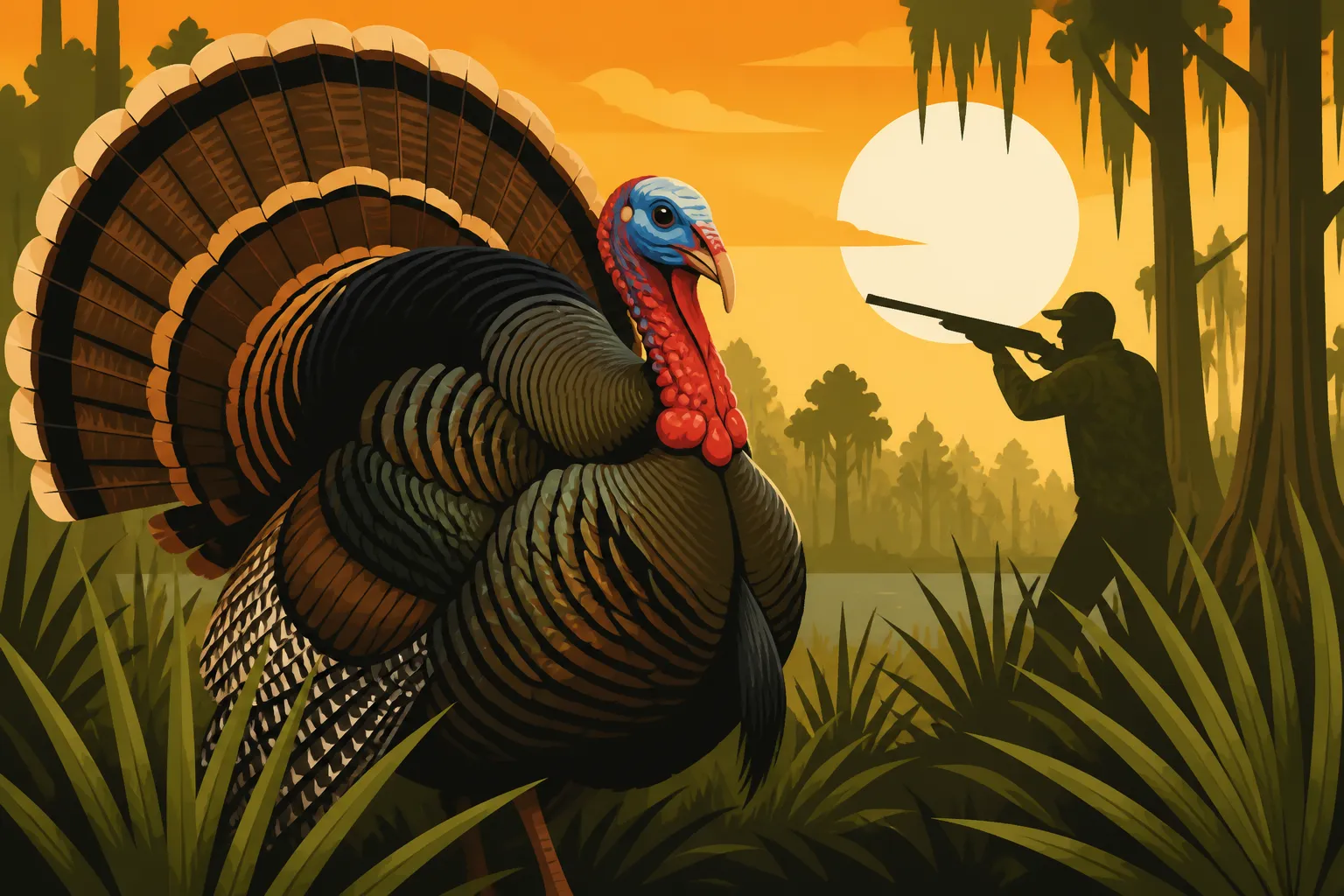
In Louisiana, the Eastern wild turkey (Meleagris gallopavo silvestris) is the sole subspecies you'll encounter. These are the classic, majestic birds that epitomize spring hunting for many. They are easily recognizable by their iridescent bronze and copper plumage, often appearing black in the shadows, with chestnut-tipped tail feathers and white and black barred wings. The adult gobblers, of course, sport impressive beards, spurs, and wattles that turn brilliant shades of red, white, and blue during the spring breeding season.
These birds are incredibly wary and intelligent, a combination that makes them such a challenging and rewarding quarry. They possess keen eyesight, exceptional hearing, and an uncanny ability to pattern human movement. While they are the dominant turkey across much of the eastern United States, their specific behaviors and habitat use in Louisiana are finely tuned to our unique environment. Understanding the Eastern wild turkey's specific traits is the first step in formulating a successful hunting strategy in our state.
Habitat Preferences and Regional Differences
Eastern wild turkeys are adaptable, but they certainly have their favorite haunts. In Louisiana, you'll generally find them gravitating towards areas with a mosaic of mature hardwood forests, pine timber, and open fields or clearings. The key is a blend that provides ample food, cover for roosting and nesting, and open areas for strutting and insect foraging.
- Bottomland Hardwoods: The vast river basins, like the Tensas River Basin and the Atchafalaya Basin, are prime turkey country. These areas offer towering oaks and other mast-producing hardwoods for food, dense understory for cover, and plenty of large trees for roosting. Turkeys here often use bayous, sloughs, and high ground within the swamps.
- Piney Woods and Mixed Forests: In regions like Kisatchie National Forest and other parts of North and Central Louisiana, you'll find turkeys utilizing stands of mature pine interspersed with hardwoods. These areas provide different food sources, like pine seeds and insects, alongside the mast crops of hardwoods. Managed timberlands with prescribed burns can create excellent turkey habitat by promoting new growth and insect populations.
- Agricultural Areas: While turkeys need timber, they also frequent the edges of agricultural fields – think soybean, corn, or pasture lands. These open areas are fantastic for gobblers to strut and display, and they offer a rich buffet of insects and waste grain. Hunting these field edges, especially in North Louisiana, can be incredibly productive if you understand the birds' movements. For tips, you might check out Turkey Tactics for North Louisiana Field Edges.
Distinct Characteristics and Behaviors
Beyond their physical appearance, Eastern wild turkeys in Louisiana exhibit several distinct characteristics and behaviors influenced by our climate and landscape. One notable aspect is their adaptability to warm weather. Unlike turkeys further north, our birds are accustomed to mild winters and often hot springs. This can influence their activity patterns, with gobblers sometimes going quiet earlier in the day as temperatures rise. Understanding When Louisiana Gobblers Go Quiet in Late April is critical for planning your hunts.
Their diet is varied, consisting of acorns, pecans, wild berries, insects (especially grasshoppers and beetles), seeds, and tender green vegetation. This diverse diet allows them to thrive in various habitats throughout the state. During the breeding season, gobblers become intensely vocal and territorial. They'll gobble to attract hens and challenge rival males, creating those thrilling moments that turkey hunters live for. Observing their strutting zones, dusting bowls, and tracks will provide invaluable clues to their whereabouts and daily routines. Pay close attention to fresh sign in areas with a mix of mature timber and open ground, as these are often prime spots for a gobbler to be looking for love.
Louisiana's Turkey Hunting Seasons and Regulations
Navigating Louisiana's turkey hunting regulations can feel a bit like deciphering an ancient scroll, but understanding the system is crucial for a legal and successful hunt. The Louisiana Department of Wildlife and Fisheries (LDWF) sets seasons and rules to ensure the health of the turkey population.
General Season Structure by Area (A, B, C)
Louisiana divides the state into three distinct turkey hunting areas: A, B, and C. Each area has its own set of season dates, which are designed to coincide with the peak of the spring breeding activity within that region. This staggered approach helps manage hunter pressure and optimize harvest opportunities.
- Area A: Generally located in the southeastern part of the state, including the Florida Parishes and some central parishes. Area A typically has the longest season.
- Area B: Primarily covers the southwestern and central parts of Louisiana.
- Area C: Encompasses the northernmost parishes of the state.
It's absolutely vital to know which area your intended hunting spot falls into before you even load your truck. The dates can shift slightly year to year, so always consult the most current LDWF hunting regulations pamphlet or their website. Missing this critical detail could mean hunting out of season, which carries significant penalties. Knowing Louisiana Turkey Area A, B and C Rules is your first step to a legal hunt.
WMA-Specific Regulations and Quota Hunts
While the general statewide regulations for Areas A, B, and C provide a framework, hunting on Louisiana's Wildlife Management Areas (WMAs) often comes with additional, more restrictive rules. Many WMAs have significantly shorter seasons, different opening and closing dates, and sometimes even specific days of the week when hunting is permitted. This is done to manage hunter numbers, reduce pressure on the birds, and prevent overharvest in these publicly accessible areas.
Furthermore, some popular WMAs might implement "quota hunts" or special lottery drawings. These hunts require pre-application and a successful draw to gain access. If you're planning to hunt a WMA, you must check the individual WMA regulations well in advance. Don't assume statewide rules apply; always verify the specifics for that particular WMA. These regulations can also detail restrictions on vehicle access, camping, and even the type of calls or decoys allowed. This granular approach helps maintain quality hunting experiences on public land.
Bag Limits, Legal Methods, and Tagging Requirements
Louisiana has specific bag limits and legal methods designed to ensure a sustainable turkey harvest.
- Bag Limit: The statewide bag limit is typically one gobbler per day, with a season limit. It's crucial to know the exact Louisiana Turkey Bag Limit Rules for the current year. "Gobbler" is defined as a male turkey with a visible beard. Hens (female turkeys) are protected during the spring season.
- Legal Methods: The primary legal method for spring turkey hunting is by shotgun (using shot not larger than number 2 lead or equivalent in other materials) or archery equipment (bows, crossbows). While primitive firearms are legal for deer, they are generally not for spring turkey. Baiting for turkeys is illegal statewide, so make sure any food plots or supplemental feeding on private land is not designed or used to concentrate turkeys for hunting.
- Tagging and Reporting: Once you successfully harvest a gobbler, Louisiana requires immediate tagging. You must validate your turkey tag (either a physical tag from your license or digitally through the LDWF app) and attach it to the bird before moving it from the kill site. This is a critical step that many new hunters overlook or forget. After tagging, you are then required to report your harvest online or via the LDWF mobile app within 72 hours. This reporting data is vital for LDWF biologists to monitor harvest trends and manage the turkey population effectively. Failure to tag and report can result in fines and penalties, so always be meticulous with these requirements.
| Turkey Area | Season Start Date (Approx.) | Season End Date (Approx.) | Legal Days | Season Gobbler Limit |
|---|---|---|---|---|
| Area A | Early March | Late April | Varies | 2 |
| Area B | Late March | Mid-April | Varies | 2 |
| Area C | Late March | Mid-April | Varies | 2 |
Note: These dates are approximate and can change annually. Always consult the current LDWF regulations for precise season dates and rules.
Key Habitats for Louisiana Gobblers
Understanding where Louisiana gobblers live, feed, and strut is the cornerstone of successful turkey hunting. Our state's diverse geography offers a range of habitats, each with its unique challenges and opportunities.
Bottomland Hardwoods and River Basins
The expansive bottomland hardwood forests and river basins are, for many, the quintessential Louisiana turkey habitat. Think of places like the Richard K. Yancey Wildlife Management Area or the Pearl River WMA, where towering oaks, hickories, and cypress dominate the landscape. These areas are ecological goldmines for turkeys.
- Mast Production: The abundance of mast-producing trees (oaks, pecans, hackberries) provides a rich food source, especially in the fall and winter, which helps birds put on weight and prepare for the breeding season. Identifying productive mast crops is a key scouting tool.
- Roosting Sites: Turkeys in these areas favor large, mature trees with open limbs for roosting, often along sloughs, bayous, or on higher ground within the floodplains. Where Louisiana Gobblers Roost is often dictated by these large trees. These sites offer safety from ground predators and a good vantage point for fly-down.
- Travel Corridors: Sloughs, logging roads, and natural levees create natural travel corridors for turkeys, particularly gobblers moving between roosts, strutting zones, and feeding areas. Learning to "read" these travel lanes, especially where they funnel birds, can be highly effective. The dense undergrowth in these areas also provides excellent escape cover.
Hunting these areas requires patience and stealth. The thick foliage can make spotting difficult, but the sounds of the swamp, like the distant gobble carrying across still water, are unforgettable.
Piney Woods and Mixed Forests
Moving north and east from the vast river basins, you encounter the piney woods and mixed forests that define much of Central and North Louisiana. Areas like Kisatchie National Forest are prime examples of this habitat. Here, stands of loblolly and longleaf pine mix with various hardwoods, creating a different set of challenges and opportunities for turkey hunters.
- Diverse Food Sources: While mast is still important, pine forests offer different food sources, including pine seeds, various grasses, and a greater abundance of insects that thrive in the open, often fire-maintained understory. Prescribed burning, common in pine management, creates excellent conditions for insect foraging and new plant growth that turkeys utilize.
- Elevation and Terrain: Compared to the flat bottomlands, these areas often feature rolling hills, ridges, and draws. Turkeys will use these topographical features to their advantage, strutting on ridge tops or moving through saddles. Understanding Reading a Ridge for Central Louisiana Deer can also apply to turkeys, as they often use similar terrain features.
- Scattered Hardwood Pockets: Even in predominantly pine forests, turkeys will seek out pockets of hardwoods, especially along creeks, drainages, or in small hammocks. These hardwood stringers often hold the best mast crops and provide crucial roosting cover. Identifying these transitions and isolated hardwood patches is key for successful scouting and hunting.
These habitats often allow for a more "run-and-gun" style of hunting, where covering ground and listening for distant gobblers is often the best approach. However, don't underestimate the need for stealth and careful setup, as the more open understory can make birds harder to approach undetected.
Field Edges and Agricultural Land Opportunities
Many parts of Louisiana, particularly in the agricultural heartland, feature a patchwork of timber and open fields. These field edges and adjacent agricultural lands offer fantastic opportunities for turkey hunters, especially those looking to catch a gobbler strutting in the open.
- Strutting Zones: Open fields, pastures, and cut crop fields are natural stages for gobblers to display for hens. Early morning, as birds fly down from their roosts, they often head straight for these open areas. A well-placed decoy in a field edge can be incredibly effective here, mimicking a hen ready to be courted.
- Food and Foraging: Agricultural fields provide a consistent food source, whether it's waste grain after harvest or a flush of insects in green fields. Turkeys will spend considerable time feeding along these edges and occasionally venture out into the fields themselves.
- Transition Areas: The transition zone between dense woods and open fields is a hotspot for turkey activity. These edges offer cover for safety, yet easy access to the open areas. Setting up your blind or position along such an edge, where turkeys can comfortably enter and exit the field, is often a high-percentage tactic. For detailed strategies, consider looking into Setting Up on a Coastal Prairie Field Edge, which shares similar principles for other game but can be adapted for turkey movement.
Hunting field edges demands careful entry and exit, often in the dark, to avoid spooking birds. Using a ground blind can be a major advantage here, especially on public land where cover might be limited.
Essential Scouting and Hunting Strategies
Hunting wild turkeys in Louisiana is a chess match, demanding a blend of meticulous preparation and quick thinking in the field. It’s not just about calling; it’s about understanding the bird, its habitat, and its daily patterns.
Pre-Season Scouting: Locating Roosts and Sign
Effective pre-season scouting is arguably the most critical component of consistent turkey hunting success. You can't just show up on opening day and expect birds to materialize. This is where tools like GoHunt become invaluable, allowing you to pour over satellite imagery and topo maps from home, identifying potential roost sites, travel corridors, and strutting zones before you ever step foot in the woods.
- Map Reconnaissance: Start by looking for mature timber near water sources (creeks, rivers, swamps) – these are often preferred roosting areas. Identify open fields, logging roads, or ridge tops where gobblers might strut. Look for pinch points, saddles, or creek crossings that could funnel birds. Using the mapping features on GoHunt can help you mark these potential hot spots.
- Boots on the Ground: Nothing beats walking the terrain. Look for physical sign: turkey droppings (gobbler droppings are typically J-shaped), strut marks in dirt or dust, shed feathers, and dusting bowls. Listen for distant gobblers at dawn and dusk. This is also the time to identify potential setup locations, considering cover, shot lanes, and approach routes. Remember to focus your scouting efforts on finding Where Louisiana Gobblers Roost to be in position for that crucial fly-down.
- Listening for Locator Calls: Before the season, or even a day or two before your hunt, head out before dawn and at dusk. Use a crow call, owl hooter, or even a sharp coyote howl to elicit shock gobblers from their roosts. This helps you pinpoint general areas where birds are roosting and gives you a starting point for your opening morning hunt. However, avoid over-calling, as you don't want to educate the birds.
Calling Tactics for Pressured Birds
Louisiana gobblers, especially on public land or areas with heavy hunting pressure, can be notoriously tight-lipped and wary. Generic calling won't cut it. You need a nuanced approach.
- Subtlety is Key: Often, less is more. Instead of aggressive calling, try soft tree yelps, clucks, and purrs right off the roost. Mimic a hen going about her business, feeding and content. Once the bird is on the ground, use light calling to draw him in, only increasing intensity if he starts to hang up or move away. Sometimes, going silent after a few calls can pique his curiosity.
- Locator Calls (Strategically): Use locator calls to get a gobbler to shock gobble, but don't overdo it. A single crow call, owl hoot, or coyote howl can reveal his position. Once you know where he is, switch back to subtle hen talk.
- Variety of Calls: Master a few different calls – a slate call, a box call, and a diaphragm call. Each has a slightly different tone, and sometimes a gobbler will respond to one that he ignores from another. For Grunt Calls in Mature Louisiana Timber (though this is primarily a deer article, the principle of appropriate volume in heavy cover applies), think about how far your call needs to carry without being too loud or too soft. When birds are quiet, a soft, seductive series of purrs and clucks can often be more effective than loud yelping.
- Patience and Persistence: Louisiana turkeys are not always run-and-gun birds. Sometimes, setting up and waiting for a period, even an hour or two, can pay off as a gobbler eventually decides to investigate.
Run-and-Gun vs. Sit-and-Wait Approaches
Deciding between a run-and-gun and a sit-and-wait strategy depends heavily on the habitat, the bird's mood, and hunting pressure.
- Run-and-Gun: This aggressive tactic is often employed in more open, piney woods or across large private land tracts where you can cover significant ground. The idea is to move, make a series of calls, listen for a response, and then quickly move in on a gobbler that sounds interested. It’s physically demanding but can be exhilarating. This strategy is particularly effective when you're targeting birds that are gobbling aggressively and moving. If you're tackling public land, you'll find great tips in Run-and-Gun Turkey Tactics on Public Land.
- Sit-and-Wait (Ambush): This strategy involves finding a prime location – perhaps a field edge, a known strutting zone, or a funnel – setting up a blind or good natural cover, and patiently waiting for a bird to appear or respond to subtle calls. This is often more effective in heavily pressured areas or dense bottomlands where visibility is limited, and getting close to a gobbler is tough. Setting up against a large tree, preferably one wider than your shoulders, gives you a natural backrest and breaks up your silhouette. For details on how to use cover effectively, check out Setting Up Against a Big Oak. This method is also ideal when you've patterned a specific bird's movement and know where he's likely to show up.
A successful hunter often blends these approaches. You might start with a run-and-gun to locate a bird, then transition to a sit-and-wait once you've engaged him. Having a clear plan and the flexibility to adapt is key.
Gear and Equipment for Louisiana Turkey Hunters
Having the right gear won't guarantee a turkey, but it will certainly improve your odds and comfort in the field. Louisiana's unique conditions, particularly the warm spring weather and sometimes dense cover, dictate specific choices.
Shotguns, Chokes, and Ammo Choices
Your shotgun is your primary tool, and selecting the right setup can make a significant difference in your effective range and pattern density.
- Shotguns: Most turkey hunters opt for a 12-gauge, though 20-gauge shotguns have become incredibly popular, especially with modern tungsten super shot (TSS) loads. A 3-inch or 3.5-inch chamber allows for heavier loads, delivering more pellets downrange. Pump-action or semi-automatic models are common, but single-shot shotguns are also effective and perfectly legal. A shorter barrel (22-26 inches) is often preferred for maneuverability in thick timber.
- Chokes: A good quality, extra-full or turkey-specific choke tube is essential. These chokes are designed to constrict the shot pattern much tighter than a standard full choke, delivering a denser pattern at longer ranges. Brands like Carlson's, Indian Creek, and Trulock offer excellent turkey chokes.
- Ammunition: While lead shot is legal, many hunters have switched to denser, non-toxic alternatives like tungsten super shot (TSS) or bismuth. TSS in particular, like offerings from Federal Premium or Apex Ammunition, has revolutionized turkey hunting, allowing for smaller shot sizes (like #9) that carry tremendous energy and pattern incredibly tightly, extending effective range. If using TSS, always check your choke tube manufacturer's recommendations for compatibility. Patterning your gun with your chosen load and choke at various distances (20, 30, 40 yards) is non-negotiable. You need to know exactly how your setup performs.
Decoys, Blinds, and Camouflage Considerations
These accessories help you disappear into the environment and draw gobblers closer.
- Decoys: Turkey decoys can be incredibly effective, especially in open field settings. A single hen decoy, or a pair of hen and jake decoys, can often bring a gobbler in for a closer look. Placement is key: set them up where a gobbler can see them from a distance but also has a clear approach path. Consider the position relative to your blind or hiding spot, aiming to have the gobbler face away from you as he approaches the decoy, offering a broadside or quartering-away shot. For more specific advice, review Decoy Placement for Pressured Louisiana Birds. In dense woods, a lone hen or even just a fan can sometimes be enough.
- Blinds: Ground blinds offer excellent concealment and allow for movement without being detected. They're especially useful on field edges or in areas with sparse natural cover, or when hunting with youth. Pop-up blinds from brands like Primos or Ameristep are popular. If you're on public land, remember to check WMA rules regarding ground blind usage and removal. You can learn more about Using a Ground Blind on Louisiana Public Land.
- Camouflage: Full head-to-toe camouflage is a must. Patterns that mimic natural foliage, like Realtree or Mossy Oak, work well in Louisiana's diverse habitats. A face mask or face paint and gloves are critical; a gobbler's eyesight is legendary, and even a slight glint or movement can give you away. Lightweight, breathable fabrics are preferred due to Louisiana's warm spring temperatures.
Calls: Pot, Box, Diaphragm, and Locator Calls
Mastering a variety of calls will make you a more versatile and successful turkey hunter.
- Pot Calls (Slate/Glass): These are perhaps the most versatile and easiest to learn. They produce a wide range of hen vocalizations – yelps, clucks, purrs, and cutts – by rubbing a striker across a slate, glass, or aluminum surface. Brands like Primos, Zink, and Woodhaven offer excellent pot calls.
- Box Calls: Another relatively easy-to-master call, the box call, typically made of wood, produces loud, realistic yelps and cutts. They are great for reaching out to distant birds. However, they can be cumbersome for subtle calling. Check out models from Lynch or Quaker Boy.
- Diaphragm (Mouth) Calls: These are the most challenging to master but also the most versatile, allowing for hands-free calling. They can produce every turkey vocalization imaginable, from soft purrs to loud gobblers. A wide variety of cuts and reeds are available, so experiment to find what works best for your mouth and calling style. Companies like Woodhaven, Zink, and HS Strut are popular choices.
- Locator Calls: As mentioned earlier, crow calls, owl hoots, and coyote howls are essential for getting shock gobblers to reveal their location, especially early in the morning or late in the evening. Keep a variety handy, as some gobblers respond better to one sound over another.
Practice with your calls regularly, not just before season. Learn the rhythm and cadence of natural turkey sounds. The more realistic your calls, the better your chances of fooling a wary gobbler.
Challenges and Considerations for Louisiana Turkey Hunters
Louisiana turkey hunting offers incredible rewards, but it's not without its unique set of challenges that can test the patience and skill of any hunter. Being prepared for these obstacles is key to maintaining a positive attitude and increasing your chances of success.
Warm Weather and Mosquitoes
One of the biggest realities of spring turkey hunting in Louisiana is the weather. While the season kicks off in early March, by late April, temperatures can easily soar into the 80s or even 90s, especially in the southern parishes. This isn't just uncomfortable; it directly impacts turkey behavior.
- Impact on Birds: Gobbling activity tends to taper off earlier in the day as temperatures climb. Birds become less active, seeking shade and water during the midday heat. This means your prime hunting window is often limited to the first few hours after fly-down and perhaps the last hour before roosting. Planning your hunts around the coolest parts of the day is crucial.
- Hunter Comfort: Warm weather also means more mosquitoes, gnats, and other biting insects. Bug spray with a high DEET concentration is a non-negotiable item, as are thermacells or similar devices, especially if you're sitting for extended periods. Dressing in lightweight, breathable camo is also essential, but make sure it’s enough to cover exposed skin from both bugs and sun. Staying hydrated is also paramount; always carry plenty of water.
Public Land Pressure and Ethics
Hunting public land in Louisiana is a fantastic opportunity, but it often comes with increased hunter pressure, which can make turkeys incredibly wary.
- Educated Birds: When a gobbler hears constant calling or encounters multiple hunters, he quickly learns to be silent or to only respond to very subtle calls. This means you might need to adapt your calling strategy, using less aggressive calls or even silent approaches to get close.
- Finding Solitude: Successful public land turkey hunting often involves walking further, getting off the beaten path, or exploring less accessible areas, such as those that require a boat. Using mapping tools like GoHunt to identify remote corners of WMAs can give you an edge. Be prepared to put in the miles. You might also want to read about Hunting Pressure on Louisiana Public Land for broader strategies.
- Hunter Ethics: Respecting other hunters is paramount. If you encounter another hunter or hear them working a bird, move to a different area. Don't "cut off" another hunter or try to call in a bird they are already engaging. Ethical behavior ensures everyone has a safe and enjoyable experience. Always be aware of your surroundings and consider what other hunters might be doing.
Managing Expectations: Not Every Bird Gobbles
It's easy to get caught up in social media highlight reels of birds gobbling their heads off, but the reality of Louisiana turkey hunting is often far different.
- Silent Gobblers: Especially on pressured land or later in the season, many mature gobblers become "silent" birds. They might still be receptive to calls and looking for hens, but they won't announce their presence with booming gobblers. Don't get discouraged if you're not hearing constant gobbling; learn to listen for subtle clucks, purrs, or even just the rustle of leaves as a bird approaches.
- Patience is a Virtue: Sometimes, the best strategy is simply to pick a good spot, call sparingly, and wait. A bird might eventually wander into your setup without ever making a sound. Being still and observant can pay off more than aggressive calling.
- Learning Curve: Turkey hunting has a steep learning curve. Don't be disheartened if your first few outings, or even your first few seasons, don't result in a harvested bird. Every hunt is a learning experience. Pay attention to what worked, what didn't, and adjust your tactics for the next time. The pursuit itself, the time spent in the woods, and the thrilling interactions with these incredible birds are often the greatest rewards. If you're consistently striking out, consider learning more about Louisiana Turkey Population Trends in your specific area; understanding the local bird numbers can help manage expectations.
Disclaimer
Hunting carries inherent risks, and it is the responsibility of each individual hunter to understand and comply with all Louisiana Department of Wildlife and Fisheries (LDWF) regulations, obtain appropriate licenses, and practice safe hunting techniques. The information provided in this guide is for informational purposes only and should not be considered legal advice. Always consult the official LDWF regulations for the most current and accurate information before heading afield.