Turkey Tactics for North Louisiana Field Edges
Hunting wild turkeys in North Louisiana, especially along those tempting field edges, can be incredibly rewarding, but it often comes with its own unique set of frustrations. You've got birds gobbling their heads off one minute, then disappearing into thin air the next, leaving you scratching your head. It feels like they know exactly where you are and how to give you the slip. This guide is all about cutting through that confusion, helping you understand the specific nuances of these field edge setups, and providing actionable tactics to get those wary gobblers within range.
Understanding North Louisiana Field Edge Dynamics
Field edges in North Louisiana are magnets for wild turkeys, offering a critical blend of open feeding areas and dense cover. However, they're not all created equal, and understanding their specific dynamics is crucial for success. These transition zones present both opportunities and challenges that differ significantly from hunting deep timber or wide-open ag fields.
The Allure and Challenge of Field Edges
Imagine a sprawling soybean field meeting a thick pine plantation or a hardwood creek bottom. That edge is a highway for turkeys. They love to strut and display in the open fields, picking bugs and browsing on tender greens, while having the immediate security of the timber just a few steps away. This natural behavior makes field edges prime locations, but it also makes them incredibly challenging. These birds are often exposed to predators, both human and animal, in these transitional spaces, making them exceptionally wary. They've learned to use the terrain and cover to their advantage, often skirting just inside the woods, using low spots, or taking advantage of any undulation in the landscape to stay hidden. You might hear a booming gobble from seemingly right on the edge, only to find the bird is actually 50 yards deep in the timber, just using the acoustics to project his voice. This constant push-pull between their need for food and their instinct for safety is the core dynamic you're dealing with. It's not enough to just sit and call; you need to anticipate their movements and thought processes.
Typical Field Edge Cover and Terrain
North Louisiana's field edges can vary dramatically, from perfectly manicured farm fields bordered by dense hardwood draws to cutovers meeting natural pine stands. Often, you'll find a mix of mature timber, usually pines or oaks, along with a thick understory of briars, honeysuckle, or saplings right on the actual boundary. This thick stuff provides excellent thermal cover and escape routes for birds. The fields themselves might be planted in soybeans, corn, wheat, or even left fallow, growing up in weeds and grasses that offer insects and seeds. Understanding what kind of cover the field provides, and more importantly, the type of cover along the immediate edge, is key. Is it a gradual slope from field to forest, or is there an abrupt drop-off into a creek bed? Are there scattered individual trees, like a lone pecan or oak, standing out in the field near the edge? These isolated trees can act as strut zones or reference points for gobblers. Knowing these details helps you visualize how a turkey might approach, strut, feed, or retreat. Using mapping tools like GoHunt, or simply walking the edges before the season, can reveal subtle terrain features, old logging roads, or brush piles that could funnel birds or provide ideal ambush points. Pay close attention to these small details; they often make all the biggest difference.
Scouting Field Edges for Roosted Birds and Feeding Areas
Successful turkey hunting, particularly on field edges, isn't just about calling. It's about intel, and that intel comes from meticulous scouting. Knowing where birds are roosting and where they prefer to feed or strut is half the battle won before you even step foot in the woods with your shotgun. Without this understanding, you're essentially just taking a shot in the dark.
Locating Roost Trees Along the Edge
Turkeys are creatures of habit, especially when it comes to their evening roosts and morning fly-down routines. Along field edges, they're often looking for tall, sturdy trees that offer a good vantage point and security. Pines, especially large, mature ones, are often favored, but big oaks in a hardwood bottom can also be prime real estate. The key is to be out at dawn or dusk, well before the season, listening intently. You'll want to understand Roost Hunting Louisiana Gobblers well before opening day. Listen for those last-light clucks and yelps as they fly up, and especially for that booming gobble right at first light. Once you hear a bird on the roost, try to pinpoint the exact tree or cluster of trees. Pay attention to which direction they fly down when they hit the ground. Do they sail into the field directly, or do they pitch down into the timber and then skirt along the edge before entering the open? Knowing this can drastically change your morning setup. Sometimes, especially on heavily pressured public land, birds will fly down and immediately move away from the field edge if they perceive any threat. This is where a little stealth and early-morning listening really pays off. A quiet approach in the dark, well before any other hunters are stirring, can put you in a position to intercept a bird that wants to pitch into the field.
Identifying Primary Feeding and Strutting Zones
Once birds are on the ground, their next priorities are feeding and strutting. Field edges provide fantastic opportunities for both. When scouting, look for visual evidence of turkey activity. Fresh tracks in the dirt, particularly the distinctive drag marks left by a strutting gobbler, are gold. Piles of droppings, often near a favored strut zone, are another clear sign. You might also spot wingtip drag marks in dusty areas where a gobbler has been showing off for hens. Pay attention to what's growing in the field itself. If it's a wheat field, they'll be picking up waste grain. If it's a fallow field with a lot of clover or tender shoots, they'll be browsing. They often gravitate towards natural openings or slight rises within the field edge where they can display prominently. I've often seen birds prefer to strut along the highest point of a small ridge that runs parallel to a field, just inside the timber, or right on the corner of a field where two edges meet. These areas act as natural stages. Using binoculars to glass these areas from a distance during non-hunting hours can give you invaluable insight into their daily patterns. Keep in mind that these zones can shift with crop rotation, weather, or hunting pressure, so consistent scouting is vital throughout the season.
| Turkey Activity Sign | Description | What it Tells You |
|---|---|---|
| Tracks | Large, three-toed tracks, sometimes with drag marks. | Recent presence, potential travel routes. |
| Strut Marks | Distinctive wingtip drag marks and feather impressions. | Gobblers displaying; indicates a strutting zone. |
| Droppings | J-shaped (gobblers) or spiral (hens) droppings. | Frequent use of an area; gobblers often leave larger, straighter droppings. |
| Scratches | Disturbed leaf litter from foraging. | Feeding activity, especially in wooded edges. |
| Feathers | Large wing or tail feathers, often from preening/display. | Roosting sites or regular strutting/loafing areas. |
| Dust Bowls | Shallow depressions in dry soil. | Turkeys dust bathing to remove parasites; indicates loafing areas. |
Strategic Setup and Calling Techniques
Once you've done your homework and understand where the turkeys are likely to be, the real game begins: getting into position and convincing that gobbler to come your way. This is where strategic setup and nuanced calling become paramount, especially on North Louisiana's challenging field edges. It’s a dance of concealment, patience, and persuasion.
Positioning for Optimal Visibility and Shot Opportunity
Setting up effectively on a field edge means balancing concealment with a clear line of sight and an unobstructed shot. You can't just plop down in the middle of a sparse hedge row and expect a wary gobbler to stroll in. The ideal setup often involves finding some substantial cover – maybe a fallen log, a dense thicket, or even Setting Up Against a Big Oak – that breaks up your outline and provides a solid backdrop. The key is to be just inside the woods, maybe 10-20 yards in, rather than right on the very edge. This gives you a little extra wiggle room for a bird that might hang up in the timber, and it keeps you hidden from a gobbler that's already strutting in the field.
Consider the sun's position. In the morning, you generally want the sun at your back, shining into the turkey's eyes, making it harder for him to spot you. Also, think about your shooting lanes. Clear out any small branches or vines that might deflect an arrow or shot, but don't clear so much that you expose yourself. An often-overlooked aspect is having multiple shooting lanes, especially for incoming birds that might veer left or right. If you're hunting with a partner, position yourselves back-to-back or side-by-side a few yards apart to cover different angles. Always anticipate where the bird is most likely to approach from based on your scouting and place yourself accordingly. Sometimes, that means being patient and letting the bird work its way into a slightly less-than-perfect lane, rather than risking a subtle movement to adjust.
Adjusting Calling for Open vs. Wooded Edges
Calling on field edges requires a delicate touch. You're trying to emulate the sounds of a hen without giving away your exact location. The type of calling you employ often depends on whether you're trying to pull a bird out of the woods into the field, or if you're working a bird already in the field towards the woods. For birds deep in the timber, you might need a slightly louder, more aggressive series of yelps and cutts to get their attention, especially if you're trying to coax them across a wider expanse of woods to the field. Once they respond, tone it down. As the bird gets closer, switch to softer, more contented clucks and purrs.
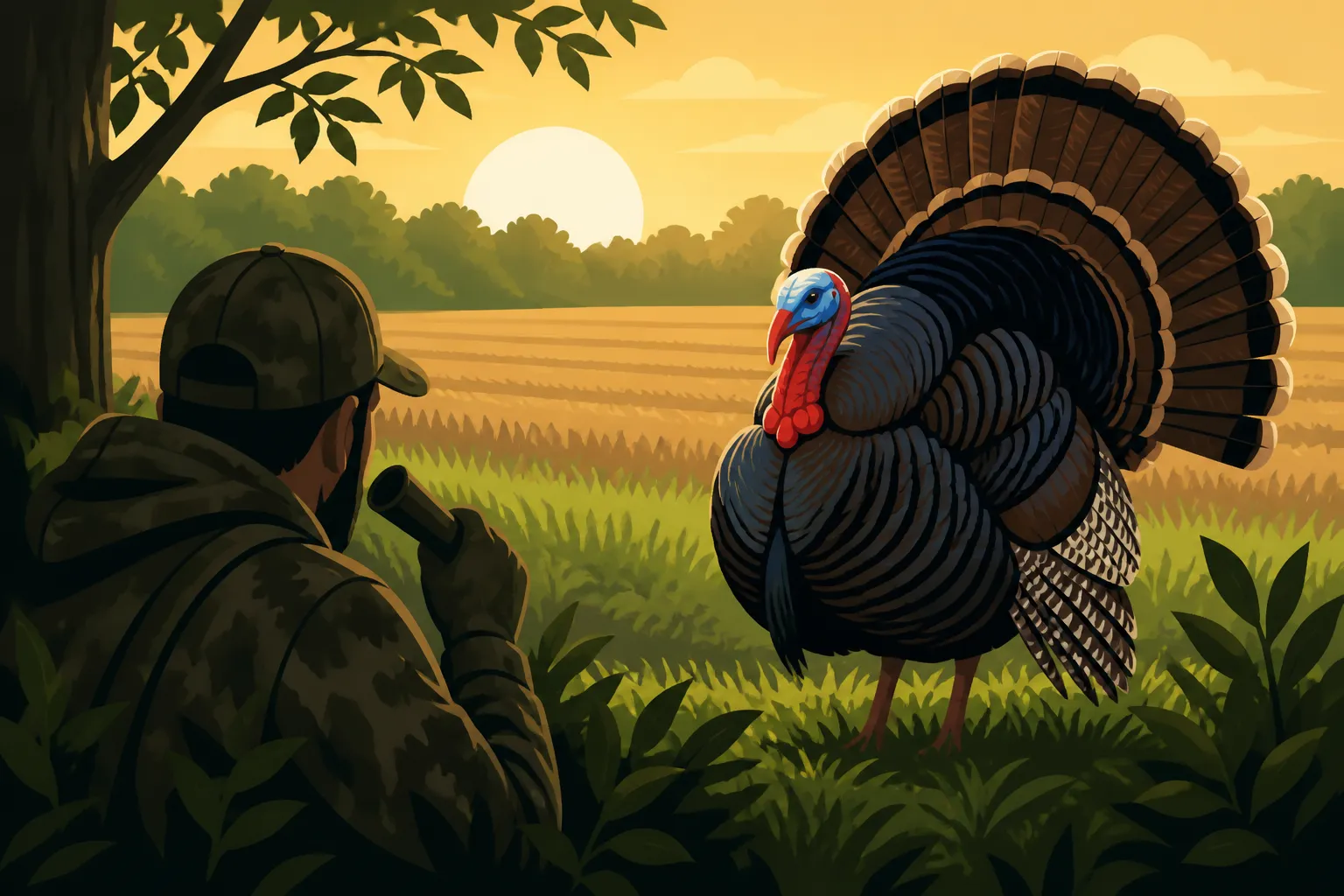
If a gobbler is already in the field, strutting and displaying, he's likely looking for a hen to come to him. In this scenario, less is often more. A few soft tree yelps right after fly-down, followed by minimal calling, can be incredibly effective. Make him think you're a hen that's a bit shy and waiting for him. Don't be afraid to go completely silent for extended periods. Sometimes, the best call is no call at all. When Calling a Louisiana Gobbler Off the Roost, remember that soft, subtle calls might be all it takes. North Louisiana birds, particularly those that have been hunted a bit, are incredibly sensitive to excessive or unrealistic calling. Using a mouth call or slate call that can produce varied pitches and tones can be an advantage here. Remember that the woods will gobble up some of your sound, while open fields will carry it further, so adjust your volume accordingly. You'll also want to consider When Louisiana Gobblers Go Quiet in Late April, as calling tactics might need to shift to match less vocal birds.
Decoy Use and Hunter Movement
Decoys can be a game-changer on field edges, drawing a gobbler's attention away from your position and giving him a visual incentive to close the distance. However, like all tactics, their deployment requires careful thought. Similarly, knowing when and how to move is critical; improper movement can instantly blow your hunt.
Effective Decoy Placement in Field Edge Scenarios
Decoys, when used correctly, can work wonders in bringing a wary gobbler across an open field or pulling him the last few yards into your setup. The key is strategic placement. On field edges, you typically want to set your decoys out in the open, but not so far into the field that an approaching bird might hang up out of range. A good rule of thumb is to place them 20-30 yards from your position, angled slightly to present a good broadside shot to an incoming gobbler. If you place them too close, the bird might be too close for an ethical shot when he gets to the decoy. Too far, and he might stop short of your effective range.
Consider the types of decoys. A single hen decoy is often sufficient, but adding a jake or even a submissive gobbler decoy can sometimes incite a dominant gobbler to charge in, especially during the peak of the rut. If using a jake or gobbler decoy, make sure it’s facing away from you. This can make an incoming gobbler feel more dominant, giving you an even better shot opportunity. Always remember Decoy Placement for Pressured Louisiana Birds and adjust as needed; sometimes, less is more, or a partial setup in cover is better than a full spread.
Also, think about the backdrop. Don't place your decoys against a dark, dense treeline where they'll disappear. Instead, try to set them up with some open sky or a lighter background so they stand out. The illusion is everything. And safety first: always be aware of other hunters and avoid using gobbler decoys on public land if there's any chance of being mistaken for a real bird.
Patience and When to Make Your Move
Patience isn't just a virtue in turkey hunting; it's a necessity. This is especially true on North Louisiana field edges. Gobblers have an uncanny ability to suddenly appear or seemingly materialize from nowhere. If you've set up on a hot bird, commit to that spot. Too many hunters get antsy, make a small adjustment, and then spook a bird that was just about to show up. Sit still, scan constantly, and listen. Turkeys often circle, using cover to approach from an unexpected angle. What you think is the direct line of approach from his gobble might be entirely different when he actually commits.
However, there are times when a strategic move is warranted. If a bird has completely shut down, moved off, or is actively moving in a direction away from you with no interest in your calls, it might be time for a slight repositioning. This is where Run-and-Gun Turkey Tactics on Public Land might come into play, but exercise extreme caution. A quiet, slow stalk along the field edge, staying deep in the timber and using terrain features for concealment, might put you in front of the bird again. Only move when you can do so completely undetected, using any rise in the ground, thick brush, or a dip in the terrain to your advantage. If the bird is still gobbling, use his gobble to mask your movements. Wait for him to sound off, then take a few steps while he can't hear you. Moving too quickly or too often can be detrimental. Remember, these birds are very familiar with their home range in parishes known as the Best Louisiana Parishes for Turkeys, and any unusual movement will set them off. Often, the best move is to simply hold tight, maintain your confidence in your setup, and let the bird make the mistake.
Disclaimer
Hunting is an inherently dangerous activity. This guide provides information for educational purposes only and does not guarantee success or safety. Always prioritize safety, adhere to all local and state hunting regulations, and obtain proper licenses, such as those detailed in Louisiana Hunting Licenses and What They Cost, before engaging in any hunting activities. The information provided here is not a substitute for professional instruction or personal experience in the field.