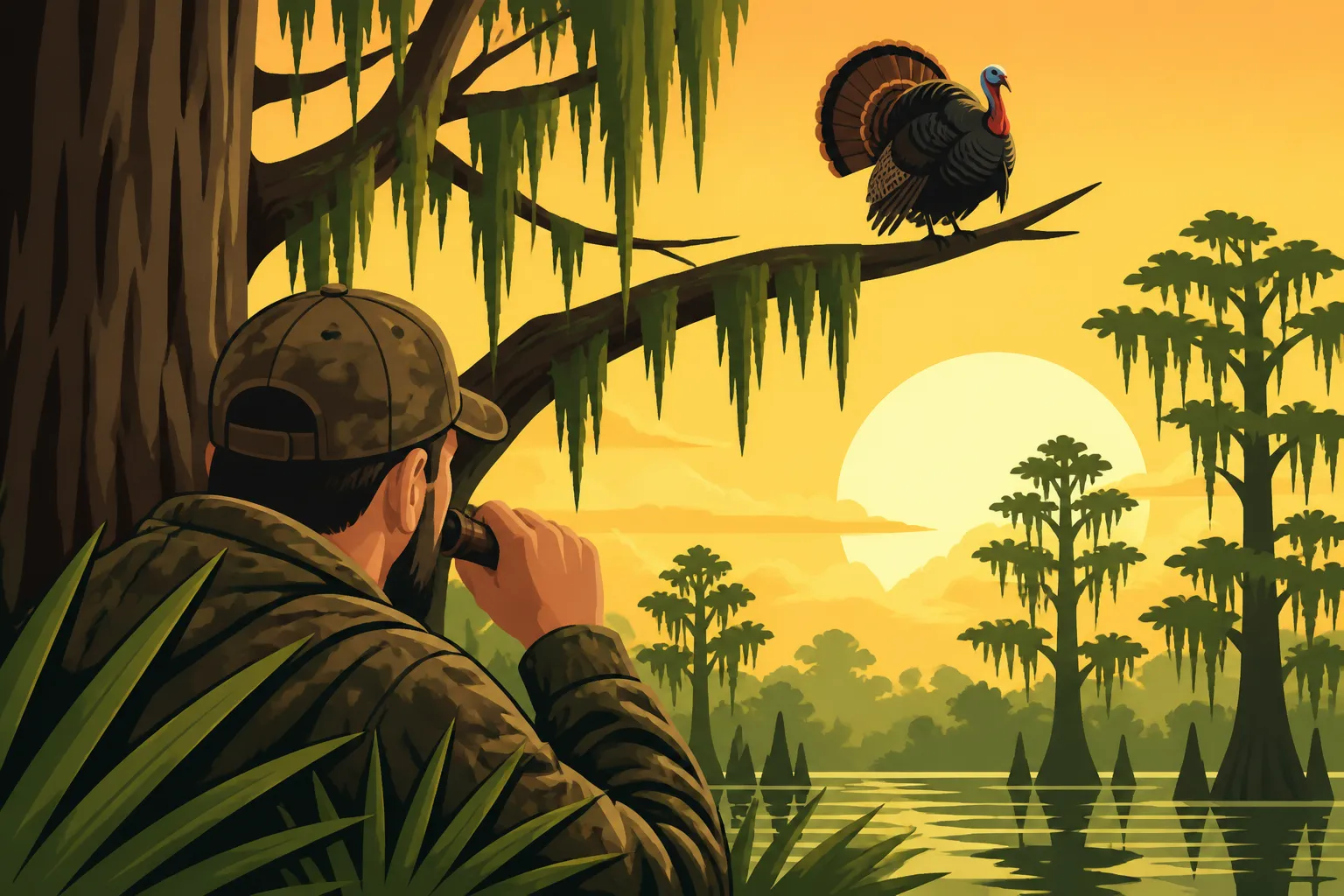
Calling a Louisiana Gobbler Off the Roost
There are few things as frustrating in turkey hunting as hearing a big gobbler sound off from the roost, letting you know he's there, eager to gobble… only for him to fly down and disappear in the opposite direction, or worse, fly straight to a flock of real hens that lead him away. It’s a common scenario that leaves many hunters scratching their heads and wondering what they did wrong. This guide aims to unravel the mysteries of calling those wily Louisiana gobblers off the roost, equipping you with the tactics and patience needed to bring that morning thunder right into your lap.
Understanding Roosted Gobbler Behavior in Louisiana
Before you can effectively call a gobbler off the roost, you need to understand why he chooses a particular tree, what his morning routine might look like, and the natural challenges that can throw a wrench in your plans. Louisiana gobblers, much like hunters, have their own preferences and anxieties.
Why Gobblers Roost Where They Do
Gobblers don't just pick any old tree to spend the night. Their choice is strategic, often driven by survival and dominance. For one, roost trees offer crucial protection from ground predators like coyotes, bobcats, and even the ever-present feral hogs. A tom feels much safer perched high above the forest floor, away from prying eyes and sniffing noses. Look for the tallest trees in the area – towering pines in the upland regions, or massive cypress and sprawling oaks in the bottomland hardwoods and swampy areas. These giants provide the elevation and sturdy limbs a heavy bird needs.
Beyond safety, roost trees often serve as a prime stage for dominance displays. A gobbler will often sound off fiercely from his perch, challenging other birds and announcing his presence. He might also choose a tree that's strategically located near a preferred morning strutting zone, like a field edge, an open timber flat, or a sandy road. This allows him to quickly fly down and get to business, hoping to intercept hens as they disperse from their own roosts. The weather also plays a significant role; a windy night might see them tucking into more sheltered spots, while a heavy rain might push them to denser canopies. Understanding Where Louisiana Gobblers Roost involves knowing the local terrain.
The "Fly-Down" Drama and Its Challenges
The moment a gobbler flies down from the roost is perhaps the most critical – and often the most unpredictable – part of the morning hunt. The classic image of a gobbler sailing directly to your calls is often just that: an image. More often than not, a gobbler will fly down with a cadre of real hens, and those live hens are usually a much stronger draw than your most seductive calling. He might fly down completely silently, a common trick for older, more wary birds, especially in areas with significant Hunting Pressure on Louisiana Public Land.
Another common headache is the "hang up." A gobbler might land on a distant ridge, across a slough, or on the far side of a creek, continuing to gobble but refusing to close the distance. He’s telling you exactly where he is, but also creating a barrier. This can be particularly frustrating in diverse Louisiana terrain, where water features or thick palmetto patches can act as impenetrable walls. Given the current Louisiana Turkey Population Trends, which show some regional fluctuations, these birds can be incredibly smart and cautious, making the fly-down a true test of a hunter’s skill and patience.
Pre-Dawn Scouting and Setup for Roosted Birds
Success with roosted gobblers often hinges on what you do before the first hint of light. Your pre-dawn strategy, from your approach to your setup, can make or break the hunt.
Listening for the Roost and Approaching Quietly
Getting to your hunting spot well before dawn, sometimes an hour or more before first light, is absolutely paramount. You need time to get into position, scout the immediate area by ear, and let the woods settle down after your approach. As the night begins to give way to twilight, listen intently for those tell-tale shock gobblers. An owl hoot or a distant coyote howl can often elicit a response, giving away a gobbler's location without you having to make a sound. Use these "locator calls" sparingly though; too much, too early, and you risk making the gobbler wary.
Once you pinpoint a general area, move in slowly and silently. Every snapped twig, every rustle of leaves, can carry far in the pre-dawn quiet and alert a sharp-eared tom. Plotting your approach using a detailed mapping application like GoHunt on your phone before you even leave the house can be a game-changer. It allows you to identify quiet routes, avoid dense thickets, and anticipate terrain features that might force noisy detours. Think about how you’d use these tools for Scouting Louisiana Public Land Before Season – the principles apply directly to finding and approaching roosts.
Strategic Setup: Blinds, Decoys, and Terrain
Your setup is your sanctuary and your ambush point. Once you've located a roosting gobbler, selecting the right spot to set up is critical. Look for a sturdy tree that offers excellent concealment and a clear line of sight in the direction you expect the gobbler to approach. Think about the angle of the rising sun; you want it at your back, not glaring into your face or silhouetting you. Consider the advice given for Setting Up Against a Big Oak – a wide trunk can offer incredible cover.
Decoy placement is another art form. A single hen decoy, or a small group of one hen and a jake, can be incredibly effective at drawing a gobbler’s eye once he flies down. Place them far enough away from your position – say, 15 to 25 yards – so that the gobbler focuses on the decoys rather than on you. However, you don't want them so far that they are out of range or in heavy cover. If you’re hunting public land or areas with less cover, consider using a ground blind. A well-brushed-in blind provides maximum concealment and allows for more movement without being detected. Mastering Using a Ground Blind on Louisiana Public Land can give you a significant advantage, especially with pressured birds. Always visualize the turkey's approach path and set up to intercept him effectively, accounting for any natural funnels or obstacles.
The Art of the Pre-Fly-Down Call Sequence
With your setup complete and the first hint of light gracing the horizon, it’s time to start communicating with that gobbler. The key here is subtlety and timing; you’re trying to wake him up and entice him, not startle him into flying away.
Soft Tree Yelps and Purrs: Building Anticipation
Your initial calls should be incredibly soft, almost ethereal. Think of a hen just waking up, still on the roost, making those quiet, contented sounds. A few soft tree yelps, perhaps followed by a cluck or a purr, are usually all it takes to get that gobbler to respond. You’re building anticipation, letting him know a hen is nearby and interested. Gauge his reaction: if he gobbles loudly after a soft yelp, you know you’ve got his attention. If he’s hesitant, a few more soft calls might be in order.
The goal is to sound natural, like a real hen stretching her wings and making morning conversation. Avoid loud, aggressive calling at this stage. You don’t want to give him any reason to be suspicious. A slate call or a mouth call can both produce these soft, nuanced sounds perfectly. Experiment with cadence and volume until you find what makes him sound off with gusto.
Aggressive Calling to Cut Off Hens (and What Not To Do)
Sometimes, that gobbler is with real hens on the roost, and they're already having a conversation. This is where you might need to get a little more aggressive, but still with caution. The aim is to sound like an eager hen, ready to meet up, potentially luring his real hens your way, and by extension, him. Sharp, louder cutting or a series of excited yelps can sometimes achieve this. You're essentially trying to "cut off" the real hens, making them think they're missing out on something or that there's competition nearby.
However, there’s a fine line between aggressive and over-calling. Too much volume, too many yelps, or calls that sound unnatural can easily send him flying the other way. If he’s gobbling furiously, a few sharp cuts might be all you need. If he's already talking to real hens, your best bet might be to try and call those hens in, knowing he’ll follow. Never try to mimic a gobbler’s call during the fly-down sequence; it can often spook real gobblers who might think another tom is already on the ground. Different Louisiana turkey subspecies might also respond differently to varying levels of aggression, so knowing your local birds helps.
Post-Fly-Down Tactics: Luring Him In
The gobbler has hit the ground. Now what? This is where many hunts are won or lost. Patience, quick thinking, and adaptability are your most valuable assets.
Patience and Adapting to His Landing Spot
Once that gobbler flies down, the dynamic changes entirely. He might land 100 yards out, or 300. He might land in front of you, or behind. He might even land silently. The absolute most important thing to do is remain still and observe. If he flies down with hens, your work just got a whole lot harder. Often, your best bet is to let him walk off a bit with his harem, then try to call those real hens back to you. If you can convince them, he’ll usually be right behind them, too focused on the real birds to worry too much about you.
If he lands alone and gobbles, start with some soft, inviting hen calls. Don't immediately hit him with your loudest yelps. He knows where you are now, and he'll be evaluating the situation. If he hangs up, continuing to gobble from a distance without approaching, it means he expects you to come to him. This is a common test from an older, wiser bird. This is when real patience is needed. Don't give in to the urge to move unless absolutely necessary and completely concealed. Sometimes, waiting him out, even for an hour or more, is the only way he'll eventually commit.
The Silent Treatment and When to "Run and Gun"
When a gobbler hangs up, or if he's actively moving away with hens, sometimes the most effective call is no call at all. Going completely silent can often pique his curiosity. He heard a hen, he responded, but now she’s gone quiet. Why? This can sometimes be enough to make him break his pattern and come looking. It works especially well if he’s already committed somewhat and is within 100 yards, just not closing the last distance.
If, after a good waiting period, the gobbler has clearly moved off with hens or is simply not interested in your current setup, it might be time to consider a "run and gun" approach. This involves carefully backing out of your position, circling around, and trying to get ahead of him or reposition yourself closer to where he’s headed. This is a more aggressive tactic, best used when the roosted bird clearly won’t come to you. It's a key strategy for hunters looking to cover ground and find more receptive birds, often outlined in guides like Run-and-Gun Turkey Tactics on Public Land. This approach can be particularly useful in areas with shorter season windows, such as when Hunting Area C's Shorter Turkey Window requires quick decisions and adaptability.
Common Roost Calling Mistakes and How to Avoid Them
Even seasoned hunters can fall prey to common mistakes when dealing with roosted gobblers. Being aware of these pitfalls can significantly improve your chances of success.
Over-Calling and Spooking Wary Birds
This is arguably the single most common mistake hunters make. It’s easy to get excited when a gobbler is hammering from the limb, and the natural inclination is to keep calling to him. However, too much calling, especially too loud or too aggressive, can make a gobbler wary. He’s heard it all before, especially on public lands where he’s been educated by countless hunters. A tom that gets called to excessively from the roost might decide it’s a setup and fly down in the opposite direction, or simply shut up and disappear.
Think of it like this: if you were a turkey, would you trust the hen that sounds like she's got a megaphone, or the one that's making soft, inviting noises, prompting you to investigate? The key is to read the bird. If he’s gobbling enthusiastically, a simple soft yelp might be all it takes to keep him interested. If he’s only gobbling once every few minutes, you definitely don’t want to pressure him with incessant calling. This caution is especially relevant when dealing with turkeys impacted by Hunting Pressure on Louisiana Public Land.
Poor Setup and Giving Away Your Position
Another frequent blunder is neglecting your setup. Rushing into a spot without enough natural cover, setting up with a busy backdrop that lets your silhouette stand out, or placing your decoys poorly can all lead to a busted hunt. Remember, turkeys have incredible eyesight. A flash of movement, a glint of sun off your barrel, or being silhouetted against the morning sky is all it takes for a gobbler to spot you and immediately change his mind.
Ensure you’re camouflaged from head to toe, and use any natural cover available – a downed log, a thick bush, or the base of a large tree. Proper Decoy Placement for Pressured Louisiana Birds is also critical; ensure your decoys are visible but not too close, and position them so the gobbler will present a clear shot if he approaches. Using a tool like GoHunt to analyze the topography and vegetation can help you choose an optimal, concealed setup position even in low light. Always consider the sun's position and try to have it at your back if possible, especially during those early morning hours.
Impatience and Moving Too Soon
The wait can be agonizing, especially when a gobbler is gobbling his head off but refusing to come into range. The temptation to move, to "cut the distance," or to try a new calling position can be overwhelming. However, patience is often the most rewarded virtue in roost calling. A gobbler might go silent for 15 or 20 minutes, making you think he's left, only to suddenly reappear or gobble from a much closer position. He could be circling, cautiously observing, or simply taking his time.
Moving too soon almost guarantees you'll spook him. Many hunters have packed up, only to have the gobbler walk into their former setup just minutes later. Stay put for at least an hour, sometimes longer, after he's flown down and gone silent. Even after you've taken a shot, maintain stillness for a few minutes; sometimes, a satellite gobbler or a jake might still be coming in.
Here's a quick comparison of calling strategies based on the roosted gobbler's behavior:
| Gobbler Behavior | Pre-Fly-Down Calling Strategy | Post-Fly-Down Calling Strategy | Rationale |
|---|---|---|---|
| Gobbling Strongly, Seems Alone | Soft tree yelps, contented purrs, light clucks. | Moderate yelps, clucks, purrs. Gauge response, don't overcall. | Build anticipation, sound inviting. Once on ground, keep him interested without being aggressive. |
| Gobbling with Hens Already | Louder, sharper cuts and excited yelps to "cut off" the hens. | Focus on calling the hens in; he will likely follow. | Challenge the real hens, make them curious. If hens come, he will too. |
| Gobbling Infrequently or Distantly | Very soft, infrequent tree yelps or clucks. Locator calls (owl/coyote). | Minimal, soft yelps or silent treatment. | Don't pressure a wary bird. Pique curiosity; make him think he might miss something. |
| Flies Down Silently or Appears to Leave | N/A (focus on post-fly-down if you know where he landed) | Go completely silent for 15-30 minutes. Then try very soft calls. | He's either super wary or has left. Silence can draw out curiosity. If no response, consider run-and-gun. |
| Lands and "Hangs Up" (Gobbling but not approaching) | N/A | Go silent for a period, then try soft calls. Minimal movement. | He expects you to come to him. Make him curious about why you've gone quiet. Patience is key. |
Disclaimer
Hunting is an inherently dangerous activity. Always prioritize safety, understand and follow all Louisiana Department of Wildlife and Fisheries (LDWF) regulations, and obtain appropriate licenses and tags before heading into the field. This guide provides general information and recommendations, but individual hunting situations can vary greatly.