Recovering a Deer From a Basin Slough
The moment your deer bolts into a murky Louisiana slough after the shot, that exhilarating high of the hunt can plummet into a pit of despair. The thought of losing your hard-earned venison, or facing the daunting task of retrieving a heavy animal from treacherous, snake-infested waters, is a very real and frustrating challenge many basin hunters encounter. This comprehensive guide will equip you with practical steps and safety considerations to confidently and effectively recover a deer from a challenging swamp slough, turning a potentially lost deer into a successful harvest.
Initial Steps and Prioritizing Safety When a Deer Hits Water
The first few minutes after a deer enters the water are critical, not just for the deer's recovery, but for your own safety. The Louisiana basin, while teeming with life, also holds its share of hidden dangers, from submerged logs to venomous snakes and surprisingly strong currents. Rushing in without a plan is a recipe for disaster.
Assessing the Situation Immediately After the Shot
As soon as your deer disappears into the slough, resist the immediate urge to charge after it. Take a deep breath. Mark the exact spot where you last saw the deer enter the water with a visual landmark on the opposite bank or a GPS waypoint if you're using a device or an app like GoHunt. Note the direction it was headed and the speed of its travel. Did it crash in, or did it seem to swim with purpose? A deer that crashes hard is likely expired or expiring rapidly, while one that swims strongly might be trying to cross to another bank or find cover. Consider the water itself: Is it a narrow ditch, a wide bayou, or a sprawling, shallow cypress swamp? The characteristics of the slough will dictate your next moves. Is there any visible blood trail leading up to the water's edge? This blood trail, even if it vanishes at the water, is crucial for establishing the entry point and initial trajectory.
Implementing a Waiting Period and Calling for Backup
Even if you saw the deer drop right at the water's edge, a brief waiting period is often advisable, especially if you didn't see it completely expire. A mortally wounded deer that submerges might float up quickly. If it was only marginally hit, it could still be alive and pose a risk if you approach hastily. However, if the deer is obviously dead in the water, or floating, a waiting period is less about the deer moving and more about gathering your thoughts and resources.
This is also the time to call for help. Trying to retrieve a full-sized deer from deep or swiftly moving water by yourself is incredibly difficult and dangerous. Reach out to hunting partners, friends, or family who might be able to assist. Explain the situation clearly, including your exact location and the perceived challenges of the retrieval. More hands make the job safer and more efficient. Remember that navigating the winding waterways of the basin can be tricky, so clear communication about your position is key, especially if you’re trying to connect with someone launching a boat. You can learn a lot about the unique challenges of Hunting Atchafalaya Basin Swamp Deer before you even head out.
Personal Safety: Don't Become a Victim Yourself
The basin is gorgeous, but it demands respect. Before you even consider wading or entering a boat, conduct a quick safety check. Are you wearing waders or hip boots? Are they in good condition? Waders can fill with water and become extremely heavy, turning a wade into a drowning hazard. Do you have a life vest, especially if you're in a boat or if the water is deep? What about a sturdy walking stick or pole to probe the bottom for holes, roots, or hidden snags?
Snakes are a year-round concern in Louisiana, and a deer carcass in the water can attract all sorts of curious critters. Always be aware of your surroundings. Look for alligators, especially in larger bayous. The water temperature is another factor; even on a warm day, extended exposure to cool water can lead to hypothermia. If you plan to wade, make sure you have appropriate clothing and a way to warm up afterward. Carrying a first-aid kit, a fully charged cell phone (or a satellite communicator if cell service is spotty), and a knife are non-negotiable for any basin hunt, but especially for a water retrieval. Understanding Wind and Thermals in Swamp Bottomland can also give you clues about potential dangers and where wildlife might be concentrated.
Tracking and Locating the Deer in the Slough
Once safety is assessed and backup is on the way, the next monumental task is actually finding that deer. Unlike a track through dry woods, a water track is a completely different beast, relying on subtle signs and an intimate understanding of the environment.
Identifying the Deer's Entry Point and Immediate Path
Pinpointing where the deer entered the slough is your absolute starting line. Look for disturbed vegetation, broken branches, fresh mud churned up at the bank, or even residual blood smears on cypress knees or palmetto fronds. This entry point establishes your first known data point. From there, try to project the deer's likely path. Did it enter a narrow section? Was it trying to cross to the nearest piece of high ground? Deer, even when mortally wounded, often have an instinct to seek cover or cross obstacles. If you've spent time Scouting Louisiana Public Land Before Season, you might have a good idea of which parts of the slough are shallow or have submerged logs, giving you an advantage.
Once in the water, a solid blood trail is unlikely. Instead, you're looking for subtle disturbances. Did any ripples propagate out from where it entered? Can you see a faint disturbance in any algae or floating debris? The trick is to think like a deer—where would it go, and what visible impact would it make?
Searching the Banks and Observing Water Surface Signs
Before plunging into the water, systematically search both banks of the slough for any sign of the deer having exited. A wounded deer might try to get out of the water quickly, especially if it's struggling. Look for fresh tracks in soft mud, scuffed vegetation, or even a faint blood trail resuming on solid ground. This can save you a lot of time and effort in the water.
If the deer hasn't exited, your focus shifts to the water itself. Look for any unusual activity. This could be a patch of bubbles coming to the surface, especially if the deer is submerged and breathing its last breaths or if decomposition gases are starting to release. Keep an eye out for floating debris that looks out of place, or for a "slick" on the water's surface that might indicate oils from the deer's fur. If the water is relatively clear and shallow, you might even be able to spot the deer's outline. This is where patience is key; it’s a lot harder than Tracking a Deer Through Louisiana Leaf Litter.
Modern technology can be a huge asset here. If you have a drone available, flying it over the slough can give you an invaluable aerial perspective, often revealing a deer that's only partially submerged or hidden by overhanging vegetation. Similarly, a good pair of binoculars can help you scan distant banks or peer into thick cypress stands without having to physically navigate the difficult terrain. If you're using an app like GoHunt, you might be able to mark potential locations and share them with your team, streamlining the search.
Understanding Deer Behavior in Water
Deer are strong swimmers, even when wounded. They can hold their breath for a surprising amount of time and are adept at navigating complex underwater environments. A deer shot through the lungs, for example, might still make it a significant distance before expiring and sinking. On the other hand, a deer that takes a gut shot might not be able to swim as effectively and could become tangled in roots or cypress knees close to the bank.
Factors like the current of the slough are also paramount. A deer that expires upstream will likely be carried downstream. If the slough connects to a larger body of water, predicting the deer's final resting place becomes even more complex. Always consider the potential for the current to carry the deer, even if it's a slow drift. Knowing Where Atchafalaya Basin Bucks Bed can also give you insight into where they might seek refuge, even in water, to feel secure. If you're unfortunate enough to still be tracking as light fades, these unique challenges are compounded, making Blood Trailing After Dark in Louisiana even more perilous near water.
Retrieval Strategies for a Deer in Water
Once you've located the deer, the real work begins. Getting a large, dead animal out of water, especially a slough, requires ingenuity, the right tools, and often, a team effort.
Wading into the Unknown: When to and When Not to
Wading is often the first instinct, and it can be effective for shallow, calm water with a firm bottom. However, it's fraught with risks. Always use a sturdy stick or pole to probe the bottom ahead of you. This helps you detect sudden drop-offs, deep mud, submerged logs, or hidden roots that can trip you or even hold you fast. The basin floor can be incredibly unstable, with layers of soft mud over firm clay or vice versa.
Wear appropriate footwear and waders. If the water is cold, even hip boots will provide some protection. If you must go deep, consider a life vest. Never wade alone if possible. If you do go in, move slowly and deliberately. If the deer is heavy and partially submerged, trying to pull it solo can be exhausting and cause you to lose your footing. Remember, getting the deer out safely is the goal, not becoming a rescue mission yourself.
Utilizing Boats: The Best Bet for Deep Water
For deeper sloughs, or when the deer is a significant distance from the bank, a boat is almost always the best and safest option. A pirogue, a canoe, or a small jon boat is ideal for navigating the tight, often obstacle-ridden waterways of the basin. You might have already utilized boat access to get to your hunting spot, in which case Launching a Boat Into the Atchafalaya Basin is already second nature to you.
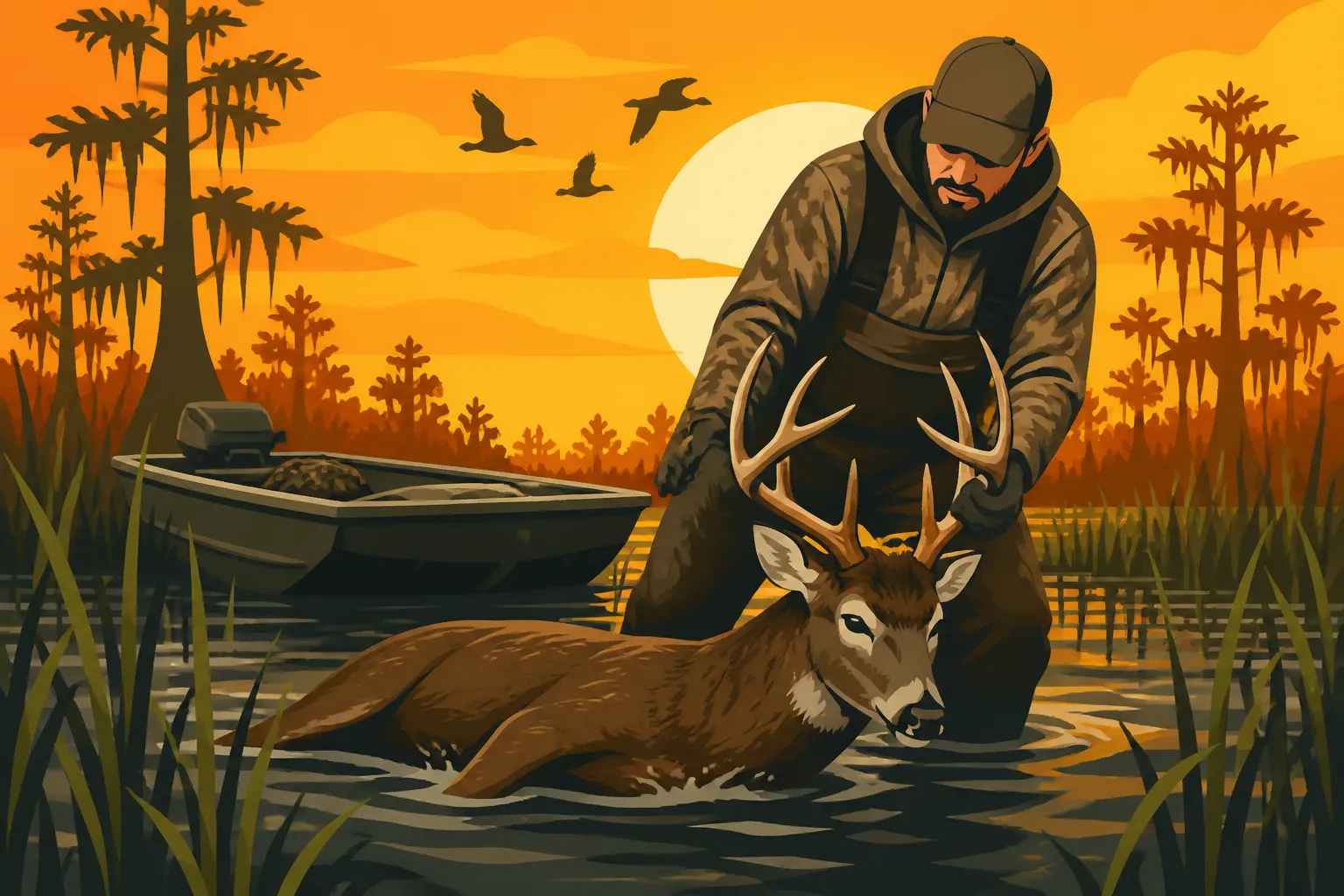
Once you reach the deer by boat, the challenge is getting it into the boat. This is where teamwork shines. Position the boat alongside the deer. If the deer is floating, you might be able to roll it into the boat. If it's submerged, you'll need to lift it. This can be done by one person holding the head or antlers and another lifting from the midsection. For very large deer, you might need ropes or even a makeshift sling to leverage it into the boat.
Table: Comparison of Deer Retrieval Methods from a Basin Slough
| Method | Best Use Case | Pros | Cons | Essential Gear |
|---|---|---|---|---|
| Wading | Shallow, calm water, firm bottom, short distance | Direct, no special equipment needed beyond personal gear | High risk (snakes, mud, falls, hypothermia), physically demanding, limited depth | Waders/hip boots, sturdy walking stick, knife, life vest (optional but recommended) |
| Small Boat (Pirogue/Canoe) | Moderate depth, obstacles, longer distance | Relatively safe, less physical strain, can carry gear, multiple people | Requires boat access, difficult to load very large deer, potential for tipping | Boat, paddles, life vests, ropes, lifting aids |
| Jon Boat | Wider sloughs, deeper water, heavier deer | Stable, higher carrying capacity, easier to load large deer | May struggle in very shallow water or tight spots, requires motor/propulsion | Boat, motor, fuel, life vests, strong ropes, gaff/hook |
| Grappling Hook/Snatch Pole | Submerged deer, difficult access, solo hunt | Can retrieve from a distance without entering water (if lucky) | Requires patience and skill, may damage hide, not always effective for fully submerged deer, limited range | Grappling hook, strong rope, long pole |
Using Grappling Hooks, Ropes, and Other Retrieval Tools
Sometimes, a boat isn't an option, or the deer is in such a snag-ridden area that getting a boat directly to it is impossible. This is where a grappling hook or a "snatch pole" can be a lifesaver. A heavy-duty grappling hook, tied to a strong rope, can be cast beyond the deer and slowly pulled back, ideally catching an antler, a leg, or the carcass itself. This can be frustrating, as it often takes multiple attempts, but it can allow you to pull the deer closer to the bank where it can be more easily accessed.
A snatch pole is essentially a long pole with a large hook or gaff on the end. This allows you to reach out and pull the deer in. For partially submerged deer, this can work well. For fully submerged deer, it becomes more challenging, requiring you to feel for the deer and try to hook a solid part of its body. Always prioritize pulling the deer to a shallower, safer spot before attempting to fully extract it. The Physical Demands of a Basin Deer Hunt are already high; retrieval adds another layer.
The Team Effort: Many Hands Make Light Work
No matter the method, retrieval from a basin slough is almost always easier, safer, and faster with multiple people. One person can maneuver the boat, another can assist with the lift, and a third can help clear obstacles or guide from the bank. If you're pulling a deer out of the water and up a muddy bank, having one person pull from the front while another pushes or guides from behind will make the job much more manageable. Communication is key to coordinate efforts and avoid accidents.
Post-Retrieval Care and Considerations
Congratulations, the deer is out of the water! But the work isn't over. Proper care now is essential to ensure your venison isn't spoiled and that you avoid any legal or health issues.
Field Dressing Your Deer in the Swamp
Once the deer is on solid ground—or at least out of the deep water—field dressing should happen as quickly as possible. Even if the deer has been in cool water, the Louisiana heat and humidity can quickly spoil meat, especially if the internal organs are left intact. Find the driest, cleanest spot you can. If you're on a small strip of land in the middle of a slough, you might have to field dress right there, being careful not to let the internal organs fall back into the water if possible, or at least away from sensitive areas.
Be thorough, remove all internal organs, and allow the body cavity to cool. If water has entered the body cavity, try to drain it as best you can. This is critical for maintaining meat quality, especially if you're dealing with Field Dressing a Deer in Warm Weather. The quicker you can get the deer dressed and cooling, the better the meat will be.
Getting the Deer Out of the Swamp
Retrieving the deer from the slough is one thing; getting it all the way back to your vehicle or camp is another. If you used a boat, you can often transport it directly back. If you waded or pulled it to the bank, you now face the task of dragging a heavy, wet deer through thick mud, tangled roots, and dense vegetation. This is where a deer cart, if the terrain allows, or a sturdy dragging sled can be invaluable. Even with these tools, navigating the swamp is tough.
Consider the route carefully. Is there a more accessible path back, even if it's a bit longer? If you have multiple people, consider rotating who's on the drag. For some areas, the only way out might be a long, arduous Dragging a Deer Out of a Swamp process. It's often worth the extra effort to make sure the meat isn't damaged by prolonged dragging over rough terrain.
Cleaning the Carcass and Processing Considerations
Once the deer is out of the swamp and back at camp or your vehicle, give it a good cleaning. Any mud, leaves, or debris from the slough needs to be removed from the hide and especially from the body cavity. A quick rinse with a hose can go a long way. Pat it dry, or at least get the excess water off.
If the deer has been in the water for an extended period, or if the water was particularly warm, pay close attention to the meat when you begin processing. Any off-smells or discoloration should be noted. While deer often come out of the water looking a bit rough, the meat can still be perfectly good with proper care. However, if there's any doubt about spoilage, especially if the body cavity was inundated with warm, stagnant water, it's always better to err on the side of caution. Louisiana’s climate means vigilance with game meat is always important.
Staying within Legal Boundaries
Finally, always make sure you are abiding by all Louisiana hunting regulations throughout the process. This includes having the appropriate licenses and tags, such as the Louisiana Deer Tag Add-On Cost, and reporting your harvest as required. The excitement of a successful retrieval should never overshadow your legal responsibilities as a hunter.
Disclaimer
Please remember that hunting inherently involves risks, and this guide provides general information for educational purposes only. Always prioritize safety, adhere to all local and state hunting regulations, and consider consulting with experienced local hunters or wildlife officials for specific advice related to conditions in Louisiana. The author and publisher are not responsible for any accidents, injuries, or legal issues that may arise from applying the information presented here.