Blood Trailing After Dark in Louisiana
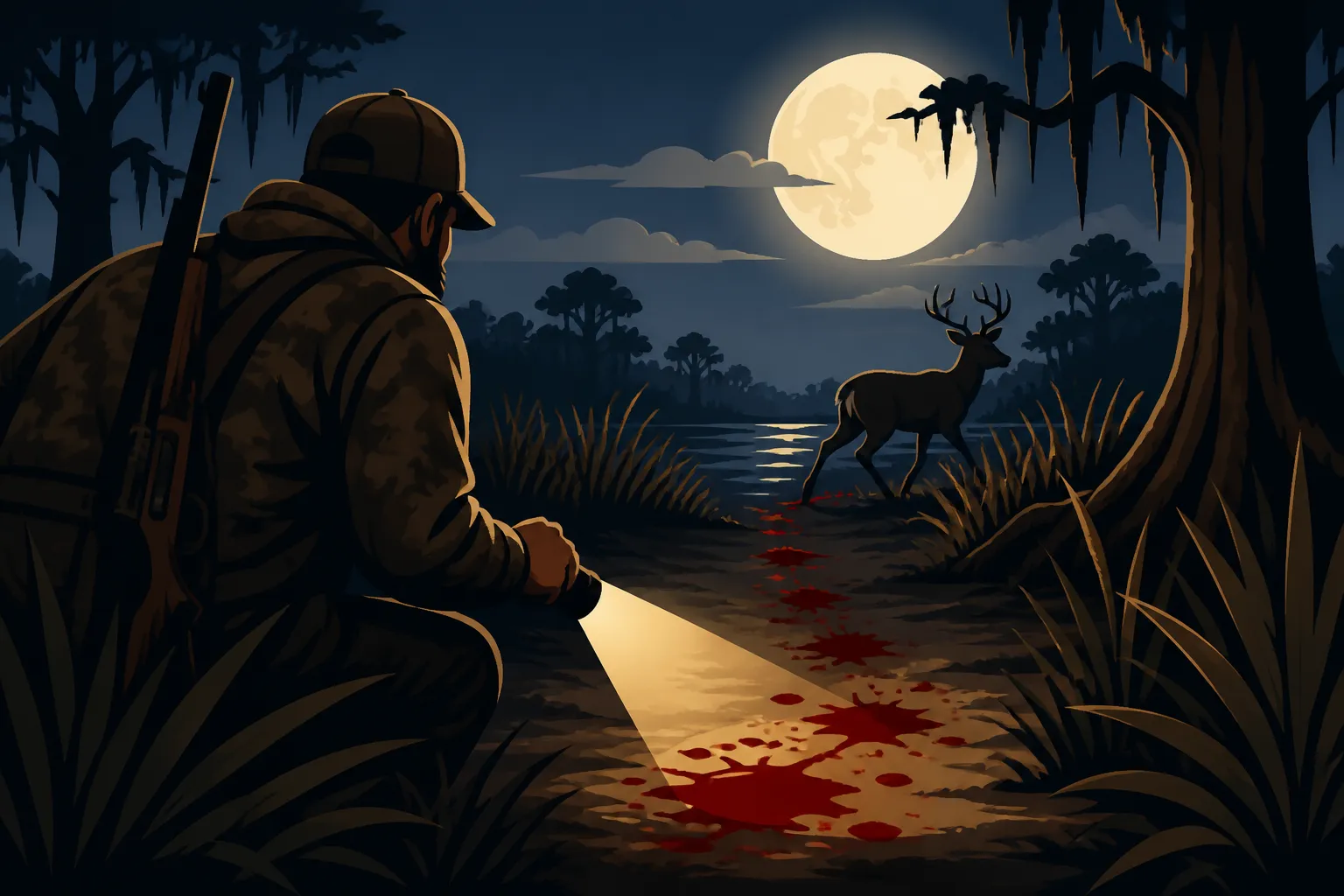
We've all been there, that heart-sinking feeling as the last sliver of daylight fades, leaving you staring into the darkening Louisiana woods, convinced you made a good shot but with no deer in sight. Trying to follow a blood trail after the sun dips below the horizon in our neck of the woods is a unique challenge, fraught with obstacles that can turn a hopeful recovery into a gut-wrenching lost animal. This guide is here to walk you through the realities, the gear, and the techniques you need to give yourself the best possible chance of finding your game when darkness falls.
The Unique Challenges of Night Trailing in Louisiana
Blood trailing in Louisiana after dark isn't like doing it up north in open timber with a fresh layer of snow. Our swamps, bottomlands, and piney woods present a whole different set of hurdles. It's crucial to understand these obstacles before you even step foot into the gloom, because forewarned is forearmed, as they say.
Navigating Treacherous Terrain in the Dark
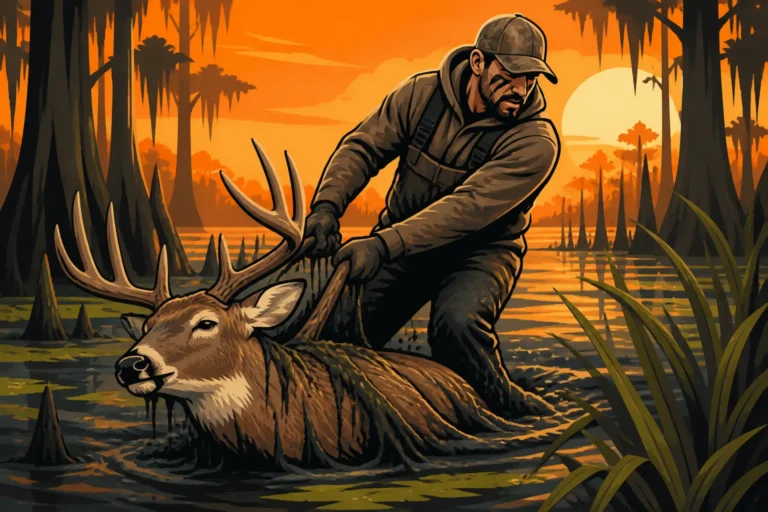
Louisiana's landscape is famously diverse, but much of it shares a common trait: it's not exactly easy walking. In the thick bottomland hardwoods or cypress-tupelo swamps, you're dealing with a tangled mess of fallen timber, cypress knees, mucky bogs, and dense palmetto thickets. Even familiar terrain can become a confusing, ankle-twisting nightmare when you can't see your feet. Imagine trying to follow a faint blood trail while simultaneously trying not to trip over a hidden log or sink into a slough. It’s exhausting, disorienting, and it makes focusing on the task at hand incredibly difficult. The challenges of Dragging a Deer Out of a Swamp are amplified tenfold when you can't even see the deer yet. You might step in a soft spot, losing your footing, and then suddenly you're covered in mud, your focus completely broken from the trail.
Dealing with Fading Blood and Insect Swarms
Blood on the ground, especially in warm, humid Louisiana conditions, doesn't stay vibrant for long. It can dry out quickly, turning a bright red splash into a dull, dark stain that blends perfectly with wet leaves or dark soil. If there's any dew, light rain, or even just high humidity, that precious blood sign can spread, dilute, or simply disappear into the damp ground or Tracking a Deer Through Louisiana Leaf Litter. Compounding this frustration are the ever-present insect swarms. Mosquitoes, gnats, and other biting bugs can make standing still to examine a trail utterly miserable. Their constant buzzing and biting distract you, make you rush, and can even cause you to miss subtle signs as you frantically swat them away. It’s hard enough to concentrate, let alone perform delicate detective work, when you feel like you’re being eaten alive.
Essential Gear for After-Dark Blood Trailing
You wouldn't head out on a deer hunt without your rifle and ammo, and you shouldn't attempt a night blood trail without the right tools. Good gear doesn't just make the job easier; it makes it possible and safer. Skimping here is a recipe for a lost deer and a frustrating, potentially dangerous night.
Lighting Systems for Maximum Visibility
Forget that weak little flashlight you keep in your truck's glove compartment; you need serious illumination. A powerful headlamp is your first line of defense. Look for one with a wide, bright beam that casts a clear, even light, allowing you to scan a broad area while keeping your hands free. Many modern headlamps offer multiple settings, including a red-light option which can be useful for preserving night vision if you need to briefly look away from the beam, though it's not ideal for spotting blood itself.
Beyond the headlamp, a strong handheld spotlight or a high-lumen flashlight is invaluable. This allows you to punch a concentrated beam into thick cover, illuminating distant objects or deeply shadowed areas that your headlamp might miss. Some hunters swear by specialized blood-trailing lights, which are often LED lights designed to highlight the iron in blood, making it "pop" against the natural background. While they can be effective, don't rely solely on them; a bright white light is still your primary tool. Think of these as an extra advantage, not a replacement.
Navigation and Marking Tools
In the dark, it's incredibly easy to become disoriented, especially when your attention is fixed on the ground. A reliable GPS device or a smartphone app like GoHunt is absolutely critical. Before you even start trailing, mark your shot location (the "last seen" spot if the deer ran off, or the precise impact point if you heard it hit). Every time you find a significant piece of sign — a pool of blood, a chunk of hair, or a clear track — mark that spot as a waypoint. This creates a virtual breadcrumb trail that allows you to easily backtrack if you lose the sign, or if you need to call it quits for the night and return in the morning.
Along with digital marking, physical markers are essential. Bright, reflective marking tape or surveyor's ribbon tied to branches or shrubs allows you to see your path even if your device dies or you temporarily lose service. Some hunters use small, reflective tacks that can be pushed into trees. Whatever you choose, make sure it’s highly visible under flashlight beam and can withstand the elements. These physical markers are particularly useful for indicating the direction of travel when the blood trail becomes sparse, helping you keep track of where you've been and where you think the deer is headed.
Effective Blood Trailing Techniques When the Sun Goes Down
Once you've got your gear and your head is wrapped around the challenges, it's time to actually hit the trail. This isn't a race; it's a methodical investigation. Patience and a systematic approach will yield far better results than a frantic, haphazard search.
Slow and Systematic Search Pattern
The absolute most important rule of night trailing is: go slow. Rushing will almost guarantee you overshoot the blood trail or miss crucial signs. Start at the last confirmed sign — the shot location or the last visible blood spot. Get down on your hands and knees if you have to. Your headlamp should sweep a grid pattern, not just a straight line. Look for specks, drips, smears, and even subtle changes in the texture or color of leaves or grass. Remember that blood can be on both sides of the trail, so if you're not seeing anything on the ground, raise your beam and scan low-hanging branches or brush for splashes, especially in thick areas or when a deer jumps over an obstacle.
It’s often helpful to have two people: one focused purely on the blood trail, moving slowly, and another person slightly behind, marking the path with tape and keeping an eye on the GPS. This allows the lead person to remain hyper-focused on finding that next drop of blood. If you're alone, use your GoHunt app or GPS to mark every significant sign you find. This record is invaluable if you need to retrace your steps or if you discover the trail has veered in an unexpected direction. Remember that deer, especially when wounded, don't always run in a straight line, and knowing Wind and Thermals in Swamp Bottomland can sometimes help predict their escape route, but don't count on it.
Interpreting the Sign and Expanding Your Search
Blood isn't the only indicator. Look for disturbed earth, scuffed leaves, broken twigs, or even overturned moss. A deer running through dense cover will often leave a clearer path of broken vegetation than blood, especially if the wound isn't bleeding externally. Pay attention to how the blood looks: bright red, frothy blood often indicates a lung hit, while dark, clotted blood can suggest a liver or muscle hit. If you find stomach contents or feces, that's a strong indicator of a gut shot, which means a longer wait might be necessary.
If the blood trail completely vanishes, don't panic. Go back to the last confirmed sign and re-evaluate. Expand your search outward in ever-widening circles from that point. A grid search pattern of about 10-20 yards in radius can often pick up a missed drop or a subtle sign that indicates a change in direction. Sometimes, a deer will circle back, or make a sharp turn. Consider where the deer might naturally go: towards thicker cover, downhill, or to water. The GoHunt app can be particularly useful here, allowing you to quickly scan topographical maps for features like creek beds, thickets, or natural funnels where a deer might seek refuge.
When to Call It Quits and When to Re-Engage
Deciding when to push on and when to back out is one of the toughest calls in blood trailing, especially after dark. Your emotions will be running high, but making a rational decision is paramount to a successful recovery.
Assessing the Shot and Initial Blood Trail
The nature of the shot plays a huge role in your decision. If you saw or heard a clear hit in the vitals (heart/lungs), and the initial blood trail is strong and consistent, pressing on is often the right move. A deer hit in the heart or lungs will typically expire quickly, often within 100-200 yards. In these cases, even if it's dark, continuing the trail carefully can lead to a quick recovery. You're trying to prevent coyotes or other scavengers from getting to your deer overnight.
However, if the shot felt marginal, or the blood trail is sparse, inconsistent, or indicates a gut shot (green matter, dark blood, strong odor), then backing out and waiting until morning is almost always the best course of action. A gut-shot deer needs time, usually 6-12 hours, to bed down and stiffen up. Pushing it immediately will only make it run further, making recovery nearly impossible, especially in challenging Louisiana terrain. Don't let the darkness or your excitement cloud your judgment here. Mark your last spot meticulously with your GoHunt app and physical tape, and leave the area as quietly as possible.
The Morning Re-Entry Strategy
Returning to a cold trail in the morning requires a fresh approach. Use your marked waypoints to get precisely back to where you left off. The cooler morning temperatures often mean blood will be more visible, and dew might even make dried blood stand out more. With natural light, you'll be able to see subtle ground disturbances, broken twigs, and faint tracks that were invisible under artificial light.
When you restart, approach the last marked sign from a slightly different angle, maybe 10-15 yards to the side, and slowly work your way towards the marked spot. This allows you to potentially pick up a trail that veered off before your last marker. Use the daylight to thoroughly examine the surrounding area. Look for ravens or buzzards circling, which can sometimes indicate a downed animal. Remember to report your harvest according to Louisiana Deer Reporting Requirements once you've successfully recovered your deer. And always be prepared for a difficult recovery, because Recovering a Deer From a Basin Slough is no easy task, even in daylight.
| Trailing Light Source | Pros | Cons | Best Use Case |
|---|---|---|---|
| Headlamp | Hands-free, wide beam, consistent light | Less powerful than handheld, limited focus | Primary light for general navigation and close trailing |
| Handheld Flashlight | Powerful, focused beam, reaches further | Requires one hand, can be heavy | Penetrating thick cover, long-range scanning |
| UV (Black) Light | Can make dried blood glow, unique visibility | Effectiveness debated, can miss fresh blood, distorts colors | Supplement to white light for sparse, old trails |
| Dedicated Blood Light | Optimized LED spectrum for blood visibility | Often expensive, may not be as bright as high-lumen flashlights | Targeted search when blood is minimal |
Disclaimer
Hunting involves inherent risks, and conditions in the field can be unpredictable. This guide offers general advice on blood trailing after dark in Louisiana. Always prioritize safety, understand and follow all Louisiana Department of Wildlife and Fisheries (LDWF) regulations, and consider consulting with experienced local hunters or professional tracking services if you are unsure or the situation is too challenging. Neither the author nor the publisher assumes responsibility for any injuries, losses, or legal issues that may arise from applying this information.