Dragging a Deer Out of a Swamp
There are few moments in a Louisiana hunter's life more exhilarating than connecting with a big buck, and few moments more soul-crushing than realizing that trophy has dropped deep in a murky, sucking swamp. The elation quickly turns to dread as you face the monumental task of extracting a heavy animal from a landscape designed to swallow anything that dares traverse it. This isn't just a walk in the park; it's a grueling, mud-caked marathon, and this guide is here to walk you through the realistic challenges and practical strategies for dragging a deer out of a Louisiana swamp.
The Unique Gauntlet of a Louisiana Swamp Recovery
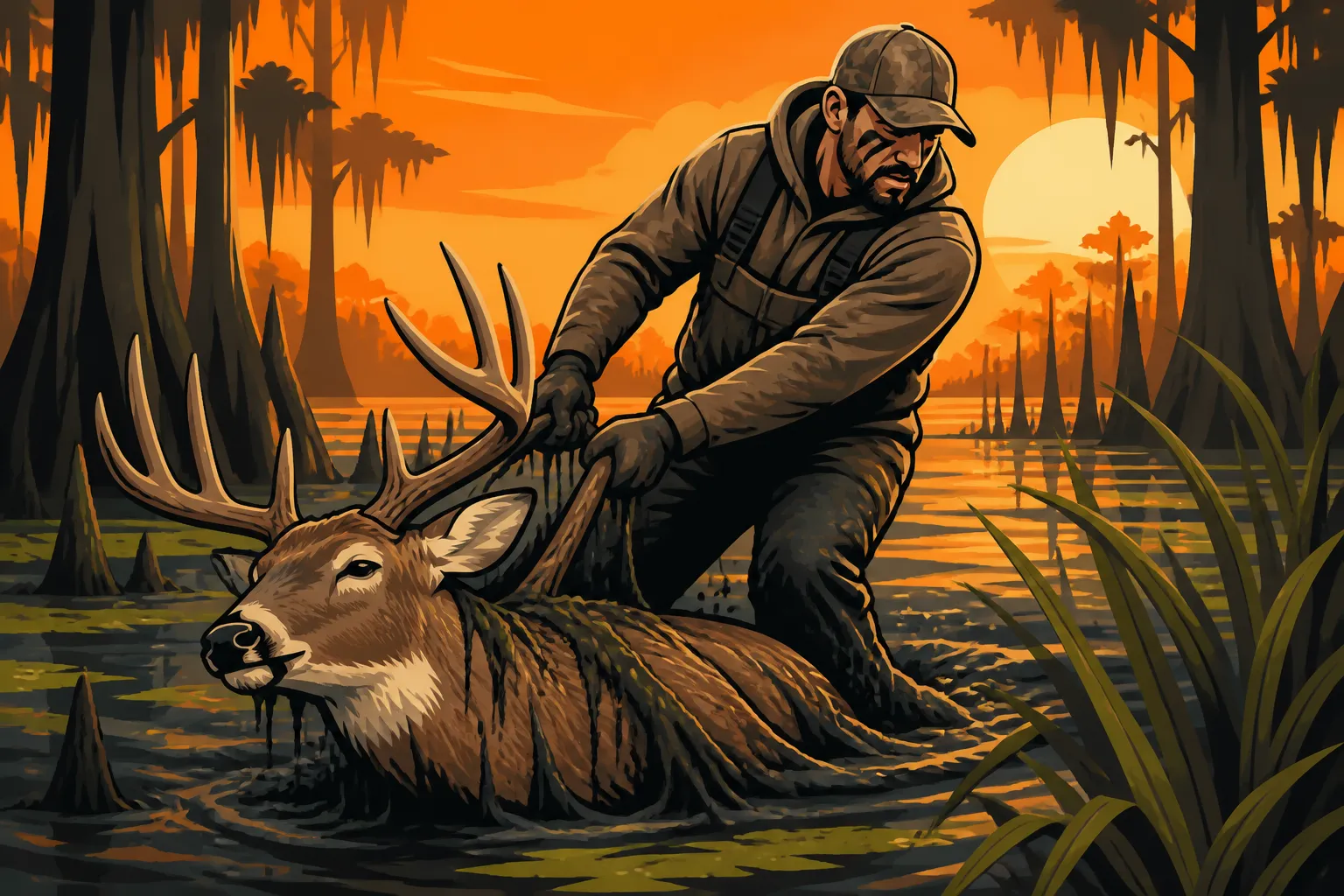
Recovering a deer in Louisiana's swamps is a beast all its own, fundamentally different from hauling one out of a piney hill or a clear-cut. This isn't merely about physical strength; it's about navigating a truly hostile environment that tests your gear, your resolve, and your patience to their absolute limits. If you've ever tried to pull a 150-pound deer through knee-deep mud, you know exactly the kind of frustration and exhaustion I'm talking about.
The Treacherous Terrain of Mud and Water
The most obvious adversary in a Louisiana swamp recovery is the ground itself. What looks like solid earth can quickly become a boot-sucking, energy-draining trap. You might be walking on what feels like firm ground one minute, only to plunge knee-deep into thick, viscous mud the next. This isn't just sloppy dirt; it's often a mixture of clay, silt, and decayed organic matter that creates a powerful suction, making every step an arduous effort.
Then there's the standing water. Depending on recent rainfall and the specific area, you could be dealing with everything from ankle-deep puddles to waist-high sloughs. This water might conceal hidden stumps, logs, or even deeper holes, turning a simple drag into a dangerous obstacle course. Trying to maintain balance while dragging a heavy deer through water is a recipe for a painful fall, not to mention soaking wet gear and clothes. This constant battle against the elements truly emphasizes why understanding Wind and Thermals in Swamp Bottomland is crucial not just for hunting, but for recovery too.
Dense Vegetation and Hidden Obstacles
Beyond the mud and water, Louisiana swamps are an impenetrable maze of vegetation. Think about those dense palmetto thickets, the thorny briar patches that grab at every piece of clothing, and the endless stands of cypress and tupelo trees with their distinctive knees poking out of the water. Each one of these is a potential snag point for your deer, your rope, or even yourself. A deer's antlers can get hopelessly tangled in vines, or a leg might hook on a submerged log, bringing your progress to a screeching halt.
Fallen timber is another significant challenge. Old trees, sometimes massive, often lie half-submerged, creating natural barriers that are too big to drag a deer over and too dense to pull it around. You might have to saw through smaller obstacles or completely re-route, adding valuable time and energy to an already demanding task. This type of environment makes scouting absolutely essential; knowing the lay of the land can save you hours of struggle, reinforcing the value of Scouting Louisiana Public Land Before Season.
The Unforgiving Heat, Humidity, and Wildlife
As if the physical landscape wasn't enough, you're usually battling Louisiana's infamous climate. Even in cooler hunting months, a mid-day recovery effort can quickly turn into a sweaty, suffocating ordeal. The humidity is often oppressive, and strenuous physical activity in such conditions rapidly leads to dehydration and exhaustion. Sweat gnats, mosquitos, and horseflies are relentless, buzzing in your ears and biting at every exposed inch of skin, making concentration difficult and morale low.
And let's not forget the natural inhabitants. While you're likely focused on your deer, the swamp is home to a host of creatures. Water moccasins are common, and stepping on one while dragging a deer could turn a bad day into a critical emergency. Alligators, though typically shy, are always a consideration in the deeper waters of the Atchafalaya Basin or other swampy regions. While direct attacks are rare, their presence adds another layer of awareness and caution to an already stressful situation. For warm weather hunts, it's wise to consider a Warm-Weather Sitting Strategy in Louisiana to minimize your exposure to these harsh conditions during a potential recovery.
Essential Gear for a More Manageable Swamp Drag
Facing down the swamp with nothing but a flimsy rope and your willpower is a recipe for disaster. To give yourself a fighting chance and ensure a safer, more efficient recovery, you need to come prepared with the right tools. Investing in quality gear isn't just about convenience; it's about minimizing risk and maximizing your chances of successfully getting your deer out.
Personal Protection and Navigation
Before you even think about moving the deer, think about yourself. Louisiana swamps can be brutal, and proper personal gear is paramount.
- Waders or Sturdy Waterproof Boots: This is non-negotiable. Trying to drag a deer while your boots are full of mud and water is miserable and dangerous. Chest waders or knee-high rubber boots will keep you drier and offer some protection against submerged obstacles and critters.
- Hydration Pack: You're going to sweat, a lot. A hydration pack filled with water or an electrolyte drink is far superior to carrying bottles and keeps your hands free.
- Insect Repellent: Heavy-duty insect repellent is a must. The mosquitoes and gnats can drive you mad and make a difficult task nearly impossible. Consider a head net if the bugs are particularly thick.
- First-Aid Kit: A small, waterproof kit with bandages, antiseptic wipes, pain relievers, and snake bite supplies (if you're comfortable and trained in their use) can be a lifesaver. Accidents happen in the swamp.
- GPS and Communication Device: You will get disoriented in thick swamp. A reliable GPS unit, or a hunting app on your phone like GoHunt, is essential for marking your trail, locating your deer, and finding your way back to your vehicle or camp. Always carry a fully charged phone and a portable charger. Consider a satellite messenger for areas with no cell service.
Specialized Dragging Aids
Forget trying to muscle a whole deer by yourself. Even a small buck feels like a ton after a hundred yards in the swamp. These tools are designed to make the job less strenuous.
- Game Sled or Toboggan: This is often the best option for swamps. A durable plastic sled allows the deer to slide over mud, fallen logs, and through shallow water with much less friction than dragging it directly. Look for one with a strong rope or harness attachment points. Brands like Pelican or Shappell make excellent portable sleds that can be strapped to a pack.
- Heavy-Duty Drag Rope or Harness: A thick, sturdy rope (at least 1/2 inch diameter) is crucial. You might even consider a dedicated deer drag harness that distributes the weight across your shoulders and waist, saving your arms and back. Some hunters will even fashion a "swamp sled" out of a tarp and some PVC pipe for easier gliding. The GoHunt website often features reviews and comparisons of different dragging systems, which can be invaluable for finding what works best for your specific needs.
- Small Folding Saw or Hatchet: For cutting through smaller fallen limbs, briar thickets, or creating a makeshift path. Every little bit of resistance removed makes a difference.
Strategies for a Successful Swamp Recovery
Now that you're geared up, let's talk tactics. Recovering a deer from a Louisiana swamp is less about brute force and more about smart planning, efficient execution, and often, the willingness to adapt on the fly.
The Immediate Aftermath: Assessment and Field Dressing
Once you locate your deer, the very first step is a thorough assessment. Check the deer for any remaining signs of life, and then tag it according to Louisiana Department of Wildlife and Fisheries (LDWF) regulations. This is also the prime opportunity to reduce weight and make the animal easier to handle.
- Field Dressing is Key: Performing a complete and clean field dress on site is crucial. Removing the entrails immediately can reduce the deer's weight by 20-30%, which is enormous when you're battling mud and water. It also helps cool the carcass, especially important in Louisiana's warm climate, preserving the meat. If you're unsure, refresh your memory on Field Dressing a Deer in Warm Weather.
- Consider Quartering (Extreme Cases): If the deer is exceptionally large, or if the terrain is truly impassable even with a sled, consider quartering the animal. While more involved, packing out meat in sections can be the only realistic way to save a deer from a particularly deep and difficult swamp. This isn't for everyone, but it's a technique to have in your back pocket.
Route Planning and The Power of Teamwork
Don't just grab the rope and start pulling blindly. Take a moment to survey the scene.
- Identify the Path of Least Resistance: Look for slightly higher ground, natural ridges, or areas with less dense vegetation. Even a slight elevation can mean drier, firmer footing. Use your GoHunt app or GPS to mark these potential routes. Sometimes the easiest path is not a straight line, but a winding route that follows the contours of the land or a game trail.
- Bring a Buddy (or Two): If at all possible, never attempt a deep swamp recovery alone. Two people can alternate pulling, navigate obstacles more effectively, and provide safety in numbers. More hands make lighter work, especially when lifting a deer over a downed log or out of a deep hole. This cooperative spirit is a big part of Louisiana Deer Camp Traditions.
- Utilize Water: If you're near a deeper slough or creek, consider floating the deer for a section. This can be remarkably easier than dragging it through mud. You might still need to guide it with ropes, but the water takes much of the weight. This is especially useful for Recovering a Deer From a Basin Slough.
Specialized Techniques for Tricky Spots
Sometimes, even with a good plan, you'll hit a wall. Here are some tricks for those truly tough spots.
- Rope and Pulley Systems: For incredibly heavy deer or very steep banks (which are rare in deep swamp, but possible), a simple rope and pulley system can multiply your pulling power. This might require a sturdy tree for an anchor point.
- Leverage with Logs: Use fallen logs as fulcrums. If you need to lift the deer over a particularly thick log, roll it onto the log, then use another log or a sturdy branch as a lever to pivot it over.
- Antler Handling: If the deer has antlers, they can be both a blessing and a curse. They offer excellent handholds, but also snag on everything. If you're using a sled, try to position the deer head-first so the antlers don't catch on branches as much. In extremely dense brush, some hunters will even saw off larger antlers if trophy preservation isn't the primary concern and recovery is impossible otherwise.
Post-Recovery Care and Reflection
Congratulations! You've wrestled your deer out of the swamp. The work isn't quite over.
- Clean Up: Take the time to clean your gear thoroughly. Swamp mud and water are notoriously corrosive and can quickly ruin ropes, sleds, and even your boots if left uncleaned.
- Proper Carcass Care: Once out of the swamp, get your deer on ice as quickly as possible. Louisiana's heat can turn good meat bad rapidly.
- Lessons Learned: Every swamp recovery is a learning experience. Think about what worked well and what didn't. Did you have enough rope? Was your sled suitable? Did you underestimate a certain section of terrain? This reflection will make you better prepared for your next hunt, especially if you plan to continue Hunting Louisiana's Reinstated Bear Season in similar habitat, as bear recovery presents its own challenges.
Comparing Dragging Aids for Swamp Conditions
| Dragging Aid | Pros | Cons | Ideal Swamp Conditions |
|---|---|---|---|
| Game Sled (Plastic) | Low friction over mud/water, protects carcass, easy to clean. | Can be bulky to carry in, hard to maneuver in very dense brush. | Moderate mud, standing water, areas with fewer tight obstacles. |
| Deer Cart (Wheeled) | Excellent for firm, clear trails; reduces direct pulling effort. | Useless in deep mud/water; wheels get bogged down, too wide for brush. | Only for swamp edges with established, firm paths. Generally not recommended for true swamp. |
| Heavy-Duty Rope | Simple, lightweight, versatile, inexpensive. | No friction reduction, more physical effort, carcass gets dirty. | Short distances, minimal mud, when no other aid is available. |
| Game Harness | Distributes weight, frees hands, less strain on back/arms. | Requires a good dragging aid (sled) to be effective for long hauls. | Best when combined with a game sled for long, strenuous drags. |
| Backpack Frame | Best for quartered meat, hands-free, works in any terrain. | Requires field quartering, more time-consuming, specialized skill. | Extreme, impassable terrain; very large animals; lone hunter. |
As you can see, the game sled, especially when paired with a good game harness, offers the most advantages for typical swamp recovery scenarios. A quality, durable sled can make a world of difference when you're working your way through the muck.
Final Thoughts on Swamp Recovery
Dragging a deer out of a Louisiana swamp is never going to be easy. It's an experience that will push you physically and mentally, often leaving you exhausted, mud-caked, and questioning your life choices. But with the right preparation, the proper gear, and a solid plan, it's a challenge that can be overcome. Always prioritize your safety, consider bringing a partner, and don't be afraid to take your time. A retrieved deer, no matter how hard-won, is always worth the effort when it means venison in the freezer and a story to tell. Remember, knowing your chosen Louisiana Hunting Licenses and What They Cost is just as important as knowing your recovery plan, as unexpected circumstances can always arise.
When you're out there, remember that tools like the GoHunt app are invaluable not just for planning your hunt, but also for getting out of tough situations. Using its mapping features to mark downed deer, potential obstacles, and the easiest route back to civilization can be a game-changer. And always be aware of your surroundings; whether it's understanding Louisiana Coyote Range and Density to avoid leaving game unattended, or knowing the WMA rules if you're hunting public land.
Disclaimer
The information provided in this guide is for general informational purposes only and does not constitute professional advice. Hunting involves inherent risks, and conditions in the wild can be unpredictable. Always exercise caution, adhere to all local and state hunting regulations, and prioritize your safety above all else. Seek professional instruction for any hunting techniques or gear you are unfamiliar with.