Hunting Into the Long Either-Sex Window
It can feel like a real head-scratcher when Louisiana's deer season stretches out, particularly during those extended either-sex windows. You've prepared all year for a specific rut phase or early season buck pattern, only to find yourself facing weeks, sometimes months, where any legal deer is fair game. This extended opportunity, while fantastic, often comes with changing deer behavior, increased pressure, and shifting food sources, leaving many hunters wondering how to stay effective. This guide will walk you through adaptable strategies and proven tactics to make the most of hunting into the long either-sex windows, ensuring your freezer stays full and your season stays exciting.
Understanding the "Long Either-Sex Window" in Louisiana
What Defines These Unique Seasons
Louisiana's deer hunting framework is a bit different than some other states, offering some incredibly generous opportunities, especially when it comes to harvesting either-sex deer. For many hunters, this means more chances to put meat in the freezer, manage herd numbers on their land, or simply enjoy more time in the woods. These "long either-sex windows" are periods within the deer season where hunters, depending on the deer area, can harvest either antlered or antlerless deer for an extended duration, sometimes for months on end. It's not just a weekend deal; we're talking about a significant portion of the hunting calendar where you don't have to solely focus on antler growth or wait for specific management days. This flexibility is a huge perk, but it also means that the dynamics of the hunt can shift considerably from the intense, buck-focused opening weeks. You might be accustomed to hunting solely for that big racked buck, but when does are on the menu daily, your entire approach can, and should, change.
The Louisiana Department of Wildlife and Fisheries (LDWF) manages deer seasons across ten distinct deer areas, each with its own specific regulations tailored to local herd health, habitat, and hunter pressure. While many areas have more restrictive either-sex days, certain parts of the state are blessed with these longer windows. This means that hunters in those zones get to enjoy a more continuous approach to deer management and harvesting. It's a testament to the healthy and robust deer populations in these regions, allowing for a more liberal harvest structure without impacting the long-term sustainability of the herd. Understanding these regulations is paramount, and it pays to dig into the details for your specific hunting zone. You don't want to miss out on an opportunity or, worse, make an unlawful harvest simply because you weren't aware of the specific rules governing your area.
Which Deer Areas Offer These Extended Opportunities
When we talk about the really long either-sex windows, we're primarily looking at Deer Areas 5, 6, and 9. These particular areas are known for their extended seasons, often stretching from early archery right through the late firearm periods, allowing for a continuous either-sex harvest. For example, some of these areas can have either-sex seasons that run for four to five months, an incredible timeframe compared to the much shorter windows in other parts of the state. This extended opportunity is generally a reflection of high deer densities and robust populations that can sustain a more liberal harvest. It also often aligns with regions that see diverse habitat, from sprawling pine plantations to rich bottomland hardwoods, providing ample cover and food sources for deer throughout the fall and winter.
- Area 5: Encompasses parts of central and southwest Louisiana, characterized by mixed pine and hardwood forests, as well as agricultural lands. The deer here benefit from diverse forage.
- Area 6: Covers a large section of west-central Louisiana, including much of the Kisatchie National Forest, featuring extensive pine forests mixed with creek bottoms and clear-cuts.
- Area 9: Situated in the central part of the state, this area features diverse habitats, including agricultural fields and bottomland hardwoods, supporting a healthy deer population.
These areas, with their unique environmental characteristics and deer populations, are managed to allow hunters greater flexibility. This means if you're hunting in a parish like Vernon (part of Area 6) or Rapides (part of Area 9), you'll often find yourself with a continuous supply of either-sex days once the gun season opens. This really opens up possibilities for hunters, whether you're focused on managing a lease, filling the freezer, or introducing new hunters to the sport without the pressure of strict antler point restrictions or limited doe days. It's a golden ticket for consistent hunting action, but it demands an adaptable strategy. To really get a handle on specific parish boundaries and season dates, check out a detailed resource like Louisiana's Ten Deer Hunting Areas Explained to make sure you're operating within the correct regulations.
Adapting Your Strategy to Extended Either-Sex Opportunities
Shifting Focus from Bucks to Does
When the either-sex window is wide open, the primary shift in strategy often moves from solely targeting trophy bucks to a more balanced approach that includes does. This isn't to say you abandon the idea of a big buck altogether, but rather, you expand your opportunities significantly. Does are typically less wary than mature bucks, and their movements are often more predictable, especially around primary food sources. During the early parts of these long seasons, does will often be moving in family groups, making it easier to identify and select animals for harvest. Later in the season, as the rut progresses in these long-window areas, does become even more crucial, as they are the very magnet that draws bucks out of hiding. Bucks will be actively seeking does, so by understanding where the does are, you inherently increase your chances of intercepting a cruising buck.
This shift means you might focus your scouting and stand placement around areas that does frequent: specific feeding plots, dense bedding cover with easy access to water, or subtle travel corridors they use daily. Forget the pressure of "buck fever" for a moment and concentrate on observing general deer movement and patterns. You'll find that if you consistently see does in an area, a buck will eventually show up, especially during the rut. Pay close attention to how does react to hunting pressure or changing weather conditions; their patterns are often a bellwether for the entire herd. For a deeper dive into how this plays out during peak breeding, consider reading up on Hunting the Rut in the Long-Window Areas to fine-tune your approach for those critical weeks.
Monitoring Food Sources and Cover Transitions
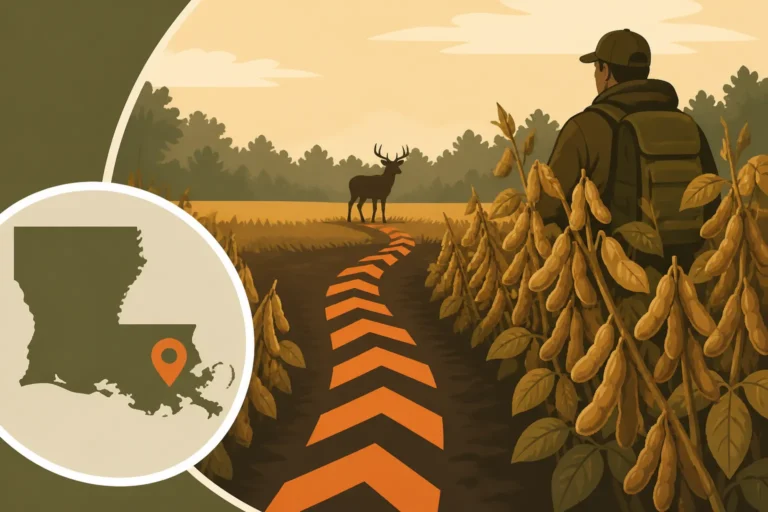
Deer, regardless of sex, are driven by two main things: food and security. As the season progresses through a long either-sex window, both of these elements can change dramatically. Early in the season, natural food sources like acorns might be abundant, pulling deer into specific areas. However, as those natural mast crops are depleted or as agricultural fields are harvested, deer will transition to other available sustenance. This often means moving to planted food plots, browse in cutovers, or remaining standing crops like soybeans or corn. Your job as a hunter is to keep a finger on the pulse of these transitions. One effective way to stay ahead is to use tools like GoHunt, which can help track weather patterns and seasonal food availability, giving you an edge in predicting deer movement.
Beyond food, cover is equally critical. As leaves fall from trees, dense canopy areas become sparse, forcing deer into thicker cover such as young pine plantations, palmetto thickets, or deep swamp bottoms. Increased hunting pressure during these long seasons also drives deer into the most secure, out-of-the-way places. This means your best bet might be to shift your focus from open hardwood bottoms to dense brushy areas or hard-to-access pockets. If you're on public land, this often means walking further than others are willing to go. On private land, it might mean targeting the densest parts of a clear-cut or the thickest edges of a creek bottom. Understanding Late-Season Food Sources for Louisiana Whitetails is crucial, as is adapting your approach to finding deer in heavy cover when the landscape changes.
Key Tactics for Success During These Long Windows
Aggressive Scouting and Stand Relocation
Hunting a long either-sex window demands a more proactive and less static approach. You can't just hang a stand in August and expect it to be productive all the way through January. Deer patterns, as mentioned, are constantly evolving due to food availability, pressure, and the rut cycle. This means aggressive, year-round scouting – and especially in-season scouting – is absolutely essential. Don't be afraid to put boots on the ground, even during hunting season, to check for fresh sign, track new trails, and identify current food sources. Trail cameras are invaluable for this, helping you monitor shifts without putting too much human scent in an area. However, nothing beats actual observation. For example, if you notice deer have abandoned a once-hot white oak ridge because the acorns are gone, it's time to move.
Being willing to relocate your stand, sometimes multiple times in a season, is a game-changer. This might mean having several portable stands ready to deploy, or even a good ground blind. If you're using a mobile setup, you can quickly move to where the sign is fresh, minimizing your impact on the area. This flexibility is what separates consistent hunters from those who get frustrated as the season drags on. Don't fall into the trap of thinking a stand location that worked in October will necessarily work in December. Deer are smart, and they adapt quickly. Tools like GoHunt can assist with topographical maps and satellite imagery, making it easier to pinpoint potential new stand locations or identify overlooked pockets of cover that might be holding deer. You can learn more about finding good spots by checking out Scouting Louisiana Public Land Before Season.
Employing Scent Control and Quiet Movement
With a longer season and often increased hunting pressure, deer become incredibly wary. They've seen and smelled it all by the time December rolls around. This makes meticulous scent control and silent movement absolutely non-negotiable for success during an extended either-sex window. Every single step you take into the woods, every piece of gear you touch, every breath you exhale, is a potential warning sign to a deer. Start with clean clothes, stored in scent-free bags, and use scent-eliminating sprays on your person and gear. Consider wearing rubber boots to minimize ground scent. The goal is to be as invisible as possible to a deer's nose.
Beyond scent, noise is another critical factor. The crunch of dry leaves, a clanking piece of gear, or a loud cough can ruin a hunt. Practice walking quietly, especially when approaching your stand. Trim shooting lanes well in advance to avoid breaking branches on the day of the hunt. If still-hunting, take slow, deliberate steps, pausing often to scan your surroundings. Think about how deer move – they are constantly surveying their environment with all their senses. Mimic that caution. The more silent and scent-free you can be, the more likely you are to encounter a deer that hasn't been spooked by previous hunters. Consider reading Warm-Weather Sitting Strategy in Louisiana as many of these long windows involve warm stretches, and scent control becomes even more vital in those conditions.
Navigating Pressure and Habitat Shifts
Dealing with Increased Hunter Traffic
One of the realities of long, liberal hunting seasons, especially those with extended either-sex opportunities, is the potential for increased hunter traffic. More days to hunt often means more people in the woods, whether on public land or smaller private tracts. This amplified pressure directly impacts deer behavior. Deer, being intelligent and adaptable, quickly learn to avoid areas with high human activity. They'll become largely nocturnal, move deeper into the densest cover, and use less obvious travel corridors. This doesn't mean your hunting is doomed, but it does mean you need to adjust your strategy to counteract this pressure. You might need to adjust your approach to deer drives if you hunt with a group, or learn to find those hidden pockets if you hunt alone.
To succeed, you'll need to think outside the box and hunt "smarter, not harder." This might involve scouting areas that are difficult for others to access – think about deep swamps, areas requiring a boat, or places that demand a long, tough walk. Consider hunting during weekdays when pressure is typically lighter than weekends. Focus on dawn and dusk, or even try an all-day sit in a high-traffic area, as deer might move during the midday lull when other hunters are out of the woods. Often, the deer are still there, they're just avoiding the well-traveled paths. Learning to identify and target these less-pressured sanctuaries is a critical skill. Dive into Finding Ground That Sees Fewer Hunters for some excellent ideas on how to locate those overlooked spots.
Hunting Post-Harvest and Late-Season Cover
As the hunting season rolls into late fall and early winter, Louisiana's landscape often undergoes significant transformations. Agricultural fields that once offered prime feeding opportunities are harvested, leaving behind stubble or freshly plowed earth. The thick canopy of leaves that provided cover in early fall is long gone, making the woods much more open and exposing deer more easily. This change in habitat forces deer to adapt, and successful hunters must adapt with them. Post-harvest, deer will either abandon fields entirely or gravitate towards the remaining food sources like waste grain, often under the cover of darkness. They will also seek out remaining patches of dense cover for security.
For hunters, this means your focus needs to shift from targeting specific food plots that were hot in October to looking for areas with residual food or the thickest available cover. Think about standing cane, dense regrowth in clear-cuts, thick palmetto swamps, or even small, overlooked woodlots adjacent to suburban areas. These spots, which might have seemed unappealing earlier in the season, become sanctuaries for pressured deer. Understanding how to Using a Ground Blind on Louisiana Public Land can be incredibly effective in these situations, allowing you to set up quickly and conceal yourself in thick, low-lying cover that might not accommodate a traditional treestand. Always remember to adjust your tactics based on what the landscape is actually offering at that moment, not what it was offering weeks or months ago.
Important Considerations and Louisiana Regulations
Tagging and Reporting Your Harvest
Hunting during a long either-sex window means you might be harvesting more deer, which makes adhering to Louisiana's tagging and reporting requirements even more crucial. Every deer harvested in Louisiana, regardless of whether it's a buck or a doe, must be tagged immediately after harvest with a valid deer tag. These tags are specific to the license holder and correspond to the type of deer (either-sex or antlered). It's a simple system designed to help the LDWF monitor harvest numbers and manage deer populations effectively. Losing a tag or forgetting to apply it immediately can lead to complications, so always make sure you have your tags easily accessible in the field.
After tagging, the next critical step is reporting your harvest. In Louisiana, you have 72 hours from the time of kill to report your deer. This can be done conveniently through the Louisiana OutDoors app or the LDWF website. It's a quick and straightforward process that collects vital data for wildlife management. Failing to report your harvest within the specified timeframe can result in penalties, so don't let the excitement of a successful hunt make you forget this important step. Maintaining accurate records of your personal harvest also helps you track your success and learn from your past hunts. This is also where an app like GoHunt can really shine, as it often has integrated harvest logging features that simplify the process. Learn more about the specifics by checking out Louisiana Deer Reporting Requirements.
Understanding Local Area Nuances and WMA Rules
While Deer Areas 5, 6, and 9 offer generous either-sex windows, it's absolutely vital to remember that within these larger areas, specific regulations can and do vary. This is especially true if you plan to hunt on public lands, such as Wildlife Management Areas (WMAs). Each WMA often has its own set of rules, which can include different opening and closing dates, specific either-sex days that might be more restrictive than private land, mandatory sign-in/out procedures, or even specific legal primitive firearms under Louisiana rules. For instance, the general season in a deer area might be long, but a WMA within that area might only have a few designated either-sex days, or even quota hunts that require advance application.
Never assume that the statewide or deer area regulations automatically apply to a WMA. Always, and I mean always, check the specific WMA regulations pamphlet or the LDWF website for the particular WMA you intend to hunt before you head out. These details are updated annually and are non-negotiable. Ignoring them could lead to fines, loss of hunting privileges, or even confiscation of your harvest. It's also worth noting that some private land leases might have their own antler restrictions or harvest quotas that you've agreed to, even within a liberal either-sex zone. So, whether you're on public or private ground, local nuances are key to a successful and legal hunt. For an overview of how public lands are managed, take a look at Louisiana Wildlife Management Areas.
| Season Phase | Typical Deer Behavior | Recommended Tactics | Key Focus Areas |
|---|---|---|---|
| Early Season (Archery/Muzzleloader) | Consistent patterns, less wary, focused on prime food (acorns, early plots) | Aggressive scouting, quiet entry, focus on primary food sources | Oak flats, planted green fields, edges of ag fields |
| Mid-Season (Firearms Opener – Rut) | Increased pressure, rut activity begins, bucks seeking does | Scent control, mobile hunting, calling, focus on doe bedding & travel | Thick cover, creek bottoms, pinch points, funnels near doe areas |
| Late Season (Post-Rut – January) | Highly wary, largely nocturnal, seeking remaining food/thick cover | Deep woods scouting, patience, ground blinds, focus on survival foods | Clear-cut edges, dense palmettos, standing crops, remote thickets, thermal cover |
| High Pressure Days | Shift to nocturnal, use dense cover, avoid open areas | Hunt hard-to-reach spots, midday sits, hunt wind, use terrain for cover | Remote public land, deep swamps, private land sanctuaries, steep inclines/ridges |
Hunting into Louisiana's long either-sex windows presents a fantastic opportunity for hunters to enjoy an extended season and fill their freezers. It requires adaptability, constant scouting, and a keen understanding of deer behavior as the season progresses and pressure builds. By shifting your focus, monitoring food and cover, and adhering to all regulations, you can make these extended periods some of the most productive and rewarding hunts of the year. Don't be afraid to experiment, move your stand, and embrace the challenge of hunting wary deer. The reward is well worth the effort.
Disclaimer
This guide provides general information based on current Louisiana hunting regulations and common practices. Hunting regulations are subject to change. Always consult the most recent official Louisiana Department of Wildlife and Fisheries (LDWF) hunting regulations pamphlet or their official website before participating in any hunting activity. The author and publisher are not responsible for any errors or omissions, or for any hunting violations that may occur.