Hunting Deer After a Cold Front
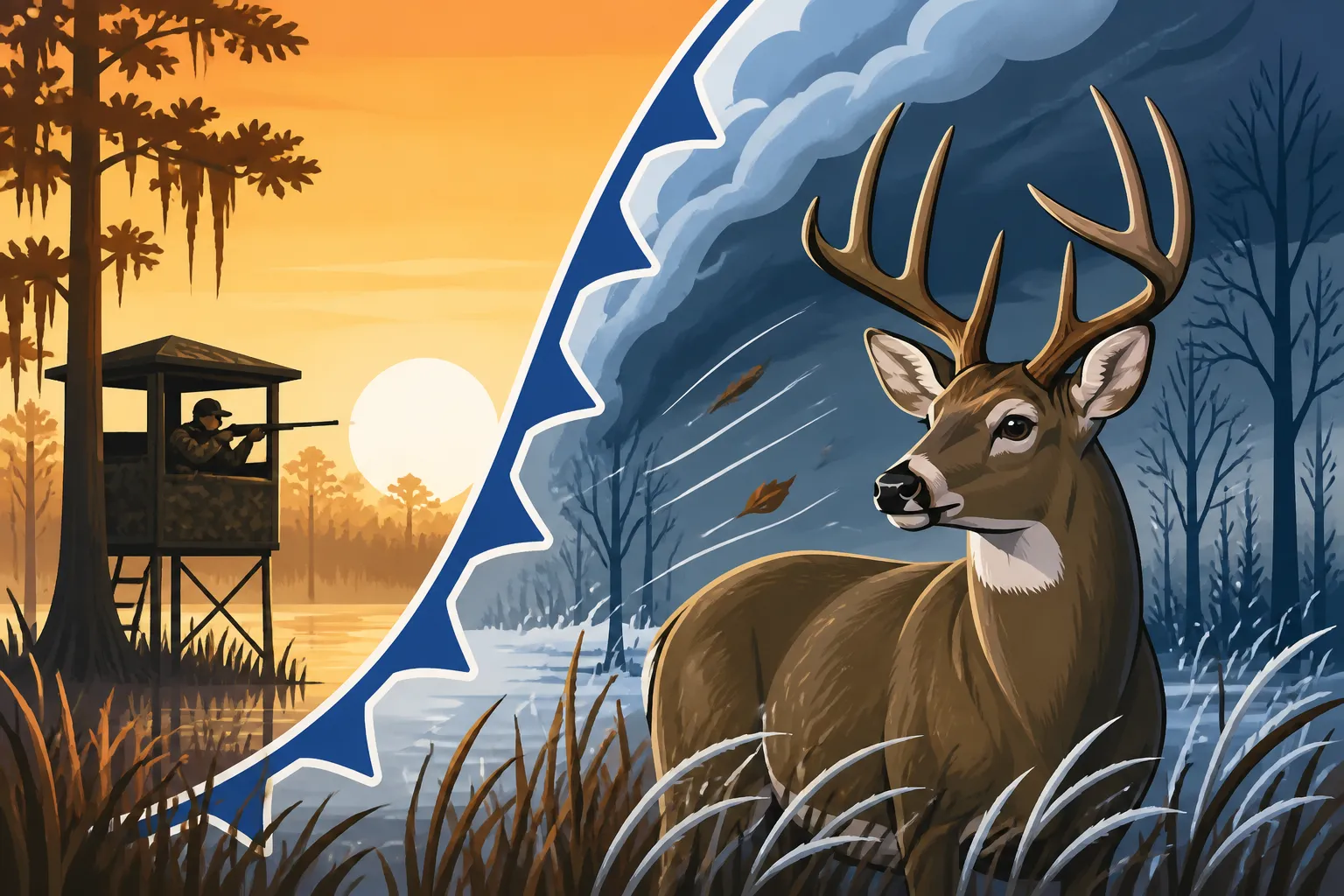
The unpredictability of deer movement in Louisiana can be one of the most frustrating aspects of hunting our often warm and humid seasons. You spend hours scouting, set up what you think is the perfect stand, and then the deer just seem to vanish, only to reappear when you least expect it. But then, a cold front rolls through, bringing that crisp, cool air we all crave, and suddenly, there's a buzz of anticipation. This guide is dedicated to helping you understand why deer react so strongly to these weather changes and, more importantly, how you can leverage that post-cold front activity to significantly improve your chances of success in the Louisiana woods.
Understanding the Impact of a Cold Front on Louisiana Deer
When that autumn or winter cold front finally blasts through, pushing out the stagnant, muggy air we often experience, it's like flipping a switch for the deer herd. Their behavior, which might have been sluggish and nocturnal during extended warm spells, often shifts dramatically. This isn't just a casual change; it's rooted in their biology and survival instincts.
Physiological Changes and Energy Demands
Imagine yourself trying to exert maximum energy on a hot, humid Louisiana afternoon. It's draining, right? You move slower, you sweat more, and you conserve energy. Deer are no different. In warm weather, they tend to be more lethargic, moving primarily during the cooler hours of dawn and dusk, or even sticking to the deep cover during the day. Their bodies are working overtime just to stay cool.
However, when a strong cold front drops temperatures, especially after a prolonged warm spell, it’s a game-changer. Their metabolic rate increases as their bodies need to burn more calories to maintain core temperature. This isn't just about shivering; it's a fundamental demand for more energy. This sudden need for calories acts as a powerful motivator, driving deer to become far more active during daylight hours. They feel invigorated, much like we do on a cool, clear morning after a muggy night. This surge in energy expenditure directly translates to an increased need for food, making them much more predictable.
Shift in Feeding Patterns
With that increased need for energy, deer almost immediately adjust their feeding patterns. Prior to a cold front, especially during warm conditions, deer might browse somewhat casually, picking at various forages throughout the day and night. But once the cold truly settles in, they become far more purposeful in their search for high-calorie, energy-rich foods.
In Louisiana, this often means a strong focus on mast crops like acorns if they're available, particularly white oaks which are preferred. If acorns are scarce, they'll hit agricultural fields hard – thinking about those standing soybean fields or a patch of winter wheat that's just coming up. Green food plots, often planted specifically for deer, become absolute magnets. They'll also turn their attention to native browse that offers good nutrition. For hunters, this means your focus needs to shift dramatically to identifying and sitting the very best food sources in your hunting area. If you’ve done your Scouting Louisiana Public Land Before Season homework, you’ll have a good idea of what’s available.
Increased Rutting Activity
While the rut is ultimately triggered by photoperiod (the amount of daylight), cooler temperatures can certainly amplify deer movement during this crucial time. If a cold front rolls through during the peak of the rut in your specific deer area – be it one of the Hunting the Rut in the Early-Start Areas or Hunting the Rut in the Long-Window Areas – you're in for a treat.
Bucks, already driven by hormones, become even more comfortable covering ground, seeking out does, making rubs, and scraping. They're less concerned about overheating while chasing and fighting. The cooler air allows them to pursue does with more vigor and for longer periods during daylight hours. Even outside the absolute peak of the rut, a significant cold front can sometimes spark a "mini-rut" of sorts, where bucks that have been holding tight suddenly decide it's time to check for receptive does. This added movement, whether it’s a full-blown chase or just a buck cruising a ridge line, significantly increases the odds of an encounter.
Reading the Weather and Timing Your Hunt
Understanding the weather isn't just about knowing if it's going to rain; it's about anticipating deer behavior. A cold front isn't a single event but a progression of atmospheric changes, and knowing how to interpret these signals can tell you exactly when to be in your stand.
Monitoring Barometric Pressure
This is perhaps one of the most critical, yet often overlooked, factors in predicting post-cold front deer movement. Deer, like many animals, are highly sensitive to changes in atmospheric pressure.
- Before the Front (Falling Pressure): As a cold front approaches, the barometric pressure typically drops. Often, just before the storm hits, deer will go on a frantic feeding binge. This is their biological response to the impending weather change, almost as if they know they need to fill up before conditions turn rough. If you can get into your stand a day or half-day before the front actually arrives, when the pressure is steadily falling, you might catch them moving unexpectedly early or late in the day, gorging themselves.
- During the Front (Low Pressure/Storm): While the storm itself is passing, whether it's heavy rain or strong winds, deer usually hunker down. Movement will be minimal.
- After the Front (Rising and Stable Pressure): This is the magic window. As the cold front pushes through, the skies clear, and the barometric pressure begins to rise sharply and then stabilize at a higher level. This rising and then sustained high pressure, combined with cooler temperatures, is what truly triggers that widespread, invigorated deer movement. Deer feel good, they need to eat, and they feel safe from the immediate threat of the storm. Many hunters rely on advanced weather apps like GoHunt to track these crucial barometric pressure changes, helping them pinpoint the exact window of opportunity.
Wind Direction and Thermals Post-Front
Cold fronts in Louisiana often usher in stronger, more consistent winds, and sometimes a complete shift in direction. This is a double-edged sword: while deer are moving more, your scent will also carry further.
- Playing the Wind: With increased deer activity, it becomes even more critical to play the wind perfectly. Your scent cone will be larger and more detectable. Always approach your stand and hunt with the wind in your favor, anticipating likely deer travel routes. If the wind is wrong for your primary stand, have a secondary option or be prepared to still-hunt or use a ground blind to adapt.
- Understanding Thermals: Even with consistent wind, thermals still play a role, especially in varied terrain like Louisiana's river bottoms, piney hills, or Atchafalaya Basin Swamp Deer. Thermals are localized air currents created by temperature differences. In the mornings, as the ground warms, air rises. In the evenings, as the ground cools, air sinks. After a cold front, this effect can be even more pronounced. For instance, in a deep creek bottom, early morning cooler air will sink, carrying your scent downhill. As the sun warms the slopes, that air will begin to rise, taking your scent upwards. Understanding these subtle shifts, much like learning Wind and Thermals in Swamp Bottomland, is paramount for a successful ambush, as even a slight shift can reveal your presence. Using a platform like GoHunt to pinpoint optimal pressure drops and rises, alongside real-time wind data, gives you a significant advantage.
Tactics for Hunting Deer Post-Cold Front in Louisiana
So, the cold front has passed, the air is crisp, and the pressure is rising. Now what? This is where strategic hunting comes into play. You can't just hunt the same way you did a week ago. Adaptability is key to capitalizing on this prime opportunity.
Focusing on Food Sources
As mentioned earlier, deer are now highly motivated to eat. This makes food sources the absolute epicenter of your hunting strategy. Your mission is to find the freshest, most attractive food available and position yourself to intercept deer traveling to or from it.
- Prime Locations: In many parts of Louisiana, this means scrutinizing oak flats for fresh acorn drop, especially during early and mid-season. Once acorns are gone, or if they were sparse to begin with, shift your attention to green fields planted with winter wheat, clover, or brassicas. Don't overlook agricultural field edges, particularly those with standing crops or recent harvests, such as Hunting a Standing Cornfield in Farm Country. Browse in recent clear-cuts can also become a hot spot.
- Scouting for Sign: Before you even climb into a stand, do a quick, quiet scout of potential food sources. Look for fresh deer tracks, abundant droppings, and signs of heavy browsing. If you find multiple options, prioritize the one with the freshest, most concentrated sign. Deer won't waste energy on depleted or unappealing food when their caloric needs are high.
- Timing is Everything: With deer feeling more comfortable moving in cooler temperatures, don't be afraid to sit longer. Early mornings, right at first light, as deer head from food to bedding, and late afternoons, as they emerge from bedding to feed, are typically your best bets. However, it's not uncommon for deer, especially bucks during the rut, to move throughout the mid-day in post-front conditions.
Adjusting Stand Locations and Approach
The increased deer movement post-cold front often means deer are using more defined travel corridors to access those critical food sources. Your stand placement needs to account for this.
- Targeting Funnels and Pinch Points: Look for natural funnels – narrow strips of timber between open fields, creek crossings, saddles on ridges, or thickets bordering swamps. These areas force deer into predictable travel paths. A post-front deer is likely to stick to these efficient routes to get to food. Consider areas where deer might cross between two sloughs, creating a natural Hunting a Funnel Between Two Sloughs.
- Bedding Area Proximity: While you never want to bust deer out of their bedding areas, understanding where they're likely to bed down after feeding can help you set up on transition lines. With cooler weather, they might bed closer to prime food sources, or seek sunny spots to warm up. Identifying these areas, perhaps through careful aerial photo analysis like Reading Aerial Photos for Central Louisiana Deer, can be invaluable.
- Stealthy Entry and Exit: Even with increased movement, deer are still incredibly wary. Your approach and departure from your stand are critical. Plan your routes to minimize noise and scent contamination. Use natural cover, walk into the wind, and avoid walking directly through bedding or feeding areas. If you're hunting public land or areas with limited suitable trees, consider Using a Ground Blind on Louisiana Public Land for flexibility and concealment.
Patience and Persistence in Cooler Weather
While the odds certainly improve after a cold front, deer hunting is never a guarantee. The biggest mistake you can make is assuming that because conditions are good, a deer will just walk right under your stand.
- Longer Sits: Cooler weather generally makes for more comfortable hunting for you, so take advantage of it. Be prepared for longer sits, especially during the morning and evening prime times. The deer might not move right at sunrise or sunset; sometimes it takes a few hours for them to get up and going, or they might make a mid-day appearance.
- Stay Warm and Comfortable: Being cold and uncomfortable will shorten your sit and reduce your focus. Layer your clothing, bring hand and foot warmers, and pack a warm drink. The better prepared you are for the cold, the longer you'll stay out there, and the higher your chances of seeing a deer.
- Don't Give Up: A cold front’s positive effects on deer movement can last for several days, sometimes up to a week, especially if the high-pressure system remains stable. Don’t just hunt the first morning after the front and call it quits if you don't see anything. Stay persistent, keep scouting for fresh sign around food sources, and adjust your tactics if needed. Sometimes, it's the second or third day after the front that really delivers. If you do get a shot, ensure you know your post-shot procedures, especially Tracking a Deer Through Louisiana Leaf Litter in dense woods.
Below is a table summarizing the general shifts in deer behavior before and after a significant cold front in Louisiana:
| Condition | Deer Activity Before Cold Front (Falling Pressure) | Deer Activity After Cold Front (Rising/Stable Pressure) |
|---|---|---|
| Feeding | Increased, often frantic, seeking high energy | Steady, focused on prime, high-calorie food sources |
| Movement | Can be sporadic, often mid-day rush | Sustained, especially morning and evening, covering ground |
| Rut Activity | Less influenced by heat, may chase but not far | Significantly increased, more daylight seeking/chasing |
| Bedding | Seeking shade/cool, can be deep in cover | May bed closer to food, sunning to warm up, more active |
| Hunting Strategy | Focus on immediate feeding, short windows | Longer sits, key food sources, travel corridors, playing wind |
Disclaimer
Always consult the latest regulations from the Louisiana Department of Wildlife and Fisheries (LDWF) before planning any hunting trip, as rules and seasons can change.